Want to join in? Respond to our weekly writing prompts, open to everyone.
woke
from Things Left Unsaid
Woke became an insult. What does it mean to be not woke? To oppose all the things that could bring humanity to a brighter future, like wisdom, common sense, empathy, acceptance, logic, education, science, etc.. Judge and hate people for the color of their skin, for who they fall in love with, for where they were born, or for no reason at all. Decide who should have and who should have not. Even when presented with solid evidence, deny that more of an iceberg exists beneath the surface than what can be seen. Life is all black or white with no in between. Don't listen to reason, and ignore any inclination to investigate anything. Cancel critical thinking. Don't care about how much suffering closed mindedness, greed and violence causes. Measure success by how much power and The Dollar Almighty a person has taken by manipulation, greed, or brute force. If you haven't achieved this (false) success for yourself, admire those who have, and elect them as leaders.
R
from An Open Letter
I have been getting a lot more matches on, and there’s this one person that I was talking to a lot today she really matches my energy. I also thought she was funny And she matched my freak. She also mentioned that she has had therapy in the past, and she lives pretty close by which I’m excited for. We have our first date on Saturday. I’m nervous but excited.
The Fine Balance of Suggestion
from AnOublietteofThought
He did not settle upon my heart with the coziness of a warm blanket. He clawed his way through terror and rejection, roaring in silent defiance until I granted audience. Until I opened my eyes to see what stood before me.
It is said, that when the leaves blush in longing dance, air and water will unite to set flame to ways long rotting. What they forgot to mention is that the earth must tremble, cracking until mountains rise to spew fire into the heavens. Forever igniting our best minds to blaze in remorse. The unyielding storm holds no syllables in that passage.
Storms do not yield. They flood. They rupture. They clean the slate and leave a debris field of memories for us to learn from. But we haven't learned. Neither have I. Neither has he. We just are. Two victims of a cunning value. Little more. Little less.
We are taught that we must never gaze into the eyes of our heroes. One does not ascend to such great depths by doing what they are told. I dared to peer into the travesty of his gaze, and in that monumental moment of a not-so-insignificant contact—
the world tilted.
© 2026 AnOublietteofThought. All rights reserved.
Day 64
from Out of Office
WTF.
Today started out with the reminder that it may be my dogs last day. I am still not ready.
It was not quite as productive and busy yesterday. I can’t tell if that is a good thing or not, because I felt as if I had to fully acknowledge how I am feeling, which resulted in a lot of crying.
I could not eat this morning, the best I could do was a cup of coffee, which I hate taking on an empty stomach. I think I doomscrolled for a bit/started packing in short bursts of energy. It was weird. The energy was weird. The weirdest of all was my dog acting and looking completely fine and normal. It is disheartening and charming at the same time. Does she even know that I am just waiting for her to be ready? However, I have to leave in just a couple of days so I can’t wait any longer. My heart feels physically broken – like my chest physically hurts.
I am pulling every single string so I can have her for just one extra day.
It is too much. Everything happening right now is just too much.
To top it all of, I had an ATM machine malfunction on me on my last errand. Now I have to go to the bank tomorrow and get it sorted out because my deposit did not go through :/
Thank you for your message. I am currently out of office with no set return date. I will get back to you when the time is right.
Day 63
from Out of Office
Well, today was kind of busy ~ kind of sad.
Started with a bang at an oil change appointment. It was kind of annoying (another expense while having no paycheck), but also productive because I finally started writing my speech for my brother’s wedding!
Went to urgent care (finally) for my cough/congestion… only to be told it may be really bad allergies and to just continue taking allergy medicine.
Then I went to pottery and got quite a bit of work done with the trimming and stamping of a couple of pieces. All before heading to therapy for an hour. It was helpful, but man was it a lot to unpack this time.
Ran home, finished some laundry, and saw the dogs before going to a workout class! Continued on by another short pottery session of glazing a few other pieces with my mom. Proceeded to meet up with my dad and dogs at the dog park for what I have to assume is the last time (?!)
And finally, came home for the day.
Thank you for your message. I am currently out of office with no set return date. I will get back to you when the time is right.
YouTube Vomit
from The disconnect blog
I enjoy alt-media news much more than I ever really enjoyed mainstream media news. But something so strange happened during the whole Covid-19 thing. So many people got shadow banned during that event who were just being inquisitive and trying to find out what was going on. Legitimate doctors who were having successful results in treating Covid in many ways were harassed and even lost their licenses. As I watched all of this happen many alt-media lost a lot of their viewers because of being shadow banned or banned on Youtube, Facebook, Twitter, and probably more that I’m forgetting. Then some of them built back up on either their own platforms or other platforms. Now after all the dust has settled many are going back to their corrupt masters at Google and posting on YouTube. They talk about how they were banned and how lame the company is for doing that but still use it and post on it and funnel traffic to that beastly company. Isn’t this pretty much the definition of “selling out?” And all of us who disliked that whole thing, aren’t we selling out by still using the platform who thwarted free speech? I had Covid twice (untested cause I don’t trust the PCR test as viral diagnostics, neither did the inventor Kary Mullis. See a snippet article on the topic here and an open forum interview with him here skip to 48:30 to 52:11 for the reference about PCR testing, but the whole thing is interesting) and it wasn’t all that bad by taking vitamin C and D with zinc. Some doctors were harassed for saying such a thing, and that is known to help your immune system fight against just about any virus. I later learned that nicotine can help with long lasting Covid symptoms (and here). I did have decreased smelling for quite a while and got used to it. But after I heard about that I used a few nicotine patches cut up into small strips and nicotine gum. That gave me back a lot of my smell! Why won’t the main outlets give us at least the basics. Go get fresh air and sunlight for vitamin D, boost your vitamin C intake and make sure you have some zinc. That alone can keep many viruses from taking hold, and when they do they often will not be too debilitating.
Personally I have tried to avoid YouTube for many years now. There are some rare occasions that I do but I use it through third party platforms that block ads and hide my identity. I use a VPN, FreeTube, and/or PipePipe. I’ll switch to other things if/when those stop working. There is a constant little battle going on with YouTube trying to block those services and then those services get patched and they start working again. If I’m going to go use that platform which I dislike I’m not going to support them by watching their ads and letting them profile me. I’d rather not watch the video if I cannot do it on my own terms.
One of the biggest reasons I still ever go to YouTube is for the DIY and tutorial type videos. There are some decent alternative platforms for news, politics, and rantings of sorts but there isn’t much out there in the DIY and tutorial world besides YouTube that I have found. I would love a simple video site or video blog site to come along focused on that theme. Keep the bulk of the nonsense videos, politics, and compilations of silly animal events out, there are already plenty of platforms for that. If I had the ability and a bit more care that might be a project I’d put effort into. A simple clean DIY and tutorial video platform with no ads, just passion driven sharing of ideas. I wouldn’t block free speech with people posting a DIY video on something while rambling about their political views, but if it was just about politics I’d rather they go to Bitchute or something. A donation option would be cool and other payment options for content creators, but no ads and no paywall. That would be awesome!
Doesn’t this Proverbs 26:11 verse sort of fit with the people running back to YouTube after being banned?
Like a dog that returns to his vomit is a fool who repeats his folly
Proverbs is great.
Resources:
Books:
mRNA Vaccine Toxicity – by Dr. Michael Palmer M.D.
The Indoctrinated Brain: How to Successfully Fend Off the Global Attack on Your Mental Freedom – by Michael Nehls
Lies My Government Told Me: And The Better Future Coming – by Robert Malone, MD, MS
Apps and websites:
BitChute and Old BitChute — YouTube alternative focused more on freedom of speech.
Odyssey — YouTube alternative focused more on freedom of speech.
PipePipe — YouTube interface for Android and GrapheneOS that blocks your identity and ads.
FreeTube — YouTube interface for Linux, Mac, and Windows that blocks your identity and ads.
from Blog of Sand
Gatsby got got
By my calculations The Great Gatsby is 305,729 characters. That's probably an overestimate, as it is the character count of the file from Project Gutenberg which has some extra text. Even still, we can use that number. This blog has reached 415,432 characters so it is approximately 136% of the Great Gatsby. A noteworthy achievement. I'm gonna take a beat before the next update like this. I'm thinking maybe War and Peace next. From there, many options. But I have a lot of projects in store so many potential posts coming down the pike. Just a few of them:
-Wrapping up the High Fantasy Swordfighter Tournament -More installments of Starcraft Co. -A bunch of D and D content -Various Musings
Stay tuned!
from The Practice
On Learning To Write
Current Reading: Adler and How To Read A Book have officially been shelved. Saint Michaels Lent has started and I'll be reading The Spiritual Combat by Lawrence Scupoli as part of my devotion. I won't come back to Adler right away. I want to move on to something else, but I'll keep it close by for reference.
I've noticed my reading decline as of late. Im trying to become a better writer and it's really taking up a lot of my time just focusing on that. And I know that reading helps you become a better writer. But trying to write as much as possible to really get a feel for it, to try and find my voice is hard.
I was doing a lot of research on how people write differently. A lot of people have an idea in their head, plan it out and then write it down in the most elegant way they can. Some people write very analytical, almost like a very precise scientific explanation of something. Some write in beautiful pros, leading you down a beautiful literary narrative to a deeper understanding.
I write different I think.
Usually when I start I have no idea where I'm going to end up. That's what the Current Reading sections is for. It's something concrete I can start with, get my mind and hands working, then a thought will usually come up, and I start writing towards it.
I noticed this a couple years ago. I struggled to keep a steady journaling habit. I would make it two or three days then completely fall off. No real reason, just that I didn't have anything to write about. I think it's because I had an idea of what I was supposed to be doing. I thought I had to have a complete, fully formed narrative in my head before I started writing. I mean, that's what I was taught in school. Figure out what you're going to write about, make an outline, construct the essay. And that's a completely valid way of writing, but just not what I was wanting to do.
I'm Catholic. And every first Friday of the month my parish has overnight adoration. You can sign up to make a Holy Hour during the overnight hours into Saturday morning. I started going at 3 o'clock AM, and I really wanted to keep an adoration journal. But the same thing started happening, I'd get there, pray, open the journal and...crickets. Nothing coming to mind. No mystical messages from Our Lord beamed straight into my head. No big inspiration of anything I just had to get out.
So I started doodling, just because the pen and paper were right there in front of me. And then to my surprise, just by the mechanics of my hand moving, something loosened up, and a thought would just pop into my head. Something I was dealing with at work, something one of my kids had asked me, some problem I had been struggling with, some family dynamic that was needing to be worked out. And my hand started moving, but making letters and words this time not just drawing. Not in some flashy “a-ha” moment. Just natural.
I've now developed a pretty robust journaling habit. I've learned that I need to externalize my thoughts onto the page, to see them, so I can really understand them. I have also started a bullet journal and I still doodle.
And I know this may seem trivial to some people, but it was monumental for me. People think “Why are you making mountains out of mole hills Stoney. Just write something down”. And yeah for some that might work. I needed a little more understanding first. For years I wanted to journal steadily but it always evaded me. I just had to figure out the thing in my head holding me back, the way I was conceptualizing writing, was what I was taught in school. But it had to make sense in my own head for it to finally click.
And that brings me to the next big step. Trying to learn to write for others to read. It's something I've been drawn to my whole life. I never had enough confidence to actually do it, and I kinda can't believe I'm doing it now. I'm practicing in public(TERRIFYING). These short essays aren't going to be heavily edited. They are, at their core, my learning process. If you're looking for a completely polished, 3,000 word, journalistic masterpiece you probably won't find that here. At least not at first. The goal is to practice getting better. And I hope, eventually, that I'll write things that people enjoy reading.
back to night, back to basics
from  blog//x2600.cc
10:45 PM, coffee settling on the stove. I ready a tobacco pipe, allow the AC to settle from a day of battling 101° heat. Now it is back on, slowly cooling the room to a nicer 68°.
from Blog of Sand
High Fantasy Epic Sword Fighter Tournament Round 1, Fight 8
Xena, Warrior Princess vs Lancelot
Not all fights need to be prolonged. This one I think would end pretty fast. Xena Warrior Princess is well... if you aren't up to date on your early to mid 90s cheesy swords and sandals television epics, she is a reformed ruthless warlord who travels fighting evil to atone for her past, but she never loses her edge. Lancelot is one of the most famous knights in Arthurian legend. I could describe each more... but I don't feel like it. Research them if you are interested. Anyway, the final fight of the first round. Xena is hanging out in an old chapel and finds a cup to drink wine out of, unaware of its importance. Enter, Lancelot, questing for the Holy Grail.
Xena sat on the broken altar with one leg crossed over the other, drinking wine from an old cup she had found among the ruins. Hooves sounded outside, then an armored knight appeared in the chapel doorway. Lancelot stopped when he saw the cup in her hand. “Put down the Holy Grail.” Xena looked at the cup, then back at him. “This?” She took another drink. Lancelot drew his sword. Xena stared at him for a moment—and chuckled. “Oh, you're serious.” She set the cup beside her and stood. Lancelot advanced. “I will not ask again.” Xena drew her sword. “Good.”
Lancelot attacked beautifully. His first cut was fast, his second faster, and Xena turned both aside almost casually before slipping around the third. Lancelot pivoted to follow her and realized she was already inside his guard. Xena caught his sword wrist, drove her blade upward beneath his breastplate, and buried it through his chest. Lancelot stared at her in disbelief. “You really should've asked again.” Xena ripped the sword free and let him fall. She wiped the blade on his surcoat, retrieved the Grail, and frowned into it. Empty. “Great.” She tossed the holiest relic in Christendom onto Lancelot's chest and walked out.
Winner: Xena
And that ends the first round. Going forward to the next round:
Aragorn Jaime Lannister Maximus Beatrix Kiddo Lan Geralt Achilles Xena
I'm thinking we will do:
Aragorn vs Lan- Battle of Legends Maximus vs Jamie- Emperor Slayer vs King Slayer Beatrix Kiddo vs Xena- Boss Lady Battle Geralt vs Lan- Epic Fantasy Showdown
from Blog of Sand
High Fantasy Epic Sword Fighter Tournament Round 1, Fight 7
Achilles vs Beowulf
This is the most epic fight yet. Achilles is the undisputed GOAT of Greek mythology. An unstoppable force on the battlefield. If only his mother had dipped that other ankle...
Anyway, if your only familiarity with Achilles is the movie Troy, you don't have the full picture of his ability. Brad Pitt did an excellent job, but his portrayal was too... human. The Homeric version of Achilles is something else entirely.
And then Beowulf. If you haven't read the epic poem, please do. His most notable feature is his absolutely absurd level of strength. He can toss monsters about like a dad wrestling with their young child. Interestingly, both of these characters are fixated on achieving glory so I think this is a pretty solid matchup.
Let's say that the Nordic Gods and Greek Gods have gotten into a debate as to who has the better hero. Or rather, whose top hero could win in a fight. The Nordic Gods resurrect peak Beowulf and the Greek Gods resurrect peak Achilles. They fight in the ruins of a temple.
The temple had been ruined so long ago that neither warrior recognized the gods whose faces had once adorned its walls. Broken columns lay across a floor of cracked marble, weeds pushed between fallen stones, and half a roof opened the sanctuary to a sky divided unnaturally in two. Thunderclouds rolled across one horizon while brilliant Mediterranean sunlight burned across the other. Somewhere beyond mortal sight, Odin and Zeus watched. The wager had begun simply enough, as wagers among gods often did: which people had produced the greater warrior? The Greeks offered Achilles. The northern gods answered with Beowulf. Death proved no obstacle to either pantheon.
Achilles awakened first, armored as he had been before Troy, shield on his arm and the great Pelian spear in his hand. Beowulf rose across the temple with sword and shield, restored to the tremendous strength of his youth. Neither man seemed particularly impressed when unseen voices explained why they had been returned to life. Beowulf looked toward the divided heavens and laughed. “Gods have strange amusements.” Achilles rolled the spear once in his hand. “They could have chosen worse.” Beowulf studied the younger man across the ruins. He saw speed in the way Achilles shifted his feet and confidence bordering upon arrogance in everything else. Achilles saw an older kind of danger. The Geat was huge even among warriors, thick through the chest and shoulders, and his sword looked almost small in his hand. Neither asked the other's name. The gods had already provided those.
Beowulf advanced. Achilles did not. The Greek's spear struck without warning, shooting toward Beowulf's chest with astonishing speed. Beowulf turned it on his shield and charged through the impact, expecting Achilles to retreat. Instead Achilles slid sideways and struck again, the spearhead slicing across Beowulf's upper arm before he could turn. Beowulf answered with a sweep of his sword that would have taken another man's head from his shoulders. Achilles was already gone. He moved around the broken columns with the impossible quickness for which men had named him, stabbing at Beowulf from angles that forced the larger warrior continually to turn. A second wound appeared along Beowulf's thigh. A third opened his shoulder. None were deep. Achilles was learning. Then Beowulf caught the spear. Achilles thrust toward his throat, and the Geat simply knocked the point aside with his shield and seized the shaft behind the head. Achilles pulled. Beowulf pulled harder. For an instant surprise crossed Achilles' face as he found himself dragged bodily forward. He released the spear a heartbeat before Beowulf's sword came down, and the blade shattered the marble where his leg had been. Achilles rolled, drew his sword and came upright several paces away. Beowulf tossed the Pelian spear aside. “Fast,” he said. Achilles looked from the discarded spear to the enormous man who had torn it out of his hands. “Strong.”
They met in the center of the temple. Now there was no reach to protect Achilles, and Beowulf attacked with the ferocity of the man who had torn Grendel's arm from its socket. Achilles caught the first blow on his shield and was driven backward. He slipped the second and answered with his sword, but Beowulf took the cut across his mail simply to get close enough to smash the rim of his shield into Achilles' chest. Achilles stumbled against a fallen column. Beowulf came after him, sword descending, and Achilles twisted away as the blade struck stone. He slashed Beowulf across the ribs, pivoted behind him and cut again across the back of his leg. Beowulf turned with astonishing speed and caught Achilles by the edge of his armor. For the first time in his life, Achilles discovered what it felt like to be manhandled. Beowulf lifted him and hurled him through the remains of a stone altar. Achilles struck hard enough to scatter broken masonry and disappeared beneath dust. Somewhere above, thunder rolled with unmistakable satisfaction.
Beowulf retrieved his sword and approached the rubble carefully. Achilles exploded from it. His shield struck Beowulf's sword aside, his blade opened the Geat's forearm, and before Beowulf could answer Achilles drove forward and buried the sword beneath his ribs. Beowulf grunted and seized Achilles' sword arm. Achilles tried to withdraw the blade. It did not move. Beowulf smiled through bloody teeth. Achilles abandoned the sword. He drove his shield into Beowulf's wounded side, twisted free of the enormous hand reaching for him and sprinted toward the fallen spear. Beowulf ripped Achilles' sword from his own body and threw it aside. Blood poured down his side now, but he followed. Achilles reached the Pelian spear first and turned just as Beowulf came upon him. The spearpoint drove toward Beowulf's chest. Beowulf knocked it aside. Achilles reversed it, struck him across the face with the butt, then spun away from the answering sword. Beowulf pursued, but something had changed. The wounds were accumulating. His left leg no longer followed the right quite as quickly. His sword arm had begun to slow. Achilles saw all of it.
Beowulf saw that Achilles saw it. He stopped chasing. “Come, Greek.” Achilles stopped as well. Beowulf threw his shield aside. Achilles understood the invitation. It was exactly the kind of invitation that had killed Hector. He came. The spear flashed toward Beowulf's chest. Beowulf twisted aside and continued forward. Achilles stabbed again, opening his shoulder. Beowulf kept coming. A third thrust entered his abdomen. Beowulf roared and drove himself farther down the shaft, trapping the weapon inside his own body as he closed both hands around it. Achilles tried to release the spear, but this time Beowulf had expected that. One bloody hand left the shaft and closed around Achilles' wrist. Beowulf pulled him close. The sword rose. Achilles' shield intercepted it inches from his head. Beowulf struck again. The shield split. Achilles staggered, and Beowulf came after him with the last of his strength. The third blow tore the ruined shield from Achilles' arm. Beowulf raised the sword for the fourth.
Achilles stepped forward. The movement was almost impossibly fast. He abandoned the spear still buried in Beowulf, drew the knife at his belt and drove it upward beneath the Geat's jaw. Beowulf stopped, his sword remaining raised. Achilles held the knife there for a moment, breathing against Beowulf's chest. Then the sword fell from Beowulf's hand. Achilles stepped backward. Beowulf remained standing longer than he should have. Blood covered him from shoulder to thigh, the Pelian spear still protruding from his body. He looked down at Achilles and gave a low, rasping laugh. “Fast.” Achilles nodded. “Strong.” Beowulf fell.
For several moments Achilles stood beside him, battered and bleeding, his shield destroyed and his sword somewhere among the ruins. Then he planted a foot against Beowulf and pulled the spear free. He looked upward toward the impossible sky. “Is that enough?” Thunder answered from one horizon. From the other came laughter.
Winner: Achilles
from Blog of Sand
High Fantasy Epic Sword Fighter Tournament Round 1, Fight 6
Geralt of Rivia vs Conan the Barbarian
Geralt of Rivia is a genetically enhanced, magically imbued monster hunter, aka a Witcher. Conan the Barbarian was enslaved as a child, lost his family, and fought as a gladiator becoming more a force of nature than man. A preternaturally skilled hunter vs a warrior with true brute force of will. We will have them meet in Conan's homeland, Cimmeria, a cold wasteland. Let's see how it goes:
Cimmeria was cold, gray, and miserable, which Geralt supposed was one point in its favor. Two days earlier he had been outside Novigrad when green light swallowed him and deposited him among mountains that belonged to no map he knew. The curse had been remarkably straightforward: Slay Conan of Cimmeria, and you may return. Geralt had spent two days attempting to prove it a liar before his medallion finally led him into a narrow valley beneath the mountains. The man waiting there was difficult to mistake. Conan stood beside a butchered elk with a broad sword within arm's reach, enormously muscled without the clumsy bulk Geralt associated with men who cultivated strength for show. The Cimmerian looked up as Geralt approached, and something in his expression changed immediately. He had recognized danger. Geralt stopped twenty paces away. “Conan?” The barbarian rose and reached for his sword. “Who asks?” Geralt drew his steel blade and sighed. “Sorry.”
Conan came at him without another word, and Geralt's first thought was that no man that large had any business moving so quickly. The broad sword swept toward his neck with enough force to make blocking foolish, so Geralt slipped outside the stroke and opened Conan's ribs as the Cimmerian passed. It should have broken the attack. Conan merely turned with it, blood already running down his side, and sent the return stroke toward Geralt's head. Geralt ducked beneath the blade and found Conan's knee driving into his chest. The impact threw him backward. He struck the earth, rolled as the sword came down where his skull had been, and came onto one knee with his left hand extended. “Aard.” The Sign caught Conan squarely and hurled him through the air. He struck a pine hard enough to shake water from its branches and dropped among the roots.
Geralt was moving before Conan landed. He had killed things stronger than this man and things faster than him; the trick was never allowing either kind to recover. His sword stabbed downward, but Conan rolled aside, kicked Geralt's knee and somehow came upright in the same movement. The Cimmerian's forehead smashed into Geralt's face, and then one enormous hand closed around his sword wrist. Geralt felt the strength in that grip and abandoned any thought of wrestling free. Instead he opened his left hand between them and summoned Igni. Flame washed across Conan's chest and face. Conan roared and recoiled, his grip loosening for no more than an instant, but an instant was plenty for a witcher. Geralt tore his arm free, stepped inside the barbarian's sword and drove his steel blade beneath Conan's ribs until the point emerged from his back.
Conan did not fall. Geralt had just enough time to realize that before a hand closed around his throat. The Cimmerian pulled himself farther down the sword to reach him, blood pouring from a wound that should already have ended the fight, and Geralt saw no madness in his eyes. Conan knew he was dying. He simply intended to kill Geralt first. Geralt released his sword rather than be dragged closer, but Conan was already raising the broad blade in his other hand. There was no room to dodge and no time to recover the steel sword. Conan struck with everything left in him, the edge descending toward the place where Geralt's neck met his shoulder.
The sword struck Quen instead. Golden light burst between them, and Conan's blade rebounded as though it had struck an invisible wall. Surprise entered the Cimmerian's face for the first time, and Geralt understood that the fight had ended. Conan had already survived telekinetic force, fire, and a sword through his body; he had solved every new problem almost as quickly as Geralt could present it. Given another few seconds, perhaps he would have found some answer to this one too. Geralt did not give him those seconds. His right hand went over his shoulder, the silver sword came free in one smooth motion, and the blade swept through Conan's neck before the barbarian could recover his guard.
Conan's head struck the wet earth. His body remained upright for the smallest fraction of a second, Geralt's steel sword still buried through its abdomen, then collapsed beside it. Geralt stood motionless, silver sword extended, listening to his own breathing and the patter of rain through the trees. The whole encounter could not have lasted much more than twenty seconds. He sheathed the silver sword, planted one boot against Conan's side and pulled the steel blade free, wiping it clean before looking down at the dead Cimmerian. The green light of the curse had already begun forming between the trees. “You deserved better,” Geralt said, and stepped through.
Winner: Geralt of Rivia
from Blog of Sand
High Fantasy Epic Sword Fighter Tournament Round 1, Fight 5
al'Lan Mandragoran vs. Arthur Dayne
For anyone who has read the Wheel of Time, “Lan” Mandragoran needs no introduction. For those who haven't... I wouldn't recommend it unless you are ready to dedicate... a substantial amount of time to it. I think the series is about 12000 pages. That said, Lan is a badass of epic proportions. I'm just gonna lift the description straight from his wiki:
“known commonly as Lan, is also known as Lord of the Seven Towers, Lord of the Lakes, True Blade of Malkier, Defender of the Wall of First Fires, Bearer of the Sword of the Thousand Lakes, May He Sever the Shadow, Dai Shan, and known to the Aiel as Aan'allein. He is the king and only survivor of the royal line of the fallen kingdom of Malkier.” – https://wot.fandom.com/wiki/Lan_Mandragoran
Arthur Dayne, on the other hand, is the greatest sword fighter to ever live in the ASOIAF universe. That is saying something if you are familiar with the series, as there are many, many exceptional fighters. Dayne is on another level. His sword, Dawn, is said to be made from the heart of a fallen star and is one of the most coveted weapons of all the kingdoms. His skill, speed, prowess and rigid code of honor make him unparalleled. He was only killed after being heavily outnumbered and stabbed in the back.
So this fight is going to be a barnburner. We will set it in The Blight to give an ambiance of dread and danger to match the danger these two present:
The Blight had no wind. That was what Arthur Dayne disliked most about it. The trees moved anyway. Their pale branches twisted against one another beneath a bruised sky, leaves trembling without any breeze to stir them. Things crawled beneath the rotting carpet of vegetation and vanished whenever he looked directly at them. Dawn rested easily in Arthur's hands, its pale blade catching what little light penetrated the canopy. He had awakened here without knowing how he had arrived, but the rules of the place had been made clear to him. Somewhere beyond the twisted forest stood a stone archway filled with white light. Pass through it, and the trial continued. Only one warrior could pass.
A man stood before the archway. He was tall, broad across the shoulders, and dressed in a color-shifting cloak that seemed to disappear whenever Arthur tried to focus upon it. His face looked carved rather than born, all hard planes and weathered lines, and there was something in his eyes Arthur recognized immediately. Arthur had seen it in old knights who had survived too many wars, though never quite like this. This man had not merely accepted that he would someday die. He appeared to have reached an agreement with death a very long time ago. Lan Mandragoran studied the silver-haired knight approaching through the Blight and then looked at the strange pale sword in his hands. “You know the rule?” Arthur nodded. “Only one may continue.” Lan drew his sword. “Then there is nothing to discuss.” Arthur brought Dawn into guard. “No.”
For perhaps ten seconds neither man moved. There was no boasting, no demand for names, no attempt at intimidation. Each watched the other's feet, hands and shoulders. Arthur noticed the heron etched into Lan's blade. Lan noticed how effortlessly Arthur held Dawn. Neither knew what those things meant in the other's world. Both understood anyway. Then Arthur moved. Dawn came toward Lan's neck so quickly that another man might have died before realizing the duel had begun. Lan's sword met it. Arthur reversed instantly, cutting toward the ribs, but Lan was already turning. Steel rang again. Lan answered with a thrust toward Arthur's face. Arthur slipped aside and brought Dawn around in a cut that should have caught Lan during his recovery. Instead Lan's blade appeared exactly where it needed to be. They separated after barely three seconds. Arthur stared at him. Lan's expression had not changed.
Arthur attacked again. This time there was no testing. Dawn moved through a sequence that had killed better men than most kingdoms possessed: high, low, thrust, reverse, then a sudden change of line toward the neck. Lan gave ground beneath it, his sword moving with extraordinary economy. He did not block Arthur's strength directly when he could redirect it. He did not retreat farther than necessary. Dawn passed within inches of his body again and again without touching him. Arthur accelerated. Lan accelerated with him. Then Lan counterattacked. Arthur immediately understood why the other man had been retreating. Lan had not been overwhelmed. He had been watching.
The first cut forced Arthur backward. The second threatened his hand. The third appeared to be a thrust toward the chest before changing into something Arthur had never seen, Lan's wrists turning as the blade suddenly came toward his neck from an impossible angle. Arthur caught it on Dawn and stepped away. Lan followed. His sword flowed continuously from one position into another, each attack becoming the beginning of the next. Arthur did not know the names Boar Rushes Down the Mountain or Lightning of Three Prongs or The Moon Rises Over Water. He only knew that the stranger's swordsmanship had been refined into something extraordinarily systematic and extraordinarily lethal. Arthur smiled. Lan noticed. “You enjoy this.” “I have not had a fight like this in a very long time.” Lan's eyes remained cold. “Enjoyment gets men killed.” Arthur attacked.
For the next minute the Blight rang with steel. Arthur was magnificent. Dawn seemed weightless in his hands, the great pale sword moving with a speed that should have belonged to something half its size. He changed grips, angles and distances without warning, using the blade's unusual reach to force Lan into positions from which most swordsmen could not have recovered. Lan recovered from all of them. Arthur cut toward his head; Lan slipped aside. Lan thrust toward Arthur's heart; Dawn turned it away. Arthur stepped inside and struck Lan with his shoulder. Lan answered with an elbow to the jaw. They separated, came together again, and neither gave the other a moment to breathe.
Arthur began to realize something unsettling. He was accustomed to being better. Even against exceptional swordsmen, there usually came a moment when he understood the limits of the man facing him. Perhaps the opponent was slightly slow recovering from a backhand cut. Perhaps he overcommitted when attacking the legs. Perhaps his balance shifted before a thrust. Everyone had something. Arthur had spent the opening exchanges searching for Lan's. He could not find it. Lan, meanwhile, had found several of Arthur's. None were weaknesses in any ordinary sense. Arthur Dayne was too good for that. They were preferences. Tiny habits accumulated across a lifetime of swordsmanship. Arthur favored one direction when disengaging from a bind. He shifted his weight fractionally before one particular thrust. When forced to choose between protecting his sword arm and yielding ground, he tended to yield ground. Lan catalogued each one without expression.
Arthur cut Lan across the shoulder. It was the first clean hit. Blood darkened Lan's coat. Arthur immediately pressed the advantage. Dawn came down toward Lan's head. Lan caught it and retreated. Arthur struck again. Lan gave another step. Dawn flashed toward his ribs. Lan twisted aside, but the point opened another shallow line along his side. Arthur drove forward. Lan's heel struck a twisted root. Arthur saw it. Dawn came for his throat. Lan fell. Not stumbled. Fell. Arthur's blade passed through empty air. Lan hit the ground and rolled beneath Arthur's guard. His sword swept toward Arthur's leg. Arthur barely jumped clear. Lan came to his feet almost instantly. Arthur backed away, and for the first time his smile disappeared.
Lan had deliberately stepped onto the root. Arthur understood. The wound to the shoulder. The retreat. The second wound. The apparent mistake. Lan had built the entire sequence to discover whether Arthur would commit when he believed victory was near. “You let me cut you.” Lan glanced at the blood on his shoulder. “Yes.” Arthur almost laughed. “That is madness.” “No.” Lan raised his sword. “It is a price.”
Something changed in the duel after that. Arthur had fought fearless men before. Fearlessness could be exploited. Men who did not fear death often attacked recklessly because they mistook courage for invulnerability. Lan was different. He did not disregard death. He calculated it. He would accept a wound if the wound purchased something more valuable. He would sacrifice his hand for Arthur's arm, his shoulder for Arthur's throat, his life for Arthur's life if that was what victory required. There was no bravado in it whatsoever. Arthur suddenly understood that he was fighting perhaps the most dangerous kind of man who could hold a sword.
They attacked simultaneously. Dawn struck Lan's blade and drove it aside. Lan stepped forward instead of retreating. Arthur changed his cut toward the neck. Lan ducked. His sword came upward. Arthur twisted and the blade scraped across his breastplate. Arthur struck with Dawn's pommel and caught Lan above the eye. Blood appeared immediately. Lan answered with a cut that opened Arthur's thigh. They separated again. Both men were breathing harder now. Arthur's leg bled. Lan's face and shoulder bled. Neither seemed interested. The Blight moved around them. Something large shifted between distant trees. Neither looked.
Arthur raised Dawn into a high guard. Lan recognized the intention without recognizing the stance. The next exchange would decide it. Arthur came forward. The first strike was extraordinary. Dawn descended with tremendous force and changed direction halfway through, becoming a diagonal cut toward Lan's shoulder. Lan barely redirected it. Arthur reversed instantly and attacked the opposite side. Lan blocked. Arthur stepped forward and thrust. Lan moved just enough. Dawn entered his side. Arthur felt the blade penetrate. He knew immediately that he had won. Then he saw Lan's face. Lan had not tried to avoid the thrust. He had moved so that it missed the heart.
Arthur tried to pull Dawn free. Lan's left hand closed around his wrist. Arthur understood. Too late. Lan's sword entered beneath Arthur's breastplate. The point drove upward through the gap beneath his ribs. Arthur gasped. For one frozen moment they stood almost against one another, each man's sword buried in the other. Arthur looked down. Then back at Lan. “You knew.” Lan's grip remained around his wrist. “I suspected.” Arthur's knees weakened. Lan withdrew his sword. Arthur dropped to one knee, still holding Dawn. He tried to raise it. His arm would not obey him. Lan pulled himself carefully off the pale blade, staggered once and remained standing.
Arthur looked toward the glowing archway. Then he looked at Lan. “What are you?” Lan stood over him, blood pouring from his side. “A man who had something worth dying for.” Arthur smiled faintly. “That makes two of us.” He fell. Lan remained standing for several seconds before lowering his sword. He knelt beside Arthur and closed the knight's eyes. Then he picked up Dawn and examined the pale blade that had nearly killed him. He placed it carefully across Arthur's body. “The best I have ever faced,” Lan said. There was nobody alive to hear him. Lan rose and walked toward the archway, one hand pressed against the wound in his side. The white light swallowed him. Behind him, the Blight began reclaiming the clearing.
Winner: al'Lan Mandragoran.
What I Do With the Fear I Cannot Explain to Anyone
from Douglas Vandergraph | Quiet Christian Reflection
Chapter 1: The Thoughts That Get Louder After Everyone Else Is Asleep
There are nights when nothing dramatic is happening in the room, yet your mind feels like it is standing in the middle of a storm. The lights are off. The house is quiet. Everyone else seems to be sleeping. But you are thinking about the world, your family, money, the future, and all the things you cannot control. You tell yourself to stop thinking, but your thoughts keep reaching for one more possibility. That is when a quiet 2 Thessalonians 2 message for people who feel shaken inside can meet you differently, not as a lesson to study, but as a place to put down what you have been carrying.
Sometimes the hardest fear is the kind you do not know how to explain. You are not in immediate danger. Nothing terrible happened today. You may even feel embarrassed that you are this unsettled. Still, your chest feels tight and your mind will not rest. You have read enough headlines, watched enough arguments, and heard enough warnings that the future has started to feel personal. You are not only thinking about what is happening in the world. You are wondering what it could eventually mean for your home, your job, the people you love, and the life you are trying to hold together. That is why Christian encouragement for the hidden fear that follows you into the night matters. Sometimes you need more than information. You need somewhere safe to be honest.
Paul’s words in 2 Thessalonians 2 speak directly into this kind of inner shaking. He tells believers not to be quickly shaken in mind or alarmed. I keep coming back to that phrase because it does not shame the person who feels unsettled. It recognizes that a mind can be moved. It can be pushed around by fear, confusion, rumors, and pressure. But it also tells us that being shaken does not have to become our permanent condition.
Maybe you know what this looks like when the day is finally over. You have answered everyone’s questions. You have handled what needed to be handled. You have been the dependable one at work, at home, or in your family. Then you lie down and realize you have been holding yourself together all day. The silence gives your fears room to speak. You wonder whether the economy will get worse, whether your children will be okay, whether someone you love is drifting away, whether your health will hold, or whether you are prepared for whatever comes next.
In those moments, I do not think the answer is to force yourself into a better mood. I do not think faith requires you to pretend you are not scared. Sometimes the most faithful thing you can do is tell God exactly where your mind has gone. Not the polished version you would say in front of other people, but the real version: you are afraid of what you cannot see, tired of feeling responsible for everything, and worn down from imagining the worst. There is relief in becoming honest enough to stop performing calmness.
2 Thessalonians 2 does not promise that believers will understand every confusing event around them. It does something more useful. It reminds them that they do not have to be ruled by confusion. Deception can exist without becoming your identity. Trouble can be real without becoming your master. You can admit that the world is unstable without deciding that God must be unstable too.
That distinction matters late at night because fear likes to erase proportion. A difficult possibility starts feeling inevitable. One frightening headline begins representing the entire future. A problem you cannot solve before morning suddenly feels like something you must solve before you are allowed to sleep. But you are still human, and you are allowed to reach the end of what you can carry today.
There is no spiritual failure in saying, “I cannot hold this tonight.” In fact, surrender often begins there. You stop trying to manage ten imaginary tomorrows and return to the one room you are actually sitting in. You notice the clock and your breathing. You notice that the people you love are still here. You remember that God is not waiting for you to predict the future correctly before He agrees to remain faithful.
This is where standing firm becomes deeply personal. It may mean turning the phone facedown even though part of you wants one more update. It may mean refusing to search for reassurance until two in the morning. It may mean opening your Bible without demanding that every question be answered. It may mean whispering one simple prayer because you do not have the energy for anything more. God is not measuring the beauty of your prayer; He is meeting you in the truth of it.
Paul later reminds these believers that they are loved by the Lord, and I think that belongs beside the warning not to be shaken. When your mind is tired, you can start believing that God must be disappointed in you for struggling. But tiredness does not cancel love. Fear does not erase belonging. An unsettled night does not move you outside the reach of grace.
You may not wake tomorrow with every concern resolved. The world may still be noisy, and your personal questions may still be waiting. But tonight does not have to become a courtroom where you put your faith on trial because you are afraid. You can simply be a tired person talking honestly to God, and sometimes that is where steadiness starts.
Chapter 2: The Morning After the Fear
Morning has a way of making some fears look different. You wake up, see a thin line of light around the curtains, and realize the world did not end while you were sleeping. The problem you were worried about may still be there. The headlines may still be difficult. The unanswered message may still be unanswered. But you are here, and the fear that felt enormous at 1:30 in the morning has lost some of its power in daylight.
That does not mean the fear was fake. It means fear changes shape when we stop feeding it.
Imagine walking into the kitchen and seeing the same unpaid bill you were thinking about the night before. The amount has not changed. Your bank account has not changed. But now you can make coffee, sit down, look at the numbers, and decide what the next step actually is. Maybe you need to move money, call someone, change a plan, or ask for help. Faith does not make the bill disappear. It helps you face the real problem instead of suffering every possible consequence before anything has happened.
That is one of the things I hear in Paul’s instruction to stand firm. Standing firm is not emotional numbness. It is refusing to let fear push you into a life of imagined emergencies. It is returning to what is true, what is in front of you, and what God is asking of you today.
There is also something deeply freeing in remembering that you are loved before you are steady. You do not have to calm yourself perfectly before you are welcome with God. You do not have to prove that your faith is strong enough by pretending you never get overwhelmed. You can come to Him tired, uncertain, and still asking the same question you asked last night.
Then you can take one faithful step.
Make the call. Eat breakfast. Go to work. Sit with the person who needs you. Pray for the part of the world that has been weighing on your heart. Turn off the noise when it stops helping. Tell the truth. Do what is yours to do and leave what is not yours with God.
The world may remain unstable. Your life may still contain uncertainty. But you do not have to become unstable with it.
Sometimes peace is not the feeling that nothing bad can happen. Sometimes it is the quieter confidence that whatever happens, you will not be alone in it.
Your friend, Douglas Vandergraph
Explore the complete Douglas Vandergraph Master Index: https://douglasvandergraph.com/douglas-vandergraph-master-index/
Watch Douglas Vandergraph’s faith-based videos on YouTube: https://www.youtube.com/@douglasvandergraph
The Price You Alone Pay: How Surveillance Pricing Punishes Loyalty
from  SmarterArticles
There is a particular kind of betrayal in being charged more for staying. It runs against every instinct a customer brings to a long relationship with a shop, a bank, an insurer. You assume, reasonably, that years of repeat business buy you something: goodwill, a better deal, the warmth of being a known quantity. The opposite is closer to the truth. In a growing number of markets, the longer you remain a customer, the more a pricing system has learned about you, and the higher the figure it concludes you will tolerate. Loyalty is not rewarded. It is metered, modelled and monetised. The system reads your steadfastness as a signal of your inability to leave, and prices the difference.
This is the strange logic at the heart of what regulators have started calling surveillance pricing, and it is worth pausing on how counter-intuitive it is. Surge pricing, the kind that lifts a taxi fare when it rains, at least responds to something visible and shared. Everyone standing on the same wet pavement faces the same multiplier. Surveillance pricing does something else entirely. It responds to you: to your browsing history, your device, your postcode, your past purchases, the financial circumstances it has inferred about you and, crucially, to how trapped you appear to be. By 2026 this is no longer a thought experiment kept warm in economics seminars. It is law in three American states, the subject of formal orders from the United States Federal Trade Commission to eight companies, and the documented practice of firms from grocery delivery platforms to airlines. The question it forces is not whether the technology works. It plainly does. The question is what happens to the idea of a fair public price, the same number for anyone who wants the same thing, when that idea quietly stops being true.
The Difference Between a Crowd and a Person
The vocabulary matters here, because the industry has a strong interest in blurring it. Dynamic pricing is old, familiar and broadly understood. Airlines have flexed fares with demand since deregulation. Hotels lift rates around conferences. Energy tariffs move with wholesale markets. What unites these practices is that the price, however much it jumps, is a fact about the market at a given moment. It is aimed at a condition, not a customer. Two strangers booking the same seat at the same second see the same number.
Surveillance pricing breaks that symmetry. It is the calculation turned inward, away from the conditions of supply and demand and towards the individual standing in front of the screen. The Federal Trade Commission, in the issue spotlight it published in January 2025, drew the line precisely: instead of a price being a static feature of a product, the same product could carry a different price for different people based on consumer data, behaviours, location, time and purchase channel. The agency described an opaque market of third-party intermediaries that use advanced algorithms, artificial intelligence and personal information to categorise individuals and set a targeted price for each. The signals it documented were granular to the point of intimacy: not merely what you bought, but the movement of your cursor across a page, the products you placed in a basket and then abandoned. One example named in the FTC's findings was a cosmetics company tailoring promotions to a customer's skin type and skin tone.
The distinction is not pedantry. It is the whole moral architecture of the thing. A dynamic price is a message the market sends to everyone. A surveillance price is a private message addressed to you alone, written from a profile you cannot read, by a system that knows things about you that you have not agreed to share and may not even know about yourself. The crowd has become a person, and the person has become a target.
The Loyalty Penalty, and Why Britain Saw It First
If you want to understand surveillance pricing before the algorithms arrived, look at British insurance. For years the home and motor insurance markets ran on a practice the industry euphemistically called price walking, and which everyone else called the loyalty penalty. The mechanism was simple and cynical. Insurers offered cheap, often loss-making premiums to new customers to win them, then ratcheted the price upward at each annual renewal, year after year, betting that inertia, busyness or simple trust would stop the customer from shopping around. The longer you stayed, the more you paid, not because your risk had risen but because your loyalty had been identified as exploitable.
The scale of it was extraordinary. In September 2018, Citizens Advice lodged a super-complaint with the Competition and Markets Authority arguing that across five essential markets, mobile, broadband, home insurance, mortgages and savings, British consumers were losing around 4.1 billion pounds a year to the loyalty penalty. That worked out at roughly 877 pounds per affected household, equal to about three per cent of the average household's annual spending. Eight in ten people, the charity found, were paying a significantly higher price in at least one of those markets simply for staying with their existing supplier. The CMA accepted the substance of the complaint when it responded that December.
The Financial Conduct Authority went furthest in the insurance sector. Its market study concluded that six million existing customers would have saved 1.2 billion pounds in a single year had they paid the average price for their actual risk rather than the inflated renewal figure their loyalty had earned them. From January 2022 the FCA banned the practice outright, requiring insurers to offer renewing customers a price no higher than they would quote a new customer for the equivalent policy. It was, in effect, a legal insistence that loyalty must not be priced as a weakness.
What makes this history so relevant is that it was the analogue rehearsal for the digital performance now underway. Price walking was the loyalty penalty done crudely, by hand, with renewal letters and call-centre scripts. It worked because insurers could make a rough guess about who was unlikely to switch. Surveillance pricing is the same instinct supercharged. Where the old insurer guessed at your inertia from your renewal record, the modern pricing engine infers it from hundreds of signals in real time, and applies the penalty not once a year but at the moment of every transaction. The loyalty penalty was never really about insurance. It was about the seller's ability to read a customer's captivity and charge for it, and that ability has grown beyond all recognition. Even the FCA's ban proved porous. Research by the consumer group Which? in 2024, two years after the rules took effect, found that only around one in five car insurance customers had thought to test their renewal quote against what their own insurer would offer them as a new customer, and that just over half of those who did were quoted less for identical cover. Nor was the leakage always accidental: Direct Line Group, having misapplied the new rules, agreed to hand back an estimated 30 million pounds to renewing customers it had overcharged. The penalty, banned in one form, leaks back in others.
The Oldest Dream, Finally Buildable
Economists have a clinical name for the destination all of this is travelling towards. They call it first-degree, or perfect, price discrimination: the seller's fantasy of charging every buyer the exact maximum they are willing to pay, capturing for the company every last scrap of value that, under a single posted price, would have stayed in the customer's pocket. The theory has sat in textbooks for a century. What it always lacked was a mechanism, because individual human beings are historically rather good at concealing their personal ceiling. The single posted price, the same number on the same shelf for everyone, emerged in part because sellers simply could not do better. It was a technological limit that hardened, over time, into something we mistook for a moral norm.
That limit has now dissolved. Lina Khan, who chaired the FTC from 2021 to 2025, put the shift plainly. The idea of charging every individual person according to their individual willingness to pay, she said, had for the most part been a thought experiment. Through the enormous quantity of behavioural and individualised data that brokers and other firms now collect, she went on, the environment had changed: technologically it had become much more possible to serve every individual person an individual price based on everything they knew about you. Her framing of the consequence is the one that has stuck to the debate. We are moving, she warned, from a transparent market with public prices to an opaque world in which we are alone against secret algorithms.
The first public glimpse of the dream came in September 2000, when an Amazon shopper noticed that deleting the cookies from his browser dropped the price of a DVD. The company had been varying prices according to what it could infer about each customer, and in some cases loyal returning buyers were quoted more than newcomers. The backlash was fierce, Amazon retreated, calling it a random test, and the industry drew a careful lesson. Not that personalised pricing was wrong, but that it must never again be visible. For two decades the dream advanced quietly, dressed in the respectable language of demand and yield, until the data and the machine learning matured enough to make the old fantasy operational.
A TV That Costs More in the Car Park
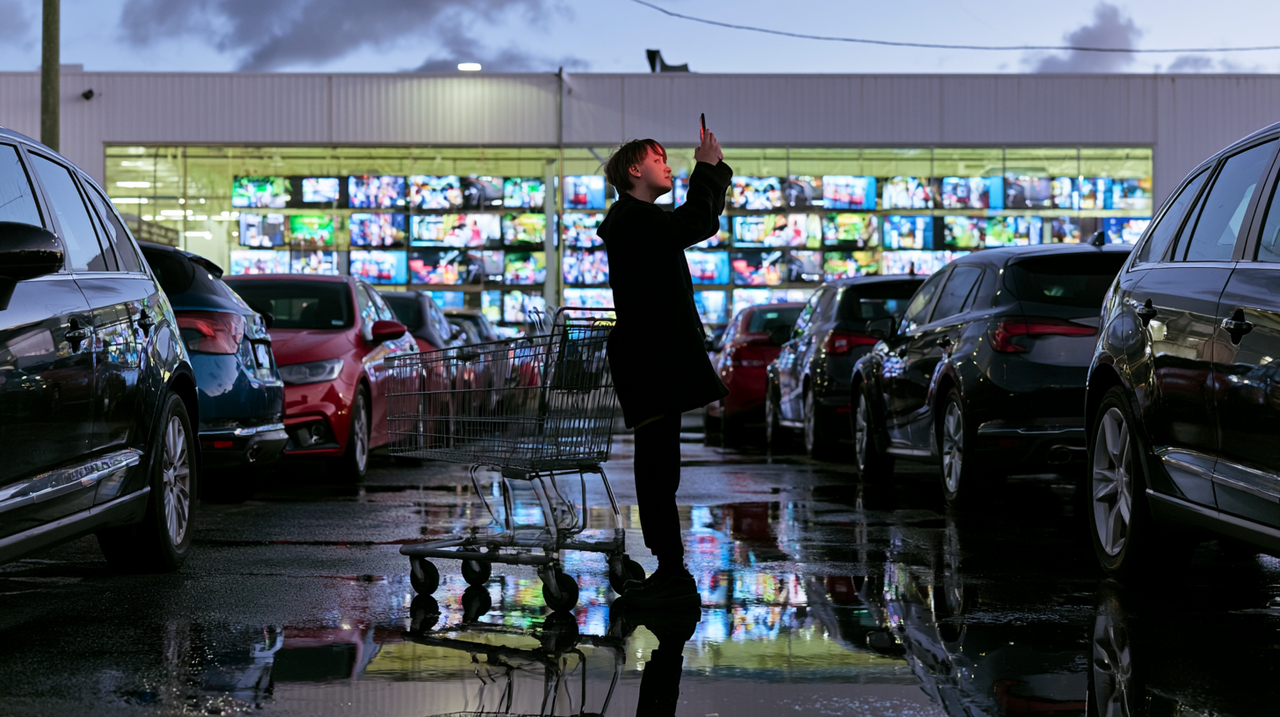
The clearest way to feel surveillance pricing is to watch a price move not because the market shifted, but because you did. In 2019 investigative journalists at the Minneapolis television station KARE 11 documented exactly this on the Target retailer's app. A Samsung 55-inch smart television was listed at 499.99 dollars when a shopper browsed it from home. When the same shopper drove into the car park of a Target store, the app's price for the identical set leapt to 599.99 dollars. The variable was not supply, demand or time of day. It was geolocation: the app could tell the customer was now physically present, less likely to walk away empty-handed, and it priced that captivity at a hundred dollars. The television was not a fluke. Reporters picked ten products at random, from toys to bottled water to vacuum cleaners, and four of them rose in price once they were inside the shop: an Apple Watch band by two dollars, a Shark vacuum cleaner by forty, a Graco child car seat by seventy-two and a Dyson vacuum cleaner by a hundred and forty-eight. The spread is the instructive part. A system that moves a watch strap by two dollars and a vacuum cleaner by a hundred and forty-eight is not applying a blunt in-store surcharge; it is judging, item by item, what the fact of your presence is worth. Target adjusted the app after the investigation, but the episode remains a near-perfect demonstration of the mechanism, because the only thing that changed about the customer was how committed they appeared.
The principle scales far beyond a single retailer's app. The same season the FTC published its findings, the practice was visibly spreading into one of the most price-sensitive markets there is: air travel. In July 2025, the airline Delta confirmed it was expanding the use of artificial intelligence to set fares, working with an Israeli startup called Fetcherr, with the stated ambition of using AI to price a fifth of its domestic network by the end of the year. Three United States senators, Mark Warner, Ruben Gallego and Richard Blumenthal, wrote to the airline demanding answers. Their letter, dated 22 July 2025, warned of prices tailored to an individual consumer's willingness to pay, and cited Fetcherr's chief executive describing the company's use of all the data it could get its hands on. The senators borrowed Khan's most vivid illustration of the danger: a system that charges a higher fare because it knows the traveller just had a death in the family and needs to fly across the country at any cost. Pricing, in other words, calibrated not to the seat but to the customer's pain point, the precise moment of maximum desperation. Delta denied that it used personal data to set individual fares, insisting the AI forecast demand and market conditions rather than identifying any one passenger's willingness to pay. The denial is instructive, and we will return to it, because the more telling fact is not whether Delta is doing it today but that the infrastructure to do it now exists and is being marketed as a route to extraordinary profit.
Who Actually Said Yes
Strip the practice to its foundation and the question that will not go away is one of consent. Somewhere in the architecture of surveillance pricing there is supposed to be a moment at which the customer agreed to be priced as an individual, to have their financial circumstances inferred and held against them, to be charged according to a secret model of who they are. Find that moment. It does not exist.
What exists instead is a chain of consents to other things entirely. You agreed, in some buried clause, to let an app use your location, ostensibly to find your nearest store. You agreed to cookies so the site would remember your basket. You agreed to a loyalty card so you could collect points. You agreed to terms of service no one reads, in exchange for a service you actually wanted. At no point in any of this did a screen ask whether you would consent to those signals being fused into an estimate of your maximum tolerable price, and at no point would a rational person have said yes if it had. The Federal Trade Commission, examining the third-party intermediaries that build these systems, found a market drawing on data both volunteered by consumers and, more troublingly, inferred about them from first and third-party sources. Inference is the crucial word. You cannot meaningfully consent to a conclusion drawn about you that you never disclosed and may not even know is true.
This is what consumer advocates and privacy lawyers mean when they describe surveillance pricing as a black box. The customer cannot see what data the company holds, cannot see how the price was reached, and cannot see what other shoppers are paying for the same item at the same moment. The ordinary apparatus of fairness, the ability to know the reason for a decision and to contest it, simply never engages, because the reason is locked inside a proprietary model and the decision arrives disguised as a fact of nature. A price, to the person looking at it, appears to be something the world has handed down. It does not look like a profile, an accusation or a bet. But that, increasingly, is what it is.
The asymmetry is total. The seller knows the product's cost, the price it is showing you, the prices it is showing everyone else, the model that produced your figure and the data that fed the model. You know one number. You cannot tell whether personalisation is even happening, because a personalised price and a public one look identical: both are simply digits on a screen. The market was supposed to be an information system, aggregating dispersed knowledge into a public signal that let strangers coordinate their behaviour. Surveillance pricing inverts that function. It turns the price from a signal the market sends to you into a signal the seller secretly extracts from you, while you carry on reading the number as though it still carried its old, shared meaning.
What the Models Choose to Notice
There is a comforting story the industry tells about all this, and it deserves a fair hearing before it is dismantled. In theory, the argument runs, the ability to price each customer individually can expand a market rather than merely milk it. A seller who can identify price-sensitive buyers can profitably offer them a discount that brings them into the market, while charging more to those who can comfortably pay. On a whiteboard this looks almost progressive, a kind of automated means-testing that funds cheaper goods for the poor out of the wallets of the rich.
The world runs the logic in reverse. The signals a machine-learning system finds most useful for estimating willingness to pay are, with grim reliability, the same signals that track vulnerability and constraint. A shopper in an area with no rival supermarket within reach has fewer alternatives, and an algorithm can learn to read that absence of competition and charge for it. A household ordering nappies and repeat prescription items has predictable, inelastic demand, and inelasticity is precisely what a pricing model is built to detect and exploit. The customer with limited mobility, least able to drive between shops to compare, is the one least able to escape and therefore, on the model's own cold accounting, the one most worth charging extra. The system does not optimise for fairness. It optimises for revenue. The people with the least room to push back are exactly the people from whom there is most to extract.
A price built from inferred willingness to pay is, in the end, a price built from a model of who you are, and the characteristics that feed such a model are chosen for their predictive power, not their moral acceptability. If income predicts what you will pay, the model uses income, and if it can infer your income from your postcode, your phone and the brands you buy, it is charging you according to your wealth without ever asking your salary. If household size predicts inelastic demand for essentials, the model uses household size, which can mean that a larger and often poorer family faces systematically higher prices on the very goods it cannot do without. Some of these are characteristics that anti-discrimination law has spent a century learning to treat as illegitimate grounds for differential treatment. None is one that an ordinary shopper would knowingly hand over as a reason to be charged more for milk. And here the loyalty penalty completes its circle, for the most predictive signal of all is your own history. The longer the relationship, the richer the profile, the more confident the model becomes about exactly how much you will bear. Devotion, fed into the machine, comes out as leverage.
The Year the Law Began to Notice
For most of this story the law was simply absent. There is still no comprehensive federal statute in the United States governing surveillance pricing, and enforcement has leaned on the general prohibition of unfair or deceptive practices in Section 5 of the FTC Act, an authority written long before anyone imagined a retailer inferring your income from your shopping habits. That gap has begun to narrow at its edges rather than its centre. On 14 April 2026 the Commission issued an advance notice of proposed rulemaking on unfair and deceptive fee practices in online food and grocery delivery, taking comments until 18 May, and among its questions was whether platforms tell customers when the price in front of them has been personalised; the agency has also signalled work towards a policy statement on when failing to disclose the use of personal data to set an individual price becomes a Section 5 problem. That is rulemaking about disclosure in a single sector, not a prohibition, and it leaves the federal position roughly where it has always been.
The states moved faster, and the first of them moved earlier than the headlines of 2026 suggest. New York's Algorithmic Pricing Disclosure Act took effect on 10 November 2025, obliging a seller that uses personal data to set a price to say so, clearly and at the moment of the price, in a notice reading THIS PRICE WAS SET BY AN ALGORITHM USING YOUR PERSONAL DATA, with civil penalties of up to a thousand dollars for each violation. The same Act bars the use of protected-class data where the effect is a price different from the one offered to others, and Attorney General Letitia James issued a public warning to New Yorkers as it came into force. What changed in 2026, then, was not that the law noticed surveillance pricing for the first time. It was what the law began to ask of it: the move from compelling a seller to confess the practice to forbidding the practice outright. And the centre of gravity is the food on your table.
Maryland moved first on prohibition. On 28 April 2026, Governor Wes Moore signed House Bill 895, the Protection From Predatory Pricing Act, the first law in the country to restrict surveillance pricing in the grocery sector. It takes effect on 1 October 2026. The statute prohibits food retailers above a certain size and third-party delivery services from using a consumer's personal data to set individualised prices, and pairs this with a rule requiring that displayed prices remain fixed for at least one business day, a direct check on the prospect of electronic shelf labels being used to surge the price of essentials minute by minute. Violations are treated as unfair or deceptive trade practices, carrying civil penalties of up to 10,000 dollars for a first offence and 25,000 dollars for repeat conduct. Enforcement rests solely with the state attorney general, who must give a company 45 days to cure a violation before acting, and consumers have no right to sue on their own behalf.
Those limits are not incidental, and Consumer Reports, while welcoming the law, criticised what it called weak enforcement provisions. Analysts at the International Association of Privacy Professionals catalogued the loopholes plainly: the ban bites only on prices customised for an individual, not on prices set for narrow segments of consumers; it establishes no baseline or standard price against which a personalised figure could be measured; and it explicitly exempts loyalty programmes, the very mechanism through which, in the British insurance saga, the loyalty penalty was built. A law that targets surveillance pricing while carving out loyalty schemes is a law with a gap shaped exactly like the original problem.
Connecticut went broader in scope and slower in delivery. Its Senate Bill 4 passed by overwhelming margins, 141 to 6 in the House and 31 to 4 in the Senate, Governor Ned Lamont signed it on 27 May 2026, and it is now Public Act 26-64. Where Maryland confined itself to groceries, Connecticut's law defines surveillance pricing as setting a customised price for a consumer or group of consumers based on personal data collected through any technology, and bans it across retail sellers and third-party delivery services. Businesses outside those categories that price this way are not forbidden to do it, but must label it, in wording substantially similar to THIS PRICE WAS INCREASED USING YOUR PERSONAL DATA, which is New York's device sharpened by a verb. The act also reaches into the machinery that makes surveillance pricing possible, establishing a state registry of data brokers, building towards a single universal mechanism by which a consumer can demand deletion of their records across the whole industry, and prohibiting the sale of precise geolocation data, the very signal that pushed the price of a television up in a Target car park. By attacking the data supply rather than only the pricing output, Connecticut aimed at the root as well as the fruit. Its timetable, though, is staggered, and the pricing ban is the slowest-arriving piece of it: the privacy act amendments, including the prohibition on selling precise geolocation, begin on 1 October 2026, data brokers must register from 1 January 2027, the surveillance pricing restrictions do not bite until 1 July 2027, and the universal deletion mechanism is not in working use until late 2028. The practice was outlawed in Connecticut with more than a year's notice.
Connecticut also carved out much of what Maryland carved out. Loyalty and rewards programmes are permitted provided their terms are clearly posted and available to every eligible consumer, as are discounts offered to retain a customer, and price differences traceable to legitimate factors: delivery cost, timing, supply and demand, pricing errors, network outages. Insurance-licensed entities sit outside the pricing provisions altogether, as do credit decisions governed by the Fair Credit Reporting Act and the Equal Credit Opportunity Act. The loyalty carve-out, then, is not a Maryland eccentricity. It is a defining feature of this first generation of statutes, and it is the most awkward thing about them, because the loyalty penalty is where the story started. Britain spent the better part of a decade establishing that a rewards relationship is precisely the instrument through which a seller learns to price your captivity, and the first American laws against surveillance pricing have written that instrument into the list of things they do not cover.
New Jersey came third, and went at the thing the other two left alone. Governor Mikie Sherrill signed the Fair Price Protection Act on 23 July 2026, banning personalised algorithmic pricing based on personal data, browsing history, location or protected-class status in the grocery sector, while preserving, as its predecessors did, loyalty programmes and bona fide group discounts. It takes effect on 1 August 2027. What makes it the most consequential of the three is not its reach but its enforcement. Maryland and Connecticut hand the whole job to a state attorney general; New Jersey is the first jurisdiction in the country to give the shopper a weapon of their own. A consumer who believes they were charged more than others for identical groceries because of their personal data may sue under the New Jersey Consumer Fraud Act, individually or as a class, and recover treble damages where the conduct was wilful. The attorney general may still sue as well, for actual damages or fifty thousand dollars for each violation, whichever is the greater. That alters the arithmetic of compliance in a way a cure period and a capped penalty do not, because it turns an invisible practice into a litigable one.
These three are the leading edge of a wave rather than its conclusion, and the wave is now large enough to measure. More than forty bills across at least twenty-four states were introduced in 2026 to regulate personalised algorithmic pricing, already outpacing the whole of 2025. New York, having gone first on disclosure, is poised to go further: its One Fair Price Act, which would ban the practice outright rather than merely oblige a seller to admit to it, passed the legislature on 10 June 2026 and awaits the governor's signature, carrying penalties of five thousand dollars for a first offence and twenty thousand for those that follow. Vermont has taken a narrower route, permitting electronic shelf labels but barring price increases within the day except to correct a documented error, which is Maryland's one-business-day freeze rewritten as a rule about the shelf rather than the shopper. Not all of it will land. The wider point is that the law is responding at the level of state lines while the technology operates at national, indeed global, scale. The result, for the time being, is a map in which the legality of being charged a personalised price for a tin of beans depends substantially on which side of a state border you happen to be standing, and across most of the country the practice remains lawful, undisclosed and unmeasured.
Eight Companies and the Industrial Scale of Knowing
The clearest measure of how far this has already gone came when the FTC stopped theorising and started compelling. In July 2024, using its 6(b) authority, which lets it order companies to hand over internal documents whether or not it suspects wrongdoing, the agency issued orders to eight firms that sit, mostly unseen, in the machinery between retailers and shoppers: the payments network Mastercard, the consultancies Accenture and McKinsey and Company, the banking group JPMorgan Chase, and the pricing and personalisation specialists Revionics, Bloomreach, PROS and Task Software. The orders sought to map an opaque market in which intermediaries claim to use advanced algorithms, artificial intelligence and personal information, location, demographics, credit history, browsing and shopping behaviour, to categorise individuals and set a targeted price for each. The Commission voted unanimously to issue them.
When the preliminary findings landed in January 2025, the picture was not of a fringe experiment but of an established industry. The intermediaries examined were, between them, working with at least 250 clients, selling everything from groceries and clothing to health and beauty products and hardware. The capability to price an individual, in other words, is not waiting to be invented. It has been built, sold and installed at scale, wired into the systems of hundreds of well-known sellers. This is why the denials of any particular company, Delta insisting it does not use personal data for fares, the grocery platform Instacart insisting it merely assigns customers to random pricing cohorts, miss the point that industry analysts keep returning to. Instacart's own year makes the point for them. On 18 December 2025 it agreed to pay sixty million dollars in consumer refunds to settle an FTC lawsuit alleging deceptive delivery-fee and subscription practices, and was reported at the same time to be winding up its AI-based price testing. Neither fact is a finding that it ever charged anyone a surveillance price. Both establish that it had the apparatus and the appetite, and that a federal action was what changed its behaviour. Once the machinery is in place, the difference between not profiling you today and profiling you tomorrow is a single configuration change. The capacity is the danger. A loaded weapon does not need to be aimed at you to have altered the room you are standing in.
When a Price Stops Being a Public Fact
It is tempting to frame all of this as a story about money, about whether you personally end up paying a few pounds more or less. That framing is too small. The deeper casualty of surveillance pricing is something most of us have never had to think about because we have never lived without it: the public price, the single shared number that anyone can see, compare, refuse and undercut.
Consider what that shared number does. When a price is public, a shopper who thinks it too high can walk to a competitor. A rival firm that spots an inflated price can undercut it. A journalist can report it, a regulator can investigate it, and a neighbour can compare notes over the fence. The discipline of the market, the pressure that is supposed to keep prices honest, depends entirely on the price being a fact that more than one person can see. Surveillance pricing dissolves that fact. When your price is calculated for you alone, invisible to everyone else including the competitors, journalists and regulators who might otherwise discipline it, the price becomes a private transaction between you and a model. There is nothing for a rival to undercut, because they cannot see it. There is nothing for you to refuse on principle, because you cannot tell whether anyone else would have been charged the same. The very mechanism that makes markets self-correcting is switched off, quietly, one personalised quote at a time.
This is why disclosure remedies, useful as they are, feel inadequate to the scale of the thing. The European Union, through its Omnibus Directive, already requires a trader to tell a consumer when a price has been personalised on the basis of automated decision-making, and since November 2025 New York has required much the same in blunter language. That requirement has already survived the challenge you would expect. The National Retail Federation sued to have the New York label struck down on First Amendment grounds, arguing the state was compelling retailers to recite a misleading, government-scripted opinion about their own conduct. On 8 October 2025 the United States District Court for the Southern District of New York dismissed the case, holding the compelled disclosure plainly factual and not rendered controversial merely because the regulated business would rather not make it. That is a more important precedent than its narrow subject suggests, because it settles the proposition that a company has no constitutional right to conceal that it priced you from your own data. But being told that a price has been tailored to you, without being told from what data, by what logic, or to what end, restores only a sliver of the lost information. It is like being informed that a stranger has formed an opinion of your character, without being told what the opinion is or what evidence it rests on. The grievance is not merely that the price was personalised. It is that it was built from a portrait of you that you did not sit for, that you cannot see, that you cannot correct, and that may be wrong, unfair, or assembled from precisely the characteristics you would have refused to be judged by.
The ordinary intuition that there is something improper here is not economic naivety. It is an accurate perception that a hard-won feature of how markets are supposed to work is being removed, with nothing adequate put in its place. People do not, on the whole, object to a shop making a profit. They object to being individually appraised by a machine and charged according to a secret estimate of how much they can be made to bear, on the basis of data they did not knowingly surrender, with no way to see the number anyone else is paying. That objection is close to universal, and it is the bedrock on which any durable response will be built.
Switching the Lights On
So what is the customer at the invisible checkout actually to do? Honesty requires conceding that individual self-defence is mostly futile. Clearing your cookies, browsing in a private window, comparing prices across two devices: these are the folk remedies of a cruder era. The man who deleted his cookies on Amazon in 2000 found a cheaper DVD because the discrimination then was primitive. It is not primitive now, and a system that fuses hundreds of inferred signals cannot be reliably evaded by a shopper toggling settings. A person should not have to conduct counter-surveillance against their own grocer to be charged a fair price for bread, and the burden of evasion cannot honestly be placed on them.
The more truthful answer is that this is a collective problem requiring collective tools, and the encouraging part of the story is that those tools are beginning, unevenly, to appear. They arrive in three reinforcing layers. The first is sunlight: the dogged work of investigators, researchers and regulators in dragging an invisible practice into view, because surveillance pricing is a practice that struggles to survive being seen. The journalists who watched a television's price climb in a car park, the FTC compelling eight companies to open their books, the senators demanding answers from an airline, are all performing the same act of making the hidden visible so that it can be argued about. The second layer is disclosure as a legal default, the European and now the New York requirement to declare when a price has been personalised, imperfect but better than silence, and now tested and upheld in court. The third, on which the others depend, is substantive law of the kind Maryland, Connecticut and New Jersey enacted in 2026: rules that do not merely require a disclosure to be ignored but forbid the use of certain data and inferences to price the essentials of life, and give an enforcer real teeth. The loopholes in those first laws, the loyalty-scheme carve-out, the silence about consumer segments, the long lead times before the bans actually bite, show how much remains to be built. One of them has already been closed. The most cited weakness of the Maryland and Connecticut statutes was that they left the shopper with nowhere to go, and New Jersey's private right of action, treble damages and all, answers that objection directly. Everywhere else the enforcement gap remains what it was: one attorney general, a cure period, and a civil penalty a national retailer can treat as a rounding error.
What sets the direction of travel is a fact no amount of optimisation can engineer away. People do not want to be charged according to a secret guess about their desperation, and they do not want their loyalty read as a vulnerability to be priced. The British loyalty penalty was banned not because the maths was wrong but because the public found the principle intolerable once it was named. The same naming is now happening to its digital successor, in legislatures, in regulators and in newsrooms, and it is happening because the practice depends, in the end, on staying unnamed.
That naming is no longer a forecast. On 4 August 2026, two days before this piece went to press, the Senate Judiciary Subcommittee on Crime and Counterterrorism held a hearing titled Your Data, Their Profit: The Consumer Cost of AI Surveillance Pricing. Senator Josh Hawley chaired it, Senator Dick Durbin sat as ranking member, Lindsay Owens of the Groundwork Collaborative gave evidence, and Hawley opened by naming companies out loud: Staples, Target, Lyft, Amazon. Durbin, on a day when the two parties agreed about very little else, said he had little to add to it. A hearing is not a law, and nothing said in that room obliges anyone to change a single price. But the practice has now been described in public, on the record, by people who disagree about nearly everything, which is the condition under which a thing that survives on obscurity begins to lose.
The next time you confirm an order and the total looks about right, hold for a second the thought that you can no longer verify it is right, because right has quietly stopped meaning the same thing for everyone. The price you see may be the price everyone sees. It may be the price reserved for you alone, the loyal customer the system has finally finished learning. That you can no longer tell the difference is the whole of the problem. Reclaiming the ability to tell, the right to a price that is a public fact rather than a private verdict, is the whole of the answer.
References
- Federal Trade Commission. “FTC Issues Orders to Eight Companies Seeking Information on Surveillance Pricing.” 23 July 2024. https://www.ftc.gov/news-events/news/press-releases/2024/07/ftc-issues-orders-eight-companies-seeking-information-surveillance-pricing
- Federal Trade Commission. “FTC Surveillance Pricing Study Indicates Wide Range of Personal Data Used to Set Individualized Consumer Prices.” January 2025. https://www.ftc.gov/news-events/news/press-releases/2025/01/ftc-surveillance-pricing-study-indicates-wide-range-personal-data-used-set-individualized-consumer
- Federal Trade Commission. “Issue Spotlight: The Rise of Surveillance Pricing.” January 2025. https://www.ftc.gov/system/files/ftc_gov/pdf/sp6b-issue-spotlight.pdf
- Fast Company. “Lina Khan says the FTC is investigating surveillance pricing. Here's how that could affect you.” September 2024. https://www.fastcompany.com/91195551/lina-khan-ftc-federal-trade-commission-chair-surveillance-pricing-explained-what-is-it
- Citizens Advice. “Citizens Advice issues super-complaint as loyal customers continue to be penalised by over £4 billion a year.” 28 September 2018. https://www.citizensadvice.org.uk/about-us/media-centre/press-releases/citizens-advice-issues-super-complaint-as-loyal-customers-continue-to-be-penalised-by-over-4-billion-a-year/
- Competition and Markets Authority. “Loyalty Penalty: Response to super-complaint.” 19 December 2018. https://assets.publishing.service.gov.uk/government/uploads/system/uploads/attachment_data/file/766795/Loyalty_Penalty.pdf
- Financial Conduct Authority. “FCA confirms measures to protect customers from the loyalty penalty in home and motor insurance markets.” 28 May 2021. https://www.fca.org.uk/news/press-releases/fca-confirms-measures-protect-customers-loyalty-penalty-home-motor-insurance-markets
- Which?. “Despite insurance 'loyalty penalty ban', existing customers are still being disadvantaged versus new customers, Which? finds.” January 2024. https://www.which.co.uk/policy-and-insight/article/despite-insurance-loyalty-penalty-ban-existing-customers-are-still-being-disadvantaged-versus-new-customers-which-finds-atL8s9k5bLmz
- MoneySavingExpert. “Direct Line Group to pay £30 million in refunds after overcharging some car and home insurance customers.” September 2023. https://www.moneysavingexpert.com/news/2023/09/direct-line-compensation/
- KARE 11. “Target changes app after KARE 11 investigation.” 2019. https://www.kare11.com/article/money/consumer/target-changes-app-after-kare-11-investigation/89-40ee0e76-9a0f-425d-93b0-b0eb89150f6c
- United States Senate, Office of Senator Mark R. Warner. “Warner, Colleagues Demand Answers from Delta on Use of AI to Set Individualized Ticket Prices.” 22 July 2025. https://www.warner.senate.gov/public/index.cfm/2025/7/warner-colleagues-demand-answers-from-delta-on-use-of-ai-to-set-individualized-ticket-prices
- New York State Office of the Attorney General. “Attorney General James Warns New Yorkers About Algorithmic Pricing as New Law Takes Effect.” November 2025. https://ag.ny.gov/press-release/2025/attorney-general-james-warns-new-yorkers-about-algorithmic-pricing-new-law-takes
- Akerman LLP. “Regulating Protected Class Data and Algorithmically Derived Data: New York's Algorithmic Pricing Act Takes Effect.” November 2025. https://www.akerman.com/en/perspectives/regulating-protected-class-data-and-algorithmically-derived-data-new-yorks-algorithmic-pricing-act-takes-effect.html
- Troutman Pepper Locke. “New York Algorithmic Pricing Disclosure Act Upheld as Constitutional.” October 2025. https://www.troutmanprivacy.com/2025/10/new-york-algorithmic-pricing-disclosure-act-upheld-as-constitutional/
- Federal Trade Commission. “Instacart to Pay $60 Million in Consumer Refunds to Settle FTC Lawsuit Over Allegations it Engaged in Deceptive Tactics.” 18 December 2025. https://www.ftc.gov/news-events/news/press-releases/2025/12/instacart-pay-60-million-consumer-refunds-settle-ftc-lawsuit-over-allegations-it-engaged-deceptive
- The Washington Times. “Instacart to pay $60 million in FTC settlement, end AI-based price tests.” 22 December 2025. https://www.washingtontimes.com/news/2025/dec/22/instacart-pay-60-million-ftc-settlement-end-ai-based-price-tests/
- Federal Trade Commission. “FTC Seeks Public Comment on Unfair and Deceptive Fee Practices in Online Food and Grocery Delivery Services.” 14 April 2026. https://www.ftc.gov/news-events/news/press-releases/2026/04/ftc-seeks-public-comment-unfair-deceptive-fee-practices-online-food-grocery-delivery-services
- Office of Governor Wes Moore. “Governor Moore Signs Legislation to Protect Marylanders' Pocketbooks in Grocery Stores.” 28 April 2026. https://governor.maryland.gov/news/press-releases/governor-moore-signs-legislation-protect-marylanders-pocketbooks-grocery-stores-safeguard-voting
- International Association of Privacy Professionals. “Maryland enacts a first-of-its-kind surveillance pricing law, but there are loopholes.” May 2026. https://iapp.org/news/a/maryland-enacts-a-first-of-its-kind-surveillance-pricing-law-but-there-are-loopholes
- Consumer Reports. “Consumer Reports statement on the signing of Maryland's Protection from Predatory Pricing Act into law.” April 2026. https://advocacy.consumerreports.org/press_release/consumer-reports-statement-on-the-signing-of-marylands-protection-from-predatory-pricing-act-into-law/
- Covington and Burling LLP, Inside Privacy. “Connecticut Enacts Omnibus Privacy Law.” June 2026. https://www.insideprivacy.com/state-privacy/connecticut-enacts-omnibus-privacy-law/
- Skadden, Arps, Slate, Meagher and Flom LLP. “New Jersey Enacts First-in-the-Nation Private Right of Action for Surveillance Pricing.” July 2026. https://www.skadden.com/insights/publications/2026/07/new-jersey-enacts-first-in-the-nation
- Covington and Burling LLP, Inside Privacy. “State Lawmakers Introduce New Wave of Personalized Algorithmic Pricing Bills.” 2026. https://www.insideprivacy.com/artificial-intelligence/state-lawmakers-introduce-new-wave-of-personalized-algorithmic-pricing-bills/
- Holland and Knight LLP. “Surveillance Pricing and Dynamic Pricing: What General Counsels Need to Know.” August 2026. https://www.hklaw.com/en/insights/publications/2026/08/surveillance-pricing-and-dynamic-pricing-what-general-counsels
- United States Senate Committee on the Judiciary. “Your Data, Their Profit: The Consumer Cost of AI Surveillance Pricing.” 4 August 2026. https://www.judiciary.senate.gov/committee-activity/hearings/your-data-their-profit-the-consumer-cost-of-ai-surveillance-pricing

Tim Green UK-based Systems Theorist & Independent Technology Writer
Tim explores the intersections of artificial intelligence, decentralised cognition, and posthuman ethics. His work, published at smarterarticles.co.uk, challenges dominant narratives of technological progress while proposing interdisciplinary frameworks for collective intelligence and digital stewardship.
His writing has been featured on Ground News and shared by independent researchers across both academic and technological communities.
ORCID: 0009-0002-0156-9795 Email: tim@smarterarticles.co.uk
Listen to the free weekly SmarterArticles Podcast
✝️
from  💚
💚
Our Father Who art in Heaven Hallowed be Thy name Thy Kingdom come Thy will be done on Earth as it is in Heaven Give us this day our daily Bread And forgive us our trespasses As we forgive those who trespass against us And lead us not into temptation But deliver us from evil
Amen
Jesus is Lord! Come Lord Jesus!
Come Lord Jesus! Christ is Lord!