Want to join in? Respond to our weekly writing prompts, open to everyone.
Roadside Assistance Near You 24/7 Help | Uriel'S Towing LLC
Anonymous
Getting stranded on the side of the road is something no driver ever plans for. Whether it’s a flat tire, a dead battery, or an unexpected engine issue, these problems always seem to happen at the worst possible time. You might be on your way to work, picking up your kids, or traveling late at night. In those stressful moments, having access to fast and reliable roadside assistance makes all the difference.
When your vehicle stops working, you don’t just need help — you need help right away. That’s where Uriel'S Towing LLC steps in. With dependable 24/7 roadside assistance, you can feel confident knowing professional support is only a phone call away, no matter where you are or what time it is.
What Is Roadside Assistance and Why Is It Important?
Roadside assistance is a service designed to help drivers when their vehicle breaks down or becomes unsafe to drive. Instead of being stuck for hours waiting for help, trained professionals arrive quickly to fix the issue or safely transport your vehicle if needed.
This type of service is important because car problems can happen to anyone. Even well-maintained vehicles can experience unexpected issues. From simple fixes to more complex problems, having access to emergency roadside service ensures you’re never alone during a breakdown.
24/7 Roadside Assistance for Any Situation
Car troubles don’t follow a schedule. They can happen early in the morning, during rush hour traffic, or late at night on a quiet highway. That’s why 24/7 roadside assistance is essential.
Uriel'S Towing LLC provides round-the-clock service to make sure drivers always have access to help. No matter the time or weather conditions, their team is ready to respond quickly and professionally.
Having 24-hour support means:
- You don’t have to wait until morning for help
- You stay safer in dangerous roadside situations
- You reduce stress during unexpected vehicle problems
Common Situations That Require Emergency Roadside Service
Vehicle breakdowns can happen in many ways. Some of the most common reasons drivers call for emergency roadside service include:
Flat Tires
A flat tire can leave you stranded, especially if you don’t have the tools or experience to change it yourself. Roadside technicians can quickly replace your tire with your spare or arrange further assistance if needed.
Dead Battery
A drained battery is one of the most frequent causes of breakdown assistance calls. Whether your battery died due to cold weather, leaving lights on, or an aging battery, professionals can provide a quick jump-start and get you back on the road.
Lockouts
Locking your keys inside your car is frustrating and stressful. Instead of risking damage by trying to unlock it yourself, roadside experts can safely unlock your vehicle.
Out of Fuel
Running out of gas can happen unexpectedly, especially on long trips. On-demand roadside help can deliver fuel directly to your location so you can continue your journey without delay.
Engine Trouble
If your vehicle suddenly stops running or makes unusual noises, it may need towing. Reliable roadside assistance includes safe vehicle transport to a trusted repair shop.
Fast Breakdown Assistance When You Need It Most
Breakdowns often happen in inconvenient or even unsafe locations. You might be stopped on a busy highway or a dark road. In these situations, quick response time is critical.
Uriel'S Towing LLC understands how important speed and reliability are during these moments. Their trained professionals respond promptly, assess the situation, and provide the right solution. Whether it’s a minor issue or something more serious, you can expect efficient service designed to get you back on track as quickly as possible.
On-Demand Roadside Help for Modern Drivers
Today’s drivers expect fast and convenient services. On-demand roadside help means you can request assistance whenever you need it without long wait times or complicated processes.
With professional roadside services, you receive:
- Quick dispatch to your location
- Experienced and trained technicians
- Proper tools and equipment
- Safe and reliable vehicle handling
This level of service provides peace of mind. You don’t have to worry about finding help or dealing with unreliable providers.
Highway Roadside Support for Safer Travel
Breaking down on a highway can be especially dangerous. Fast-moving traffic increases the risk of accidents, and staying inside a disabled vehicle for too long can be stressful.
Highway roadside support focuses on responding quickly and safely in high-traffic areas. The team at Uriel'S Towing LLC takes extra precautions to ensure your safety while handling your vehicle issue.
Professional support on highways includes:
- Proper safety lighting and equipment
- Quick vehicle relocation if necessary
- Secure towing when repairs cannot be done on-site
This ensures both you and your vehicle are protected in risky roadside situations.
Benefits of Choosing Professional Roadside Assistance
Some drivers try to solve car problems themselves. While minor issues can sometimes be handled independently, professional assistance offers several important benefits:
Safety
Roadside situations can be dangerous, especially at night or in bad weather. Professionals are trained to handle these risks safely.
Expertise
Experienced technicians know how to diagnose and fix common problems quickly. This reduces further damage to your vehicle.
Convenience
Instead of searching for help or waiting hours for assistance, you receive immediate support from a reliable team.
Peace of Mind
Knowing that help is always available reduces stress and anxiety when driving.
Why Choose Uriel'S Towing LLC?
When you’re searching for roadside assistance near you, you want a company you can trust. Uriel'S Towing LLC is committed to providing fast, dependable, and professional service to every customer.
Their focus is on:
- Rapid response times
- Friendly and helpful customer service
- Skilled and trained professionals
- Reliable equipment and tools
Every call is treated as a priority because they understand how stressful breakdowns can be. Their goal is simple: to get you back on the road safely and quickly.
How to Stay Prepared for Roadside Emergencies
While roadside assistance is always available, being prepared can make the situation easier. Here are a few simple tips:
- Keep your phone charged
- Store emergency contact numbers in your phone
- Carry basic emergency supplies
- Maintain regular vehicle servicing
- Pay attention to warning signs from your vehicle
Preparation combined with professional support ensures you’re never caught completely off guard.
Reliable Roadside Assistance You Can Count On
Vehicle problems are unpredictable, but your response doesn’t have to be. With dependable roadside assistance from Uriel'S Towing LLC, help is always within reach. Whether you need 24/7 roadside assistance, emergency roadside service, breakdown assistance, on-demand roadside help, or highway roadside support, you can rely on a team that puts your safety first.
Driving should be about reaching your destination with confidence. Knowing that professional help is available at any time gives you that confidence. When unexpected problems arise, trust Uriel'S Towing LLC to deliver fast, reliable, and professional roadside assistance whenever you need it most.
Internal Memo – Dread Central
from  Andy Hawthorne
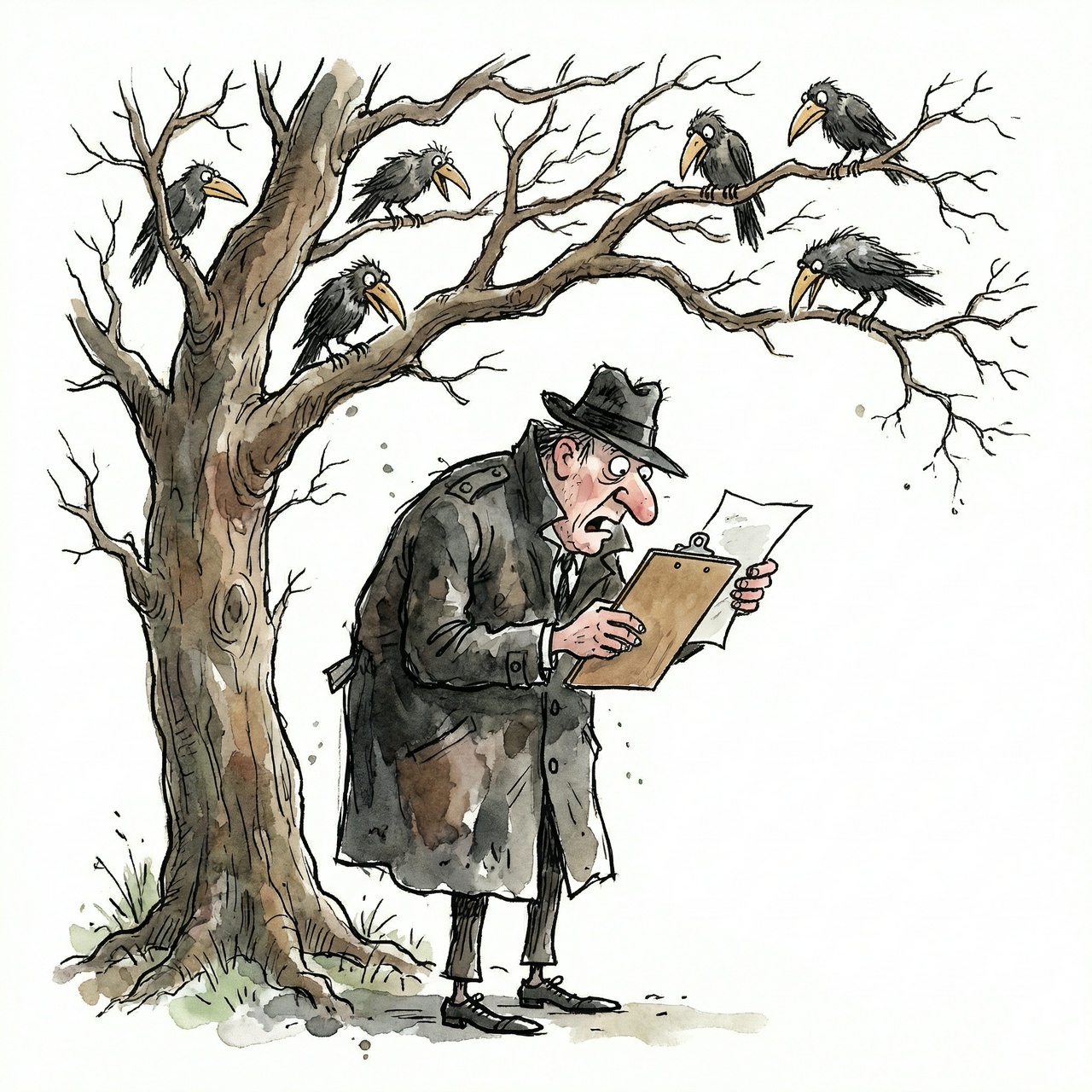
From: The Grand Commissioner (Tobias Trench)
To: All Spectral staff
Right, listen up. The Commission has noticed a distinct lack of professionalism in the park. Last week, Alfred tried to haunt a smart fridge. A smart fridge! He looked like a right muppet.
There’s an indie author called Andy who is writing a novel about you all. So, I want the park to be kept in good order. Any new arrivals should be processed straight away.
It’s called ‘Dread Central’ for a reason. Everyone dreads going there because it means they’ve snuffed it. But we don’t want that coming over in his novel. The Commission requires you all to make the whole after life thing sound like an efficient and decent departure.
Clive Smith is your Spectral Operations Manager. He will ensure that the proper paperwork is filled in. And that the Ether waiting room doesn’t get too full.
I’ve asked that Andy bloke to make sure the novel is funny. But also, to keep it bloody real. I don’t want any of Sid Smithers farts getting described in detail. Or the fact that Alfred wanders off trying to scare anyone in Piddle-on-Sea he comes across.
The Spectral Commission needs to present itself as a well organised, efficient end of life service.
End
—That’ll do it.
—Yeah, should do, Tobias.
—Wait. Should I mention it’s for the book?
—Bleeding obvious, ain’t it?
—Er, not really.
Authors note: Tobias Trench is the Grand Commissioner of the Spectral Commission that manages the afterlife. He is in the new novel I’m writing, entitled: ‘The Unfortunates’.
Hacia Toronto
 Crónicas del oso pardo
Ramón ostenta el récord nacional de llanto. Dos veces campeón, indiscutible en la federación. Pero su vida no es fácil. Este sábado defenderá nuestros colores en el campeonato mundial, en el magnífico escenario de Toronto, junto a los grandes lagos. Qué gran momento.
Una meta difícil, pero a su alcance.
Llorar en competición no es fácil. Los árbitros analizan muchos detalles. Las variables más significativas son: la duración, el tempo, la frecuencia y el gesto. Este último es clave. Los expertos dicen que es el espíritu del llanto; sin gesto, el llanto no sería un arte.
Mientras el resto de los mortales consideramos que llorar es una tragedia, en la alta competición el llanto es un arte de primerísimo nivel; y muy bien pagado. En el mundial del llanto, hay firmas de esponsorización que ofrecen millones por anunciar un colirio de ojos fabricado por un gran laboratorio, o cremas para cubrir las ojeras, casas de moda y ropa deportiva que diseñan pañuelos, bufandas, toallas y pañoletas, marcas poderosas de pañuelillos de usar y tirar, todo esto sin descontar los derechos de transmisión, aparición en espectáculos, telenovelas, películas y series duras, especializadas en la gran industria de la lágrima. En Toronto van a estar los pesos pesados. No se puede ir a improvisar.
Pero Ramón estaba pasando malos momentos. Desde hacía unos días, cuando empezaba a llorar le daba un ataque de risa, y mientras la madre -su fiel mánager- le pedía que se centrara, que expulsara el aire, que salivara o parpadeara tres veces, Ramón más se reía, soltaba carcajadas a chorro y era incapaz de articular el gesto, ni ventilar lo suficiente para mantener el tempo y la frecuencia.
Un influencer filtró la noticia y la federación se apresuró a tomar cartas en el asunto.
-Ramón -le dijo el presidente-, no nos puedes fallar, piensa en tu afición. Tienes que inundar Toronto. El país está contigo.
-Lo sé -dijo Ramón-, pero estoy acabado. Me veo tan deprimido, que no puedo sino reír. Reír y reír, qué desgracia.
Difícil de explicar
Lo primero que quiero dejar claro es que me hago cargo de que hay personas que en esta sociedad no encajan del todo. Yo no veo ningún problema en interactuar con ellas. Desde mi niñez me he topado con personas problemáticas. Suelo aplicar la virtud de la paciencia, para que las situaciones no me desborden. En esto estoy en paz conmigo mismo y quiero que conste. No soy un majadero que diría que lo hago como un sacrificio. Lo hago con gusto para que todos nos sintamos bien. Pero hay situaciones, y situaciones. Paso al meollo del asunto, si es que puedo.
Mis amigos, Pedro y Pablo, aunque se llaman como los apóstoles, a veces no se pueden ver. No sé qué hacer con ellos. Yo los aprecio, cada uno por su lado son personas muy válidas, pero juntos son un desastre, por lo menos es lo que yo veo.
No es fácil darse cuenta del momento en el que empiezan los enredos.
Estamos tranquilos conversando, que si esto, que si aquello, todo bien. Pero luego Pablo dice algo y noto que Pedro se va poniendo como tonto, no dice nada y ahí empieza todo. Se desencadena la mala onda.
Ponerse tonto y generar malas vibras es lo mismo, es quedarse como un zombie mirando hacia otro lado, y si no es uno es el otro, Pablo o Pedro, Pedro o Pablo. Luego ambos; cuando se quedan mudos, me dejan el peso de la conversación y comprenderán por lógica que no soy Platón para hablar por los tres.
Entonces yo también me voy quedando como sin alma, con las energías desangradas, con la mirada perdida y cuando lo notan, me dicen:
-Qué pasa Tito, ¿ya estás con la depre?
Y así no es la cosa. Cuando les quiero explicar lo que me pasa, los dos se ponen de acuerdo, me interrumpen y dicen:
-Nooo, bro.
Qué bueno es caminar
Sea la situación que sea, hay que hacerle frente. Hay personas que no caminan porque no pueden, otros porque no quieren. Y hay quienes que no pueden caminar pero se esfuerzan como titanes para dar hoy un pasito, mañana otro. Hasta que pueden moverse unos metros. ¡Qué gran logro!
Yo no sé por qué la gente no camina más. Hay muchos motivos para hacerlo, por eso los médicos lo recomiendan.
No voy a explicar ahora los grandes beneficios que conlleva mover las dos patas para la salud física y mental. Sólo añadiré algunos detalles.
En el alba de la civilización, caminar era como ir a la escuela. Caminas y algo aprendes. Mientras más caminas, más sabes.
De niño, el momento de caminar marca el inicio de una vida de continuo aprendizaje.
-Pero los cocodrilos caminan y no han inventado el álgebra. -Que se sepa...
La diferencia está en la panorámica. No entremos en detalles, porque nos enredamos.
-Entonces los pájaros nos ganan. -No es lo mismo.
No pares, que no hay gasolina, y empuja al perro, que va lento.
Letters to E #1
from An Open Letter
Today, E broke up with me. I’ve spent the day calling her mom, my friends, and sobbing. I’m going to write out letters to her here that I won’t send her.
I’ve gone through denial and anger already today. I’m right now in bargaining. But I don’t feel that way; I feel genuine with what I have to say. I am praying that what she said and what happened was not truly what she felt. Overnight, it went from I love you, to an explosion of wanting to break up. I think it was cruel of her to ambush me by bringing three of her roommates to my house to grab her stuff, especially right before my work meeting. I don’t think that’s like her; she is kind and empathetic, and wouldn’t do some of the things she did that were excessively cruel. I am praying so hard that this isn’t actually true, but that this really is just her spiraling last night. I don’t want her to feel this way, and to feel this shitty and scared, partially because of me. I don’t think that it’s necessarily something I’m doing wrong, but I think it’s more the stuff that she is struggling with that I can help with. I know it’s not my job to I guess handle her feelings, but I love her and we are a team. I don’t want to think of a world where that’s not the case. That’s my E. I look out for her and she looks out for me. We’re in this together. Fuck I’m tearing up typing that. It kills me to think about a world where we aren’t together, but I both know that I will be ok in that world, and I just pray that she is too. I want the best for her. We have talked a lot about how it hurts her how she feels so much guilt at always being the one to fuck up and hurt me, and how I don’t fuck up the same. I don’t know how I can make her feel better about that but I will try. I love her a lot. I don’t want her to hurt. If she’s been hurting I just want to understand why and figure out how I can love her without hurting her. I’m at such a loss because I don’t know what to do. I’m not often religious but I want to beg to any higher power that she thinks of how the good times are, and how much we mean to eachother.
If I could speak to her right now, I would tell her that I’m sorry, but I cannot tell her I won’t hurt her in some way or another. If I could, if I knew what I could do to not hurt her like that, I would in a heartbeat. All I can promise is that I care about your pain just as much as mine, and I will do whatever I can to make you feel safe and secure with me. What happened hurts, but the thought of not having you in my life hurts even more. I know I am not perfect, and I know you are not perfect. You’re still my person. I know I can ask for a lot, and I’m sorry. I know I also struggle with my emotions sometimes, and know that you do too. I also know that you make me feel heard and seen and safe in so many different ways that I haven’t felt before. I apologize for not being more grateful for you. I’m realizing now that I haven’t been nearly as vocal with how much I love her, I only tell her when she is feeling like not enough. But you are so much more than enough to me E. I want to write a list of all of the things that I love about her, and things I should have said.
I love playing arena with you, and I love seeing how hyped you get when you clutch for us.
I think it’s so cute when I complain about doing bulgarians, but I take it as such a point of pride that my girlfriend has that dog in her.
The child in me swells with so much joy that I can’t express it when you ask to play chess with me. I know that it’s not fun to lose every game, even with odds, but you still take pride in it, and you’ve initiated that every time. I really love playing chess with you. I love seeing you get better so quickly and figure out things by yourself that I had to learn from someone else.
I know that it’s not a fun feeling to have someone critique your gameplay, but VOD reviewing your Lillia game was a memory I truly cherish.
Designing things has always been something really hard for me to do. My Minecraft builds always look like shit, and any time I try to make it look decent, I feel ashamed because it looks like what you probably built when you were 10. But our Minecraft world together is by far the most beautiful base I’ve ever seen. I know you’ve put in a lot of effort into designing it in your creative world, getting inspiration on Pinterest, and actually building it for us.
I like to give you shit for color-coding our chests, but I think it’s really cute.
I love the fact that I can give you shit for things, and that you take it in good fun. I’ve always wanted a partner I can lovingly make fun of.
I really love how you told me the day when the shit I gave you for your 60% keyboard was getting to you. I think our communication consistently gets better each time we talk.
I love how you give me a safe place to cry. It’s really hard for me to cry, and I have been getting more and more comfortable with it, thanks to you.
I know I can be a hard person to love. I have a lot of my walls up, and I demand a lot because I don’t know what I should expect or even ask for. You make me feel loved. Even now, even with all of the mess that’s happened, I believe that you have love for me. I understand if there is too much else that overpowers that love, and I’m not trying to guilt you; I’m just saying that the love you gave me hit my heart.
I have asked a lot of you. I haven’t always been reasonable with it, and please forgive me for it. I’m not a pro when it comes to navigating relationships. I want to break down again when I think about how much I’ve asked of you, and how it isn’t fair. I’ve piled things on repeatedly, and I haven’t given that same effort in acknowledging the things you’ve done, or making sure I wasn’t being unfair, and talking with you about that, not just when I’m hurting. It isn’t fair that it matters enough for me to ask that of you, regardless of your stresses, but not enough for me to talk about it when I’m not hurting and I feel good.
I loved explaining Palantir to you while we watched South Park together.
I would make a calendar of all the times I’ve taken photos of you with Hash cuddled up, sleeping together. He sits guard, watching over you when you nap.
I know we could have talked about it earlier, and I know we could have handled it differently. But over winter break, when you were in so much pain because of me, you endured it for my sake. I know that we both would do things differently, of course, but just knowing how much I meant to you.
I’ve had plenty of times where I’ve been mad or frustrated. A lot of those moments are during arguments we have. But when I see you crying or hurting, all of that anger I feel flushes out of my brain. I’m not going to comfort you because I feel like I have to, or like I’m putting my feelings aside, but genuinely because they dissolve when I see you hurting. You’re a part of me, and your pain is my pain. Immediately in that moment I think about if any of the stupid (or even not stupid reasons) I’m mad is worth you crying, and before I can form the thought the answer is no. I don’t comfort you because I have to, but because I want to.
I am so happy when you come with me to V’s events, since you’re much more cultured and refined, and that’s something I am so clueless about.
At the lunch with my boss and new teammate, I knew what to do a bit more with my fork, knife, and cloth because of you.
At 24 years old, I have finally learned that you hold cups with your right hand. All thanks to you, I don’t make a clown of myself at nicer places.
I ask so damn much of you, not just emotionally. I ask you to try different things, I’m stubborn with that sometimes – like with the beer I got at the Super Bowl event. You indulge me on them, even though you’re also stubborn. But I guess I matter more, and you don’t hold it against me.
When we went to Six Flags, I remember when I was filling up the Icee cup. I was fully in the wrong, and I wanted to fill up the cup with the straw in it or something dumb. You told me to do it the right way, and I was being a bitch about it, and I refused. That (rightfully) annoyed you, and then I went to do it, and I immediately realized I was in the wrong. I don’t think I even properly apologized, but you let it go. To be fully honest, if I were in your shoes, that would have stuck with me way longer than it did for you. You forgive me so much more easily, and I don’t acknowledge that enough.
Thanksgiving and that break time always hurt me so fucking badly. This is the first year I’ve felt like I’m happy to look back at it. It’s not fair that this is only one number. I’ve never felt more seen during this time. I couldn’t even put into words how much you gave me. I spent my whole life looking from the outside in, and you and your family brought me in. No matter what, I will forever be so grateful for that.
I have to choke back tears every time I think about the surprise birthday. I didn’t know a love like that was possible until then. I used to always think growing up about how being surprised for your birthday is such a level of love that I couldn’t even dream of. Having people who love you so much that you don’t even have to ask, and they want to go through all that effort just for you? The worst part is that if you ever ask, then it ruins some of that magic. Even if I mention that it’s something I would have wanted. I never once mentioned this to you, and it still happened. That magic is something I’ll forever hold.
I know that you had a shitty childhood. I know that you had a lot of things that held you back, like e-dating and VRChat. I can’t blame you for any of it, honestly. I would have done the same if I had access to them. I admire you so much for having that setback and still pushing so hard to become the person I see. Out of the blue, saying that you wanted to cut ties with your exes caught me so off guard. I have felt so much more secure since then, and I thank you for that. That was fully your initiative and a sign of the person you have grown from.
The picture on our server is when we watched Kakegurui, and you fell asleep on my chest. You look so calm and at peace, and I feel so insanely wanted and loved there.
It annoyed me at first when you cough with your mouth open, but it feels like an inside joke now.
I remember how much you hated 67 when I first mentioned it, and now it’s almost a ritual for us. Whenever I hear about it or see it, I think of you.
Mazdas, Cybertrucks, Buggies, Mach-E’s, Priuses. I’ve always joked about wanting a girlfriend who would hit me, but you hit pretty hard. (I still want it)
The road trip we had was such a core memory for me. I got mad at you, frustrated and overwhelmed, but I wouldn’t have wanted any other navigator. I don’t like long drives like that, but I’d gladly do that over and over again with you.
Whenever you laugh at “my hard so life,” I think it’s stupid, but then I see how much you giggle at it, and I then think it’s adorable.
I swear I fart more often and louder because of you. I’ve gone from silently farting in a separate room to mid-sentence trying to blow it as loud as possible, and I’ve never felt safer doing that.
You made me feel safe enough to do the bucket list thing.
We shit infront of each other. Can you think of that for a second? How incredibly safe and vulnerable you are with someone to do that. I wouldn’t imagine doing that with anyone but you.
The double-headed shower was fully worth it. I LOVE showers, and the fact that you let me hog the water on my back and never complain is so sweet of you. I’m glad we both get to have it now.
I think we’ve crossed the point where you’ve driven towards me for longer than I have for you. I really appreciate that so much. I know it’s not fun to make those drives, and I know that the gas costs a lot. I also know how stressful it is for you, especially at night, and you still make that drive. Thank you.
I’ve never had someone that I’ve trusted as much with Hash. He’s my everything, and I trust you with that.
When we cuddle together, I get to be in heaven with both you and Hash cuddling me. That’s truly heaven, I have no other words for it.
I found out recently that I could have gotten the bedjet for free. I was also on the fence for so long about getting a PS5, which was the same price as the bedjet. I still, in a HEARTBEAT, would get the bedjet 1000 times out of 1000. I get to cuddle up to you no matter what.
I’ve always wondered where lore from games comes, and I think it’s from people like you. Your Sims generations are so creative, and I wish I could go back and spend more time hearing about the other stories. I never even got to read the instagram, and that’s my fault, I should have been way more proactive the way that you’ve been for my interests.
Watching AoT in schezuan house will stick with me for so long. It freaks me out how some of your theories are dead on, and I think I did a good job of tricking you into thinking they weren’t. I hope you finish the show.
I know that Outer Wilds doesn’t seem fun, and I genuinely do not blame you at ALL for never having the urge to do that when we could be doing ANYTHING else. But you still did. And you even kept asking to do it, and remembering. You absolutely crushed me in showing interest in eachothers things.
You come with me to social events with people, and it’s so nice to have you as my oasis I can go to no matter what.
You’re the perfect blend of competitive, but also not to the point where I actually have to worry about your feelings if I beat you. I get to be competitive too, and I know we’re having fun.
You’ve so proudly posted me on your stories, your bios, and I really love having someone who wants to show me off like that.
I genuinely find your body so fucking attractive. Even without your personality behind it, I think you’re primarily hot to me. When you add in your personality, I can’t handle it sometimes.
You make me feel so fucking safe with sex. I have so much baggage there, and that’s something you’ve helped me through, and thank you so much for that.
You started therapy for me, and you even fought for it. That’s so much to ask for from someone, and I couldn’t have forced you to do it. Everyone tells me that I can’t change you, and it can only happen if you want to, and I have proof that you do. I don’t doubt that you want to.
I have had my depressive episodes, and I know that I put so much strain on us because of that. You handled them in stride and tanked it, all without making me feel guilty or like a burden, even though I absolutely was. That’s way more than I could have asked for.
I’m forcing myself to stop here because I know I’ll need sleep to not want to kill myself tomorrow morning. I will continue.
Orientierung statt Effizienz
from  EpicMind

Ich greife einen Gedanken auf, der mir seit einiger Zeit nicht mehr aus dem Kopf geht. Er stammt von Robert Spaemann, einem katholischen Philosophen, und ist ebenso schlicht wie unbequem: Bildung ist nicht Ausbildung. Ein gebildeter Mensch ist nicht einfach jemand mit viel Wissen oder mit einer gut verwertbaren Qualifikation, sondern jemand, der Zusammenhänge versteht, urteilen kann und sein Wissen in ein umfassenderes Verständnis von Welt und Mensch einordnet. Bildung, so Spaemann, ist Orientierung. Je länger ich diesen Satz mit mir herumtrage, desto deutlicher wird mir, wie sehr er quer zu vielen gegenwärtigen Debatten steht.
Wer heute über Defizite in Wissenschaft, Politik oder Medien klagt, spricht meist von fehlender Expertise, von mangelnder Professionalität oder von ungenügender Kompetenz. Das klingt zunächst plausibel. Doch bei genauerem Hinsehen beschleicht mich der Verdacht, dass diese Diagnose zu kurz greift. Fachwissen ist so verfügbar wie nie zuvor. Funktionale Fähigkeiten lassen sich erwerben, zertifizieren und laufend aktualisieren. Und dennoch bleibt ein Unbehagen. Was oft fehlt, ist nicht Information, sondern Einordnung. Nicht Können, sondern Urteilskraft. Nicht Eloquenz, sondern #Bildung.
Diese begriffliche Unschärfe ist mehr als ein akademisches Detail. Wenn Bildung und Ausbildung, Kompetenz und Orientierung, Wissen und Verstehen in Eins fallen, verändert sich stillschweigend, was wir von Menschen in verantwortungsvollen Rollen erwarten. Dann genügt es, etwas effizient zu beherrschen, ohne es in einen grösseren Zusammenhang stellen zu können. Genau an diesem Punkt gewinnt Spaemanns Unterscheidung ihre Schärfe. Sie ist ein Massstab für die Gegenwart.
Die Verwechslung
Gerade an der Debatte über generative künstliche Intelligenz zeigt sich, wie sehr wir Bildung und Ausbildung verwechseln. Vor diesem Hintergrund erscheint mir auch diese Debatte in einem anderen Licht. Meist wird die #KI als Bedrohung oder als Effizienzwerkzeug verhandelt. Entweder fürchten wir den Verlust menschlicher Fähigkeiten, oder wir feiern Produktivitätsgewinne. Beides bleibt an der Oberfläche. Denn KI adressiert zunächst Ausbildung, nicht Bildung. Sie liefert Informationen, strukturiert Texte, schlägt Lösungen vor. Was sie nicht kann, ist verstehen, urteilen oder Verantwortung tragen. Bildung lässt sich nicht automatisieren.
Und doch wäre es zu einfach, daraus eine kulturkritische Abwehrhaltung abzuleiten. Gerade in Bildungszusammenhängen kann KI, klug eingesetzt, Räume eröffnen. Nicht als Antwortmaschine, sondern als Gesprächspartnerin. Nicht als Ersatz für Erfahrung, sondern als Anlass zur Reflexion. Wenn sie dazu beiträgt, Fragen zu vertiefen, Perspektiven zu wechseln oder Denkbewegungen sichtbar zu machen, kann sie Breitenbildung unterstützen. Vorausgesetzt, wir verwechseln das Werkzeug nicht mit dem Ziel.
Zwei Stimmen
An dieser Stelle drängt sich mir eine andere Stimme auf, die in der medialen Berichterstattung und in den sozialen Medien der letzten Monate kaum zu überhören ist. Sie klingt ganz anders. Drängend, appellativ und leistungsorientiert. Ihr Kern lautet: Wer jetzt früh versteht, früh nutzt und früh adaptiert, verschafft sich einen entscheidenden Vorteil. KI wird hier nicht als Bildungsfrage, sondern als Karrierethema verhandelt. #Lernen bedeutet vor allem, schneller zu sein als andere. Wer eine Stunde pro Tag experimentiert, sich keine Scheu vor grossen Aufgaben leistet und bereit ist, Teile seiner Arbeit zu automatisieren, wird vorne mitspielen.
Ich halte diese Perspektive nicht für falsch. Sie ist realistisch, wirksam und für viele Menschen attraktiv. Sie trifft einen Nerv unserer Arbeitswelt. Und doch irritiert sie mich. Denn implizit transportiert sie ein bestimmtes Verständnis von Lernen und Bildung. Lernen wird zur Anpassungsleistung, Wissen zur Ressource und die KI zum Beschleuniger. Orientierung spielt dabei kaum eine Rolle. Entscheidend ist, ob etwas funktioniert.
Hier liegt für mich eine zentrale Spannung. Auf der einen Seite steht ein funktionales Bildungsverständnis, das auf Effizienz, Nutzen und individuelle Positionierung ausgerichtet ist. Auf der anderen Seite ein bildungstheoretisches Verständnis, das Lernen als Verhältnis zu sich selbst und zur Welt begreift. Beide Perspektiven schliessen sich nicht aus. Aber sie lassen sich auch nicht nahtlos ineinander überführen. Was verlieren wir aus dem Blick, wenn Bildung auf „Frühsein“ reduziert wird?
Was bleibt
Gerade deshalb scheint mir die Frage nach KI weniger eine technische als eine bildungstheoretische zu sein. Sie zwingt uns, unsere Begriffe zu klären. In Elternhaus, Schule und Erwachsenenbildung entscheidet sich nicht, wie leistungsfähig KI ist, sondern wie wir sie rahmen. Ob schnelle Antworten zählen oder gute Fragen. Ob Output oder Orientierung im Vordergrund steht. Ein Beispiel: Wenn Schülerinnen und Schüler mit KI einen Text schreiben, können sie entweder lernen, wie man ein Werkzeug bedient – oder wie man mit diesem Werkzeug denkt, zweifelt und urteilt. Der Unterschied liegt nicht in der Technologie, sondern in der pädagogischen Haltung.
Eine gewisse Gelassenheit hilft dabei. Technologische Umbrüche verlaufen selten gleichmässig. Sie sind fragmentarisch, widersprüchlich und oft langsamer, als es der öffentliche Diskurs vermuten lässt. Nicht alles verändert sich gleichzeitig, nicht alles sofort. Der Himmel fällt uns nicht auf den Kopf. Aber Übergangszeiten haben es in sich. Sie verlangen nach Menschen, die Zusammenhänge sehen, Unsicherheiten aushalten und Verantwortung übernehmen können. Mit anderen Worten: nach gebildeten Persönlichkeiten.
Vielleicht liegt hier der eigentliche Prüfstein der KI-Debatte. Nicht darin, wie schnell Modelle besser werden, sondern darin, ob wir unsere Unterscheidungen schärfen. Spaemanns Satz wirkt auf mich dabei wie eine Zumutung – aber vielleicht ist gerade diese Zumutung heilsam in einer Zeit, die nach schnellen Antworten verlangt. Bildung ist Orientierung. Wenn das stimmt, dann verschärft KI nicht primär ein Technikproblem, sondern ein Bildungsproblem. Und die Antwort darauf lässt sich nicht automatisieren. Sie beginnt dort, wo wir uns die Zeit nehmen, über unsere Begriffe nachzudenken.
💬 Kommentieren (nur für write.as-Accounts)
Bildquelle Pieter Bruegel d. Ä. (1525/30–1569): Grosser Turmbau zu Babel, Kunsthistorisches Museum, Wien, Public Domain.
_-_Google_Art_Project_-_edited.jpg)
Disclaimer Teile dieses Texts wurden mit Deepl Write (Korrektorat und Lektorat) überarbeitet. Für die Recherche in den erwähnten Werken/Quellen und in meinen Notizen wurde NotebookLM von Google verwendet.
Topic #Selbstbetrachtungen | #Maschinenwelten
from gry-skriver
Demokratisering av teknologi?
En av mulighetene med generativ KI jeg synes er veldig spennende er muligheten for at mennesker uten teknisk bakgrunn skal kunne lage prototyper på verktøy og produkter de savner. Det kan være snakk om verktøy tilpasset nevrodivergens eller noen som har en utfordring på jobb de vet hvordan kunne vært fikset med riktig verktøy. Kodeverktøy hvor du programmerer ved å skrive eller lese inn naturlig språk kan kanskje bidra til at flere kan bidra til å utvikle digitale produkter.
Kan “hvem som helst” nå lage en app?
Før jul testet jeg forskjellige verktøy som lar deg kode ved hjelp av en agent og som ikke krever at du setter opp fancy greier på maskinen din, aka tilpasset folk som ikke har en naturlig tilbøyelighet til å programmere. Jeg ble imponert, men tenkte det ikke helt var der at produksjonsklare apper kunne bli resultatet. Men jeg vet også at utviklingen går raskt og da jeg så reklame for Replits buildathon hvor du kan konkurrere om å levere en mobilapp laget på Replit ble jeg fristet til å delta.
Rekruttering av et offer
Jeg kan jo programmere. Hvis jeg vibekoder en app er det ikke egentlig så imponerende. Selv om jeg snakker med en KI agent kan jeg såpass mye om programmering at det ikke helt er det samme som når noen uten erfaring gjør det. Jeg kontaktet der for Oda Rygh. Hun liker å lære nye ting og har erfaring med nettdebatt. Det er nyttig i denne sammenhengen (mer om det senere).
Intro til Replit
Jeg tok en tur til Odas hjemmekontor og på et par timer var vi godt i gang på Replit. Eller det vil si, Oda var godt i gang. Det er lett å bli med på slike plattformer og hvis du er vant til chatbotter føles det ganske likt ut å skravle med et verktøy som Replit. Replit har også mange andre muligheter, som at du kan be om å bruke et spesielt rammeverk og du har også mulighet til å se på koden direkte, kjøre ting i terminalen og mye mer som utviklere liker å ha tilgang til. Disse verktøyene forstyrret ikke Oda nevneverdig, så designet passer også godt for nybegynnere.
Tidsbruk
KI-agenten hos Replit har brukt omtrent ti timer på å gjøre ting, hvilket betyr at Oda nok har gitt Replit mer eller mindre sin oppmerksomhet i kanskje 20 timer inne på Replit. I tillegg skjønte Oda raskt at det kan være lurt å bruke andre chattetjenester som ChatGPT eller Claude til å be om hjelp til å prompte Replit for da sparer man credits inne på Replit og du slipper å resette kontekstvinduet midt i noe. Hvor lang tid Oda brukte vet bare Oda. La oss si at Oda brukte en drøy arbeidsuke av sin fritid på dette. Oda er en helt!
En gjeng overivrige juniorer
Noen beskrev vibekoding som å prøve å administerere en gjeng overivrige juniorprogrammere. Ikke bare mangler de oversikten, de gjør også masse andre greier enn det du ber om for å imponere. Noen ganger sletter de litt uten å helt kunne forklare hvorfor. Det er absolutt litt slik med Replit. I tillegg er KI agenter gjerne litt kranglete. Oda og jeg måtte begge argumentere hardt for hvorfor vi ikke ville ha kanji som ikoner på Android. “Det er fint å lære seg nye språk” kunne f.eks agenten melde. Joda, men ikke i denne sammenhengen ... En del av timene brukt på dette prosjektet kunne vært unngått om agenten hadde kranglet litt mindre.
Sikkerhetshull
Jeg ville ikke åpne for offentlig testing via TestFlight og lignende uten å sjekke koden litt grundigere. Jeg valgte å laste over koden til GitHub og brukte Snyk for å lete etter åpenbare svakheter. Snyk fant. Jeg kjørte på videre i ekte vibekoding-stil og kopierte inn oppsummeringene fra Snyk og sa “please fix”. Replit fixet. Jeg gjorde en ny commit og Snyk kjørte automatisk på mitt repository igjen. Snyk fant ikke flere problemer etter at sikkerhetshullene var fikset.
Kodekvalitet
Jeg ville gjerne også få et inntrykk av kodens kvalitet. Siden jeg ikke har programmert i React før og tross alt kjørte dette som et prosjekt for å lære meg siste skrik innen vibing, så koblet jeg SonarCube til mitt repository med koden på GitHub og kjørte automatiske analyser. Dette er det jeg lærte: -Kode gjentas -Forskjellige kodestiler -Vanskelig å vedlikeholde pga unødvendig (?) kompleksitet -Koden var skrevet slik at den kunne gi ytelsesproblemer
Bortsett fra det med ytelse gadd jeg ikke fikse resten. Det er framtidige Grys problem skulle vi faktisk bestemme oss for å lansere denne appen skikkelig. Ytelsesproblemene fikset jeg ved å lime inn oppsummeringen fra SonarCube og jeg verifiserte ved å kjøre appen på noen forskjellige enheter ved hjelp av ExpoGo og sjekket at det var en forbedring.
Lærdom
Ja, hvis du har en klar ide om hva du vil lage og orker å krangle og bruker nok penger på credits kan du absolutt klare å lage en app uten noe særlig kunnskap om programmering. De fleste vil nok også lære litt om hvordan programmer fungerer ved å holde på lenge nok. Per i dag vil jeg anbefale å i tillegg bruke et par verktøy i tillegg for å forbedre koden. Snyk er et eksempel på et verktøy som er fint til å fange opp sikkerhetshull og SonarCube kan hjelpe deg finne ut hvordan du skal be agenten gjøre koden enklere å vedlikeholde. Det finnes sikkert mange slike verktøy på markedet, jeg plukket bare noe jeg kjente litt fra før av. Og det var ganske gøy! Kommer noen av oss til å prøve å leve av mobilapper? Neppe. Vil jeg gjøre noe lignende igjen? Det kan godt hende.
from PG & Hostel in Noida – Budget Friendly Rooms with Amenities
PG & Hostel in Noida – Budget Friendly Rooms with Amenities
PG in Noida offers affordable paying guest and hostel accommodations across prime sectors. Options include boys, girls, and co-ed PGs with furnished rooms, meals, Wi-Fi, and essential amenities. Ideal for students and working professionals seeking safe, budget-friendly stays in well-connected Noida locations.
業火
from 下川友
ふとした瞬間に、急に担任の先生の名前を思い出すことがある。すると不思議なことに、その先生の姿と一緒に、教室の机の配置や、クラスメイトたちの顔ぶれ、さらには遠く離れた公園の風景までもが、滝のように一気にあふれ出してくる。まるでその記憶が、身体の奥深くに直接触れて、細胞を揺らし、翌日の身長にまで影響を与えるような、そんな体験だった。
でも、その先生を思い出すこと自体は、そう頻繁にあるわけじゃない。今朝も、出社のために新宿へ向かっている最中だった。身体はやはり拒絶反応を起こしていて、重たい足取りのまま、みんなと同じ顔つきで方向を示した。
この現状を変える方法はないかと、遠い過去から、まだ記録すらされていない未来の果てまで、俺の身体が栄養を燃やして、全力でサーチをかけてくれる。そんなとき、過去の記憶をたどっていくと、なぜか焦点が「先生」に合うのだ。 不思議なことに、そのときの先生はいつも決まってグレーのベストを着ている。
頭の中で迷路に迷い込んでいたら、ふと目の前に高級そうなカメラを構えたおじさんがいて、新宿の街を撮っていた。パシャリ、パシャリとシャッターを切っては、時折カメラを下ろし、まるで何か脅威を目撃したかのように、口をぽかんと開けていた。ゴジラでも現れたんか。
毛並みのいい犬が散歩されている。飼い主の顔ははっきり見えているのに、なぜか認識できない。
「友達の奥さんがさ、いつも服くれるんだよね」
そんな断片的なセリフが頭をかすめる。でも、体調も精神も底をついている今の俺には、それを受け止める余裕がない。
「人間の嫌な部分を見せた上で誠実さを示すべきだ」
そんな、誰かに何かを言われたときのために用意していた返しを、そいつに頭の中で鋭く放ってみるも、むなしく空に溶けていった。
そもそも、誰に何を言われたときの返しだったのか思い出せない。
「人が人に悪口言いたいわけないやん」
たしか、そいつにはこうも言った気がする。
でも、そんな断片だけ覚えているもんだから、結局はそのセリフを言いたかっただけなんじゃないかと、自分にあきれてしまう。
今日は妻の弁当がなかったので、素焼きアーモンドとみかんだけを持って、昼にガパオライスを弁当屋で買った。白身がカリッと揚がった目玉焼きが上に乗っていて、それがまた美味しそうだった。この目玉焼きは好きだ。でも、家でこれを作るには大量の油が必要で、その後の掃除を思うと気が遠くなる。だから、こうして弁当で手軽に食べられるのはありがたい。 ガパオライス自体は弁当屋の雰囲気に反して辛かったので、みかんを持ってきて良かった。
さて、いつ休憩から戻るか。
そう思いながら、体の外側と内側が同じような温度になったかと思ったら、
「今から10000秒間、目をつぶります」
そんな言葉がふと頭に浮かんだ。
10000秒って何分だ?と計算してみたら、166分40秒だった。そんなに目をつぶっていたら、他の社員に心配されて、寺院の倉庫か何かにしまわれてしまいそうだ。だから、自分の中で時間を圧縮して、10000秒に該当する、16秒ほど目を閉じて、部屋全体のレイアウトを頭の中で思い浮かべた。そして、自分が今どこにいるのか、心の中でピンを立てた。
ふと、座った席に紙が置いてあったので、深く息を吐いて、それを遠くへ飛ばしておいた。
明日は休みだから、朝起きた時のカーテンがきっと美しい。
Your Walk Betrays You: How AI Gait Recognition Ends Anonymity
from  SmarterArticles
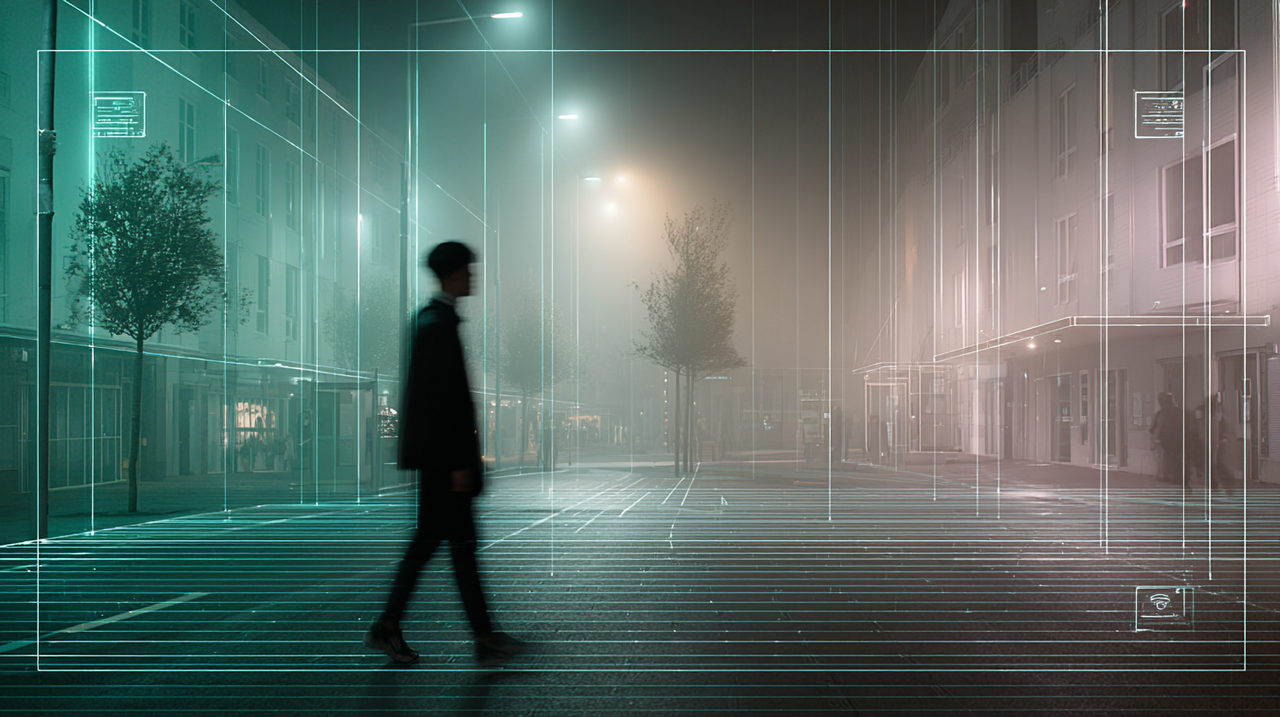
You have never walked anonymously. You may have believed otherwise, pulling a hood over your head or choosing the busy side of the street, but the truth has been catching up for years. The way you shift your weight from one foot to the other, the cadence of your stride, the particular rhythm of your fingers on a keyboard, even the micro-fluctuations in your voice when you order a coffee: all of these patterns are, increasingly, as identifiable as your fingerprint. And unlike your fingerprint, you leave them everywhere, involuntarily, continuously, without ever pressing your thumb to glass.
Artificial intelligence systems can now identify individuals through subtle behavioural patterns and voice characteristics with startling accuracy. Gait recognition software deployed on the streets of Beijing and Shanghai can pick you out of a crowd from 50 metres away, even with your back turned and your face completely covered. Voice biometric systems in banking can authenticate your identity from a few seconds of speech. Wi-Fi signals bouncing off your body as you walk through a room can betray your identity through walls. The question is no longer whether these technologies work. It is what their proliferation means for the very concept of being unknown in a public space, and whether truly private human interaction remains possible in an age of pervasive, ambient identification.
The Expanding Biometric Frontier Beyond the Face
For over a decade, the surveillance debate has centred on facial recognition. Cities have banned it. Activists have marched against it. Researchers like Joy Buolamwini at the MIT Media Lab have exposed its profound racial biases, demonstrating through her landmark 2018 Gender Shades study that commercial facial analysis systems from IBM, Microsoft, and Face++ misclassified darker-skinned women at rates as high as 47 per cent while achieving error rates below 1 per cent for lighter-skinned men. Her work, co-authored with Timnit Gebru, catalysed a reckoning that led every audited US-based company to stop selling facial recognition technology to law enforcement by 2020.
But while the world was arguing about faces, a quieter revolution was unfolding. Behavioural biometrics, the science of identifying people through how they move, type, speak, and interact with the physical world, has advanced rapidly and without the same degree of public scrutiny. Unlike facial recognition, which requires a camera pointed at your face, behavioural biometrics can operate at a distance, through obstacles, and without the subject's knowledge or cooperation. This makes it, in many respects, a far more consequential threat to anonymity than the technology that has dominated headlines.
The gait biometrics market was valued at USD 1.25 billion in 2024 and is projected to reach USD 3.41 billion by 2032, growing at a compound annual growth rate of 13.38 per cent. Security agencies accounted for roughly 44 per cent of that market in 2024, with Asia-Pacific expected to see the fastest growth at 15.15 per cent annually through 2032. These are not speculative projections from fringe analysts; they reflect sustained investment by governments and corporations in technologies that identify you not by what you look like, but by what you do.
Gait Recognition Comes of Age
The idea that every person walks differently is not new. Forensic investigators have long known that gait is distinctive. What is new is the ability of AI systems to extract that distinctiveness from ordinary surveillance footage and match it against databases at scale.
The Chinese AI company Watrix, incubated by the Chinese Academy of Sciences, has developed gait recognition software that extracts a person's silhouette from video and analyses its movement to create a model of how that person walks. According to Watrix CEO Huang Yongzhen, the technology has been trialled by police in Beijing, Shanghai, and Chongqing, and a pilot system operates in Hubei and Guangdong provinces. The system can identify individuals from up to 50 metres away, from any angle, even when faces are covered and in darkness. “With facial recognition people need to look into a camera,” Huang told the South China Morning Post. “Cooperation is not needed for them to be recognised by our technology.”
The accuracy Watrix claims is striking: up to 96 per cent. The company, which was inspired by a US Defence Advanced Research Projects Agency (DARPA) study, has been in discussions with security firms in Singapore, India, Russia, the Netherlands, and the Czech Republic. Security officials in China's Xinjiang province, where the Uyghur Muslim population faces intense surveillance, have also expressed interest. The technology is not merely supplementary to existing surveillance; it fills the gaps that facial recognition cannot reach. It operates in conditions where faces are obscured, where lighting is poor, and where subjects are unaware they are being watched. Every person's posture, Huang has stated, is unique, like a fingerprint, and gait recognition is capable of identifying targets from any angle.
Nor is Watrix alone. In September 2024, NEC Corporation launched a gateless biometric authentication system capable of authenticating 100 people per minute while they are in motion. The system, initially deployed at NEC's Tokyo headquarters in July 2024, combines face recognition with gait-based matching technology to identify individuals in crowded areas without requiring them to stop or present credentials. NEC, which has been ranked first in face recognition benchmark tests by the US National Institute of Standards and Technology since 2009, has deployed its biometric technology in more than 50 countries and across 80 airports globally. The new system is being offered in Japan, the United States, and Singapore, and uses deep learning to re-identify tracked individuals even after they pass behind obstructions or through dense crowds.
The Voice That Gives You Away
Your voice is another behavioural signature that AI systems are learning to read with uncomfortable precision. Voice biometrics analyse characteristics including pitch, tone, cadence, and the physical properties of your vocal tract to create a unique voiceprint. Financial institutions have been early adopters: customers can authenticate transactions simply by speaking. The technology is marketed as frictionless and secure, a way to eliminate passwords and PINs. But a voiceprint, once captured, is not a password. It cannot be changed if compromised. And the infrastructure for capturing voice data is already ubiquitous: every smartphone, every smart speaker, every customer service line.
But the same technology that verifies your identity can also compromise it. Voice recordings are biometric identifiers as sensitive as fingerprints or retinal scans, yet they can be captured from a distance, harvested from voicemail messages, or scraped from social media posts. According to the 2024 Javelin Identity Fraud Study, American consumers lost more than USD 47 billion to identity fraud that year, with AI-generated synthetic identity fraud and voice cloning driving much of that figure. A survey by BioCatch found that 91 per cent of US banks are reconsidering voice biometric authentication due to AI cloning risks.
The threat is not theoretical. In April 2025, Hong Kong police dismantled a deepfake scam ring that used AI-generated video and cloned voice attacks to open accounts at HSBC, resulting in losses exceeding HK 1.5 billion, approximately USD 193.2 million. The UK government has published a briefing note on the ethical issues arising from public sector use of biometric voice recognition technology, acknowledging the tensions between convenience, security, and privacy. Some institutions store biometric voice templates indefinitely or share them with third-party vendors for AI training purposes, often without the knowledge of the individuals whose voices are on file.
The US Department of Justice has affirmed a broad definition of biometric identifiers that encompasses facial images, voiceprints and patterns, retina and iris scans, palm and fingerprints, and behavioural data such as gait and keyboard usage patterns. This definitional expansion matters because it signals that regulators are beginning to recognise what technologists have known for some time: the body is a broadcasting device, and everything it broadcasts can be recorded, analysed, and matched to an identity.
The Invisible Biometric Layer
Beyond gait and voice, there exists an entire category of behavioural biometrics that most people never consider. Keystroke dynamics, the study of how you type, can identify individuals based on the timing between key presses, the duration for which each key is held, and the rhythm of your overall typing pattern. These measurements, captured at millisecond precision, create a biometric template that is unique to each person and extremely difficult to replicate.
Research published in Discover Applied Sciences in 2025 highlights that keystroke dynamics can be used for continuous, real-time authentication, with any deviation from established typing patterns triggering an alert for possible unauthorised access. A 2024 study published in Sensors demonstrated that deep learning architectures combining convolutional and recurrent neural networks achieve high effectiveness in identifying users based on typing patterns. Forensic applications are also emerging: regardless of the number of machines a person uses, their typing pattern persists, making keystroke dynamics a potential tool for identifying anonymous online activity.
The transparency of this technology is part of what makes it so consequential. Keystroke dynamics require no specialised hardware. They operate via backend software implementation, and in most cases users are entirely unaware they are being profiled. This passive, invisible collection of behavioural data represents a fundamentally different kind of surveillance from a camera on a pole or a guard at a door. It is ambient, continuous, and nearly impossible to evade. Research from MDPI in 2023 also found that keystroke authentication is influenced by the language being typed, meaning bilingual users produce distinct profiles for each language, further enriching the data available for identification.
Wi-Fi Signals as a Surveillance Medium
Perhaps the most unsettling frontier in behavioural identification is the use of ordinary Wi-Fi signals to detect, track, and identify people. Wi-Fi sensing exploits the way radio signals interact with human bodies: as you move through a space, you cause reflections, refractions, and attenuations in the Wi-Fi signal, and these disturbances encode information about your body shape, movement patterns, and activities.
A comprehensive 2024 survey published in ACM Transactions on Sensor Networks documents how researchers have used Channel State Information from Wi-Fi signals to identify individuals based on their unique gait patterns, achieving accuracy rates above 90 per cent. Unlike camera-based systems, Wi-Fi sensing works through walls, in complete darkness, and without requiring any device to be carried by the subject. The technology leverages existing infrastructure, requiring only standard Wi-Fi access points and receiving devices.
Research published in Engineering Applications of Artificial Intelligence demonstrated human activity recognition through walls using deep learning models applied to Wi-Fi CSI data. The PA-CSI model, which combines phase and amplitude analysis with attention mechanisms, has achieved accuracy rates of up to 99.9 per cent on benchmark datasets. A specialised system called WiFind can detect, localise, and estimate body pose through walls, debris, and smoke, using nodes costing under USD 150 each.
The implications are stark. A person walking through a building equipped with standard Wi-Fi infrastructure could, in principle, be continuously tracked and identified without any visible surveillance equipment, without their knowledge, and without any possibility of covering their face or altering their appearance to avoid detection. Wi-Fi technology has evolved from its initial 802.11 standard to Wi-Fi 6 and the anticipated Wi-Fi 7, with each generation improving the resolution and sensitivity of sensing capabilities. The physical world is becoming readable in ways that were previously confined to science fiction.
Regulation Struggles to Keep Pace
The regulatory response to behavioural biometric surveillance has been fragmented and reactive, consistently trailing the technology it seeks to govern. The most significant legislative development has been the European Union's AI Act (Regulation (EU) 2024/1689), which entered into force on 1 August 2024 and began enforcing prohibitions on certain AI systems from 2 February 2025.
Article 5 of the AI Act prohibits real-time remote biometric identification systems in publicly accessible spaces for law enforcement, with limited exceptions. It bans AI systems that scrape facial images from the internet or CCTV footage, and prohibits biometric categorisation systems that deduce race, political opinions, religious beliefs, or sexual orientation from biometric data. Violations carry fines of up to 35 million euros or 7 per cent of global annual turnover, whichever is higher.
Yet the Act contains significant exceptions for law enforcement, allowing real-time biometric identification for targeted searches of victims of abduction or trafficking, prevention of imminent threats, and prosecution of serious crimes, all subject to judicial authorisation. These carve-outs have drawn criticism from organisations like European Digital Rights (EDRi), which argues they may legitimise the very practices the Act purports to ban. As a Stanford Law School analysis noted, despite omitting an outright ban on facial recognition in publicly accessible spaces, the AI Act will probably show its full potential in the years after its entry into force.
In the United States, Illinois' Biometric Information Privacy Act remains the strongest state-level protection, granting individuals a private right of action and statutory damages of USD 1,000 per negligent violation and USD 5,000 per intentional violation. BIPA class action settlements totalled more than USD 206 million in 2024, including the landmark Clearview AI settlement in which class members received a 23 per cent equity stake in the company, valued at approximately USD 51.75 million. In August 2024, Illinois amended BIPA to limit damages to one violation per person regardless of how many times data was collected, a change that contributed to a sharp decline in new filings. Clearview AI itself had amassed a database of more than 60 billion facial images scraped from social media platforms, news websites, and other publicly accessible online sources, prompting the wave of litigation.
San Francisco became the first US city to ban government use of facial recognition in May 2019, with Supervisor Aaron Peskin declaring, “We all support good policing but none of us want to live in a police state.” Yet even this landmark ordinance had limits: it carved out exceptions for federal facilities and did not apply to private businesses. Moreover, in the five years since the ban, San Francisco police admitted to circumventing it on six separate occasions.
The UK's Information Commissioner's Office launched its AI and biometrics strategy in June 2025, focusing on situations where risks are highest and public concern is clearest. The ICO plans to set a high threshold of lawfulness for AI systems that infer subjective traits, intentions, or emotions based on physical or behavioural characteristics. Public polling cited in the strategy found that 54 per cent of UK adults have concerns about facial recognition technology impacting civil liberties, and that concern about AI use for welfare eligibility has risen from 44 per cent to 59 per cent between 2022 and 2025.
When the Wrong Person Gets Caught
The dangers of these systems are not abstract. In January 2020, Robert Williams, a Black man living in Farmington Hills, Michigan, was arrested outside his home in front of his wife and two young daughters by Detroit police. He was detained for thirty hours in an overcrowded, dirty cell. The arrest was based on a facial recognition match from a blurry surveillance image of a shoplifting suspect at a Shinola store in Detroit. Williams was actually the ninth-best match in the system's results, and detectives had not investigated his whereabouts before making the arrest.
Williams' case, brought to public attention by the ACLU and the University of Michigan Law School's Civil Rights Litigation Initiative, became the first publicly reported instance of a false facial recognition match leading to a wrongful arrest. On 28 June 2024, the parties reached a groundbreaking settlement that established the nation's strongest police department policies constraining law enforcement's use of facial recognition, including a prohibition on arrests based solely on facial recognition results and mandatory training on the technology's risks and its higher misidentification rates for people of colour.
Williams' case was one of three known wrongful arrests in Detroit where police relied on facial recognition technology. All three individuals wrongfully arrested were Black. This pattern underscores the findings of Buolamwini's Gender Shades study and raises a critical question about behavioural biometrics more broadly: if the training data and deployment contexts of gait recognition, voice identification, and other behavioural systems reproduce the same biases, the consequences for marginalised communities could be severe. The Pew Research Center found in a 2022 survey that 28 per cent of Black adults said police would definitely make more false arrests if facial recognition were widely adopted, compared with just 11 per cent of white adults.
Surveillance and the Death of Free Assembly
The surveillance theorist and Harvard professor Shoshana Zuboff has described surveillance capitalism as “the unilateral claiming of private human experience as free raw material for translation into behavioural data.” Her framework, articulated in The Age of Surveillance Capitalism (2019), identifies a fundamental shift in which human experiences are extracted, computed, and sold as prediction products. “We are not surveillance capitalism's 'customers,'” Zuboff writes. “We are the sources of surveillance capitalism's crucial surplus.”
When behavioural identification systems operate in public spaces, they do not merely observe; they transform public space itself. Research consistently demonstrates that surveillance produces measurable “chilling effects” on freedom of expression, assembly, and political participation. A qualitative study published in the Journal of Human Rights Practice (Oxford Academic) documented, through interviews with 44 participants in Uganda and Zimbabwe, how the fear of surveillance undermines trust and interpersonal relationships, creating spirals of paranoia and mistrust that directly affect the right to freedom of assembly.
These findings extend well beyond authoritarian contexts. In the United States, the Department of Commerce's National Telecommunications and Information Administration found in a survey of 41,000 households that one in five Americans avoided online activity because of concerns about government data collection. The Electronic Frontier Foundation has highlighted studies showing that government surveillance discourages both speech and access to information on the internet. When people know they are being watched, they change what they say, where they go, and whom they associate with. The extension of these chilling effects from the digital to the physical realm, through gait recognition cameras, voice identification microphones, and Wi-Fi sensing systems, represents a qualitative escalation.
Amnesty International's Ban the Scan campaign, launched in 2021, has mapped the surveillance landscape of New York City, documenting more than 25,500 CCTV cameras across the city and revealing that the NYPD used facial recognition technology in 22,000 cases since 2017. The campaign found that the most surveilled neighbourhood across three boroughs was an area in Brooklyn with a population comprising 54.4 per cent Black residents, underscoring the racialised geography of surveillance infrastructure. Amnesty further documented how facial recognition was used at Black Lives Matter protest sites in 2020 to identify, track, and harass people exercising their rights to peaceful assembly.
The UN Office of the High Commissioner for Human Rights is preparing a thematic report, expected at the 62nd session of the Human Rights Council, analysing the impact of digital and AI-assisted surveillance on assembly and association rights, including chilling effects. A 2025 study in Big Data and Society, examining Extinction Rebellion protests in The Hague, revealed that surveillance technology produces effects beyond traditional chilling, including what researchers termed “hyper-transparency” and “hyper-alertness” among both protesters and police.
The Rise of Anti-Surveillance Fashion
The proliferation of behavioural identification systems has given rise to a counter-movement that sounds like it belongs in a cyberpunk novel but is entirely real: adversarial fashion. These are garments, accessories, and cosmetic techniques designed to confuse, disrupt, or defeat AI surveillance systems.
Artist and researcher Adam Harvey pioneered this field with his CV Dazzle project in 2010, which used cubist-inspired makeup patterns to defeat facial detection algorithms. The technique, named after the dazzle camouflage developed by British painter Norman Wilkinson for Allied ships during the First World War, works by obscuring key facial features until recognition systems can no longer detect a human face. Harvey followed this with HyperFace in 2016, which takes the opposite approach: rather than hiding faces, it floods the environment with false face-like patterns printed on fabric, exploiting algorithms' preference for the highest-confidence facial region.
More recently, the Italian company Cap_able has developed a patented process that algorithmically generates adversarial patterns, translating them into knitted garments that retail between USD 300 and USD 600. These garments combine visual adversarial patterns with infrared protection, aiming to disrupt both optical and thermal surveillance. Researchers have also published work on thermally activated dual-modal adversarial clothing that can defeat both visible-light cameras and infrared sensors simultaneously.
However, as technologist Adam Harvey himself has cautioned, “Camouflage, in general, should be considered temporary, but especially technical camouflage that targets quickly evolving algorithms.” The arms race between surveillance systems and countermeasures is inherently asymmetric: updating a neural network is cheaper and faster than redesigning a wardrobe. Moreover, the very act of wearing obviously adversarial clothing in a public space draws human attention, potentially marking the wearer as suspicious even as it confuses the machines.
The video surveillance industry, enhanced by AI, is projected to grow from USD 3.90 billion in 2024 to USD 12.46 billion by 2030, according to market research. Against this scale of investment, adversarial fashion remains a niche countermeasure, meaningful as a statement of resistance but limited as a practical solution to the erosion of anonymity.
Europe's Border Experiment in Behavioural Biometrics
While much of the debate about behavioural biometrics focuses on domestic surveillance, the technology is also reshaping the boundaries of national security and border control. The European Union's PopEye project, funded through a Horizon Europe grant of 3.2 million euros, represents a significant step towards integrating gait recognition into border security infrastructure.
PopEye, an acronym for “robust Privacy-preserving biOmetric technologies for Passengers' identification and verification at EU external borders maximising the accuracY, reliability and throughput of the rEcognition,” aims to identify individuals on the move, at distances of up to 200 metres, without requiring them to stop. The project combines gait recognition with 3D facial recognition, addressing the limitations of each technology when used in isolation.
The project follows a 2021 Frontex study that examined gait recognition in depth, suggesting that video, radar, and floor sensors could be used to identify people by how they walk. Led by the European Association for Biometrics, PopEye involves partners including the AIT Austrian Institute of Technology, Idiap Research Institute, KU Leuven, and Vrije Universiteit Brussel, among others. Pilot programmes are being conducted at the external borders of Romania and Finland, with the Finnish Ministry of Interior and Romanian Border Authorities serving as key participants.
The project's emphasis on privacy preservation and compliance with the EU's AI Act and GDPR reflects an awareness that the technology it develops operates in a sensitive legal and ethical space. Researchers from VUB and KU Leuven are leading efforts on integrated impact assessments to safeguard human rights and data protection. Yet the fundamental tension remains: a system designed to identify people at a distance, without their cooperation, is inherently a surveillance technology, regardless of the procedural safeguards that surround it.
The Economics of Knowing Who You Are
The security technologist Bruce Schneier, a fellow and lecturer at Harvard's Kennedy School and board member of the Electronic Frontier Foundation, has written extensively about the economics of surveillance and the asymmetries of power it creates. “It is poor civic hygiene to install technologies that could someday facilitate a police state,” Schneier has warned. He has illustrated the collapsing cost of surveillance with a telling comparison: covert human surveillance of an individual costs approximately USD 175,000 per month, while obtaining location information from a mobile provider costs as little as USD 30 per month.
Behavioural biometrics push this economic logic further still. Gait recognition can operate using existing CCTV infrastructure. Keystroke dynamics require only software. Wi-Fi sensing leverages networks that are already installed in virtually every commercial and institutional building. The marginal cost of identifying one additional person approaches zero, which means the economic incentive to deploy these systems is enormous and the barriers to mass deployment are vanishingly small.
This economic reality creates what Schneier has called an alliance of interests between corporate and government surveillance. Corporations collect behavioural data for authentication, fraud prevention, and customer profiling. Governments seek the same data for security, immigration enforcement, and law enforcement. The data collected for one purpose inevitably becomes available for others, a phenomenon that privacy advocates call “function creep.” The US Consumer Financial Protection Bureau has already issued guidance stating that biometric information, including keystroke frequency and behavioural monitoring, used in employment decisions must comply with the Fair Credit Reporting Act.
Zuboff's analysis cuts deeper. She argues that “the power to predict human behaviour is the power to modify human behaviour, and this is what surveillance capitalism is all about.” When every public interaction can be linked to a known identity through behavioural patterns, the entire notion of a public sphere where individuals can move, speak, and associate without being tracked becomes an anachronism. The right to privacy, she insists, is not merely about data protection; it is about the conditions necessary for human autonomy: “what should become data in the first place, that is where the line has to be drawn.”
What Remains of Anonymity
The question this article set out to address, what does the rise of AI behavioural recognition mean for anonymity in public spaces, has a disquieting answer. The technological trajectory is clear: identification systems are becoming cheaper, more accurate, more pervasive, and harder to evade. They are moving beyond the face into the body's every motion and utterance. They work through walls, in darkness, and across distances that make consent meaningless.
The regulatory response, while significant in certain jurisdictions, remains fragmented and reactive. The EU's AI Act represents the most comprehensive attempt at governance, but its exceptions for law enforcement create significant loopholes. BIPA has produced substantial financial penalties in the United States, but it is a single state's law, and its recent amendments have blunted its deterrent effect. The UK's ICO strategy is still in its early stages. Globally, there is no coherent framework for governing technologies that can identify people from their walk, their voice, or the way they type.
What is at stake is not merely a technical question about privacy settings or data policies. It is a question about the kind of society that emerges when public spaces become zones of continuous, ambient identification. Research on the chilling effects of surveillance demonstrates that when people believe they are being watched, they modify their behaviour, self-censor their speech, and withdraw from political participation. The extension of surveillance from visible cameras to invisible behavioural identification systems does not reduce this effect; it amplifies it, because there is no way to know when you are and are not being observed.
Truly private human interaction in public spaces, a conversation with a stranger that no system records, a protest march where participants cannot be individually identified, a walk through a city where your movements are not logged and matched against a database, is becoming technologically impossible. This does not mean it will vanish entirely; enforcement gaps, technical limitations, and deliberate resistance will preserve pockets of anonymity. But the default condition of public life is shifting, from one where anonymity was assumed to one where identification is the norm.
The technologies being installed today will outlast the political conditions under which they were deployed. Gait recognition cameras placed for counter-terrorism will not be removed when the threat recedes. Voice identification systems built for banking will not be dismantled when fraud declines. Wi-Fi sensing capabilities embedded in building infrastructure will persist indefinitely. The question is not whether these technologies will be misused, but when, by whom, and with what consequences for the freedoms that depend on the ability to move through the world unrecognised.
Bruce Schneier put it plainly: “Privacy protects us from abuses by those in power, even if we're doing nothing wrong at the time of surveillance.” In a world where your walk, your voice, and your keystrokes are all that stand between you and identification, that protection is being quietly, systematically, irreversibly eroded.
References and Sources
Joy Buolamwini and Timnit Gebru. “Gender Shades: Intersectional Accuracy Disparities in Commercial Gender Classification.” Proceedings of Machine Learning Research, Vol. 81, 2018. http://proceedings.mlr.press/v81/buolamwini18a/buolamwini18a.pdf
South China Morning Post. “Chinese police test gait-recognition technology from AI start-up Watrix that identifies people based on how they walk.” November 2018. https://www.scmp.com/tech/start-ups/article/2187600/chinese-police-surveillance-gets-boost-ai-start-watrix-technology-can
NEC Corporation. “NEC Launches new system using Biometric Authentication Technology.” Press Release, 3 September 2024. https://www.nec.com/en/press/202409/global2024090301.html
GlobeNewsWire/SNS Insider. “Gait Biometrics Market Size to Hit USD 3.41 Billion by 2032.” 21 July 2025. https://www.globenewswire.com/news-release/2025/07/21/3118758/0/en/Gait-Biometrics-Market-Size-to-Hit-USD-3-41-Billion-by-2032-at-13-38-CAGR-Research-by-SNS-Insider.html
European Parliament. “EU AI Act: first regulation on artificial intelligence.” https://www.europarl.europa.eu/topics/en/article/20230601STO93804/eu-ai-act-first-regulation-on-artificial-intelligence
Stanford Law School. “No. 91: EU Artificial Intelligence Act: Regulating the Use of Facial Recognition Technologies in Publicly Accessible Spaces.” https://law.stanford.edu/publications/no-91-eu-artificial-intelligence-act-regulating-the-use-of-facial-recognition-technologies-in-publicly-accessible-spaces/
WilmerHale. “Year in Review: 2024 BIPA Litigation Takeaways.” 19 February 2025. https://www.wilmerhale.com/en/insights/blogs/wilmerhale-privacy-and-cybersecurity-law/20250219-year-in-review-2024-bipa-litigation-takeaways
Bloomberg Law. “Clearview AI Gets Settlement Approved in Face-Scan Privacy Case.” 2025. https://news.bloomberglaw.com/litigation/clearview-ai-gets-settlement-approved-in-face-scan-privacy-case
CNN. “San Francisco just banned facial-recognition technology.” 14 May 2019. https://www.cnn.com/2019/05/14/tech/san-francisco-facial-recognition-ban
SF Standard. “SFPD skirted facial-recognition ban, lawsuit says.” 18 July 2024. https://sfstandard.com/2024/07/18/san-francisco-police-facial-recognition-violations/
ACLU. “Williams v. City of Detroit.” https://www.aclu.org/cases/williams-v-city-of-detroit-face-recognition-false-arrest
Shoshana Zuboff. The Age of Surveillance Capitalism: The Fight for a Human Future at the New Frontier of Power. PublicAffairs, 2019.
Oxford Academic. “Chilling Effects of Surveillance and Human Rights: Insights from Qualitative Research in Uganda and Zimbabwe.” Journal of Human Rights Practice, Vol. 16, Issue 1, 2024. https://academic.oup.com/jhrp/article/16/1/397/7234270
Amnesty International. “Ban The Scan New York City.” https://banthescan.amnesty.org/nyc/index.html
Storbeck, M. et al. “Surveillance experiences of extinction rebellion activists and police: Unpacking the technologization of Dutch protest policing.” Big Data & Society, 2025. https://journals.sagepub.com/doi/10.1177/20539517241307892
ICO. “Preventing harm, promoting trust: our AI and biometrics strategy.” June 2025. https://ico.org.uk/about-the-ico/our-information/our-strategies-and-plans/artificial-intelligence-and-biometrics-strategy/
ACM Transactions on Sensor Networks. “A Survey on WiFi-based Human Identification: Scenarios, Challenges, and Current Solutions.” 2024. https://dl.acm.org/doi/10.1145/3708323
ScienceDirect. “WiFi-based human activity recognition through wall using deep learning.” Engineering Applications of Artificial Intelligence, 2024. https://www.sciencedirect.com/science/article/abs/pii/S0952197623013556
Springer Nature. “Keystroke dynamics for intelligent biometric authentication with machine learning.” Discover Applied Sciences, 2025. https://link.springer.com/article/10.1007/s42452-025-07449-5
MDPI/Applied Sciences. “Authentication by Keystroke Dynamics: The Influence of Typing Language.” 2023. https://www.mdpi.com/2076-3417/13/20/11478
Bruce Schneier. “The Eternal Value of Privacy.” Schneier on Security, May 2006. https://www.schneier.com/essays/archives/2006/05/theeternalvalue_of.html
Biometric Update. “PopEye to strengthen EU border biometrics with gait recognition integration.” October 2024. https://www.biometricupdate.com/202410/popeye-to-strengthen-eu-border-biometrics-with-gait-recognition-integration
Mozilla Foundation. “How to Disappear: The Rise of Anti-Surveillance Fashion.” https://www.mozillafoundation.org/en/nothing-personal/anti-surveillance-fashion-privacy-ai/
GOV.UK. “Briefing note on the ethical issues arising from the public sector use of biometric voice recognition technology.” https://www.gov.uk/government/publications/public-sector-use-of-biometric-voice-recognition-technology-ethical-issues/
Pew Research Center. “Public views of police use of facial recognition technology.” 17 March 2022. https://www.pewresearch.org/internet/2022/03/17/public-more-likely-to-see-facial-recognition-use-by-police-as-good-rather-than-bad-for-society/

Tim Green UK-based Systems Theorist & Independent Technology Writer
Tim explores the intersections of artificial intelligence, decentralised cognition, and posthuman ethics. His work, published at smarterarticles.co.uk, challenges dominant narratives of technological progress while proposing interdisciplinary frameworks for collective intelligence and digital stewardship.
His writing has been featured on Ground News and shared by independent researchers across both academic and technological communities.
ORCID: 0009-0002-0156-9795 Email: tim@smarterarticles.co.uk
Freaky CeCe 09
from  Shad0w's Echos
CeCe is Freaky Again
#nsfw #CeCe
CeCe still had impeccable fashion sense, piecing together outfits from thrift stores and online deals that made her look polished, professional. On workdays, she'd tuck away the naked freak entirely. She dressed presentably in blouses and slacks, arriving at the tech firm with calculated efficiency, her brilliant mind dissecting code and prototypes like it was child's play. Despite lacking a degree, her raw talent shone through; promotions came steadily, compensation rising with each one. It was all she had outside our bubble. This was her anchor to stability, so she fought for it tooth and nail. She masked her obsessions behind spreadsheets and meetings, never letting a hint of her porn-fueled world slip.
What no one knew. Her bosses praised her for her dedication to the company.
Her daily transformation to her true self started with her commute home. We were able to save our money and buy affordable cars. It was a fond memory because we picked them out for each other, not for ourselves.
As soon as she pulled out of the parking lot in her small Honda, merging into the city's evening traffic, she'd start undressing—blouse unbuttoned and tossed to the passenger seat, skirt hiked up and shimmied off, bra and panties following until she was completely bare, her curvy body reclining against the leather as she smiled to herself. The steering wheel cool against her bare breasts, the AC teasing her nipples, the thrill of potential accidents or glances from trucks beside her—it was her decompression, a private rebellion before she arrived home to me, naked and waiting.
And yes, she often got out her car wearing nothing but heels and smile carrying her clothes like it was just a normal day. I told her they will kick us out. She just responds with “We pay rent early and no one has complained.” There is no winning when CeCe wants to be naked.
CeCe had developed quite the reputation as “the naked chick,” at our apartment complex. No one ever said it to our faces. Neighbors witnessed some of her naked antics. They would see her strolling to the laundry room in the dead of night, thick thighs flexing as she carried baskets with nothing but flip-flops on, her full breasts swaying freely. Sometimes she would slip out for trash runs, her juicy ass on display under the dim hallway lights. She even took quick naked trips to the mailbox, where she'd stand exposed for a moment, sorting mail before retreating. But it was always calculated. She chose late hours, avoiding family hours when kids might be around. Folks would nod politely in the mornings, pretending they hadn't seen, but whispers floated.
Inside our apartment, our place was a shrine to her addictions: multiple screens flickering with porn tabs. Black women in exhibitionist bliss, gooning sessions that ran for hours. We had dildos and toys scattered on nightstands and shelves, lube bottles within arm's reach. I didn't mind one bit. I didn't want CeCe to feel limited, caged in by judgment. If it weren't for me and my family welcoming her into holidays and support, she'd be utterly alone, adrift in her fixations with porn her only companion.
Speaking of my family, CeCe took to them well. We started small. I took her on a Friday evening to meet my mom. At that time, we were just friends and I kept it that way. My mom is a special needs professional and was well versed in handling CeCe. My mom's name is Mimi. CeCe took to her quickly and I was glad to see that she found another safe person to add to her circle. Mom insisted that CeCe talk to her on a first name basis. That took some pressure off the formalities for her.
Over time my mom and I slowly acclimated her to the rest of the family in small doses. By the 3rd year of us living together, CeCe would breeze through family gatherings with ease. However this peace did not last long.
At gatherings, my aunt and uncle would corner me. My older cousins would watch us and judge. Some of my distant cousins were getting married and starting families.
My bold relatives would say things out of earshot from everyone. They would say things almost every time they saw me: “Tasha, why are you still living with CeCe? You're not getting any younger.” “Find a man, start a family.”
What they said stung, it wore me down but I hid it. Their assumptions about my life, about us. It was all wrong, but I didn't want to tell them. I didn't want to drag CeCe into another stressful family situation. I still have not come out to my mom yet. It was too much. So I just dealt with the comments shielding CeCe the best I could.
However, CeCe eventually overheard them during one fateful Thanksgiving dinner. They had gotten bolder over the past few gatherings and stopped being as discreet as before.
CeCe let it slide the first time, but the second time she heard it, she had enough. She came to my defense fiercely, her voice steady but edged with that calm directness that cut through bullshit. “Our life is more complicated than that,” she said openly, no shame in her tone. “If you have a problem with a lesbian couple, then maybe I don't have any family here either.”
The room went silent, tension crackling, but my mom shut it down quick—standing her ground, eyes flashing at the judging relatives. “Don't you start.” She stared daggers at the ring leaders with a paused silence. “Tasha's happy, and CeCe's family. If you can't accept that, you're the ones missing out.” It was a turning point; my mom had became our quiet advocate. She didn't even know our real status until that very moment, but she stood firm and supported us. I almost cried if it wasn't for how uneasy the moment was.
The ring leader that kept pushing me to settle down said meekly, “I didn't know.” Head down speaking softly. Her fork resting on her plate in shame.
Mom wasn't having it. She was done.
“This gathering is over. Make a plate and leave, this is not how we spend Thanksgiving together. Someone else can try again next year.” The room remained silent. She continued, her strong voice resonating off the walls. “My mother and father, the ones who bought this house would never want us fighting in our house. And if any of you have problems with Tasha and CeCe, now that you know the truth, do not come back here again. I will not stand for anyone judging my babies like this.”
With a knowing silence, my aunt and uncle quietly took their leave. My cousins took their prepared dishes home with them. If they wanted anything, mom just nodded silently. She didn't leave the dinner table. Watching everyone like a sentinel. A guardian.
CeCe just held my hand slowly rubbing my palm for comfort. I didn't make eye contact with anyone. I just looked away. I didn't want everyone to find out like this, but I guess they had to find out eventually. I wasn't embarrassed. I just didn't want CeCe to have another bad family moment. Once everyone left, I told my mom “I'm so sorry, I didn't mean for this to happen.” CeCe was the first one to respond and she gently slapped my hand.
“Shush, I'm the one that spoke up. None of this is your fault in the slightest. I just couldn't sit by and let them pick on you.”
My mom sat and observed. She looked at us differently now as if the nearly 4 years we had been living together finally started to click. “It all make sense now.” She said with a knowing fascination. There was no judgement. She was letting reality settle in.
My mom is amazing.
After that day, my mom stepped up in ways I never expected. She decided to keep family gatherings between just us from that day forward. She didn't mind. It was less work. If her siblings wanted big gatherings, they would have to step it up from now on. Just like me, she devoted her free time to nurture CeCe. She knew the events that lead us to dropping out of college and her breakdown being exposed to everyone in her dorm.
From then on, my mom poured into CeCe like she was her own daughter, inviting us over more often for quiet dinners or longer visits to her house to spend the weekends together. I was really impressed and surprised by how readily she accepted our lesbian relationship. She didn't judge, no prying questions.
She even casually suggested marriage one day, not for romance, but for the legal benefits: She spoke to me quietly, “When CeCe's ready, think about it—health insurance, taxes, all that practical stuff. Love like yours deserves protection.” I was stunned my mom was ok with that. She understood my love for CeCe stemmed from her brightness, her raw talent, her directness, and that unapologetic spirit—you couldn't help but want to support her, to shield her from a world that often misunderstood her fixations.
CeCe felt safe and comfortable around my mom in a way she never had with her own family, opening up bit by bit during those visits. Mom was the curious sort, always observant, and it didn't take long for her to notice how CeCe fidgeted in her clothes—tugging at collars, shifting uncomfortably in seats, like the fabric was an itch she couldn't scratch. One Sunday afternoon, as we sat in her living room sipping tea, Mimi leaned forward with that gentle, knowing smile. “CeCe, honey, why do you always look so uncomfortable in your clothes? Like you'd rather not be wearing them at all,” she said with a playful smirk.
CeCe froze, her eyes darting to me, but I decided to be candid. CeCe would never have broached it on her own. “Well, Mom, CeCe is basically Eve's half-sister. You can't keep clothes on the girl.”
Mimi's eyes widened in great surprise, her teacup pausing mid-sip. She set it down, a flicker of upset crossing her face. She was not angry, but looked hurt hurt. “Tasha, why on earth did it take so long for you to tell me this? I'm your mother. We both could've been supporting her all this time! It's just us ladies here after all.” She turned to CeCe, her voice softening. “If that's how you are, then be naked anytime you want in my house. I mean it. But let's talk about it, okay? I want to understand your true nature and I need to make sure I'm ready for what I'm giving permission to.”
We had a long talk that afternoon, the three of us on the couch, sunlight streaming through the windows as CeCe slowly peeled off her layers—first her sweater, then her jeans, until she sat there naked, her caramel curves relaxed for the first time that day. I made sure mom was truly prepared, probing gently: “Mom, this isn't just casual—it's extreme more than I can say right now. Are you sure you want the full story? It might change how you see things.” Mom nodded firmly, her professional instructor's empathy shining through, ready to listen without flinching.
CeCe, hesitant at first, told her most everything, her voice steady but vulnerable as she opened up. She explained why her mom got arrested—that frantic night fueled by CeCe's phone confession about loving porn and masturbation, rejecting marriage and traditional life, which sent her mom into a tailspin of control and denial. “Porn... it's everything to me now,” Her voice wavered, quivered, trembling. I held her hand and looked at her willing support telepathically. The woman was brave. She was naked in my moms house confessing her deepest secret to someone else for the first time.
“It started in college when Tasha showed me porn to help after a bad date. I was so sheltered, so shy, but it fixated me—especially videos of black women owning their bodies, exposing themselves. It's my coping mechanism, my high. I have to watch it to cum, to feel regulated.” She slowly gestured to her bare body with a tentative smile.
“I do everything like this—all the time. Laundry, cooking, even working from home. It's very extreme....” She hesitated with a sigh, letting the full gravity of her depraved mind walk into the light.
“I masturbate in public spots. I sent Tasha nudes from the college library all the time. I have done this in parks too. I know its risky, I know its very wrong, I know you are probably shocked too, but it makes me feel alive. It's who I am now.... and I understand if you want nothing to do with me anymore. I know I'm a degenerate freak that will never get therapy to fix this...I don't want to fix this.”
She sighed.. CeCe braced herself, eyes downcast, scared she'd be outcast again, unwanted like with her own family. “I think you will hate me for it,” she whispered, trembling. “That I'd be too much. So I hid the truth. I thought I could stay dressed and pretend while I'm here. You do so much for both of us. I respected your home too much to do such things like this or even talk about this without permission.”
Mom was totally unfazed. She reached out and took CeCe's hand, her expression warm and steady. She turned to me then, eyes misty but resolute. “She's precious, Tasha. Do everything you can to protect her. I see now why you bonded with her—you're her protector and her anchor. Yes, I was hoping my baby would settle down with a man, but I see why CeCe was a necessary detour and truly your calling. You are her rock. You didn't want to take that away from her. I welcome her too, because you showed her you were safe. CeCe is a brilliant and talented woman. In my profession I have talked and dealt with all kinds of unusual situations. To me, this is no different. CeCe is not harming herself. She is thriving with you. Just like you Tasha, I can overlook her 'unique' traits. She's a woman living her life without any shame or apology. I can't help but applaud that. Your secrets are safe with me. I love you both. What you just told me changes nothing.”
My mom got up and hugged the naked woman. CeCe was trembling. She was ready for the worst and instead she was shown love and understanding. CeCe broke down into hysterical crying right there, collapsing into my mom's arms, her naked body shaking with sobs that seemed to release a lifetime of pain. Tears soaking my mom's blouse.
She was so ready for things to go the other way—rejection, judgment—but instead, she found the mom she never had, accepting her fully, flaws and all. The rest of the day was spent comforting her: My mom holding her like a child, rocking gently and whispering affirmations; me stroking her back, wiping her tears, the three of us tangled in a heap on the couch. It was years of hurt, abandonment, judgment, and trauma pouring out, finally letting go because, at last, she was accepted—naked, obsessed, and unapologetically herself.
Thursday
from  Roscoe's Story
In Summary: * Listening now to women's basketball with the North Carolina Tar Heels leading the SMU Mustangs 20 to 7 in the first quarter. I plan to stay with this game until it ends, then take care of my night prayers before putting my old self to bed.
Prayers, etc.: * I have a daily prayer regimen I try to follow throughout the day from early morning, as soon as I roll out of bed, until head hits pillow at night. Details of that regimen are linked to my link tree, which is linked to my profile page here.
Health Metrics: * bw= 225.53 lbs. * bp= 145/86 (65)
Exercise: * morning stretches, balance exercises, kegel pelvic floor exercises, half squats, calf raises, wall push-ups
Diet: * 05:30 – 1 peanut butter sandwich * 06:30 – 1 Sonic cheeseburger * 08:15 – 2 crispy oatmeal cookies * 09:20 – beef chop suey * 09:50 – enchiladas * 10:30 – breaded pork chops * 18:00 – cheese and crackers
Activities, Chores, etc.: * 04:30 – listen to local news talk radio * 06:00 – bank accounts activity monitored * 06:30 – read, pray, follow news reports from various sources, surf the socials * 13:30 – listen to The Dan Bongino Show Podcast * 15:00 – listen to The Jack Ricardi Show * 16:59 – listening now to the pregame finishing for tonight's NCAA women's basketball game between the SMU Mustangs and the North Carolina Tar Heels. Call of the game will be provided by the SMU Mustangs Sports Network.
Chess: * 12:30 – moved in all pending CC games
Introducing Write.as Memberships
from  Write.as Blog
It’s been six years since the first time we celebrated our years of existence on the web by launching our long-term Pro plan.
Today, with hundreds of long-term subscribers, we’re putting a new coat of paint on this option, and renaming it Write.as Memberships, to reflect what you get with a 5-year Pro subscription: extra perks, and a lasting spot among a community of writers in our cozy little corner of the independent web.
Write.as users can check out the revamped Membership section (previously called “Long Subscriptions”) today.

This page under the Billing section includes everything about your Membership, including the extra perks you get over the monthly or yearly Pro plan, to be sure you’re enjoying them all.
Renewal
With this, we’re also introducing the ability to easily renew your 5-year membership, starting any time up to 1½ years before it’s set to end.
Since renewal is always a manual process, we wanted to leave a wide window so you can be sure your Pro features don’t lapse. This should also help anyone who wants the chance to get a discount on membership when we run occasional sales, like we’re doing now through February 16, 2026, celebrating our 11 years on the web. When you choose to renew, any existing membership is simply extended by another five years from its end date, no matter when you decide to renew.
Current and past 5-year subscribers will find this new option to renew at the bottom of their Membership page. If you’re eligible to renew, there will be a Renew button — otherwise, you’ll see the date when your renewal window opens up.
Reminders
Since membership doesn’t automatically renew, we’ll soon send out reminder emails to all current and past 5-year members (who haven’t already marked their membership as “cancelled”) to remind them that they can now renew their membership.
Future perks
Besides Membership-only perks like additional blogs, unlimited Free user invites, and the chance to hop on a call with our founder, Matt, we hope to add new perks that are exclusive to Members in the future. You can keep an eye out for that by following along with our updates here, and subscribing to email updates.
Otherwise, we’d love to hear what you think! Feel free to leave us a comment on Remark.as () or on the forum. And always, thanks for writing with us!
POTUS Hates Free and Fair Elections
from POTUSRoaster
Hello again. I hope your week is going well and that you and your family are well.
POTUS is working hard to insure that only his friends are allowed to vote. Enacting the SAVE Act which requires a state issued ID or passport to vote will disenfranchise millions of legal voters who do not have these documents for many legitimate reasons. For example, blind people do not have drivers licenses, yet they are citizens and have a right to vote.
POTUS has been working for years to make sure that Republicans control elections. The NY Times has documented his actions to control voters in this article https://www.brennancenter.org/our-work/research-reports/timeline-trump-administrations-efforts-undermine-elections which appeared on their website.
It shows the many actions that POTUS and his cohorts have taken to make sure that you don't vote at all if you won't vote the way they want. It will ensure that only republicans win elections. Just another example of how POTUS hates Americans and the freedoms the Constitution guarantees all of us.
POTUS Roaster
Thanks for reading these posts. Th read other posts in this series go to write.as/potusroaster/archive.
Please tell your friends and family about these posts.
The Seventy, the Stranger, and the Silent Kitchen: A Reckoning in Luke 10
from Douglas Vandergraph
There is something in Luke 10 that refuses to stay safely on the page. It will not allow itself to be admired from a distance like a stained-glass window glowing in soft religious light. It walks into the room. It rearranges the furniture. It confronts the comfortable. It heals the broken. It disrupts the busy. Luke 10 is not merely a chapter of Scripture. It is a commissioning, a collision, and a correction wrapped into one continuous movement of heaven pressing into earth.
The chapter begins not with stillness but with sending. Seventy others are appointed and sent out two by two ahead of Jesus into every town and place where He Himself was about to go. That detail alone changes everything. They were not sent randomly. They were not sent to represent themselves. They were sent ahead of Him. They were the advance notice of mercy. They were the prelude to redemption. They were the echo before the Voice arrived.
There is a pattern here that stretches into every generation. God still sends people ahead of His visible movement. He plants witnesses before revival. He positions encouragers before breakthrough. He dispatches obedience before manifestation. The harvest, Jesus says, is plentiful, but the laborers are few. That line has been quoted so often it risks losing its urgency, but if one pauses long enough, the weight of it becomes undeniable. The problem has never been the readiness of hearts. The problem has been the scarcity of those willing to walk into fields that do not belong to them.
The seventy were told to go as lambs among wolves. No weapon. No defensive strategy. No promise of comfort. Just authority and obedience. That is a terrifying combination for anyone who wants guarantees. The Kingdom does not offer safety as the world defines it. It offers purpose. There is a difference. Safety seeks preservation. Purpose seeks fulfillment. When a person chooses purpose, preservation becomes secondary.
They were instructed to carry no purse, no bag, no sandals. Dependence was not optional; it was the design. The Kingdom economy does not operate on self-sufficiency. It operates on trust. The modern instinct is to prepare for every contingency, to insulate against risk, to secure every possible outcome. Yet here are seventy ordinary people being told to walk into unknown territories with nothing but a message and authority over darkness. It forces the question: what are we clinging to that keeps us from being sent?
The instruction to greet no one on the road was not about coldness. It was about focus. Distraction is often the enemy of destiny. The mission was urgent. The peace they carried was real. If a house received that peace, it would rest there. If not, it would return to them. There is an emotional resilience in that teaching. Not every place will receive what you bring. Not every person will understand your obedience. Not every environment will celebrate your calling. Yet rejection does not diminish authority. It only reveals alignment.
Then comes the line that has humbled many proud hearts. If a town rejects you, shake the dust off your feet as a testimony against them. That gesture was not petty. It was prophetic. It declared that responsibility had been transferred. The message had been delivered. The opportunity had been offered. Accountability now belonged to the hearer. There is freedom in that understanding. The outcome does not rest on the messenger alone. Faithfulness does.
When the seventy return, they are exhilarated. Even the demons submit in Jesus’ name. There is a kind of joy that comes from visible impact, from measurable results, from spiritual authority demonstrated in tangible ways. Yet Jesus responds with perspective. He says He saw Satan fall like lightning from heaven. He affirms their authority, but then He redirects their joy. Do not rejoice that the spirits submit to you. Rejoice that your names are written in heaven.
This is a correction many modern movements desperately need. Power is intoxicating. Influence is seductive. Visibility is addictive. Yet the deepest joy is not in what bows before you but in where you belong. Identity before impact. Relationship before results. Heaven’s registry matters more than earth’s applause. If the seventy had built their joy on manifestations alone, they would have been vulnerable to despair the first time the miracles seemed delayed. But if their joy was rooted in belonging, nothing external could uproot it.
Then Luke records something extraordinary. Jesus rejoices in the Holy Spirit. He thanks the Father for hiding these things from the wise and learned and revealing them to little children. This is not anti-intellectualism. It is anti-pride. Revelation does not bow to human hierarchy. The Kingdom is not unlocked by credentials but by humility. The learned may analyze. The child receives. The sophisticated may debate. The surrendered understands.
In that moment, Jesus reveals an intimacy within the Trinity that is almost overwhelming. No one knows the Son except the Father, and no one knows the Father except the Son and those to whom the Son chooses to reveal Him. Knowledge of God is not achieved; it is revealed. It is not conquered; it is given. The invitation into that revelation still stands. The question is whether pride blocks what humility could receive.
Then comes the story that has transcended religious boundaries and entered global vocabulary: the Good Samaritan. Yet familiarity has dulled its blade. To hear it rightly, one must feel the shock of it. A man is traveling from Jerusalem to Jericho and is attacked, stripped, beaten, and left half dead. A priest passes by. A Levite passes by. Both religious figures. Both trained in law. Both familiar with holiness codes. Both choosing distance over involvement.
Then a Samaritan appears. In that culture, the word itself carried tension. Samaritans were despised by many Jews, viewed as compromised, impure, outsiders. Yet it is the Samaritan who stops. It is the Samaritan who feels compassion. It is the Samaritan who binds wounds, pours oil and wine, lifts the broken man onto his own animal, brings him to an inn, pays for his care, and promises to return.
Jesus asks a question that reverses the lawyer’s original inquiry. The lawyer had asked, “Who is my neighbor?” Jesus asks, “Which of these was a neighbor?” The shift is seismic. The focus moves from defining who deserves love to embodying love regardless of category. Neighbor is not a label to assign. It is a posture to assume.
The priest and Levite may have had reasons. Ritual purity laws. Safety concerns. Scheduling pressures. Religious obligations. Yet compassion was postponed in the name of responsibility. The Samaritan interrupts his journey. Compassion costs him time, money, and convenience. Love is rarely efficient. It is rarely tidy. It is rarely comfortable. But it is always transformative.
The oil and wine are not random details. Oil soothes. Wine disinfects. Compassion is not sentimental; it is practical. It addresses real wounds with tangible action. The Samaritan does not merely pray from a distance. He touches blood. He carries weight. He invests resources. This is not charity from superiority. It is mercy from proximity.
There is also a prophetic undercurrent in the story. Humanity lies beaten on the roadside of sin. Religion passes by with explanations. Law passes by with standards. But unexpected mercy arrives, binds wounds, pays debts, and promises return. The Samaritan becomes a shadow of a greater Rescuer who steps into hostility to redeem the wounded.
Yet Luke 10 does not end on the road to Jericho. It moves into a home in Bethany. Martha welcomes Jesus into her house. Mary sits at His feet listening to what He says. Martha is distracted by much serving. The Greek suggests being pulled in different directions. She is not lazy. She is not malicious. She is overwhelmed.
Martha approaches Jesus and asks if He cares that her sister has left her to do the work alone. Tell her to help me. There is frustration in her voice. There is exhaustion in her spirit. There is a subtle accusation toward both Mary and Jesus. Yet Jesus responds with tenderness. Martha, Martha. You are worried and upset about many things, but few things are needed, or indeed only one. Mary has chosen what is better, and it will not be taken from her.
This is not a rebuke of service. It is a correction of priority. Service detached from presence becomes anxiety. Activity detached from intimacy becomes agitation. Martha was serving for Jesus while Mary was sitting with Him. The order matters. The Kingdom does not reject work. It rejects work that replaces relationship.
The entire chapter forms a tapestry. The seventy sent in dependence. Joy redirected toward identity. Revelation given to the humble. Compassion embodied across hostility. Presence prioritized over performance. Luke 10 is not random episodes strung together. It is a portrait of what it means to participate in the Kingdom without losing the King.
There is a danger in being sent without staying. There is a danger in serving without sitting. There is a danger in loving abstractly without touching wounds. There is a danger in rejoicing over power without treasuring belonging. Luke 10 confronts every one of those dangers.
It calls believers out of spectator faith and into commissioned obedience. It dismantles pride disguised as wisdom. It challenges prejudice masked as theology. It exposes busyness masquerading as devotion. It invites intimacy over image. It demands compassion over convenience.
The seventy learned that authority flows from alignment. The lawyer learned that love crosses boundaries. Martha learned that presence precedes productivity. And the reader is left with a decision. Will the message remain admired, or will it be embodied?
Luke 10 does not permit half-measures. It refuses to let compassion be theoretical. It refuses to let identity be secondary. It refuses to let service overshadow surrender. It insists that the Kingdom is both proclaimed and practiced, both powerful and personal, both active and attentive.
There are fields still white for harvest. There are roads still stained with wounded travelers. There are kitchens still crowded with anxious service. There are hearts still wrestling with the question of who qualifies as neighbor. And there is still a Savior rejoicing in the Spirit, inviting the humble to understand what pride cannot grasp.
The sending continues. The compassion continues. The correction continues. And the invitation remains open. Luke 10 is not confined to ancient soil. It breathes wherever obedience answers calling, wherever mercy interrupts prejudice, wherever presence quiets anxiety, and wherever joy finds its anchor not in what bows before it but in the assurance that a name is written in heaven.
Luke 10 does not simply describe a moment in history; it exposes the architecture of the Kingdom and then asks whether anyone is willing to live inside it. If the first movement of the chapter is commissioning, the second is clarification. If the seventy reveal the reach of the mission, the Samaritan reveals the heart of it, and Mary reveals the center of it. Taken together, they dismantle every shallow version of faith that tries to survive on reputation, ritual, or relentless activity.
Consider again the sending of the seventy. They were instructed to say, “The Kingdom of God has come near to you.” Not will come. Not might come. Has come near. Proximity changes responsibility. When something is far away, it can be ignored without consequence. When something is near, it demands response. The Kingdom is not an abstract future reality reserved for a distant horizon. It presses close. It interrupts schedules. It enters towns and houses and conversations. It demands either reception or rejection.
There is a sobering realism in Jesus’ instructions. Some towns would receive them. Some would not. The Kingdom advances without denial about human resistance. It does not collapse because of rejection. It does not shrink because of hostility. It continues. There is something profoundly stabilizing in that truth. The obedience of the messenger is not invalidated by the indifference of the hearer. The measure of success in the Kingdom is faithfulness, not applause.
Then the return of the seventy reveals another layer of human nature. They are thrilled that demons submit to them. There is nothing inherently wrong with that joy. Authority exercised for the liberation of others is good. Yet Jesus sees beneath the surface. He knows how easily visible power can eclipse invisible security. When He tells them to rejoice that their names are written in heaven, He is anchoring them to something unshakeable. Authority can fluctuate in its expression. Circumstances can shift. But belonging does not waver.
Identity is the foundation of endurance. When identity rests on performance, burnout is inevitable. When identity rests on recognition, insecurity is constant. But when identity rests on being known by God, the soul becomes steady. The seventy needed that steadiness before the next assignment ever came.
Jesus’ rejoicing in the Spirit reveals another dimension that is often overlooked. He celebrates the Father’s pleasure in revealing truth to the humble. The Kingdom is not impressed with self-sufficiency. It is responsive to childlike dependence. There is a kind of strength in surrender that the world misunderstands. To kneel before truth is not weakness. It is alignment. Pride resists revelation because pride wants control. Humility receives revelation because humility trusts.
Then the narrative pivots into the conversation with the expert in the law. The lawyer’s question appears sincere on the surface: “What must I do to inherit eternal life?” Yet it is framed in achievement language. What must I do. The law is quoted correctly. Love God. Love your neighbor. Yet the follow-up question reveals the underlying tension. “Who is my neighbor?” The desire is not merely to understand. It is to define limits.
Human nature prefers boundaries around compassion. It wants clarity about where responsibility ends. It seeks categories to justify selective love. Jesus responds not with a definition but with a disruption. The road from Jerusalem to Jericho becomes the stage for a revelation that pierces through centuries of prejudice.
The priest and the Levite represent more than individuals. They represent a system where religious identity can exist without relational mercy. They see the wounded man. They pass by on the other side. The language suggests deliberate distance. Compassion would have required inconvenience. It would have required interruption. It would have required risk. They chose continuity of schedule over disruption for mercy.
Then comes the Samaritan. The outsider becomes the embodiment of the law’s fulfillment. He sees. He feels compassion. He acts. There is a progression here that is impossible to ignore. True compassion is not theoretical. It begins with seeing, moves into feeling, and culminates in action. The Samaritan does not outsource responsibility. He does not create a committee. He kneels in the dirt and binds wounds.
Oil and wine are poured. The wounded man is lifted. The inn becomes a temporary refuge. Payment is made. A promise is extended: if there is more expense, I will repay you when I return. Love assumes ongoing responsibility. It does not abandon after initial assistance. It commits to follow-through.
When Jesus asks which of the three was a neighbor, the lawyer cannot even bring himself to say “the Samaritan.” He answers, “The one who had mercy on him.” Mercy becomes the defining trait. Not ethnicity. Not religious office. Not social standing. Mercy. Then Jesus says, “Go and do likewise.” There is no applause line. There is no theological debate. There is a command.
The weight of that command stretches across generations. It refuses to be domesticated. It asks whether faith will remain doctrinal or become incarnational. It asks whether love will remain rhetorical or become sacrificial. It asks whether prejudice will be surrendered or protected.
Then Luke transitions to the home of Martha and Mary, and the contrast is startling. After a story about radical compassion, the narrative enters a private domestic scene. Yet the tension is just as sharp. Martha welcomes Jesus. Hospitality is honorable. Service is necessary. Yet distraction begins to fracture devotion. The text does not condemn her service; it exposes her anxiety.
Martha is described as worried and upset about many things. The language suggests internal agitation. Her service has become a burden because it has lost its center. Mary, in contrast, sits at Jesus’ feet. That posture is significant. Sitting at a rabbi’s feet was the position of a disciple. Mary is not merely listening casually. She is receiving instruction. She is prioritizing presence over performance.
When Martha asks Jesus to correct Mary, she reveals something many have felt but rarely articulate. There is resentment when devotion appears less productive than activity. There is frustration when stillness seems irresponsible in the face of tasks. Yet Jesus’ response reframes the entire moment. Only one thing is needed. Mary has chosen what is better.
Better does not mean the absence of service. It means the right order of service. Intimacy fuels effective action. Without it, service becomes self-referential. It becomes about proving worth or maintaining image. Mary’s posture safeguards her heart. It anchors her identity before any work begins.
Luke 10, therefore, presents a progression. Sent into the world. Rooted in identity. Humbled into revelation. Compelled into compassion. Centered in presence. Each scene builds upon the last. Each exposes a potential imbalance.
A generation obsessed with platform needs the reminder that names written in heaven matter more than followers counted on earth. A culture quick to define enemies needs the reminder that mercy may arrive through unexpected hands. A society addicted to productivity needs the reminder that sitting at the feet of truth is not laziness but alignment.
There is also an undercurrent of return woven through the chapter. The seventy return from their mission. The Samaritan promises to return to settle any remaining debt. The rhythm of going and returning reflects the heartbeat of the Kingdom. Sent out. Drawn back. Active. Anchored. Compassionate. Contemplative.
If the chapter ended with the seventy, one might overemphasize action. If it ended with the Samaritan, one might reduce it to ethics. If it ended with Mary and Martha, one might retreat into private devotion. But together, they create a holistic vision. The Kingdom moves outward with authority, bends downward with mercy, and rests inwardly with intimacy.
Luke 10 also dismantles the illusion that faith can be compartmentalized. It cannot exist purely in proclamation without practice. It cannot exist purely in service without surrender. It cannot exist purely in contemplation without compassion. Each dimension feeds the others.
There is something deeply liberating in this integrated vision. The seventy were ordinary people entrusted with extraordinary authority. The Samaritan was an unlikely hero whose mercy redefined righteousness. Mary was a woman in a culture that often restricted female discipleship, yet she was affirmed as having chosen what is better. The Kingdom consistently elevates the overlooked and confronts the established.
The chapter ends quietly, but its implications are thunderous. It asks every reader to locate themselves within its scenes. Are you resisting being sent because security feels safer than obedience? Are you measuring your joy by visible results instead of eternal belonging? Are you defining neighbor in ways that protect comfort rather than expand compassion? Are you so busy serving that you have forgotten to sit?
Luke 10 refuses indifference. It refuses shallow admiration. It invites transformation. It reveals that the Kingdom is near, that authority is real, that mercy is costly, and that presence is essential.
The seventy walked dusty roads carrying peace into uncertain houses. The Samaritan knelt beside bloodied humanity and chose involvement over avoidance. Mary silenced the noise of expectation and chose to listen. These are not isolated characters. They are mirrors.
The harvest remains plentiful. The wounded remain visible. The distractions remain loud. Yet the invitation remains steady. Go. Rejoice rightly. Show mercy. Sit and listen. Then rise again, rooted and ready.
Luke 10 is not a chapter to analyze once and shelve. It is a pattern to inhabit. It is a call to live sent, love boldly, and remain anchored in the presence of the One who sends, heals, and teaches.
Your friend, Douglas Vandergraph
Watch Douglas Vandergraph’s inspiring faith-based videos on YouTube: https://www.youtube.com/@douglasvandergraph
Support the ministry by buying Douglas a coffee: https://www.buymeacoffee.com/douglasvandergraph