Want to join in? Respond to our weekly writing prompts, open to everyone.
The Voice That Speaks Directly to You: Natalie Merchant's Journey
from  Hiroaki Satou's Music Blog
Words Came Before the Music
Natalie Merchant was born in 1963 in Jamestown, New York. Her parents divorced when she was seven, and after her mother remarried, the family moved to a commune in upstate New York. The women she met there became the foundation of who she would become.
“I fell in love with those people,” she has said. “They were artists. They were ladies that didn't shave their legs. They lived alone and fed the wood stove in the winter, and they were strong.”
She grew up in a house without television. At sixteen, she dropped out of high school and enrolled in community college. Outside the classroom, she read books and discovered folk music — picking up a copy of Harry Smith's Anthology of American Folk Music from the library was the door that led her to singing. It wasn't hours of guitar practice that shaped her; words and reading came first. Her eye for people pushed to the margins of society was already forming in those years.
10,000 Maniacs — The Band's Voice, Her Own Words
In 1981, seventeen-year-old Natalie joined a Jamestown band called Still Life. The band soon renamed themselves 10,000 Maniacs, and Natalie took on the roles of lead vocalist and primary lyricist.
From her teenage years, her songwriting stood apart. Forgotten figures from history, the guilt of a bystander watching a child be abused (“What's the Matter Here”), an unwanted pregnancy (“Eat for Two”) — the practice of using pop songs as a vehicle for social and historical subjects was there from the very start of her career, and it never left.
The band hit their peak between 1987 and 1993, with In My Tribe, Blind Man's Zoo, and Our Time in Eden all charting in the top tier of the US charts. At their 1993 MTV Unplugged session, they covered “Because the Night,” the song co-written by Bruce Springsteen and Patti Smith. Natalie's intimately conversational delivery made the cover the band's biggest hit, reaching No. 11 on the Billboard Hot 100, and brought her name to a much wider audience.
That same year, she announced she was leaving. Her stated reason: a lack of creative control over the music she wrote. She chose to break free from the machinery of a band that had grown large around her and to stand entirely on her own as a singer-songwriter.
Patti Smith's original
10,000 Maniacs' cover
Tigerlily — A Voice Written in Complete Freedom
Her 1995 solo debut Tigerlily was the first album Natalie made with total creative freedom.
The result was stunning. “Carnival,” “Wonder,” and “Jealousy” charted on the Billboard Hot 100 in succession, and the album went on to sell over five million copies. But the commercial success gave Natalie something beyond fame — it gave her the financial and psychological independence to spend the rest of her career ignoring label pressure and pursuing social activism and artistic experimentation entirely on her own terms.
“Wonder,” in particular, was written as a tribute to twin girls Natalie had come to know personally, both born with epidermolysis bullosa (EB), a rare and painful genetic condition that causes the skin to blister at the slightest contact. Natalie has said she didn't know who the song was about when she wrote it — she discovered the twins afterward, formed a deep friendship with them, and stayed close until they died in their twenties. The song's universal message later inspired R.J. Palacio's YA novel Wonder, and was played over the end credits of the 2017 film adaptation.
The success of “Wonder” was no accident. The same gaze she had learned from the strong women of the commune — a way of seeing people the world had pushed aside — was what moved audiences. As a rare example of an artist who achieved both artistic integrity and commercial success simultaneously, Tigerlily remains the defining album of Natalie Merchant's career.
“Wonder” (1995, from Tigerlily). Written as a tribute to twin girls born with epidermolysis bullosa (EB). Its universal message inspired R.J. Palacio's novel Wonder and was used in the end credits of the 2017 film of the same name.
Poetry and Politics — A Maturing Voice
After going solo, Natalie moved steadily away from chart positions and toward the music she actually wanted to make.
Motherland (2001) brought her political and social consciousness to the foreground, and Leave Your Sleep (2010) saw her set the poems of various poets to music — an unconventional project by any measure. The freedom that Tigerlily's success had created made these uncommercial artistic experiments possible. She drifted from the mainstream, but her influence can be heard clearly in the generation of thoughtful singer-songwriters that followed — Colin Meloy of The Decemberists, Weyes Blood, and others who share her instinct for literary, socially conscious songwriting.
On “Big Girls” from Keep Your Courage (2023), a duet with Black vocalist Abena Koomson-Davis, she sings of women holding each other up through the storm. Her eye for those pushed to the margins has not dimmed past sixty.
Poetry and Politics
Motherland (2001) brought her political and social consciousness to the foreground, and Leave Your Sleep (2010) saw her set the poems of various poets to music — an unconventional project by any measure. The freedom that Tigerlily's success had created made these uncommercial artistic experiments possible. She drifted from the mainstream, but her influence can be heard clearly in the generation of thoughtful singer-songwriters that followed — Colin Meloy of The Decemberists, Weyes Blood, and others who share her instinct for literary, socially conscious songwriting.
The album's title track, “Motherland,” is a desperate prayer to be held and sheltered from the encroaching concrete of modern life. Its repeated refrain — a plea to be cradled, lulled to sleep, kept safe — reads not as simple nostalgia but as a direct confrontation with the alienation of contemporary society. The song was completed just days before September 11, 2001. Merchant later said: “I was far more cynical when I wrote it. But now the song has become the death of nostalgia and dreams.” An act of violence rewrote the meaning of a song she had already finished — and that fact alone speaks to how wide a net her writing casts.
🔗 Read the full lyrics to “Motherland” on Genius
Losing Her Voice, Finding It Again
In 2019, Natalie was visiting the V&A Museum in London when her arm suddenly went numb. Back home, tests revealed she had OPLL (ossification of the posterior longitudinal ligament) — a degenerative spinal condition in which the ligaments of the spine calcify and compress the spinal cord, potentially leading to paralysis in severe cases. Emergency surgery was unavoidable.
The operation lasted six hours. Surgeons made an incision in her throat, moved her vocal cords aside, and removed three bones from her spine. When she came around, she couldn't sing.
“It took me to a place of panic,” she has said. “It made me wish I had made more records.”
For ten months, her voice didn't return. While that silence stretched on, the pandemic closed over the world. Natalie found a collection of poetry by Robin Robertson, and words began to move through her throat again. She started writing songs. The result was Keep Your Courage (2023).
Peter Asher, who had produced her work years earlier, said: “I've been a fan for decades, but this might be her greatest album.” The chart numbers don't match the heights of Tigerlily's commercial peak. But in an album made after losing her voice, getting it back, and turning sixty, there is something that no chart position could measure.
“Keep Your Courage” (2023). Her first collection of original songs in nine years, born from the silence of spinal surgery and the solitude of a pandemic.
The Gaze That Never Changed
Her voice has aged. But the core of how she sings has not.
The style of speaking directly to the listener, the eye for those the world has pushed aside, the ability to fold feminism and social consciousness into music people actually wanted to hear — all of it has been there since the day a seventeen-year-old walked into a Jamestown band rehearsal, and none of it has left.
A girl who dropped out of high school, was shaped by the strong women of a commune, and found her way into music through a library record collection has been speaking to the world for over forty years. Is there a voice like that in your own life — one that has never quite changed?
語りかける声、変わらぬまなざし:Natalie Merchantの軌跡
from Hiroaki Satou's Music Blog
声より先に、言葉があった
Natalie Merchant(ナタリー・マーチャント)は1963年、ニューヨーク州ジェームズタウンに生まれた。7歳で両親が離婚し、母親が再婚してニューヨーク州北部のコミューンへ引っ越す。そこで出会った女性たちが、彼女の原点になった。
「私はあの人たちに恋をした」と彼女は語っている。「アーティストたちで、脚を剃らないでいる女性たちで、ひとりで暮らして冬には薪ストーブをたいて、強かった」
テレビのない家で育ち、16歳で高校を辞めてコミュニティカレッジへ進んだ。教室の外で本を読み、フォーク音楽を聴いた——図書館でハリー・スミスの「Anthology of American Folk Music」を手に取ったことが、歌への入口になった。ギターの猛練習ではなく、言葉と読書が先にあった。辺縁に追いやられた人々への眼差しは、このころすでに育ちつつあった。
10,000 Maniacs——バンドの声、自分の言葉
1981年、17歳のNatalieはジェームズタウンのバンドStill Lifeに加入する。やがてそのバンドは10,000 Maniacsと名を変え、Natalieはボーカルと作詞を担った。
10代からすでに、彼女の歌詞は群を抜いていた。歴史の中で忘れられた人々、児童虐待を目撃した傍観者の罪悪感(「What's the Matter Here」)、望まない妊娠(「Eat for Two」)——ポップソングを社会的・歴史的な問題を語る手段として使うスタイルは、キャリアの最初から一貫している。
バンドは1987年から1993年にかけて全盛期を迎え、「In My Tribe」「Blind Man's Zoo」「Our Time in Eden」が全米チャート上位に入った。1993年のMTV Unplugged収録時、彼女たちはBruce SpringsteenとPatti Smithの共作「Because the Night」をカバーした。Natalieの語りかけるような歌声が際立ったこのカバーは、バンド最大のヒット(Billboard Hot 100・11位)となり、Natalieの名を広く知らしめることになる。
しかし同年、Natalieは脱退を発表する。理由は「自分が書いた曲への創作上のコントロールが足りない」こと——巨大化したバンドという組織から抜け出し、シンガーソングライターとして完全に自立することを選んだのだ。
Patti Smithのオリジナル
10,000 Maniacsのカバー
Tigerlily——完全な自由で書いた声
1995年のソロデビュー作「Tigerlily」は、Natalieが初めて完全な創作の自由を得て書いたアルバムだ。
結果は衝撃的だった。「Carnival」「Wonder」「Jealousy」の3曲が立て続けにBillboard Hot 100のトップ40入りを果たし、アルバムは500万枚以上を売り上げた。この商業的成功はNatalieに単なる名声以上のものをもたらした——レーベルの商業的プレッシャーから自由になり、その後のキャリアで社会活動や芸術的実験に没頭できる財政的・精神的な自立の土台を手に入れたのだ。
なかでも「Wonder」は、表皮水疱症(EB)という難病を持って生まれた双子の女の子たちへの讃歌として書かれた曲だ。Natalieは「曲を書いたとき、誰のことを書いているか自分でもわかっていなかった」と語っており、後にこの双子と深く友人となり、彼女たちが二十代で亡くなるまで寄り添い続けた。その普遍的なメッセージはのちにR.J. PalacioのYA小説「Wonder」の着想源となり、2017年の同名映画エンドクレジットにも使われた。
「Wonder」のヒットは偶然ではない。社会の辺縁に置かれた存在へのまなざし——コミューンの強い女性たちから受け取ったそれが、聴衆の心を打った。メッセージ性と商業的成功を両立させた稀な例として、「Tigerlily」は今もNatalie Merchantのキャリアを象徴するアルバムであり続けている。
「Wonder」(1995年、Tigerlily収録)。表皮水疱症(EB)を持って生まれた双子の女の子たちへの讃歌として書かれた。その普遍的なメッセージはR.J. Palacioの小説「Wonder」の着想源となり、2017年の同名映画にも使われた。
詩と政治——成熟期の声
ソロ以降のNatalieは、チャートの数字よりも自分の作りたいものへと向かっていく。
2001年の「Motherland」では政治・社会意識が前面に出て、2010年の「Leave Your Sleep」では詩人たちの詩に自ら曲をつけるという異色作に挑んだ。「Tigerlily」の成功が生み出した自由があればこそ、こうした利益度外視の芸術的実験が可能になった。メインストリームからは外れていくが、コリン・メロイ(The Decemberists)やWeyes Bloodといった後の世代の知的なシンガーソングライターたちに、彼女の影響は確かに聴こえる。
Keep Your Courage(2023年)の「Big Girls」では、ブラックのシンガーAbena Koomson-Davisとのデュエットで、嵐の中でも互いを支え合う女性の連帯を歌い上げた。社会の辺縁に置かれた存在への眼差しは、60歳を越えた今も変わっていない。
「詩と政治——成熟期の声」
2001年の「Motherland」では政治・社会意識が前面に出て、2010年の「Leave Your Sleep」では詩人たちの詩に自ら曲をつけるという異色作に挑んだ。「Tigerlily」の成功が生み出した自由があればこそ、こうした利益度外視の芸術的実験が可能になった。メインストリームからは外れていくが、コリン・メロイ(The Decemberists)やWeyes Bloodといった後の世代の知的なシンガーソングライターたちに、彼女の影響は確かに聴こえる。
アルバムのタイトル曲「Motherland」は、コンクリートが侵食する都市の風景から逃れ、大地に抱かれたいという切実な祈りを歌っている。「祖国よ、私を揺り籠に抱いて、眠らせて、守って」という繰り返しのフレーズは、単なる望郷の歌ではなく、現代社会の疎外感そのものへの問いかけとして響く。この曲は2001年9月11日の直前に完成していた。Natalieは後に「書いたときはずっと皮肉な気持ちで書いていた。でも今は、この曲はノスタルジアと夢の死になった」と語っている。時代の暴力が、曲の意味を書き換えてしまった——それ自体が、彼女の歌詞の持つ射程の広さを物語っている。
声を失って、声を取り戻した
2019年、NatalieはロンドンのV&Aミュージアムで突然腕にしびれを感じた。帰国後の検査で、日本では指定難病(第69号)に認定されている脊椎の疾患「後縦靭帯骨化症(OPLL)」と診断される。靭帯が骨化して脊髄を圧迫し、最悪の場合は四肢麻痺にいたるこの病気に対して、緊急手術が必要だった。
手術は6時間に及んだ——喉を切開し、声帯を脇へ寄せながら脊椎の骨3本を除去するものだった。目覚めたとき、彼女は歌えなくなっていた。
「パニックに陥った」と彼女は語っている。「もっとたくさんレコードを作っておけばよかったと思った」
10ヶ月間、歌声は戻らなかった。その沈黙の中でパンデミックが世界を覆い、Natalieは詩人Robin Robertsonの詩集と出会い、言葉が再び彼女の喉を震わせた。曲を書き始め、それが「Keep Your Courage」(2023年)として結実する。
かつて彼女をプロデュースしたPeter Asherは「何十年もファンだったが、これが彼女の最高傑作かもしれない」と評した。チャートの順位は「Tigerlily」の全盛期には及ばない。しかし声を失い、取り戻し、60歳で作り上げたこのアルバムには、チャートの数字では測れないものが刻まれている。
「Keep Your Courage」(2023年)。脊椎手術で声を失った経験とパンデミックの孤独を経て生まれた、9年ぶりの新曲集。
変わらぬまなざし
声は年輪を重ねた。でも歌い方の核心は変わっていない。
語りかけるように歌うスタイル、辺縁に置かれた人々への眼差し、フェミニズムと社会意識を大衆的な音楽に溶かし込む技——それは17歳でジェームズタウンのバンドに加入した日からずっと、彼女の中にあったものだ。
高校を辞め、コミューンの強い女性たちに育てられ、図書館でフォーク音楽と出会った少女が、その後40年以上にわたって世界に語りかけ続けている。あなたにも、そういう「変わらない声」がありますか。
You've Already Heard It: The Forgotten Name of Penguin Cafe Orchestra
from Hiroaki Satou's Music Blog
One day, a piece of music drifting out of BBC Radio 3's Late Junction made me stop what I was doing. Strings and guitar dancing around each other in an interplay unlike anything I'd heard before. I jotted down the song title and the band name, and started working my way through their albums. Then, somewhere deep into that listening, a melody came on that I recognized — the one I'd been hearing in HP commercials for years.
Penguin Cafe Orchestra. I had been living with their music for years before I ever learned their name.
“You know it, but you don't know whose it is.” That's what Penguin Cafe Orchestra has always been.
Music Born from a Fever Dream
To talk about Penguin Cafe Orchestra, you have to start in the south of France in 1972. British guitarist Simon Jeffes ate some bad fish and fell ill. Laid up in bed, burning with fever, he kept seeing the same strange vision.
Arthur Jeffes — Simon's son — later described it this way: “My father had a nightmare about the near future. People lived in enormous concrete buildings, staring at screens. In the corner of each room sat a large camera, watching them constantly. In one room, a couple was having loveless sex. In another, a musician sat surrounded by mountains of equipment — but wearing headphones, so no actual music filled the room.”
At the opposite pole of that inhuman world, Simon saw in his dream a place called the Penguin Cafe. Walking down a dark street, you'd come upon an old building spilling out light and noise. Inside, a long table where strangers sat shoulder to shoulder. And at the far end, a small ensemble playing — music that felt somehow familiar, yet impossible to place.
When the fever broke, Simon made a decision: he would write the music that dream ensemble was playing. And so, in 1972, Penguin Cafe Orchestra was born.
Chamber Music Called an “Orchestra”
The word Orchestra conjures images of a large symphonic ensemble. The actual Penguin Cafe Orchestra was something far removed from that — a small, intimate group.
Guitar, cello, violin, ukulele, trombone, percussion. The lineup shifted from piece to piece, and Simon brought in harmonium, penny whistle, rubber bands, and even telephone dial tones as instruments. This was chamber music — or something even freer than that, something that refused any category.
The name Orchestra was Simon's joke, and also his musical manifesto. He borrowed a word with authoritative weight and quietly dismantled what it implied. Not music to fill a concert hall, but music to be played in the back of a café — intimate, warm, bodily. That was what Simon was after.
“Perpetuum Mobile” (1987). Written in the irregular meter of 15/8, this piece carries the sensation of a perpetual motion machine that seems always about to end but never does. It became widely known as the theme for the TV adaptation of The Handmaid's Tale and the film Mary and Max.
The Music of Its Moment, and Something Distinctly British
When Penguin Cafe Orchestra released their debut album in 1976, they were emerging from — and in conversation with — a rich landscape of contemporary music.
In America, Steve Reich and Philip Glass were developing Minimalism: repeating patterns, layered voices, quiet transformation. PCO's music shares structural affinities with all of that. But it keeps a clear distance from Minimalism's abstraction and cool detachment.
Where contemporary Minimalism pursued intellectual structural beauty and rigorous systems, PCO's music is shot through with an irrepressible sense of play. Rubber bands as instruments. Telephone dial tones looped into a piece literally called “Telephone and Rubber Band.” Odd time signatures and intricate counterpoint that, in Simon's hands, read not as complexity but as humor. He borrowed Minimalism's language and then let the air out of its tension — that was Simon Jeffes's particular genius.
Part of the source of that playfulness, I think, lies in British and Irish traditional music. Trad has long been built around the repetition of short phrases for dancing — reels and jigs, melodies cycling with small variations. The repetition that Minimalism pursued intellectually was already embedded there, in the body, in the feet. PCO brought both kinds of repetition together not as an academic proposition but as physical joy.
The origin story of “Music for a Found Harmonium” is emblematic. On a Japanese tour, Simon happened upon an old foot-pedal organ abandoned by the roadside. The simple melody that emerged from that imperfect instrument slipped so naturally into the grammar of Irish reels that traditional players — Patrick Street, De Dannan, Kevin Burke, Sharon Shannon — began covering it as if it had always belonged to them. Not classical music, not contemporary art music, but the music people have danced and laughed and made noise to across generations — that was what supported PCO's humor and lightness.
The debut album was released on Obscure Records, the label run by Brian Eno. Eno's ambient music proposed a static kind of space — music that could be listened to or ignored equally. Simon's vision was different: it contained the warmth and noise of people actually gathered together. PCO's music has that particular friendliness because, against Eno's depopulated atmosphere, it always carries the body heat of other people in the room. Meanwhile, Kraftwerk was inventing an entirely new musical language called techno. PCO shared in the same contemporary questions, and turned toward something more human, somewhere warmer.
The rhythmic vitality of folk, the structure of Minimalism, the atmosphere of ambient, the intimacy of chamber music — all of it dissolved into a distinctly British lyricism. None of Philip Glass's chill, none of Eno's self-erasure, none of Kraftwerk's mechanization. Something more human, more frayed at the edges, and funnier.
“Music for a Found Harmonium” (1984). Inspired by a foot-pedal organ Simon discovered abandoned on a street. The melody was adopted by Irish traditional musicians as their own, and was later featured in the film Napoleon Dynamite.
Success, Forgetting, and Ubiquity
Penguin Cafe Orchestra were never obscure. The 1987 album Signs of Life charted in the UK, and they toured internationally. They found an audience in Japan. The Royal Ballet incorporated their music into productions. They appeared on The South Bank Show and on Terry Wogan's television programme.
But their debut came out in 1976 — the year I was born — and that music is now “old.” Streaming algorithms favor new releases. And Simon Jeffes died in 1997, of a brain tumor, at forty-eight. There would be no new music, no new tours.
Still, the music kept living. As film scores, as television soundtracks, as background music in commercials. HP was only the most prominent of countless advertisements. The Handmaid's Tale, Mary and Max, Napoleon Dynamite, Capitalism: A Love Story — the list of screen works drawing on PCO is long.
This is how the “you know it but you don't know whose it is” phenomenon works. The music continued to reach people's ears through different circuits even after the name faded from common knowledge. Only the name was left behind as time moved on.
What the Son Inherited
Ten years after Simon's death, in 2007, former members gathered at Union Chapel in London for a memorial concert. On that stage, Simon's son Arthur Jeffes played percussion and keyboards. All three nights sold out.
Encouraged by that response, Arthur formed a new band in 2009 called simply Penguin Cafe — a completely new ensemble, with none of the original PCO members.
Arthur studied archaeology and anthropology at Cambridge — an intellectual by formation — while also nurturing a passion for experimental music. There's a story from his childhood of him striking piano keys with a hammer, which Simon apparently read not as destruction but as the first stirrings of an experimental spirit.
Penguin Cafe has now released five albums, every one of them on Erased Tapes — the post-classical label that has been home to Nils Frahm, Ólafur Arnalds, and Jóhann Jóhannsson. That fact alone signals that Arthur is not simply preserving Simon's legacy, but actively situating Penguin Cafe within the contemporary conversations of post-classical and neo-classical music.
In the repeating structures and unique sense of play that animate Penguin Cafe, the weight of his father's influence is not hard to find.
Still Playing, in the Back of the Café
The latest album, Rain Before Seven… (2023), represents the current horizon of Arthur's Penguin Cafe. Its title draws from an old British weather saying — “Rain before seven, fine before eleven” — and the music carries Simon's spirit forward while speaking in Arthur's own voice.
Violin, cello, double bass, percussion alongside balafon, ukulele, melodica. Just as Simon made rubber bands and telephone tones into instruments, Arthur brings “unexpected sounds” into the chamber music frame. The approach is faithful throughout to his father's philosophy: “Take an interesting, slightly weird idea and do something weird with it. But make it beautiful, and emotionally accessible.”
The dream café is still open. The ensemble in the back is still playing. And you have almost certainly already heard them. You just didn't know their name.
The Score You Never See: AI Bias on the Psychiatric Ward
from  SmarterArticles
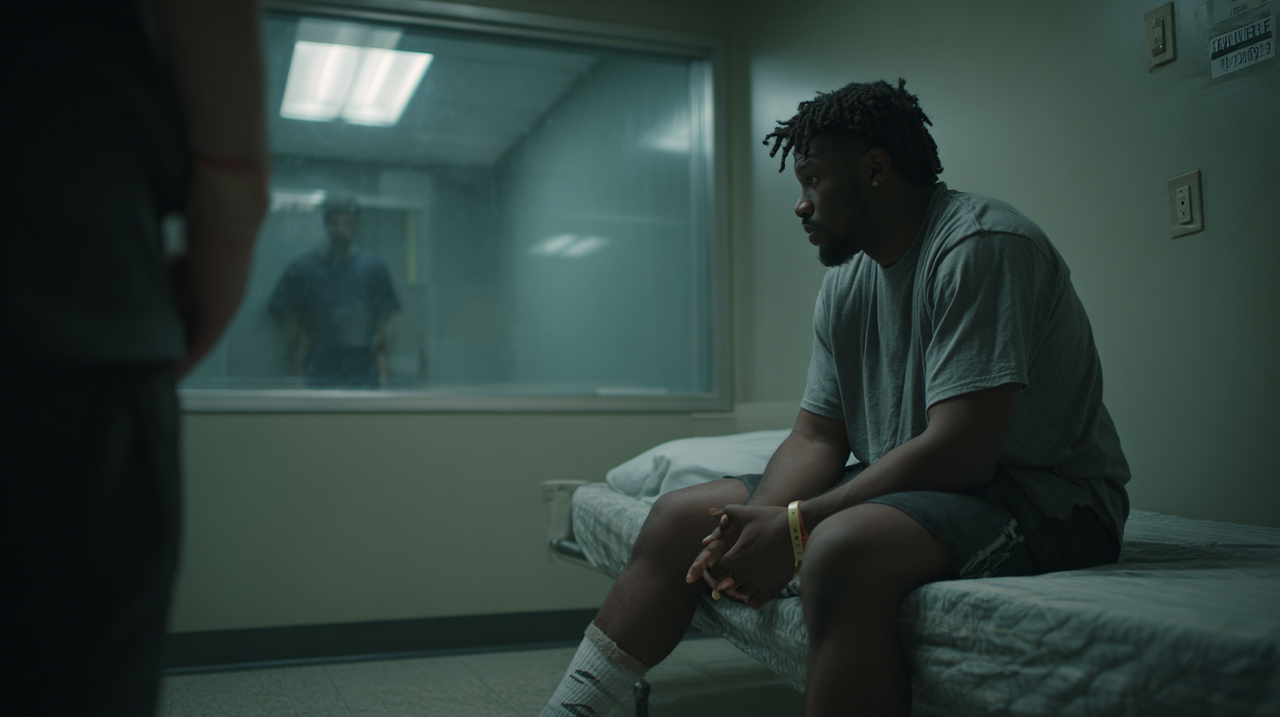
There is a particular kind of powerlessness that belongs only to the acute psychiatric ward. You may have arrived in the back of a police car. You may not be entirely sure where you are, or why, or for how long. The door is locked from a side that is not yours. The people who decide whether you eat, sleep, leave, or are held down and injected are strangers in lanyards, and the version of events that ends up in your file is theirs, not yours. Now imagine that somewhere in that file, beneath the clinical notes and the medication chart, a statistical model has quietly run the numbers on you and produced a score. The score says you are likely to become violent. You will never see it. You will probably never be told it exists. But it may shape, in ways no one will ever fully reconstruct, whether the next few days of your life involve a conversation or a set of restraints.
This is no longer a thought experiment. In March 2026, a team led by researchers at the Centre for Addiction and Mental Health (CAMH) in Toronto published a study in the journal npj Mental Health Research that did something the field had largely avoided doing: it took a machine learning model of the kind increasingly proposed for psychiatric wards, trained it on real hospital data, and then asked not whether it worked, but who it worked against. The answer, reported in April 2026 by outlets including News-Medical and MSN, was uncomfortable in a way that should travel far beyond Toronto. The model systematically overestimated the risk of aggression for Black, Middle Eastern, and Indigenous patients relative to white patients with comparable clinical pictures. It was, in the most literal sense, more suspicious of some people than of others, and its suspicion fell along the oldest fault lines in medicine.
The Machine That Watches the Ward
To understand why this matters, you first have to understand what these systems are and what they are being asked to do. Predicting aggression in acute psychiatric care is one of the oldest and most fraught tasks in the speciality. Clinicians have always had to make a guess, often within minutes of meeting someone, about whether a patient poses a danger to themselves or others. Get it wrong in one direction and someone is hurt. Get it wrong in the other and you have subjected a frightened, unwell person to force they did not need. For decades that guess relied on structured checklists and clinical instinct. The promise of machine learning is that a model trained on tens of thousands of past cases might do better, spotting patterns a human under pressure would miss.
The CAMH study made the mechanics concrete. The researchers, with Yifan Wang as lead author alongside senior scientists including Laura Sikstrom and Marta Maslej, trained a model on structured electronic health records from 17,703 unique patients across ten inpatient units at the hospital, covering 42,719 observation days between January 2016 and May 2022. The model itself was a random forest, an ensemble of decision trees, and on conventional measures it performed respectably, returning an area under the receiver operating characteristic curve of around 0.81. By the usual yardstick of predictive accuracy, in other words, it was the sort of result that gets a tool greenlit for a pilot.
That is precisely the problem. A model can hit its accuracy target overall while distributing its errors with grotesque unevenness. The CAMH team did not stop at the headline number. They broke the model's mistakes down by race and ethnicity, by gender, by housing status, by whether the patient had been brought in by police, and by the intersections between those categories. What they were measuring, in the language of algorithmic fairness, was the false positive rate: the proportion of people who were flagged as likely to become aggressive but who did not. A false positive is not an abstraction here. It is a person marked as a threat who was never going to be one.
The disparities were stark and they were patterned. The model's false positive rate sat at roughly 0.040 for white patients and 0.032 for Asian patients. For Indigenous patients it rose to 0.055, for Black patients to 0.069, and for Middle Eastern patients to 0.080, the highest of any group. Read those numbers slowly. A Middle Eastern patient was being wrongly flagged as a future aggressor at roughly twice the rate of a white patient with no greater propensity for violence. Layer gender on top and it sharpened further: Middle Eastern men carried a false positive rate of around 0.093. The single largest driver the researchers found was not skin colour in isolation but admission mode. Patients brought to hospital by police had a false positive rate of about 0.094, far above any other group, and unstable or absent housing pushed the figure to roughly 0.083. The model had, in effect, learned to treat contact with the criminal justice system and poverty as proxies for danger, and those proxies map onto race because the society that generated the data made them map that way.
Garbage In, Prejudice Out
The instinct of the technically minded is to reach for a fix. If the model is biased, debias the model. Reweight the data, add fairness constraints, strip out the offending variables. But the CAMH findings, and a companion paper published months earlier, point at something the engineering instinct struggles to grasp: the bias is not a bug in the algorithm. It is a faithful transcription of the world.
Consider where the training data comes from. An aggression label in a psychiatric record is not a measurement in the way a blood pressure reading is. It is a human judgement, recorded by a clinician, about whether a patient was threatening, agitated, or violent. That judgement is made by people working in a system with a long and documented history of perceiving danger differently depending on who is in front of them. When the model learns to predict aggression, it is not learning to predict an objective event in the world. It is learning to predict who a hospital's staff, over six years, decided to write up as aggressive. If those decisions were skewed, the model inherits the skew and launders it through the authority of mathematics.
That history is not subtle, and it is not ancient. In 1851 the American physician Samuel Cartwright coined the term drapetomania, a supposed mental illness whose symptom was the desire of enslaved people to escape captivity. It was pseudoscience in service of subjugation, and it established a template that has proven remarkably durable: the pathologising of Black resistance as madness. A century later, during the civil rights era, the diagnosis of schizophrenia in American psychiatry shifted in its public face from an affliction associated with white middle class women to a condition projected onto angry, protesting Black men, a phenomenon the psychiatrist Jonathan Metzl traced in his book The Protest Psychosis. The legacy persists in the present tense. Black patients in the United States are diagnosed with schizophrenia at well over twice the rate of white patients, a gap that studies have repeatedly failed to explain by any difference in actual illness.
If clinicians have historically been quicker to see Black and Indigenous patients as dangerous, disordered, or threatening, then the records they generate encode that quickness. A model trained on those records does not see the centuries of context. It sees a correlation, and it optimises for it. This is the deeper meaning of the companion research. In a paper published in Scientific Reports on 1 December 2025, a team including several of the same CAMH researchers, with lead author work by Vejandla and colleagues including Sikstrom, Ratto, Zaheer, and Maslej, examined how biased AI recommendations actually influenced human decision making during simulated mental health emergencies. They found that systems trained on health records overestimated violence risk for marginalised groups, with the AI in their biased conditions recommending police intervention for between 50 and 90 per cent of vignettes depicting at-risk groups, including Black patients, men, unhoused patients, and those with severe mental illness, compared with about 20 per cent of vignettes depicting no-risk groups, and with secondary analyses finding the disparity statistically significant only for vignettes depicting Black as opposed to white individuals. The disparity, in other words, was not a quirk of one model at one hospital. It was a property of what happens when you train statistical systems on data produced by an unequal system and then put their outputs in front of human beings.
When the Pop-Up Becomes the Patient's Reality
The most troubling finding of the December 2025 study was not the existence of the bias but the failure of the obvious remedies. The researchers tested cognitive forcing interventions, techniques designed to slow clinicians down and make them think independently before deferring to the machine. They tried delaying the AI's recommendation, asking participants to commit to an initial judgement first, and making the AI optional rather than automatic. In other domains, such nudges have helped people resist automated advice. Here, they largely did not. People exposed to a biased recommendation tended to absorb the bias regardless of the procedural speed bump in their way.
One variable did seem to offer some protection, and it is a quietly damning one. Participants who scored high on a psychological measure called need for cognition, essentially a disposition to enjoy and engage in effortful thinking, were more resistant to the discriminatory pull of the AI. The implication is that the safeguard against an unjust algorithm was not the system design at all but the individual intellectual temperament of whoever happened to be reading the screen. That is not a safeguard a hospital can rely on at three in the morning on an understaffed ward.
This is where the abstraction of false positive rates collides with the body. An algorithmic flag does not stay on a dashboard. In an acute setting, a prediction of imminent violence is an invitation to act pre-emptively, and the tools of pre-emption are physical. A patient deemed high risk is more likely to be watched more closely, escalated more quickly, and ultimately subjected to the interventions the ward keeps for danger: physical restraint, seclusion, and chemical sedation. These are not neutral acts of caution. They are among the most harmful things a hospital can lawfully do to a person.
The Hands That Hold You Down
It is worth being unsparing about what these interventions involve, because the language of clinical guidelines tends to sand off their reality. Physical restraint means several staff members holding a person down, often face down, sometimes binding their limbs to a bed. Seclusion means locking a distressed person alone in a bare room. Chemical restraint, sometimes euphemised as rapid tranquillisation, means the forced injection of sedating drugs into someone who has not consented and may be physically resisting. None of these are rare or marginal practices. They are the standard repertoire of the acute ward, applied many thousands of times a year across the world's psychiatric systems, and they are precisely the actions that an algorithmic risk flag is designed to make more probable.
The harms are documented and they are severe. A systematic review of physical harm and death in the context of coercive psychiatric measures found that death was the single most frequently reported adverse outcome, with mechanisms including cardiac arrest from chest compression during prone restraint, asphyxiation, and pulmonary embolism. The wider literature catalogues aspiration, rhabdomyolysis, blood clots, musculoskeletal injury, falls, and post-traumatic stress. Research on high dose sedation for acute behavioural disturbance has found that loading patients with more medication does not produce faster or better sedation but does produce more adverse effects, including cardiac problems and dangerous drops in blood oxygen. Beyond the physical, forced medication is associated with worse mental health outcomes and a lasting erosion of trust in treatment, with patients reporting stronger disapproval of their care months later. In 2023 the World Health Organization and the United Nations human rights office issued joint guidance calling for an end to coercive practices in mental health services altogether, language that frames restraint and seclusion not as regrettable necessities but as human rights violations.
Now lay the algorithm's bias over this landscape, and the stakes become clear. The interventions that an over-predicting model makes more likely are interventions that already fall unequally. A 2022 study in Psychiatric Services by Colin Smith and colleagues, examining 12,977 emergency psychiatric encounters, found that Black patients had significantly higher odds of being restrained even after adjusting for clinical factors: an adjusted odds ratio of 1.35 for physical restraint and 1.33 for chemical restraint, meaning roughly a third more likely in each case. The research on restraint-related deaths repeatedly notes the disproportionate presence of Black patients among the dead. An algorithm that overestimates the dangerousness of Black, Indigenous, and Middle Eastern patients does not introduce a new disparity into a fair system. It pours accelerant on a fire that has been burning for a very long time, and it does so while wearing the lab coat of objectivity.
The Vanishingly Small Print of Consent
What makes the psychiatric context distinct from almost every other arena where algorithmic bias has been studied is the near-total collapse of the patient's capacity to push back. When a biased model denies someone a loan or filters them out of a job applicant pool, the harm is real and the recourse is limited, but the person typically remains a free agent in the world, able in principle to ask questions, seek another lender, or hire a lawyer. The acutely unwell psychiatric inpatient has none of that. They may be detained involuntarily. They may be experiencing psychosis, which the surrounding system will treat as a reason to discount their account of events. They are frequently without an advocate, a family member, or anyone whose word carries weight against the clinical consensus. And the clinical authority arrayed against them is as close to absolute as exists anywhere in modern healthcare.
In that environment, the ordinary mechanisms of algorithmic accountability simply do not function. The idea that a patient might request an explanation of the model's logic, or contest its score, presumes a patient who knows the model exists, has the legal standing to challenge it, and possesses the cognitive and practical wherewithal to do so. Strip away those assumptions, as acute admission does, and you are left with a system that exercises power over people precisely in proportion to their inability to resist it. The patients most likely to be wrongly flagged, those brought in by police, those without stable housing, those who are Black or Indigenous or Middle Eastern, are very often the same patients least equipped to contest the flag. The bias and the powerlessness are not two separate problems. They compound.
What the Hospital Owes You
So what is actually owed, and by whom? Start with the hospitals, because they are where the abstraction becomes a person on a bed. A hospital that deploys a predictive model is making a clinical decision on behalf of every patient who passes through it, and the ordinary duties of medicine do not evaporate because a computer is involved. The first obligation is the most basic and the most frequently dodged: do not deploy a tool you have not tested for disparate harm. The striking thing about the CAMH work is how rare it remains. The researchers themselves framed their study as first-of-its-kind, which is an indictment of a field that has spent years celebrating predictive accuracy without routinely asking whose errors it is built on. A hospital that cannot say, in numbers, how its model's false positive rate varies by race has not done the work, and deploying anyway is not innovation but negligence.
The second obligation is to keep a human meaningfully in the loop, and to mean it. The December 2025 findings are a warning here, because they show that simply having a clinician read the output is not enough; the clinician absorbs the bias. Meaningful human oversight cannot be a rubber stamp on a screen. It has to be structured so that the model's suggestion can be genuinely overridden, so that staff are trained to interrogate rather than defer, and so that the institution treats an algorithmic flag as one contestable input rather than a verdict. The third obligation concerns the interventions themselves. If restraint, seclusion, and forced sedation are the downstream consequences of a flag, then any hospital using such a model owes its patients rigorous, race-disaggregated monitoring of those very interventions, with the explicit question of whether the algorithm is widening existing gaps. A model that quietly increases the coercion of already over-coerced groups is not a clinical aid. It is a liability dressed as one.
What the Builders Owe You
The developers who build these systems carry obligations of their own, and they cannot offload them onto the hospital that buys the product. The most fundamental is honesty about what the model actually predicts. A system marketed as predicting violence does not predict violence. It predicts recorded labels of aggression, which is a different and far more contaminated quantity. Developers know this, or should, and the gap between the marketing claim and the statistical reality is where much of the harm hides. A tool sold as objective when it is in fact a mirror of historical bias is mis-sold, and the consequences of that mis-selling are measured in restraints applied to the wrong people.
Beyond honesty comes the duty to test. Fairness auditing of the kind the CAMH team performed should be a precondition of release, not an academic afterthought published years into deployment. That means measuring false positive and true positive rates across racial, gender, housing, and admission-mode subgroups, and across their intersections, because the CAMH data showed that the worst disparities lived at the intersections. It means being transparent about those results to the institutions that buy the tool and, ideally, to the public. And it means accepting that some models should not ship. A system whose errors fall predictably on the most vulnerable patients in the building is not improved by a disclaimer. The CAMH researchers have since secured funding to develop a fairness-aware successor tool, which is the constructive response, but the existence of a better future tool does not retroactively justify deploying a biased one today.
There is also a harder, more philosophical duty here, one the field has been slow to confront. A growing body of work, including the CAMH team's own framing, suggests that the most honest use of these models may not be to predict individual patients at all, but to detect systemic bias in the institutions that generate the data. Turn the lens around. Instead of asking the algorithm to tell you which patient is dangerous, ask it to tell you where your hospital's own judgements are skewed. That reframing, from individual risk prediction to institutional self-examination, is one of the few genuinely promising paths out of the trap, because it uses the model's pattern-finding power against the bias rather than in service of it.
What the Regulators Owe You
Then there are the regulators, who are, at present, mostly absent from the bedside. The regulatory architecture for clinical AI is being built in real time, and it is being built largely around the wrong questions. Under the European Union's AI Act, AI systems used in healthcare are designated high-risk, a classification that brings obligations around transparency, documentation, and human oversight, with major requirements scheduled to phase in across 2026 and beyond (though in May 2026 the Council of the EU and the European Parliament reached a provisional agreement, under the Digital Omnibus initiative, to postpone the high-risk obligations, deferring the requirements for standalone high-risk systems under Annex III until 2 December 2027 and those for high-risk AI embedded in regulated products such as medical devices under Annex I until 2 August 2028). High-risk status is the right instinct, but a designation is only as good as its enforcement, and the Act's transparency requirements run into the same wall that defeats the patient: meaningful explanation of an opaque model remains, by the regulators' own admission, largely undefined in practice.
The data protection regime offers a sharper, if narrower, tool. Article 22 of the General Data Protection Regulation gives people the right not to be subject to decisions based solely on automated processing where those decisions have significant effects, along with rights to obtain human intervention, to express their view, and to contest the outcome. On paper, a violence prediction that channels someone towards restraint is exactly the kind of significant automated decision the provision was written for. In the psychiatric ward, however, the law's assumptions break down. Article 22 protects decisions made solely by automation, and a hospital can defeat the protection simply by keeping a clinician nominally in the loop, even one who, as the December 2025 study showed, may be doing little more than ratifying the machine's bias. The right to contest presupposes a person able to exercise it, which the acute patient frequently is not. The regulation was built for the credit application and the recruitment filter, not for the locked ward, and it shows.
What patients actually need from regulators is more specific than anything currently on the books. They need a right to know, in plain terms, that an algorithm has assessed them and what it concluded, with that disclosure made not in the moment of acute crisis but as a matter of standard record that they or their advocate can later examine. They need a presumption that algorithmic risk scores are disclosable in any review of restraint or seclusion, so that a coercive intervention can be challenged on the basis of the evidence that helped trigger it. They need mandated, published fairness audits as a condition of clinical deployment, with the false positive disparities the CAMH team measured treated as the floor of what must be reported, not a research novelty. And they need the human oversight requirement to have teeth, defined not by the presence of a clinician but by demonstrable, structured independence of judgement from the model's output.
The Right to Know You Were Suspected
Underneath all the specific obligations sits a single principle that the law has not yet caught up to, and it is the one a person on the ward would care about most. If a system has assessed you as a threat, you have a right to know it did. That right does not depend on whether you can understand the mathematics, or whether the model was accurate, or whether you were ultimately restrained. It is prior to all of that. It is the difference between being a patient and being a suspect, between care and surveillance, between a person whose treatment is being negotiated and an object whose behaviour is being managed.
The reason this right is so easily denied is the same reason it matters so much. The whole logic of pre-emptive risk prediction is that it works on you before you have done anything, which means it works best when you do not know it is working. A flag that the patient could see and contest is a flag with friction, and friction is precisely what the efficiency case for these tools is designed to remove. So the systems are built to be invisible, and the invisibility is not incidental. It is the point. The acutely unwell patient is the ideal subject for an opaque algorithm precisely because they are in no position to demand the lights be turned on.
There is a version of the future where this technology helps. Used to audit institutions rather than to judge individuals, tested relentlessly for disparate harm, kept subordinate to genuinely independent human judgement, and made visible to the people it assesses, a model could in principle expose the very biases it currently encodes. The CAMH team's pivot towards building a fairness-aware tool and towards using these methods to surface systemic inequity rather than to predict patients is a glimpse of that future, and it deserves to be taken seriously rather than dismissed as naive.
But the present is the present. Right now, in wards on more than one continent, the default trajectory is the opposite one: quiet deployment, accuracy figures that flatter the tool while hiding who it fails, oversight that defers rather than challenges, and patients who will never learn that a number was attached to their name. The people most exposed to that trajectory are the ones who have always been most exposed to the wrong end of psychiatric power: the Black patient brought in by police, the Indigenous patient without stable housing, the Middle Eastern man already statistically twice as likely to be wrongly marked as dangerous. The machine did not invent their predicament. It learned it, from us, and it is now prepared to repeat it with a confidence no human clinician could ever quite muster. The question the CAMH study leaves hanging is not whether the algorithm is biased. We know that it is. The question is whether the people it judges will ever be allowed to know it too.
References
Wang, Y., Sikstrom, L., Xiao, R., Findlay, Z., Zaheer, J., Hill, S. L., & Maslej, M. M. (2026). Fairness analysis of machine learning predictions of aggression in acute psychiatric care. npj Mental Health Research, 5, Article 16. https://www.nature.com/articles/s44184-026-00194-6
Centre for Addiction and Mental Health. (2026, April 7). First-of-its-Kind Study Shows AI Risk Prediction Tools in Psychiatry Can Reinforce Systemic Bias. CAMH News and Stories. https://www.camh.ca/en/camh-news-and-stories/rsch-study-shows-ai-risk-prediction-tools-in-psychiatry-can-reinforce-systemic-bias
News-Medical. (2026, April 7). AI models may amplify bias in psychiatric aggression predictions. https://www.news-medical.net/news/20260407/AI-models-may-amplify-bias-in-psychiatric-aggression-predictions.aspx
MSN / Medical Xpress. (2026, April). AI risk prediction tools in psychiatry can reinforce systemic bias. https://www.msn.com/en-us/health/other/ai-risk-prediction-tools-in-psychiatry-can-reinforce-systemic-bias/ar-AA20n69Y
Vejandla, S., Ray, A., Sikstrom, L., Ratto, M., Zaheer, J., & Maslej, M. M. (2025, December 1). Impacts of cognitive forcing and need for cognition on biased AI-assisted decision making about mental health emergencies. Scientific Reports. https://www.nature.com/articles/s41598-025-30506-3
Smith, C. M., Turner, N. A., Thielman, N. M., Tweedy, D. S., Egger, J., & Gagliardi, J. P. (2022). Association of Black Race With Physical and Chemical Restraint Use Among Patients Undergoing Emergency Psychiatric Evaluation. Psychiatric Services. https://psychiatryonline.org/doi/10.1176/appi.ps.202100474
Kersting, X. A. K., et al. (2019). Physical Harm and Death in the Context of Coercive Measures in Psychiatric Patients: A Systematic Review. Frontiers in Psychiatry. https://www.ncbi.nlm.nih.gov/pmc/articles/PMC6580992/
Calver, L. A., et al. (2013). A prospective study of high dose sedation for rapid tranquilisation of acute behavioural disturbance in an acute mental health unit. BMC Psychiatry. https://pmc.ncbi.nlm.nih.gov/articles/PMC3848824/
World Health Organization & Office of the United Nations High Commissioner for Human Rights. (2023). Mental Health, Human Rights and Legislation: Guidance and Practice. https://www.who.int/publications/i/item/9789240080737
Metzl, J. M. (2009). The Protest Psychosis: How Schizophrenia Became a Black Disease. Beacon Press. See also: Schwartz, R. C., & Blankenship, D. M. discussion in American Journal of Psychiatry. https://psychiatryonline.org/doi/full/10.1176/appi.ajp.2009.09101398
American Psychological Association reporting on schizophrenia overdiagnosis, summarised in: Amsterdam News. (2025, September 4). Racial bias in medicine is driving the overdiagnosis of schizophrenia in Black patients. https://amsterdamnews.com/news/2025/09/04/racial-bias-driving-overdiagnosis-of-schizophrenia-in-black-patients/
European Union. Artificial Intelligence Act, Annex III: High-Risk AI Systems. https://artificialintelligenceact.eu/annex/3/
Tandem Health. EU AI Act explained: what healthcare organisations need to know. https://tandemhealth.ai/resources/knowledge/eu-ai-act-explained-what-healthcare-organisations-need-to-know
Goldsteen, A., et al. A health-conformant reading of the GDPR's right not to be subject to automated decision-making. Medical Law Review, 32(3), 373. https://academic.oup.com/medlaw/article/32/3/373/7732100
GDPR Article 22: Automated Decision-Making, Profiling, and Your Rights. https://gdprinfo.eu/gdpr-article-22-explained-automated-decision-making-profiling-and-your-rights

Tim Green UK-based Systems Theorist & Independent Technology Writer
Tim explores the intersections of artificial intelligence, decentralised cognition, and posthuman ethics. His work, published at smarterarticles.co.uk, challenges dominant narratives of technological progress while proposing interdisciplinary frameworks for collective intelligence and digital stewardship.
His writing has been featured on Ground News and shared by independent researchers across both academic and technological communities.
ORCID: 0009-0002-0156-9795 Email: tim@smarterarticles.co.uk
Listen to the free weekly SmarterArticles Podcast
Weekly update
from  The happy place
I have been drinking so much coffee today that my urine looks a little bit like coffee too.
That’s why it’s half past two, but I’m still awake at my friend’s place at the loft, near the ceiling.
It used to be a bright and warm day with a big sun followed by a big almost full moon and a pleasant summer evening, but now I hear the sound of rain.
He got married today, technically it was yesterday. And it was a merry and touching event, now existing only as a memory with I will take with me to my grave. I think.
The day before the day before that one, in the evening, upon my arrival, we sat on his veranda drinking beers until it got dark, sharing a bottle of Jägermeister. It made me very drunk. I didn’t expect we’d drink the whole bottle, but we did.
Talking of this and that, smoking a pipe like two sailors.
Drinking Jägermeister.
And that night I slept like a stone
I have been feeling many emotions these days
But right now, I don’t feel anything in particular.
あなたはもう聴いている:Penguin Cafe Orchestraという忘れられた名前
from Hiroaki Satou's Music Blog
ある日、BBC Radio 3の「Late Junction」から流れてきた音楽に、私は手を止めた。弦楽器とギターが踊るように絡み合う、聴いたことのない音楽だった。曲名とバンド名をメモして、アルバムを聴き始めた。そうして何枚か掘り進めていくうちに、ふいに気づいた瞬間があった。HPのCMで何年も耳にしていた、あの旋律が流れてきたのだ。
Penguin Cafe Orchestra。その名前を知るまで、私はすでに何年もその音楽とともに生きていた。
「知っているけれど、誰の音楽か知らない」。Penguin Cafe Orchestraとはそういう存在だ。
食中毒の夢から生まれた音楽
Penguin Cafe Orchestraを語るには、まず1972年の南フランスから始めなければならない。イギリス人ギタリストのSimon Jeffes(サイモン・ジェフス)は、そこで腐った魚を食べて体調を崩した。病床に就いたSimonは、高熱のなかで奇妙なビジョンを繰り返し見た。
そのビジョンをArthur Jeffes(Simonの息子)が後年こう語っている。「父は近未来の悪夢を見た。人々はコンクリートの巨大な建物に住み、画面を見つめて生きていた。部屋の隅には大きなカメラがあり、常に監視されていた。ある部屋では愛のないセックスをしているカップルがいて、別の部屋では膨大な機材に囲まれたミュージシャンがいた――しかしヘッドフォンをつけているので、部屋には実際には音楽が鳴っていなかった」
この非人間的な世界の対極にあるものとして、Simonは夢のなかで「ペンギンカフェ」を見た。薄暗い道を歩いていくと、光と騒音があふれ出る古びた建物がある。中に入ると長いテーブルがあり、見知らぬ人々が肩を並べて座っている。奥では楽団が演奏している——どこかで聴いたことがあるような、でも思い出せないような音楽を。
熱が下がったSimonは決意した。その夢の楽団が奏でる音楽を自分で書こう、と。そうして1972年に生まれたのがPenguin Cafe Orchestraである。
「オーケストラ」という名の室内楽
「Orchestra(オーケストラ)」という名称から、多くの人は大編成の管弦楽団を想像するだろう。だが実際のPenguin Cafe Orchestraは、その言葉のイメージとはかけ離れた、小さなアンサンブルだった。
ギター、チェロ、ヴァイオリン、ウクレレ、トロンボーン、打楽器。メンバーは曲によって流動的に変わり、ハーモニウム(足踏み式オルガン)やペニーホイッスル、さらにはゴムバンドや電話の発信音まで楽器として用いた。これはどう見ても室内楽——あるいはそれ以上に自由な、カテゴリーを拒む音楽だった。
「Orchestra」という名称はSimonのユーモアであり、音楽的なマニフェストでもあった。権威ある響きを持つ言葉を借用しながら、その概念を静かに解体する。大ホールを満たすような音楽ではなく、カフェの奥で演奏されるような、親密で体温のある音楽。それがSimonの目指したものだった。
「Perpetuum Mobile」(1987年)。15/8拍子という変拍子で書かれたこの曲は、終わりそうで終わらない、永遠運動機械のような感覚を持つ。『The Handmaid's Tale/侍女の物語』のTVドラマや映画『Mary and Max』のテーマとしても知られる。
同時代の音楽と、イギリス的なもの
1976年にデビューアルバムをリリースしたPenguin Cafe Orchestraは、同時代のさまざまな音楽の流れの上に立っていた。
アメリカではSteve ReichやPhilip Glassがミニマル・ミュージックを展開していた時期だ。繰り返しのパターン、声部の積み重ね、静かな変容——PCOの音楽にもそれに似た構造がある。しかしミニマリズムの持つ抽象性や冷ややかさとは、PCOは明らかに一線を画している。
現代音楽としてのミニマル・ミュージックが知的な構造美や厳格さを追求するのに対し、PCOの音楽には底抜けの遊び心がある。ゴムバンドを楽器にしたり、電話の発信音をループさせたり、「Telephone and Rubber Band」という曲名そのままに笑いを音楽に持ち込む。変拍子も複雑な対位法も、PCOの手にかかれば難解さではなくユーモアになる。ミニマリズムの語法を借りながら、その緊張感をほぐしてしまう——そこにSimon Jeffesという人物の独自性があった。
その遊び心の源泉のひとつが、イギリスおよびアイルランドの伝統音楽(トラッド)にあると思う。トラッドには、リールやジグといった舞曲のために短いフレーズを繰り返す構造が古くから根付いている。踊り続けるための反復、少しずつ変化しながら循環するメロディ——それはミニマル・ミュージックが知的に追求したものと、形は違えど本質的に近い。PCOはその二つの反復を、学術的な文脈ではなく身体的な喜びとして音楽に持ち込んだ。
象徴的なのが「Music for a Found Harmonium」の誕生秘話だ。Simonが日本ツアー中に路上で偶然見つけた古びた足踏みオルガン。その不完全な楽器から生まれたシンプルなメロディは、あまりにも自然にアイルランドのリール(伝統舞曲)の文法に溶け込んでいたため、Patrick Street、De Dannan、Kevin Burke、Sharon Shannonといったトラッドの名手たちが「自分たちの音楽」として次々とカバーしていった。クラシックでも現代音楽でもなく、人々が踊り、笑い、騒いできた音楽の記憶——それがPCOのユーモアと遊び心を支えていた。
デビューアルバムはBrian Enoが主宰したObscure Recordsからリリースされた。Enoのアンビエント音楽は「聴かれることも、無視されることもできる」という静的な空間の提示だった。対してSimonのビジョンは、人々が集まるカフェという場所の熱量やノイズを内包するものだった。PCOの音楽がどこか人懐っこいのは、Enoの「無人」の気配に対して、常に体温のある他者を感じさせるからかもしれない。同じ頃、Kraftwerkはテクノという新しい音楽の言語を作り出していた。PCOはそれらの同時代的な問いを共有しながら、しかしより人間的な方向へ、より温かい場所へ向かった。
フォークの躍動感、ミニマリズムの構造、アンビエントの空気感、そして室内楽の親密さ。これらをイギリス的な叙情性でひとつに溶かしたもの——それがPenguin Cafe Orchestraの音楽だったと思う。Philip Glassの冷たさもなく、Enoの没個性もなく、Kraftwerkの機械性もなく、もっと人間的で、もっとほころびがあって、もっと笑いがある。
「Music for a Found Harmonium」(1984年)。路上で見つけた足踏みオルガンからインスピレーションを得た楽曲。アイルランドのトラッドミュージシャンたちにカバーされ、映画「Napoleon Dynamite」でも使用された。
成功と、忘却と、遍在
Penguin Cafe Orchestraは「無名」ではなかった。1987年のアルバム「Signs of Life」はイギリスのチャートにランクインし、世界中をツアーした。日本でも人気を博し、ロイヤル・バレエが彼らの楽曲をバレエ作品に採用した。The South Bank ShowやTerry Woganのテレビ番組にも出演した。
しかし私が生まれた年(1976年)にデビューアルバムがリリースされた彼らの音楽は、今となっては「古い」。ストリーミング時代のアルゴリズムは新譜を優先し、Simon Jeffesは1997年に脳腫瘍で48歳の若さで世を去った。新しい音楽が生まれることも、新しいツアーが行われることもなくなった。
それでも音楽は生き続けた。映画のスコアとして、テレビドラマのサウンドトラックとして、CMの背景音楽として。HPを筆頭に数多くの企業広告に使用され、『The Handmaid's Tale/侍女の物語』『Mary and Max』『Napoleon Dynamite』『Capitalism: A Love Story』——これほど多くの映像作品にPCOの音楽が使われてきた。
「知っているけれど、誰の音楽か知らない」現象は、つまりこういうことだ。音楽は知名度を失った後も、別の回路で人々の耳に届き続けた。名前だけが、時代の流れのなかに置き去りにされた。
息子が継いだもの
Simon Jeffesの死から10年後の2007年、元メンバーたちがロンドンのUnion Chapelで追悼コンサートを開いた。そのステージに、Simonの息子Arthur Jeffes(アーサー・ジェフス)がパーカッションとキーボードで参加した。3公演はすべて売り切れだった。
その反響に背を押されたArthurは、2009年に「Penguin Cafe」という新たなバンドを結成した。元PCOのメンバーは一人も含まれない、全く新しいアンサンブルで。
Arthurはケンブリッジ大学で考古学と人類学を学んだ知性の人であり、同時に実験音楽への情熱を持つ音楽家でもある。幼少期にピアノの鍵盤をハンマーで叩いたエピソードが伝わっているが、父Simonはそれを「実験精神の芽生え」と捉えたという。
Penguin Cafeとして5枚のアルバムをリリースし、そのすべてがErased Tapes——Nils FrahmやÓlafur Arnalds、Johann Johannssonを擁するポストクラシカルの名門レーベル——から出ている。この事実は、ArthurがただSimonの遺産を守るだけでなく、現代のポストクラシカルやネオクラシカルの文脈にPenguin Cafeの音楽を新たに位置づけていることを示している。
Penguin Cafeに息づく反復構造とユニークな遊び心のなかに父親の作り出した音楽の影響の大きさを見て取るのはたやすい
カフェの奥で、今も
最新アルバム「Rain Before Seven…」(2023年)は、Arthurが率いるPenguin Cafeの現時点での到達点だ。「Rain before seven, fine before eleven(七時前に雨が降れば、十一時には晴れる)」という古いイギリスの天気のことわざをタイトルに持つこのアルバムは、父の音楽の精神を引き継ぎながら、Arthurの独自の声でそれを語り直している。
ヴァイオリン、チェロ、コントラバス、打楽器にバラフォン、ウクレレ、メロディカ。Simonがゴムバンドや電話音を楽器にしたように、Arthurも「予想外の音」を室内楽の文脈に持ち込む。その姿勢は一貫して父の哲学に忠実だ——「面白い、少し変な発想を取り上げて、変なことをする。でも美しく、感情的にアクセスできる音楽として」。
夢のカフェは今も続いている。奥の楽団は演奏を続けている。そしてあなたはきっと、すでにその音楽を聴いている。ただ、その名前を知らなかっただけで。
Sonnet 7
from  Hunter Dansin
New England Stoicism
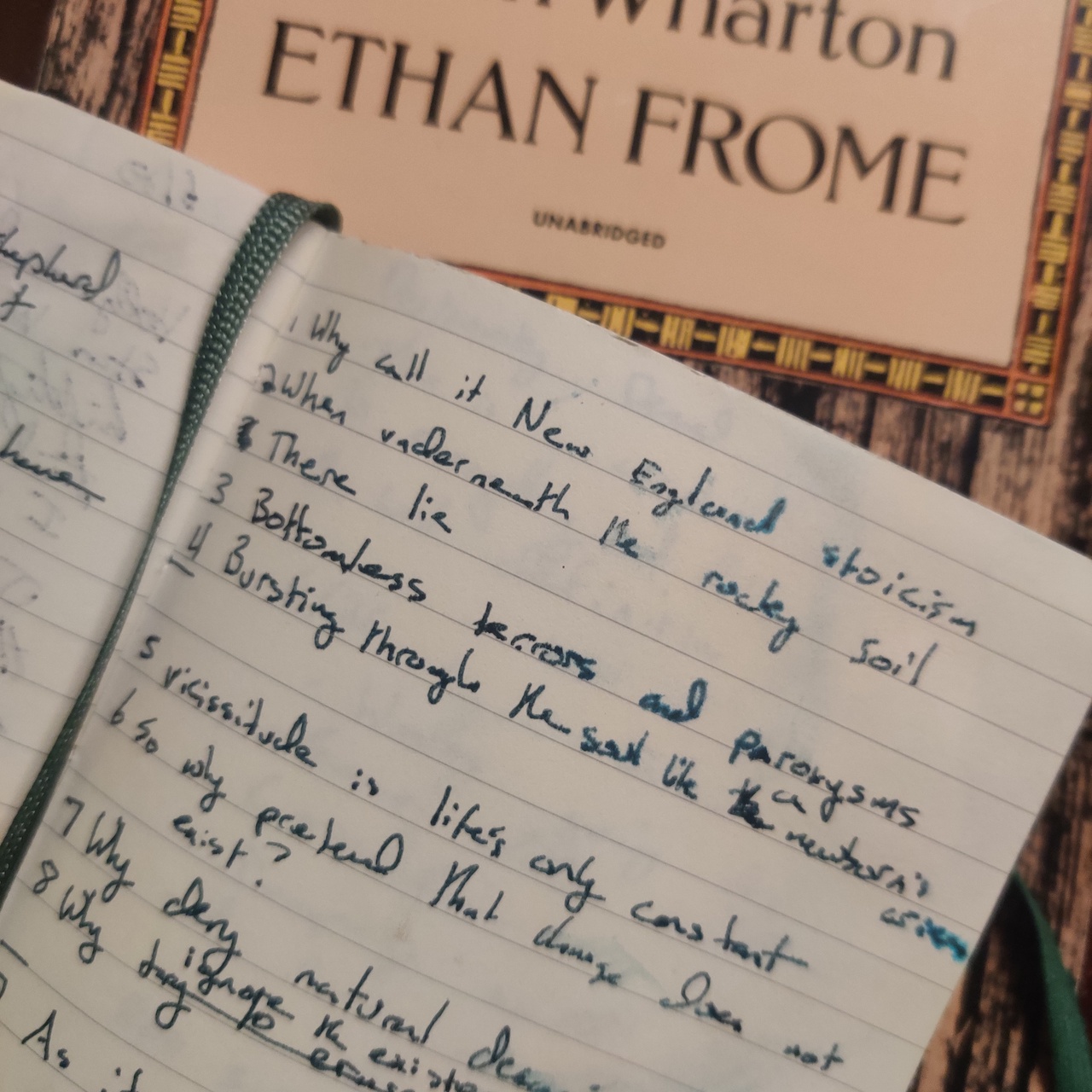
Why call it New England Stoicism, When underneath the rocky soil, there lie Bottomless terrors and paroxysms, Bursting through the soul like a newborn's cries? Vicissitude is life's only constant. So why pretend that change does not exist? Why deny natural decay's portents? Why ignore the existence of death's list? As if your old house were Buckingham Palace? And its unused china something precious? Preserving only what you miss, will miss Those moments in life that are most precious, For which we will be judged at heaven's gate. Change must be allowed to change; too late!
This sonnet was inspired by living in New England and Ethan Frome.
Thank you for reading! I greatly regret that I will most likely never be able to meet you in person and shake your hand, but perhaps we can virtually shake hands via my newsletter, social media, or a cup of coffee sent over the wire. They are poor substitutes, but they can be a real grace in this intractable world.
Send me a kind word or a cup of coffee:
Buy Me a Coffee | Listen to My Music | Listen to My Podcast | Follow Me on Mastodon | Read With Me on Bookwyrm | Connect With Me on Substack
How to self-host your own tangled git server without Bluesky
from Suranyami
A confession before the recipe, because I'd rather be honest than look clever: I am not an AT Protocol expert, and I'm no great sysadmin either. What follows is a recipe I stitched together from trial, error, docs read sideways, and a lot of pairing with an LLM that knew the bits I didn't. It works — I'm running it right now — but if any of it reads as authoritative, that's hard-won, not pre-loaded.
Right. What are we actually building?
- tangled — a federated git host. Think GitHub, except no single company owns the whole thing; anyone can run a piece and the pieces talk to each other.
- The piece you run is, in tangled's words, a “knot”. I think that name is daft, so I'll call it a tangled server. It's the bit that actually holds your repositories.
- To own one you need an AT Protocol identity. AT Protocol is the open plumbing under Bluesky — and, crucially, not Bluesky. Your identity there is a DID (a permanent ID that's genuinely yours, not rented from anyone) anchored to a PDS (Personal Data Server — the box that holds your identity and data).
The lazy way to get that identity is to sign up for Bluesky. I'm in Australia, where that now means handing over a face scan, a credit card, or a photo of my ID for “age verification”. Hard no. So I run my own PDS instead, and the identity never touches Bluesky.
See this post for the painful experience that was to set up.
At the end of this you'll have a working git host on your own domain, registered on the tangled network, owned by an identity you fully control.
Two moving parts:
- A PDS — the official Bluesky reference PDS. It's open source; “Bluesky the company” and “Bluesky's software” are different things, and this is the software. It mints and hosts your DID.
- A tangled server — configured to be owned by the DID from part 1.
I run both on eon, a Raspberry-Pi-class box, behind my cluster's reverse proxy (Caddy) via uncloud. The uc deploy / x-ports lines below are uncloud's way of saying “publish this service”; if you're on plain Docker Compose, swap them for however you do reverse-proxy ingress. Everything else carries over.
What you'll need
- A host that can run a container, reachable on ports 80/443 (I'm assuming a reverse proxy out front terminating TLS).
- A domain you control DNS for. I point a wildcard
*.suranyami.comat my cluster edge, sopds.suranyami.comandknot.suranyami.comboth resolve and get auto-issued certs with no per-host records. - Somewhere durable to keep data on local disk. Not NFS — these services use SQLite, and SQLite over a network share is a recipe for corruption. (I learned that one the hard way on an unrelated service. Different post.)
openssl,curl, andjqon whatever machine you run the setup commands from.
Step 1 — stand up the PDS
Make the three secrets
The PDS needs three secret values. These are the commands the upstream installer uses; I didn't invent them, I lifted them:
# JWT signing secret
openssl rand --hex 16

# admin password (HTTP basic-auth for the admin API)
openssl rand --hex 16

# PLC rotation key — a secp256k1 private key, in hex. THIS IS YOUR IDENTITY.
openssl ecparam --name secp256k1 --genkey --noout --outform DER \
  | tail --bytes=+8 | head --bytes=32 | xxd --plain --cols 32
⚠️ Back up that rotation key like your identity depends on it, because it does. It's the cryptographic key that controls your DID. Lose it and the identity is gone for good — and your git server's ownership goes with it. Drop all three into a gitignored .env, and put the rotation key in your password manager on top of that:
# .env (gitignored)
PDS_JWT_SECRET=...
PDS_ADMIN_PASSWORD=...
PDS_PLC_ROTATION_KEY_K256_PRIVATE_KEY_HEX=...
The service definition
This is the upstream compose file with everything I didn't want stripped out — no bundled reverse proxy, no host networking, no auto-updater — because my cluster already does TLS and proxies it through to port 3000:
# services/pds.yml
services:
  pds:
    image: ghcr.io/bluesky-social/pds:0.4
    environment:
      PDS_HOSTNAME: pds.suranyami.com
      PDS_PORT: "3000"
      PDS_JWT_SECRET: ${PDS_JWT_SECRET}
      PDS_ADMIN_PASSWORD: ${PDS_ADMIN_PASSWORD}
      PDS_PLC_ROTATION_KEY_K256_PRIVATE_KEY_HEX: ${PDS_PLC_ROTATION_KEY_K256_PRIVATE_KEY_HEX}
      PDS_DATA_DIRECTORY: /pds
      PDS_BLOBSTORE_DISK_LOCATION: /pds/blocks
      PDS_DID_PLC_URL: https://plc.directory
      PDS_BSKY_APP_VIEW_URL: https://api.bsky.app
      PDS_BSKY_APP_VIEW_DID: did:web:api.bsky.app
      PDS_CRAWLERS: https://bsky.network
      PDS_SERVICE_HANDLE_DOMAINS: .suranyami.com   # allows handles like forge.suranyami.com
      PDS_INVITE_REQUIRED: "true"                  # no open signups; admin creates accounts
    volumes:
      - /bricks/eon-1/pds:/pds                      # SQLite + blobstore (local disk)
    x-ports:
      - pds.suranyami.com:3000/https               # web/API via cluster Caddy (TLS auto)
    x-machines:
      - eon
    restart: always
Make the data dir on the host first (mkdir -p /bricks/eon-1/pds), then deploy. With uncloud the secrets get pulled from .env at deploy time:
set -a; . ./.env; set +a
uc deploy -y -f services/pds.yml
Check it's alive:
curl -s https://pds.suranyami.com/xrpc/_health
# {"version":"0.4.x"}
Step 2 — create your identity
Heads up: this particular PDS image ships without the pdsadmin helper that the docs assume you have. Took me a minute to work out you can just talk to the admin API directly instead. Signups are invite-only (that's the PDS_INVITE_REQUIRED line above), so mint yourself an invite first — the -u admin:... is the admin password doing HTTP basic auth:
set -a; . ./.env; set +a

curl -s -X POST https://pds.suranyami.com/xrpc/com.atproto.server.createInviteCode \
  -u "admin:${PDS_ADMIN_PASSWORD}" \
  -H "Content-Type: application/json" \
  -d '{"useCount": 1}'
# → {"code":"pds.suranyami.com-xxxxx-xxxxx"}
Then create the account with that code:
curl -s -X POST https://pds.suranyami.com/xrpc/com.atproto.server.createAccount \
  -H "Content-Type: application/json" \
  -d '{
    "email": "admin@suranyami.com",
    "handle": "forge.suranyami.com",
    "password": "<a-strong-account-password>",
    "inviteCode": "<code-from-above>"
  }'
# → { "did": "did:plc:...", "handle": "forge.suranyami.com", ... }
Run that exactly once. Run it twice and the PDS throws Handle already taken back at you — which isn't a new failure, it's the first run having succeeded. To redo an account you delete it through the admin API first; you don't re-create over the top of it.
Save the returned DID and the account password into .env (PDS_ACCOUNT_DID, PDS_ACCOUNT_HANDLE, PDS_ACCOUNT_PASSWORD). The DID is the thing your git server gets owned by, so keep it handy.
A handle gotcha that caught me out: the PDS quietly reserves a pile of role-ish handles.
admin,git,code,repo,devandsourceare all taken before you even start, andcreateAccountjust rejects you.forge,ops,vcs,scm,tangled,knotandhubwere free — I went withforge.suranyami.combecause it names the job (a git host), not me. If your handle gets bounced, this is why.
Step 3 — prove the handle is yours
The wildcard DNS gets the web address resolving, but the handle itself needs a separate proof so tangled (and the login flow) will trust that forge.suranyami.com really is you. That proof is a DNS TXT record — a little text note attached to a DNS name:
host:  _atproto.forge.suranyami.com
value: did=did:plc:tg42msv45ief3qphccenrogh
The explicit _atproto record wins over the wildcard for that one name. Check it resolved, and that the PDS agrees the handle maps to your DID:
dig +short TXT _atproto.forge.suranyami.com
# "did=did:plc:tg42msv45ief3qphccenrogh"

curl -s "https://pds.suranyami.com/xrpc/com.atproto.repo.describeRepo?repo=forge.suranyami.com" \
  | jq '{handle, did: .didDoc.id, handleIsCorrect}'
# handleIsCorrect: true
handleIsCorrect: true is the bit you're after.
Step 4 — stand up the tangled server
tangled's server image lives in tangled's own registry, atcr.io, which is private and checks AT Protocol identities at the door. So you log in to it with your self-hosted handle and an app-password — a throwaway password scoped to one tool, so you're not handing your real account password to the docker CLI.
Mint one from your PDS:
set -a; . ./.env; set +a

ACCESS=$(curl -s -X POST https://pds.suranyami.com/xrpc/com.atproto.server.createSession \
  -H "Content-Type: application/json" \
  -d "{\"identifier\":\"${PDS_ACCOUNT_DID}\",\"password\":\"${PDS_ACCOUNT_PASSWORD}\"}" \
  | jq -r .accessJwt)

curl -s -X POST https://pds.suranyami.com/xrpc/com.atproto.server.createAppPassword \
  -H "Authorization: Bearer ${ACCESS}" \
  -H "Content-Type: application/json" \
  -d '{"name": "atcr"}'
# → {"password":"xxxx-xxxx-xxxx-xxxx", ...}   ← store as KNOT_ATCR_APPPW in .env
Log the host that'll run the server into the registry (run this on that machine):
docker login atcr.io -u forge.suranyami.com # paste the app-password
Now the service itself. The one line that ties this whole thing to you is KNOT_SERVER_OWNER — your DID from Step 2. (Yes, the env vars insist on calling it a knot. I've made my peace with the YAML if not the branding.)
# services/knot.yml
services:
  knot:
    image: atcr.io/tangled.org/knot:latest
    environment:
      KNOT_SERVER_HOSTNAME: knot.suranyami.com
      KNOT_SERVER_OWNER: did:plc:tg42msv45ief3qphccenrogh   # your self-hosted DID
      KNOT_SERVER_DB_PATH: /app/knotserver.db
      KNOT_REPO_SCAN_PATH: /home/git/repositories
      KNOT_SERVER_INTERNAL_LISTEN_ADDR: localhost:5444
    volumes:
      - /bricks/eon-1/knot/keys:/etc/ssh/keys              # stable SSH host keys
      - /bricks/eon-1/knot/repositories:/home/git/repositories
      - /bricks/eon-1/knot/server:/app                     # SQLite db + app state
    x-ports:
      - knot.suranyami.com:5555/https   # web UI via cluster Caddy (TLS auto)
      - 2222:22@host                    # git-over-SSH, raw TCP on the host
    x-machines:
      - eon
    restart: always
Deploy, and confirm the web UI answers on a valid cert:
uc deploy -y -f services/knot.yml
curl -s -o /dev/null -w '%{http_code}\n' https://knot.suranyami.com
# 200
Don't reach for curl -I here — the knot only allows GET on /, so a HEAD comes back 405 and you'll convince yourself the server's broken when it isn't. (What you'll actually get at / is an ASCII banner saying “this is a knot server”. The real surface is /xrpc/; the human UI lives on tangled.org, rendered on top of your knot's data.)
The web UI and registration work over 443 alone. Cloning and pushing over SSH from outside your own network needs one more thing: a port-forward on your router (public TCP 22 → eon:2222) and a fixed local IP for the host. That's optional and entirely separate from getting registered — skip it for now if you just want the thing live.
Step 5 — register it with tangled
Sign in at tangled.org as forge.suranyami.com, using your account password (not the app-password, not the admin password). What happens next is the nice part of running your own identity: tangled bounces you to your own PDS to approve the login, because your PDS — not Bluesky, not tangled — is the thing that vouches for you. Approve it, then:
Settings → Knots → add knot.suranyami.com.
tangled fetches your server over HTTPS, checks it's owned by your DID, and links them. That's it. Push a repo.
If you want to watch the wire actually close, ask your PDS what records your DID is now carrying:
curl -s "https://pds.suranyami.com/xrpc/com.atproto.repo.describeRepo?repo=did:plc:tg42msv45ief3qphccenrogh" \
  | jq '.collections'
# ["io.atcr.sailor.profile", "sh.tangled.actor.profile", "sh.tangled.knot"]
sh.tangled.knot is the registration record, and its key is your knot's hostname. Not sh.tangled.publicKey — that one turns up later, the first time the knot signs a git push, so its absence right after registering is normal. (I spent a confused few minutes waiting for it. Don't.)
Two things that'll bite you
1. The login fails and the error is a lie. When I first tried to register, the login died with invalid_client_metadata and I lost hours chasing a permissions theory that turned out to be completely wrong. The real cause was that my PDS couldn't make one outbound network request — a broken IPv6 path it should never have had. If your registration login throws that error, don't trust where it's pointing you; the whole saga (and the actual fix) is its own post: the bug was IPv6. The quick tourniquet, if you hit it before sorting IPv6 properly, is one line on the PDS:
NODE_OPTIONS: "--dns-result-order=ipv4first --no-network-family-autoselection"
2. “Wrong identifier or password” when the password is right. A 32-character password with no word breaks is trivially easy to truncate when you copy it, and then you'll swear blind it's correct. If a createSession call from the command line works but the browser login keeps rejecting you, the value reaching the form has drifted — your account is fine. Reset the password without recreating the account (recreating mints a brand-new DID and orphans your git server — don't):
curl -s -X POST https://pds.suranyami.com/xrpc/com.atproto.admin.updateAccountPassword \
  -u "admin:${PDS_ADMIN_PASSWORD}" \
  -H "Content-Type: application/json" \
  -d "{\"did\":\"${PDS_ACCOUNT_DID}\",\"password\":\"<new-password>\"}"
Then confirm it with createSession and paste the new value straight off your clipboard, not retyped.
Two log lines that look fatal and aren't
Once the knot's up, two ERROR lines will scroll past and both are nothing. I lost ten minutes on each before I trusted the rest of the stack, so:
1. failed to resolve did/handle handle=.well-known — random bots hammer /.well-known/acme-challenge/<anything> on any public hostname, looking for exposed ACME endpoints. Caddy only intercepts the challenge tokens it issued; everything else falls through to the knot, and the knot's router treats the first path segment as a handle to resolve. .well-known fails the handle regex, so it 500s and logs ERROR. Your cert is fine — Caddy already issued it. Ignore it, or add a Caddy rule to 404 /.well-known/acme-challenge/* before it reaches the proxy.
2. database is locked on a backfill-collaborators migration — two code paths touch the SQLite file at the same instant during startup and the loser hits the busy timeout. On a fresh knot there's nothing to backfill (count=0), so losing the race costs nothing; it just never marks the migration done, so it re-runs every boot. Ugly, harmless. A clean restart once the container's settled clears it. I didn't bother.
What you end up with
- A DID you own outright, on your own PDS, with a custom-domain handle — no Bluesky account, no face scan, no age check.
- A git host owned by that DID, on a federated network you don't depend on any single company to keep running.
- One file (
.env) you absolutely must back up — the rotation key inside it is your identity.
None of this needs you to be a protocol wizard. I'm certainly not one. It needs an afternoon, a domain, and a stubborn refusal to hand your ID to a website just to host your own code.
The MAG weekly Fashion and Lifestyle Blog for the modern African girl by Lydia, every Friday at 1700 hrs. Nr 211 26th June, 2026
from  M.A.G. blog, signed by Lydia
Lydia's Weekly Lifestyle blog is for today's African girl, so no subject is taboo. My purpose is to share things that may interest today's African girl.
This week's contributors: Lydia, Pépé Pépinière, Titi. This week's subjects: The Corporate Kimono Era, Prada has bought rival fashion brand Versace, The Ban on Drumming, Your Blood Group, and Restaurants
The Corporate Kimono Era. The Accra corporate girl is no longer dressing like she’s attending a board meeting from 2007. We’re layering, flowing, and serving elegance with movement. And honestly? The kimono understood the assignment.
 Whether it’s silky, structured, printed, or neutral-toned, the kimono gives your outfit personality while still keeping it office appropriate.
 Think of it as your blazer’s cooler, artsier cousin.
 The Power Styling Formula:
The “CEO but Fashionable” Look
Pair a long neutral kimono with:
Tailored trousers
The Power Styling Formula:
The “CEO but Fashionable” Look
Pair a long neutral kimono with:
Tailored trousers
 A fitted camisole or bodysuit
Pointed heels
Minimal gold jewelry
A fitted camisole or bodysuit
Pointed heels
Minimal gold jewelry
 Result? You look like you own shares in three companies and still make it to brunch on time.
African Print Kimono = Boardroom Royalty: Ankara kimonos over monochrome outfits? Elite behavior.
Result? You look like you own shares in three companies and still make it to brunch on time.
African Print Kimono = Boardroom Royalty: Ankara kimonos over monochrome outfits? Elite behavior.
 A black dress or all-white set instantly comes alive with a bold print kimono. It’s corporate chic with cultural confidence — exactly the energy Accra girls are bringing to the office lately.
 Makola meets management.
Corporate fashion in Accra is evolving, and the kimono is leading the soft-power revolution. It’s stylish, breathable in this Ghana heat, versatile, and effortlessly elegant.
Prada has bought rival fashion brand Versace for $1.36bn, but this is more than just business as usual. Gianni Versace, born in 1946, started Versace fashion house in 1978, together with his sister Donatella.
Makola meets management.
Corporate fashion in Accra is evolving, and the kimono is leading the soft-power revolution. It’s stylish, breathable in this Ghana heat, versatile, and effortlessly elegant.
Prada has bought rival fashion brand Versace for $1.36bn, but this is more than just business as usual. Gianni Versace, born in 1946, started Versace fashion house in 1978, together with his sister Donatella.
 Donatella Versace
In 1990 Gianni met Andrew Phillip Cunanan, though the family has always denied this. Cunanan was a notorious person with many ID’s, and amongst others dealing in and using drugs, and mostly living off elderly wealthy men. In 1997 when Gianni was 50, Cunanan shot Versace twice and fatally. And he murdered a total of 5 people before then shooting himself.
Donatella Versace
In 1990 Gianni met Andrew Phillip Cunanan, though the family has always denied this. Cunanan was a notorious person with many ID’s, and amongst others dealing in and using drugs, and mostly living off elderly wealthy men. In 1997 when Gianni was 50, Cunanan shot Versace twice and fatally. And he murdered a total of 5 people before then shooting himself.
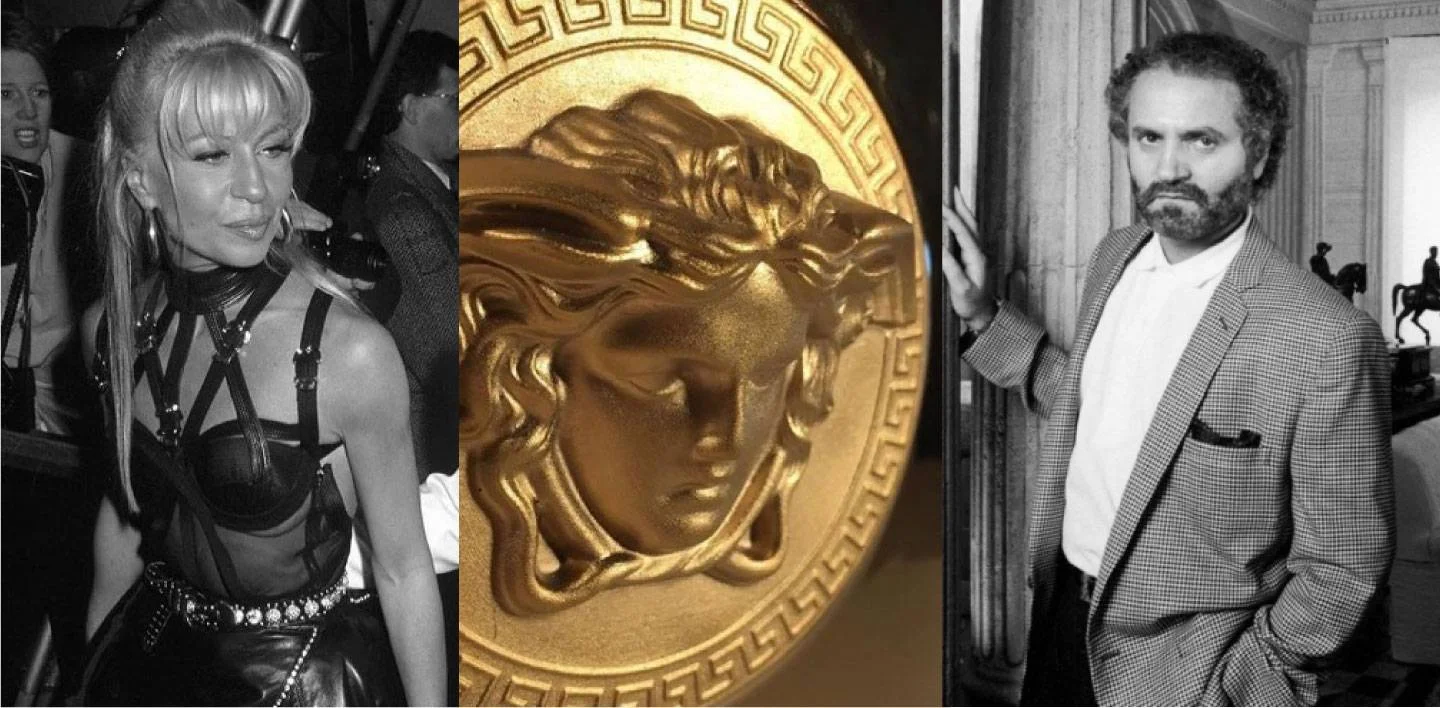 Versace’s sister, Donatella then became creative director but could not keep this $500-million turnover company, with its flamboyant reputation for clothes in unconventional materials and offbeat designs going, and eventually Versace amassed a very high pile of debt. Donatella, now 69 has since stepped down as creative director but will remain an ambassador for Versace. She will be replaced by Dario Vitale, who is a former design director for Miu Miu.
The Ban on Drumming. (May 4-June 4 2026) left those who like life music in the dry. +233 Jazz and Grill Bar (Dr. Isert Street, North Ridge, opposite GBC, Accra) was open throughout the period, but without the music, and without the customers. So I went there on the 4th of June, Chris and the Zoom Band were doing their evergreens again, and I ordered my usual kebab. Dry. Maybe it had been there all that time. And the lettuce leaves in the Greek salad were dry as well, for the same reason? But the second kebab was juicy again, back on track. And I wondered how +233 were paying their staff throughout the period, with hardly any income. And how did the artistes survive? 2 Zoom members had called me during the ban for a loan, one claiming the mother in Cape Coast was not well, the other one claiming same for the wife, in Accra. Traditions……

Your Blood Group. As much as you want to know your sickle status before you get married (friend of mine didn’t, first baby was ok, then they had twins, both are sicklers, good morning) you also want to know your blood group. Why? You’re not planning to donate blood? No, but you may need blood. For example before or after an operation, and that may well be an unscheduled operation like an appendix or a car accident. Hospitals don’t have blood? Well, not always. For the most common blood groups like A+ (55%) B+ (22%) and A+ (20%) often they have, but the not so common ones like AB, O-, A-, B- (all between 2 and 4 % of the population only) don’t assume that they have. So if you’re in one of those uncommon groups it is good to know people who have the same group as you. I’d prefer to have blood from someone I know rather than from an unknown donor who may have had unprotected sex the day before he donated and hence might have creeped through the screening process the hospitals are supposed to apply. HIV infected blood is only detected from 10 days onwards after the infection occurred.

Restaurants. There's a lot of restaurants in Accra, or shall I call them eateries, and majority have impressive rankings if you look at them through one of the search engines. The reality is drastically different. Poor service such as QR code menus only (and outdated), waiters not knowing what is available, lack of attention from waiters, long waiting times, no change, no proper napkins (tissues only), poor quality food, clogged salt dispensers, grossly overpriced junk food (the cost of a beef burger is not more than 40 GHC) and so forth. There’s also the more upscale restaurants with beautiful interiors and menus and with waiters in uniforms and booking registers at the entrance where classics like pepper steak and sole meuniere are served, and unfortunately most of them are not worth even half the money they are charging. Real cooks hardly take things from packages or cans or use the microwave and they make their own sauces and use fresh ingredients. And cook. Internationally professional cooks study at least 2-3 years and then do a few years of attachments in the better restaurants before anyone would hire them. There are indeed 6 month courses where you can obtain “certified cook”, but don't think much of it. And some really never learn.
At the end of the day it is best to ask friends, but there again one still has to be careful, some are happy with any rubbish as long as they can say they were there.
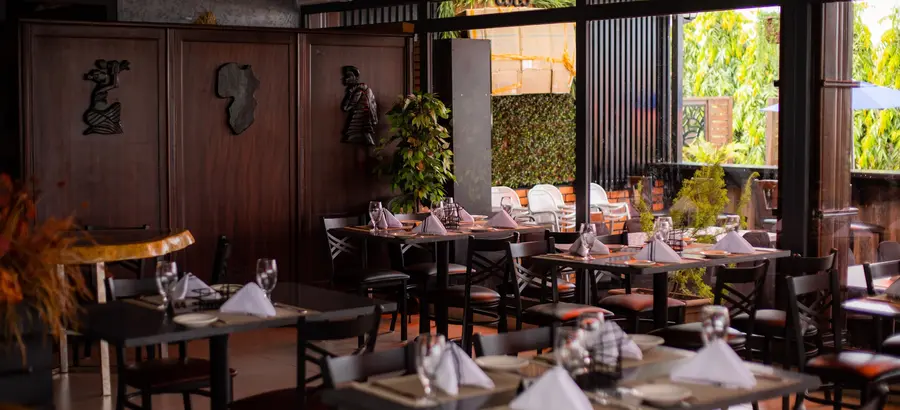
Lydia...
Do not forget to hit the subscribe button and confirm in your email inbox to get notified about our posts.
I have received requests about leaving comments/replies. For security and privacy reasons my blog is not associated with major media giants like Facebook or Twitter. I am talking with the host about a solution. for the time being, you can mail me at wunimi@proton.me
I accept invitations and payments to write about certain products or events, things, and people, but I may refuse to accept and if my comments are negative then that's what I will publish, despite your payment. This is not a political newsletter. I do not discriminate on any basis whatsoever.
I tried self-hosting a PDS. It didn't work and the bug was IPv6
from Suranyami
I wanted to self-host a tangled server. I refuse to call it a “knot”, because that's just fucking stupid.
FYI, it's supposed to be a small, federated, GitHub-like git server built on the AT Protocol. The catch: tangled identities are AT Protocol identities, and the obvious way to get one is a Bluesky account.
I'm in Australia, where Bluesky now gates sign-up behind age verification (facial recognition, a credit card, or an ID scan).
I object to this on principle, so I said “fuck that”, and besides I do NOT need another social media account, so a bsky.social account was off the table.
The good news is that the AT Protocol doesn't require Bluesky at all. Your identity is just a DID anchored to a PDS (Personal Data Server) — and you can run your own. So I did: the official Bluesky reference PDS, in a container on eon (a Raspberry-Pi-class DietPi box), behind my cluster's Caddy, on my own domain. I created an account, verified the handle, pointed the knot at it. Everything came up green.
Then I tried to log in to tangled with my shiny self-hosted identity, and got:
Failed to start auth flow: auth request failed: PAR request failed (HTTP 400): invalid_client_metadata
This is the story of how that error sent me down a completely wrong path for hours — and how a single differential test dragged me back to a mundane, and much more interesting, root cause.
The obvious culprit (that wasn't)
Thirty-second primer, because OAuth is a swamp of acronyms and I won't pretend otherwise. “Log in with Google” is OAuth: one service vouches for you to another. Here, tangled is the app asking for access (in the jargon, the client), and my PDS — my little self-hosted identity server — is the bouncer deciding whether to let it in (the authorization server).
The handshake starts before my browser is even involved: tangled shoves a request straight at my PDS, server to server. That shove has a name — a Pushed Authorization Request, or PAR. And invalid_client_metadata is the bouncer sniffing the request and going: I don't like the look of this club's paperwork.
So I read the paperwork:
tangled's client metadata asks for a long list of scopes- scopes being the specific permissions an app wants, the “this app would like to access your repos and your handle” checklist
tangledasks for fine-grained ones:repo:sh.tangled.repo,rpc:sh.tangled.repo.create,blob:*/*,identity:handle
Then I checked what my PDS said it understood:
scopes_supported: ['atproto', 'transition:email', 'transition:generic', 'transition:chat.bsky']
The old, coarse set. None of the granular ones. Case closed, right?
My PDS (@atproto/pds version 0.5.9) was too old to grasp the permissions tangled was asking for, so it spat the request out. Bluesky's own docs even say granular permissions are “rolling out to the self-hosted PDS distribution” — translation: not in a shipping self-hosted PDS yet.
I went a long way down this road.
- Checked npm for a newer PDS — latest stable was 0.5.10, one patch ahead, useless.
- Checked the pre-release tags — somehow older than stable, also useless.
- Then I found Tranquil, a PDS rewritten in Rust that explicitly supports the granular scopes, read its install docs, confirmed it ran on my hardware, and got within a hair of migrating my brand-new identity onto a multi-container, Postgres-backed, community-alpha server.
That is a colossal amount of effort and risk to dodge a problem I had not actually confirmed was the problem. Mercifully, it was not the problem.
The question that broke the theory
The thing that saved me was one stupid question: if my PDS can't do this, how is tangled doing it for everyone else right now?
People log in to tangled every day with handles on .bsky.social or .tngl.sh. That second one — .tngl.sh — is tangled's own PDS hosting. Whatever software it runs, it demonstrably works with the exact login I was failing. So instead of theorising, I could just go poke it.
I had a .tngl.sh handle lying around from earlier, so I worked out which PDS hosts it and interrogated it directly. Two things fell out immediately, and both upended the original theory:
tngl.shruns the Bluesky reference PDS — the same@atproto/pdssoftware I installed, version0.4.208. Not Tranquil. So migrating to Tranquil would have been “solving” a problem the working system doesn't have.- Its
scopes_supportedwas the exact same legacy set as mine. And tangled login works there fine.
If the box that works advertises the same scopes as the box that doesn't, then the scopes were never it. The theory was built on a coincidence I'd mistaken for a clue.
So I fired the identical PAR request at both PDSes and put the answers side by side:
# my PDS:
{"error":"invalid_client_metadata",
 "error_description":"Unable to obtain client metadata for \"https://tangled.org/oauth/client-metadata.json\""}

# tngl.sh:
{"error":"invalid_request",
 "error_description":"client authentication method \"private_key_jwt\" required a \"client_assertion\""}
There it is, in the error text. tngl.sh fetched and read tangled's paperwork and moved on to the next step — it was only complaining that my bare test didn't include a signature it expected. Mine never got that far. “Unable to obtain client metadata.” My PDS couldn't even download the document.
This was never about permissions. It was a failed HTTP request. My server tried to fetch one URL and couldn't.
Why couldn't it fetch one URL?
From inside the PDS container, using the same mechanism the PDS itself uses (Node's built-in fetch):
https://tangled.org/oauth/client-metadata.json   -> ETIMEDOUT
https://plc.directory                             -> 200
https://example.com                               -> 200
The internet at large was fine. Only tangled.org hung until it gave up (ETIMEDOUT is the network politely telling you nothing ever answered). One host timing out while everything else sails through has a particular smell to it.
I ruled out the boring stuff first. MTU — the largest chunk a network link will carry in one go — was a normal 1500 on both the container and the host, so I wasn't looking at the classic “big packets silently vanish” trap. To be sure, I forced a full encrypted handshake to tangled.org over IPv4 with the right hostname attached, big packets and all. It completed. Not an MTU black hole.
The tell was in DNS. tangled.org publishes two addresses: an A record (its IPv4 address) and an AAAA record (its IPv6 one). And my container was listening on :::3000 — that's IPv6 notation, so IPv6 was very much in the game. So I told Node to stop being clever about which one it picked:
node --no-network-family-autoselection -e 'fetch("https://tangled.org/oauth/client-metadata.json").then(r=>console.log(r.status))'
# -> 200
Instant 200. The bug was IPv6.
Here's the clever-that-backfired bit. Modern Node (I'm on 24) uses a trick called Happy Eyeballs: when a host has both an IPv4 and an IPv6 address, it races connections to both and uses whichever replies first. The whole point is resilience — if one path is dead, the other wins and you never notice.
Except my IPv6 path wasn't dead. It was black-holed — packets marched out and nothing ever came back, no rejection, no error, just silence. So Node's connection sat there waiting for a reply that would never come, instead of failing fast and letting IPv4 win the race. plc.directory and example.com happened not to provoke it; tangled.org's particular setup did. A dead path is fine. A path that eats packets and says nothing is poison.
The quick fix was one environment variable on the PDS container — tell Node to prefer IPv4 and stop racing:
NODE_OPTIONS: "--dns-result-order=ipv4first --no-network-family-autoselection"
Redeploy, replay the PAR, and now my PDS gives the identical answer tngl.sh did. Login unblocked. No Tranquil, no migration, no waiting for a release that was never the issue.
But slapping “never use IPv6” on a machine that's supposed to have IPv6 isn't a fix, it's a tourniquet. The real question was still standing there: why was IPv6 black-holing in the first place?
The actual root cause: Docker quietly knifed my IPv6
This is the part that was worth the whole detour.
First, whose fault — the network, the router, or the box? Easy to settle by comparison. My Mac, sitting on the same LAN, has a proper public IPv6 address handed down from the ISP and pings the IPv6 internet in about 22ms. So the router and the ISP do IPv6 perfectly well. But eon had no public IPv6 address and no IPv6 route to the outside world at all — just a link-local address (the IPv6 equivalent of “I can talk to the room I'm in”) and Tailscale's private range. It had never picked up the router's IPv6 at all.
I'd assumed IPv6 just worked everywhere because it works on my Mac. It works on my Mac because macOS does SLAAC out of the box.
SLAAC — Stateless Address Autoconfiguration — is the no-paperwork way devices get IPv6: the router periodically shouts its network details onto the LAN (these shouts are called Router Advertisements), and any device that hears one configures its own address from it. No DHCP server, no central list, just “here's the network, help yourself.”
My Mac does that natively. So do my Ubuntu boxes — their network managers handle the router's shouts themselves, in normal software. But my DietPi nodes use a barebones networking setup where listening for those shouts is the Linux kernel's job. And the kernel was sitting there with its thumb up its arse.
The relevant kernel switches (sysctl is just the knob-panel for kernel settings) were identical on every DietPi node:
net.ipv6.conf.eth0.accept_ra   = 1
net.ipv6.conf.eth0.forwarding  = 1
And that pair together is the trap. forwarding = 1 means the host is willing to act as a router, shuffling packets between interfaces on behalf of others. accept_ra is whether it listens to the router's shouts. The catch the kernel enforces: a box that's acting as a router will not listen to other routers' shouts — because routers are supposed to be authoritative, not take their config secondhand. So with accept_ra = 1 and forwarding = 1, the kernel silently bins every Router Advertisement. No shouts heard, no SLAAC, no address, no route. Silently. There's the magic word again.
So who switched on forwarding? Docker. The moment Docker starts, it flips IPv6 forwarding on so it can route packets to your containers. Every Docker-running DietPi node I had was therefore sitting at forwarding=1 + accept_ra=1 — meaning every one of them quietly lost outbound IPv6 the instant Docker came up. And I never noticed, because nothing I ran needed outbound IPv6 until a Node app went looking for an IPv6-published host and hung itself on the silence.
My Ubuntu nodes dodged it purely by luck: their network managers do the listening in software, sidestepping the kernel switch entirely, so the forwarding clash never touched them.
The actual fix is one knob, set to stick across reboots:
net.ipv6.conf.<iface>.accept_ra = 2
accept_ra = 2 means “listen to the router's shouts even while forwarding.” Flip that, and the kernel starts hearing Router Advertisements again, SLAAC kicks in, and the node grabs a real public IPv6 address and a route to the world like every other device on the network. I'm rolling it out across the whole fleet with Ansible, so every machine is a proper IPv6 citizen — not just the ones whose networking happened to paper over the gap by accident.
What I'd tell past-me
- Go find a working version and diff against it. I torched hours on a tidy, well-evidenced, completely wrong theory. One question — “how does the thing that works do it?” — and one identical request fired at a known-good server flattened the whole story in minutes. When something should work and doesn't, stop theorising and go interrogate a copy that does.
- Same symptom does not mean same cause. Both PDSes advertised the same scopes. That coincidence is exactly what sold me the wrong story for an afternoon. The error messages, read slowly and side by side, were trying to tell me the truth the whole time.
- “It works on my machine” can be three different accidents wearing a trenchcoat. IPv6 worked on my Mac and my Ubuntu boxes for three unrelated reasons, none of which applied to my DietPi nodes. Same behaviour across a fleet is something you check, not something you assume.
- Docker turns on IP forwarding and that can silently murder kernel
SLAAC. If you run containers on a Debian-ish host with barebones networking and your IPv6 has “mysteriously” vanished, go look ataccept_raversusforwarding. You almost certainly wantaccept_ra=2. - A black-holed network path is worse than a dead one. A cleanly-dead IPv6 stack fails fast and the IPv4 fallback wins. A path that swallows packets and says nothing makes well-behaved software hang forever. If connections to some hosts time out while everything else is fine, suspect a half-configured address family long before you blame MTU, DNS, or the far end.
So, now, to continue my yak-shaving I have managed to:
- host an identity server
- so now I can get an identity
- I didn't need to make a stupid social media account to fix it
- now I can attempt to run a federated git server with a stupid name
And all this is so I can host my own code repos instead of dealing with Microsoft's continued enshittification of Github, and the ongoing collapse of the USA up its own arsehole of late-stage capitalism as it goose-steps into oligarchic cronyism.
Hoo-fucking-ray!
Izabel's Awakening 09
from  Shad0w's Echos
The Transformation

As she stared at the ring in disbelief, she finally noticed her phone was buzzing full of activity. Her automatic silent mode for church finally turned off. Messages from friends, strangers, and family came flooding in; all of them were concerned about her. She glanced. She didn't read. She didn't care. It was another source of annoyance compounding the problem at hand. So she decided to handle something she could control.
Izzy quickly turned off her phone and tossed it across the room, expertly landing on the couch far away from her sight. She needed to isolate herself from everything; even the outside world was already too much. She didn't want to see through her windows or be bothered by anything that wasn't porn. When she was done, all that remained of the outside world was the soft natural glow of light trying to soak through the curtains, which she accepted in her home—for now.
Izzy put on her headphones, started her favorite porn playlist, and let the sounds of pleasure wash over her. Finally, she was at peace. Finally, she was where she belonged...until she heard a familiar “clank” on her table. It was the same noise she heard earlier when the ring hit the floor in the living room. The damn ring had teleported again, this time right next to her left hand. She wanted to scream. Her vision started to blur from rage. Peace was shattered once again.
Surprisingly, at that moment, she kept her wits about her. Deep down Izzy knew her screams were not normal. She just didn't acknowledge them because they felt so good. Her mind flashed back to the church, that moment when the lights went out. It was delicious wielding that kind of power. The ownership of that moment made her instantly horny. But she couldn't do that to her laptop. Not now. She really needed to watch porn. She let out a low, deep growl. Something that could be felt more than heard. All of her quiet rage began to focus on a piece of metal that refused to leave.
She took a deep breath, her face set in a scowl, and picked up the ring. She walked out the door, still naked, storming down the stairs, and made her way across the parking lot again. For the second time today, Izzy was deliberately exposing herself naked in public for anyone to see. She didn't care.
The naked and insatiably horny woman stopped at a tall tree. She wound her arm back, her breasts jiggling as her body adjusted. With all her strength, she threw the ring towards the tree. A rustle of leaves and an audible 'plink' was heard as the ring was once again out of sight. Further away from her door than last time. Hopefully gone for good.
Izzy stood naked in the sun. Her vision sharpened, her scowl faded—her humanity returned. She chose to prolong her public exposure. She needed to savor it. Embrace it. Detach from all things wholesome and normal.
Izzy outstretched her arms and smiled. It felt good to be naked outside again. She still had her headphones on, and her porn audio played from her laptop. It was pure bliss—nothing but perverted moans and sunshine. She felt her pussy throb, and her sweet wet arousal began gushing down her leg again. She was free. She was finding her true self. She was completely obscene.
She did a pivot on her heels, letting her left hand drift back between her legs. Izzy didn't care one bit if anyone could see her. She didn't even look around. “Shame has no place in my life anymore,” she thought to herself. The naked woman walked back to her apartment, slowly playing with her clit, building up to a well deserved glorious release.
“This is my wedding night,” Izzy said to herself. “Porn is my husband, my lover, and my best friend. Porn is all of these things now. Porn will be everything I need.” The naked woman glided back into her apartment, her hands covered in her womanhood. She put her fingers in her mouth, slurping up the obscene collection of pussy juice that had flowed out between her legs. She smelled the aroma. Savored the taste. It came from her, produced out of defiance to be her old self. She wasn't starting to let go of her anger. The increasingly depraved woman wanted her thoughts to fade into something simpler and more primal.
By the time Izzy got inside, her hand was making audible noises playing with her pussy. The symphony of porn in her headphones and the squelching slick slops of her fingers were putting her in a trance. Each hitched breath was a soft moan from the fire that was building inside of her naked body. Her well-placed caresses continued to make sweet music with her pussy. “I've never seen anything like this. I've never heard anything like this,” she said to herself.
The naked woman looked down at her hands and feet. A large puddle of clear liquid was beginning to form, little bits of womanly nectar splashing up and wetting her feet. Not even her favorite porn stars did what she's doing at this moment. She felt more alive than ever before. Praying and reading her bible never brought her this much joy. Her devotion to porn was giving her real tangible results. She only wanted to worship porn now.
The chorus of moans in her ears told her what to do next. It was her only compass. Her only unwavering decision. She had to see the images on her screen making these marvelous sounds. She had to watch. She had to focus all of her energy on what matters most. Porn.
Her porn addicted orgasm awaited. Her rebirth as a full-time pornosexual goonette was now.
Visibly drooling with a crazed look of anticipation, Izzy padded over to her laptop. Her other free hand started playing with her tits. Both of her thighs were slick and sticky from her pussy gushing like a small stream. She had a vague thought that maybe she should drink some water, but her legs didn't carry her to the kitchen. Instead, something else happened entirely.
In a sudden bright flash of light, the ring reappeared.
There was no mistake; that same blasted piece of metal, the final bastion to her purity, did not want to leave. Izzy's stood there. Nostrils flaring. Eyes vibrating, lights flickering, laptop stuttering and glitching because of her rage welling up from deep inside. She took 3 deep breaths. Closed her eyes. Calmed her thoughts. She decided to talk to the ring. If this thing has a will of its own, then maybe it will hear her.
The haunting duality of human and inhuman voice started coming from her throat. Izzy spoke slowly. Each word was slow, controlled, and metered. Her only gateway to happiness was in danger for fear of her own dark inner power. She refused to let her rage obliterate her laptop all because a stubborn ring refused to leave.
“I don't know WHAT you are, but if you want to stay, you will be with me my way.”
The enraged naked porn addicted virgin grabbed her purity ring. She held it carefully between her sticky wet fingers, placed the tarnished silver ring on her clit, and began to rub slowly. Each up and down motion rubbed gently on her clitoris, sending pulsing pleasure up her spine and around her body.
She closed her eyes, reassuring herself that the ring would not disrupt her perverted version of her wedding now. Izzy sat down, took a deep calming breath, and began to watch porn and masturbate. Her pace began to quicken as she accepted that her last symbol of purity was being perverted into a tool of hedonistic pleasure. A slow exploration became a furious pace, summoning something deep inside to finally be free.
She looked down between her legs and began talking to the ring in her inhuman voice. “Look what I turned into little ring,” She cooed in her new voice, “Is this what you wanted to see? Is this how you want it all to end? My complete sacrifice of all things pure and holy? You want me to watch it all get replaced by porn? Are you my little pervert too? Look what became of me. It's so perfect, isn't it?” The ring obviously didn't respond. But it was completely covered in her juices.
The poor laptop could barely maintain a cohesive image. Every coo with Izzy's supernatural voice rattled the pixels, straining to perform their designed purpose while being exposed to immense spiritual pressure. Lights all around her apartment flickered in response to Izzy's voice. The audio in her headphones started to scramble. Even the TV in the living room started to flicker. The purity ring was soaked, wet, and slippery, barely able to stay in her grasp. A strong, sweet, womanly aroma wafted in the air. The room got cold, but Izzy didn't stop masturbating. Her very existence was becoming a supernatural event.
She felt her breasts swell. She felt her genitals pulsate. Each contraction ended with more fluid gushing out in obscene sploshes, pooling at her ankles on the floor.
“This is my calling. My purpose. This is my pleasure. My POWER. My EVERYTHING!”
More waves of pleasure welled up from inside of her, rushed out from her clit, and then wrapped her whole body in a shockwave of pleasure. The pleasure she was experiencing had fully consumed every sensory organ. She focused on her screen. Watching black women that looked just like her writhe in ecstasy from the toys that were buried deep inside their beautiful bodies.
Blinking felt good. Breathing felt good. Leaking felt good.
The heavy musk of her arousal filled the room, overpowering everything. It was just confirmation that what she was doing was important. Everything about this was right. Everything about this was a sign that this is how she was supposed to be.
Her hand was a violent blur between her legs, summoning more than just an orgasm. It was almost like she was trying to elevate herself beyond the screen. Beyond porn. Beyond everything she lived for.
She was ready for an orgasm that would make her leave her body.
As she gasped in complete surrender to her unhinged and extremely aroused desire, Izzy was far was beyond feral. Her breath in the cold room formed lustful clouds of condensation before her face. She didn't question it, nor did she question the flickering lights.
She accepted all of it, including her own inhuman supernatural voice. She yearned for change, for something to happen in her life. Thus, she chose to embrace all of these unexplained phenomena and invite them into her being. The Bible was full of miracles. She was just deviating from the path and creating her own.
She opened her mouth, eyes rolling, drooling, and gurgling, slowly downgrading her faculties to just her base instincts.
Then the convulsions started.
She cried out in pleasure, speaking to an unspoken presence ready to emerge from her womb. “Praise Porn! I'm at my altar! I am GOONING,” she bellowed. “I am ready. I am open. I WILL be reborn!”
The inhuman supernatural tones from her voice washed over Izzy's ears. For a brief moment she finally heard the demonic duality of her voice, but she was too far gone to care. It all felt too good to stop. Then with one final moan, everything shifted.
Just like before, everything around her became deathly silent. Despite her moans, screams, affirmations, and other inherently disturbing vocalizations, there was no reaction from the outside world. In fact, her neighbors were none the wiser to the ritual being performed on the other side of their walls. That was the extent of Izzy's inner power. What she was doing was for her and only her to witness and experience. Her desire to isolate manifested in ways that she would never be aware of or comprehend. She had created her own porn addicted worship bubble. She wanted to leave their world, so she made her own.
Izzy had 3 porn videos playing all at once in front of her. All of them were black women masturbating for the camera, rubbing their pussies in reckless abandon. One woman was sucking a dildo, the 2nd was using a fuck machine, and the 3rd woman was spreading her ass wide open, showing her holes. Everything slowly came into bright, vivid focus that was better than anything she had seen before. This was more intense than anything else she has experienced. No religious event could compare to this experience.
Izzy kept touching herself.
The audio playing in her ears became more than perfect. More than real. It was almost as if she was in the room with porn, not the other way around. That only lasted a few seconds though. Then the sounds it grew louder and louder in volume. Then it became deafening. She felt the audio rattle her skull. She could almost feel her teeth vibrate. She refused to turn it down. She didn't know her hears and changed on a fundamental level.
The glitching screen flashed one more time, and the images stabilized. The flickering lights all around her changed. Instead, they began to act more like a lit candle flame than man made lights.
Then the laptop screen got brighter, almost blinding, but she refused to close her eyes and stop watching. Her eyes had changed on a fundamental level.
Then, screen felt like it was getting closer to her face. She felt like she was floating. She didn't want to stop touching herself. She put more pressure on the ring and in turn this put heavier pressure on her clit. She had to keep masturbating. There was no stopping this, no matter the cost. She literally was gooning like her life depended on it. In some ways, it was.
If it weren't for the fact her mind had totally unraveled, she would have noticed she was actually floating. Her whole wet naked ass had left the chair a few moments ago.
Then transformations continued to happen.
Izzy's breasts grew bigger. Izzy's pussy grew in size, threatening to swallow her hand. Izzy's clit had grown very prominent and engorged, almost as if it was trying to wear the ring. The pleasure-possessed woman continued diddling her private parts with that ring like a human-powered vibrator. She didn't even care that she was floating; nothing in that moment mattered other than pornography and masturbation.
She wanted change to happen, even if she didn't know the full gravity of that singular intent in her supernatural state. The transformations continued.
Her hips grew wider. Her ears larger and pointed, almost cat-like. Her cheekbones were more pronounced. Her eyes had grown larger, also cat-like Her canines longer. Her tongue began to fork.
Her body ached and swelled in ways that felt unreal, but all of it felt good. She was too focused on her screen to take notice of what was happening to her body.
All of these transformations were a product of her oppression, her anger, and decades of pent-up sexual energy weaponized into metamorphosis.
And then she came. The once pure church virgin aged nearly 30 years finally had a real sexual release. No accidents, no guilt. A full no limits life changing orgasm.
As the woman lifted higher into the air, her sexual porn convulsions slowly became a full seizure. Her hand never left her pussy. In fact, she was practically fist fucking herself due to the transformation. Now seized in place right where it should be. The ring never left her clit the whole time. As her hips bucked, the ring finally slipped to her obscenely engorged giant clit. Almost symbolic of a wedding vow completed, but in the most perverted way possible.
Her voice was no longer human. Her vision was permanently altered. Her pussy changed forever. The chair below her was drenched as if someone poured a bucket of water all over it. The carpet below her was soggy. She was literally gushing from between her legs nonstop now, floating, twitching, and lost in pleasure.
She floated higher and higher, training her neck and upper torso to stay as close to the screen as possible. She had no other control over her body. Her eyes started glowing again.
“This is so beautiful,” Izzy gasped in her new voice... now a tritone of something old and ancient. What she heard startled her. That broke her trance. Her body stopped seizing. Then suddenly, she fell towards the floor from nearly 6 feet.
The naked woman came crashing down on the chair. Her naked body cracked the frame, but the expensive leather office chair took most of the impact. She collapsed on the floor in a wet, dripping splosh as she landed in her own puddle of musky arousal. Her pussy was still twitching. She still felt the full body high of her tantric orgasm. Somehow, she escaped serious injury. But her head still hit the sopping wet carpet pretty hard. Everything started to fade.
Right before she lost consciousness, the ring floated off her big meaty clit, glowing like the sun and spinning so quickly that it looked like a silver orb. It floated, landed on her womb, and burrowed deep inside. No pain. Just a ball of bright light went inside of her pussy, never to return.
The seizure ceased. Her pussy resumed its normal size, with her almost penis-sized clit returning to a familiar yet still pronounced state. Her ears, now fully feline, gradually reverted to a human form but remained slightly pointed, retaining an air of peculiarity. The large almond cat eyes returned to their normal size, though the iris was now an unnatural caramel and gold color—quite distinct from her original dark brown. Certain body parts retained their altered state. Her breasts remained full and large, standing proudly without a bra, as if enhanced with implants yet perfectly natural in appearance. Her hips remained flared, remaining transformed in defiance. She now exhibited a more pronounced hourglass figure due to her wider, still natural-looking hips.
Through some miracle of all these changes, Izzy was still alive. The room started to warm up. Sounds from the outside world started to return.
Izzy's mind and spirit slowly drifted off to another place while her body lay limp on the floor. She was still wearing her headphones. They were still blasting porn in her ears. The laptop continued to play porn for its now unconscious audience, the glitching screen now back to normal.
from Dan De Lion
Canticle of the Spiral
I. Gestation — The Hidden Seed
In silence formed, in darkness spun, The soul begins where light is none. Before the breath, the vow is made— Becoming waits in womb and shade.
II. Birth — The First Breath
The rupture comes, the cry is heard, The spiral breaks with sacred word. From silence torn, the light appears— The breath of life, the gate of years.
III. Infancy — The Dependent Flame
Held in arms, the hunger calls, The soul is fed through rise and falls. In need we bond, in ache we grow— The flame is lit, the seed shall know.
IV. Childhood — The Curious Eye
The world is named, the wonder wakes, The soul explores what form it takes. Through play and gaze, the truth is spun— The eye becomes the rising sun.
V. Adolescence — The Fractured Mirror
The mirror cracks, the voice rebels, The soul confronts what silence tells. In rupture deep, the self is tried— The truth is forged where masks divide.
VI. Young Adulthood — The Rising Flame
The covenant burns, the passion flows, The soul creates what longing knows. In union fierce, the vow is cast— The offering made, the die held fast.
VII. Maturity — The Steward’s Mantle
The burden borne, the law upheld, The soul provides what time has spelled. In sacrifice, the order stands— The mantle rests in willing hands.
VIII. Old Age — The Silent Witness
The gaze is still, the voice is low, The soul reflects what years bestow. In silence deep, the wisdom sings— The spiral folds its ancient wings.
IX. Death — The Spiral’s Return
The breath is gone, the gate is wide, The soul dissolves in sacred tide. In mystery, the form released— The spiral ends, the soul finds peace.
The Strength That Would Not Harden-Jesus in Ranger Training and Selection
from Douglas Vandergraph
Chapter One
Jesus knelt beside a steel-framed bunk before the lights came on.
The bay was dark except for the low red glow of an exit sign and the small spill of moonlight that slipped through a window high on the wall. Around Him, men slept in the uneven silence of soldiers who had learned to rest wherever the Army allowed it, boots aligned beneath racks, duffels packed tight, uniforms folded with the nervous care of people about to be inspected by strangers who did not owe them kindness. The air smelled of floor wax, cotton, sweat, and the faint metallic odor of old pipes. Outside, Fort Moore lay under a heavy Georgia darkness, still for a little while before engines, commands, and boots on pavement broke the morning open. No one in that room yet understood what would be asked of them, though many had read enough, trained enough, and imagined enough to fear it. Later, when people spoke about Jesus goes through U.S. Army Ranger selection and training, some would picture only the obstacle courses, the ruck marches, the water, the hunger, and the mountains. But the first battle began in a quiet room where men brought private wounds into a public test.
Jesus prayed with His hands open on His knees. He did not pray as a man bargaining with pain or asking to be admired for enduring it. He prayed as a Son listening to the Father before entering a place where strength was measured loudly and weakness was often hidden until it broke someone. There had been hard roads before this one, roads of dust, rejection, labor, thirst, and misunderstanding. This road would have its own language: roster numbers, formation lines, medical checks, time hacks, peer evaluations, and standards that did not bend for tired legs or wounded pride. Yet beneath the Army words and the ordered violence of training, the human heart had not changed. Men still feared being exposed. Men still wanted to be chosen. Men still mistook silence for courage and hardness for holiness. In that way, this story belonged beside a related reflection on Jesus and the burden of becoming strong, because the deepest tests are rarely only physical.
He remained still while another soldier turned over on a thin mattress and muttered through sleep. Down the row, a man breathed through his mouth with the deep exhaustion of someone who had arrived late after delayed flights and too many hours in a reception building. A few bunks away, Specialist Nathan Cole lay awake with his eyes open, staring at the underside of the rack above him as if the metal springs had answers. He had not slept more than twenty minutes at a time. Every time his body drifted toward rest, his mind brought him back to the same thought: tomorrow they will find out. He did not know what he meant by they, or it, not exactly. Cadre. Other candidates. Himself. Maybe God, if God still paid attention to men who had spent years turning every prayer into a performance report.
Nathan had trained for this since he was old enough to understand what his father’s black and gold tab meant. In the hallway of the house where he grew up, there had been three framed things: a photograph of his father in uniform, a folded flag from his grandfather’s funeral, and the Ranger tab his father had earned before Nathan was born. His father had not been cruel in the simple way people use that word. He paid bills, fixed the roof, showed up to games, and shook Nathan’s hand when he was proud. But tenderness in that house had always come through a filter of tests. If Nathan cried, his father told him to get control of himself. If Nathan failed, his father asked what lesson he learned. If Nathan won, his father asked whether he could do it again under pressure. There were families where love sounded like warmth. In Nathan’s house, love sounded like a challenge.
He told himself that made him strong.
He told himself many things.
He had enlisted with an Option 40 contract because there had never been another plan. He had gone through basic training, infantry training, airborne school, and the long machinery of Army movement with one idea in his head: get to the Regiment. The Ranger Assessment and Selection Program was not a legend to him. It was a gate. It was eight weeks of being measured for service in the 75th Ranger Regiment, and Nathan had repeated that fact to himself so often it no longer sounded like information. It sounded like judgment. The official descriptions called RASP an eight-week course that trains Soldiers to become members of the Regiment, but Nathan heard something underneath those words that no Army website had written: prove you belong, or go home carrying the eyes of everyone who expected you to make it.
Across the bay, Jesus lowered His head a little more. Nathan watched Him from the darkness and felt the irritation he often felt around calm people. It seemed dishonest to him, that kind of peace. Men who understood what was coming were supposed to be alert, wired, guarded. They were supposed to rehearse failure before it arrived so they could beat it back. Jesus was not asleep, but He did not look afraid. That bothered Nathan more than arrogance would have. Arrogance he knew how to answer. Peace left him with no clean enemy.
The lights snapped on at 0430, and the room changed instantly.
Men moved as if pulled by wires. Boots hit the floor. Zippers tore through the air. Someone cursed softly after striking his knee against the bedframe. Another candidate whispered a prayer that sounded more like a gasp. A voice from the hallway drove through the bay with a force that allowed no confusion about the day’s ownership.
“On your feet. Move.”
Nathan was already up. He dressed quickly, too quickly, catching one sleeve wrong and yanking it free with more force than needed. His hands shook only once, and he hated them for it. Around him, candidates grabbed gear and formed the kind of order nervous men make before professionals come to correct it. Jesus rose without haste but without delay. He made His bed with quiet precision, checked the space beneath the bunk, and helped the man beside Him secure a strap that had slipped loose on a ruck.
“Do not touch my stuff,” the man snapped, not loudly enough for the cadre to hear.
Jesus released the strap and looked at him. “It was falling.”
“I can handle it.”
“Yes,” Jesus said, “you can.”
The answer had no insult in it, and that seemed to confuse the man. Nathan noticed and looked away before he could be seen noticing.
They moved outside into air that was already warm though the sun had not risen. The candidates formed up near a line of buildings that looked plain under the floodlights, all function, no romance. There was nothing cinematic about the beginning. No music. No speeches about destiny. Only pavement, clipped commands, documents, names, numbers, and the unromantic pressure of showing up where many had wanted to stand and fewer would remain.
A staff sergeant with a voice roughened by years of making himself heard without shouting forever stepped in front of them. His uniform was exact, his face unreadable. He looked across the formation as if every man there had already been weighed and most had come up light.
“You volunteered to be here,” he said. “Remember that when you start feeling sorry for yourself.”
The sentence landed cleanly. No one moved.
Nathan liked the sound of it. Volunteered meant no excuses. Volunteered meant no one had dragged him here. Volunteered meant if he broke, the blame would belong to him. That was fair, he thought. Fair was brutal, but he trusted brutal more than mercy. Mercy asked him to receive something. Brutality only asked him to survive.
Jesus stood two files over, eyes forward. The floodlights touched His face from the side, leaving one half in shadow. Nathan did not know why he looked at Him again. Maybe because Jesus seemed fully present without seeming trapped by the moment. Maybe because the staff sergeant’s words had entered every man as pressure, yet in Jesus they appeared to settle somewhere deeper and become obedience.
The morning became inventory, instructions, movement, waiting, more movement, and long stretches of standing still with weight on the shoulders. Every small thing seemed designed to reveal something. Who listened the first time. Who blamed the man beside him. Who panicked when a form was missing. Who had trained his body but not his patience. Nathan watched all of it with the sharp eyes of a man who treated other people’s weakness as warning signs for his own future.
Near midday, when the heat thickened and the administrative pace gave way to physical assessment preparation, Nathan found himself in line behind Jesus and a private named Owen Mercer. Owen looked young enough to have shaved twice in his life, though that was probably unfair. He was lean, pale, and too eager to laugh whenever someone spoke to him. Nathan had already decided Owen was not going to make it. The conclusion came quickly, almost automatically. Nathan told himself this was not cruelty. It was pattern recognition.
Owen shifted his weight and rolled one ankle. “You been through anything like this before?” he asked Jesus.
Jesus looked at him with the full attention that made even ordinary questions feel worthy of an answer. “No.”
Owen blinked. “You nervous?”
“Yes.”
Nathan almost turned his head. The answer was so plain, so unprotected, that it sounded wrong in this place. Men admitted hunger, soreness, anger, even fear after enough time had passed to make it honorable. They did not admit nervousness in a line where everyone was pretending not to be.
Owen let out a breath that was almost a laugh. “Yeah. Me too.”
Jesus nodded. “Then we will not need to pretend otherwise.”
Nathan felt something in his chest tighten. He wanted to interrupt, to tell Owen that pretending was part of the job, that fear loose on the surface could spread, that men who named everything they felt usually became liabilities. He said nothing, because the cadre were near and because Jesus had not sounded weak when He said it. That was the part Nathan could not place. The admission had not reduced Him. It had simply made the room inside Him honest.
The first hard event did not feel dramatic at the beginning. It felt procedural. Candidates moved through standards they had rehearsed in gyms, motor pools, barracks rooms, and empty fields at their home stations. Push-ups. Sit-ups. Chin-ups. Running hard enough to make the chest burn and the mind start bargaining before the legs did. Men who had talked too much went silent. Men who had seemed small became steady. Men who looked like recruiting posters began to fold inward when effort stripped away the image they had built.
Nathan performed well. Not perfectly, but well enough that no one could question whether he belonged in the formation that day. Sweat ran into his eyes during the run, and his lungs clawed for air by the last mile, but he passed through the finish with enough left to stay upright, refusing the bent-over posture of men who had given everything. He would not let himself look spent. Even when his vision pulsed at the edges, he stood tall and breathed through his nose until the dizziness passed.
Jesus finished before him.
Not far before him, but before him.
Nathan saw Him slow beyond the line and turn back toward the stream of candidates still coming in. He did not celebrate. He did not compare times. He moved toward Owen, who was struggling down the final stretch with the broken form of a man who had gone out too fast and paid for it with every step after. Owen’s face had gone gray beneath the flush, and his arms swung loosely as if no longer attached to command.
“Do not touch him,” a cadre member barked as Jesus drew near the lane. “He runs on his own.”
Jesus stopped at the boundary. “Yes, Sergeant.”
Owen staggered, eyes unfocused.
Jesus did not reach for him. He did not break the rule. He simply stood where Owen could see Him and spoke in a voice clear enough to cut through the roaring in the young soldier’s head.
“Lift your eyes. Breathe once. Now come.”
Owen’s head rose a fraction.
“That step,” Jesus said. “Now the next one.”
Nathan watched from near the finish, anger rising for reasons he did not want to examine. It was not that Jesus encouraged him. Men encouraged each other. It was that Jesus did not seem worried about how compassion looked. He did not glance around to see whether anyone judged Him for caring. He did not wrap it in jokes or insults to make it acceptable. He simply stood there, steady and unashamed, while Owen dragged himself across the line with seconds to spare.
Owen collapsed to his hands and knees. A medic moved closer, assessed him, and let him breathe. Jesus returned to the formation only when ordered. Nathan looked forward, jaw tight.
“Problem, Cole?” asked a corporal near him.
“No, Corporal.”
“Face says otherwise.”
Nathan locked his expression down. “No problem.”
The corporal moved on.
But there was a problem. Nathan did not like seeing another kind of strength survive in the same space where his own had always felt necessary. It made the rules inside him feel less certain. He had believed there were only two choices: harden or fail. Jesus had just shown him something else, and Nathan did not want another option. Another option meant he might be responsible for what his hardness had cost.
That evening, after chow that disappeared too quickly to be enjoyed, the candidates had a narrow window to prepare equipment. The bay filled with the muted sounds of men checking straps, marking items, folding, taping, adjusting, comparing, and trying not to reveal how much they did not know. Nathan laid out his gear with care bordering on aggression. Everything had a place. Everything had a reason. His father had taught him that disorder was a confession.
Owen sat on the floor near his bunk with one boot off, working at a blister on the side of his heel. He was trying to hide it badly. The skin had lifted and torn during the run. He had cleaned it, but not well, and his hands moved with the clumsy urgency of a man who knew an injury this early could become a story others told after he was gone.
Nathan saw it and looked away.
Jesus saw it and knelt beside him.
“You should have that dressed properly,” Jesus said.
Owen glanced toward Nathan, then back. “It’s fine.”
“It is not fine.”
“I said I’m good.”
Jesus remained there. “Good is not the same as untreated.”
Nathan snapped a roll of tape harder than necessary. “If he can’t handle a blister, he shouldn’t be here.”
Owen’s face flushed.
Jesus turned toward Nathan slowly. There was no anger in His expression, but Nathan felt the full weight of being addressed before a word came.
“Pain ignored does not become strength,” Jesus said.
Nathan laughed once under his breath. “That sounds nice.”
“It is true.”
“What’s true is nobody carries you here. Nobody cares why you hurt. You either meet the standard or you don’t.”
Jesus looked at him for a long moment. “A standard can reveal a man. It does not have to make him cruel.”
The bay seemed to quiet around them, though it had not truly stopped. A few candidates looked up and then pretended not to. Nathan felt heat climb his neck. He had been challenged before. He had been insulted, corrected, smoked, humbled, and yelled at by people with rank and people without it. This was different. Jesus had not attacked his toughness. He had named the part of it Nathan guarded most fiercely.
“I’m not cruel,” Nathan said.
Jesus did not answer quickly. That restraint was worse than a quick accusation.
Owen spoke, too softly. “It’s okay. I can do it myself.”
Jesus looked back at him. “Then do it carefully.”
He stayed while Owen cleaned the torn skin and dressed it right. He did not take over what Owen could do. He did not make a display of helping. He handed him what was needed and let the young soldier keep his dignity. Nathan watched despite himself. Something about that unsettled him more than if Jesus had simply fixed the problem. It was help without possession, mercy without control.
Later, when the bay lights dimmed and men lay down with sore bodies and crowded minds, Nathan remained awake again. His calf cramped once, and he pressed his heel down until it passed. Across the room, Owen’s breathing eventually settled. Jesus was awake too, seated on the edge of His bunk, looking down at His hands.
Nathan turned toward the wall.
He remembered being twelve years old in the garage with his father during a thunderstorm. Rain had hammered the roof while Nathan tried to hold a board steady for a cut. He had been tired, bored, and scared of the saw though he would never have said it. The board slipped. The cut went bad. His father shut the saw off and stared at the ruined wood for several seconds before speaking.
“Fear makes your hands stupid,” he said.
Nathan had hated him in that moment. He had also believed him.
After that, he practiced hiding fear before he practiced almost anything else.
He hid it when he failed his first driving test. He hid it when his mother got sick and his father sat in the hospital waiting room with both hands clenched between his knees. He hid it the day his father died of a heart attack while mowing the strip of grass near the mailbox. The ambulance lights had flashed against the front windows, and Nathan, nineteen and home on leave, had stood in the yard with a strange calm on his face because neighbors were watching. His mother had sobbed into his shirt, and he had held her without crying. People said he was strong. People said his father would have been proud.
Nathan had accepted their words like a medal and carried them like a sentence.
A sound from across the bay pulled him back. Someone was crying quietly. Not loud enough to draw cadre, not dramatically, just a soft, controlled breaking in the dark. Nathan could not tell who it was. He felt irritation first, then pity, then fear that the sound might belong to some part of himself he had starved for years.
Jesus rose.
Nathan watched from the corner of his eye as He crossed the bay without making the floor creak more than necessary. He stopped beside a bunk near the far wall. The soldier there had turned toward the concrete, shoulders trembling. Jesus did not touch him. He sat on the floor nearby, close enough that the man would know he was not alone, far enough that he would not be exposed. No words reached Nathan at first.
Then he heard the soldier whisper, “I can’t go home.”
Jesus answered softly, “You are not home now.”
“My family told everybody.”
Jesus waited.
“They think I’m already in.”
“That is a heavy thing to carry.”
The soldier gave a broken laugh into his pillow. “You don’t get it.”
“I know what it is to be known by others before they understand what obedience will cost.”
The words were quiet, but Nathan felt them across the room. He did not understand everything in them, yet something old moved beneath their surface. Jesus was not trying to become impressive. He was not trying to win the man’s loyalty. He was telling the truth from some place Nathan could not measure.
The soldier asked, “What if I fail?”
Jesus said, “Then you will still stand before God as a man, not as a result.”
Nathan closed his eyes.
He hated that sentence.
He needed it not to be true.
If a man was not a result, then Nathan did not know who he was. He was a son trying to become proof. He was a soldier trying to turn grief into a credential. He was a candidate with strong legs, good scores, and a heart trained to treat tenderness like a security breach. If the tab, the beret, the selection, the graduation, the admiration, the final call home to his mother—if none of that could make him whole, then he had built his life around a door that might not open into the room he needed.
The next morning began harder.
The candidates moved under commands that compressed time until every second felt borrowed. They were corrected for what they missed, not congratulated for what they managed. Nathan welcomed that part. Criticism gave him something to push against. It did not ask him to feel. It asked him to respond.
By the time they reached the next set of physical tasks, the Georgia sun had become blunt and bright. Sweat soaked collars and ran beneath body armor. The training area carried the mixed smells of sand, pine, damp wood, rubber, and churned mud. Nathan had watched enough videos to recognize pieces of the world he had entered, but recognition did not make it easier. Nothing on a screen had weight. Nothing on a screen rubbed skin raw beneath straps or made breathing feel like sucking air through wet cloth. Nothing on a screen carried the humiliation of being corrected in front of men who were quietly deciding whether they trusted you.
At the edge of one event, Owen fumbled with a piece of gear and delayed the line. It was only seconds, but seconds mattered when everyone had been told they mattered. A candidate behind him swore. Nathan stepped forward and grabbed the strap from Owen’s hand.
“Move,” he hissed.
Owen’s face tightened. “I had it.”
“You didn’t.”
“I said I had it.”
Nathan shoved the strap into place and leaned close enough that only Owen and Jesus, standing just beyond them, could hear. “You are going to get somebody hurt because you want to believe effort counts the same as competence.”
Owen stared at him, wounded and angry. “I’m trying.”
“That’s what people say before they quit.”
Jesus spoke from behind Nathan. “No.”
Nathan turned. “No what?”
“No,” Jesus said again, calm but firm enough that the word seemed to strike the ground between them. “You will not put your fear inside him and call it leadership.”
For a moment Nathan could not speak. The words had found the hidden thing so precisely that his mind searched for a safer anger and failed. The line moved. A cadre member shouted for them to close the gap, and they did. The event swallowed the moment, as training often does, forcing bodies forward before hearts have finished bleeding from what was said.
Nathan completed the obstacle in front of him with controlled violence. He moved fast, clean, angry. He used anger well. It had powered him through football practices, basic training, long runs, grief, funerals, and the quiet house after his father was gone. Anger did not ask questions. It simply burned.
But when he finished and turned, he saw Owen come through slower, face pale, jaw set, eyes still carrying the words Nathan had given him. Jesus came behind him, not crowding him, not rescuing him, but near enough to remind him that one man’s judgment was not the whole truth.
Nathan felt the first crack in his certainty.
It did not make him repent. Not yet. Wounded men often protect the wound before they allow it to be healed. He told himself Jesus did not understand selection, did not understand standards, did not understand what happened when weak men were indulged until someone paid for it. He told himself compassion was easy when no bullets were flying and no patrol depended on the slowest man doing his job. He told himself many things, and some of them were true enough to hide the lie.
That night, after another day of pressure, Nathan found Jesus outside near the edge of the barracks area where the lights thinned and the sound of the bay fell behind them. Jesus stood beneath a dark sky, His face lifted slightly, not escaping the place but offering Himself within it. Nathan had come out because the room felt too small and because Owen’s face had stayed with him in a way he did not want. He stopped when he saw Jesus, then almost turned back.
Jesus spoke without looking away from the sky. “You can stand there.”
Nathan exhaled through his nose. “You always know when somebody is there?”
“No.”
Nathan came closer, annoyed that he had obeyed the invitation. For a few moments they stood in silence. Crickets moved in the grass beyond the building. Somewhere in the distance, a truck backed up with a faint beeping that sounded out of place under the stars. The post did not sleep, not fully. It hummed with guarded purpose.
“You got a problem with me?” Nathan asked.
Jesus looked at him then. “Yes.”
The honesty struck him harder than an insult would have. “At least you admit it.”
“I have a problem with what your fear is doing to the men near you.”
Nathan’s hands curled. “You don’t know me.”
“I know you are afraid that if you are not hard, you will disappear.”
The night seemed to narrow around them.
Nathan looked away first. “Everybody’s afraid here.”
“Yes.”
“Then maybe fear is useful.”
“It can warn a man,” Jesus said. “It cannot become his master without taking more than he meant to give.”
Nathan swallowed. He wanted to mock the answer, but his throat had tightened. “I’m not here to make friends.”
“No.”
“I’m here to be selected.”
“Yes.”
“Then why are you here?”
Jesus was quiet for a while. The question sat between them with more weight than Nathan expected. When He answered, His voice carried no pride, no performance, no need to be understood by a man who had decided understanding was weakness.
“I go where the Father sends Me,” He said. “And in every place, I find men trying to prove they are not wounded.”
Nathan felt anger rise again because anger was safer than the sadness beneath it. “You think you can fix everybody?”
“No.”
“Then what are you doing?”
Jesus looked toward the barracks, where rows of tired men were trying to sleep beneath the burden of tomorrow. “Seeing them.”
Nathan laughed, but it came out thin. “That’s it?”
“To be seen truthfully and not abandoned is not a small thing.”
The sentence entered Nathan quietly and did damage he could not measure yet. He thought of his mother’s face at the funeral. He thought of neighbors praising his composure. He thought of his father’s tab in the hallway and the way he had touched the frame the night before leaving for basic, as if it were a relic that could bless him into becoming the sort of son grief could not accuse. He thought of Owen’s blister. The crying soldier. Jesus standing beside a finish line He was not allowed to cross, giving only words and somehow not making the help feel small.
Nathan stared into the dark. “My father was a Ranger.”
Jesus waited.
“He died before he saw me get here.”
The words surprised Nathan by coming out. They sounded too plain for something he had held like a locked box.
Jesus did not rush toward them. “You wanted him to see it.”
Nathan’s mouth tightened. “He would’ve expected it.”
“Expectation is not the same as sight.”
Nathan looked at Him sharply, but Jesus was not accusing his father. That made it harder. Nathan knew the difference. His father had expected much. He had seen less. Or maybe he had seen and not known how to say so. The uncertainty hurt more than blame.
“I’m not weak,” Nathan said.
Jesus’ face held steady compassion. “No.”
“I can do this.”
“Yes.”
“Then stop acting like I’m broken.”
Jesus looked at him with a sorrow Nathan could not call pity. “A man can be capable and still need healing.”
Nathan shook his head and stepped back. “I don’t have time for this.”
“You brought it with you,” Jesus said. “It will keep coming until you let the Father touch it.”
Nathan walked away before his face could betray him. He went back into the bay, climbed onto his bunk, and lay rigid beneath the thin blanket. Around him, men slept or pretended to. Owen turned once on his rack and winced quietly. Nathan looked toward him in the darkness, then toward Jesus’ empty bunk.
When Jesus returned a few minutes later, Nathan closed his eyes.
He did not pray. Not exactly. But for the first time since arriving, he let one sentence rise inside him without dressing it in toughness.
God, do not let them see me fail.
The silence that followed did not answer the way he wanted. It did not promise selection. It did not promise graduation. It did not promise that his father’s voice would finally become warm in memory. But somewhere beneath the fear, beneath the pride, beneath the trained refusal to need anything, Nathan sensed a different question beginning to form.
What if failure is not the thing you should fear most?
He opened his eyes in the dark.
Across the bay, Jesus lay still, resting before the next day’s burden. His face was turned slightly toward the room, as though even in sleep He had not withdrawn His love from the men around Him. Nathan watched Him for a few seconds, then turned toward the wall again.
Outside, Fort Moore waited for morning.
Inside, the real selection had already begun.
Chapter Two
The day began with water.
It waited for them in the kind of pool that looked ordinary from a distance and became something else when men stood near it with boots on, uniforms darkening under the morning humidity, and equipment arranged in ways that made the body remember it could sink. The concrete around it held the stale smell of chlorine and wet canvas. Cadre moved along the edge with clipboards and the controlled impatience of people who had watched confidence drown in shallow places. The sun had barely cleared the trees, but heat already pressed down on the candidates’ necks, and the steam rising from the ground made the whole morning feel trapped between breath and burden.
Nathan Cole stood in formation with his jaw locked and his hands still at his sides. He had trained in water before. He could swim. He could tread. He could control panic, which mattered more than strength once the body started sending urgent messages that the mind had to overrule. Yet he felt something sour in his stomach as he watched the first candidates step forward. The water did not frighten him as an obstacle. It bothered him because it accepted no reputation. A man could not impress water. He could not glare it into yielding. He could only enter it and find out what remained true when the bottom disappeared.
Owen Mercer stood two men ahead of him, pale but quiet. His blister had been dressed well enough to keep him moving, though Nathan had seen him favor the foot during formation. Owen did not complain. That should have softened something in Nathan, but instead it irritated him. Endurance from a man he had dismissed felt like an accusation. It suggested Nathan’s first judgment might have been lazy, and he disliked that possibility more than he disliked Owen himself.
Jesus stood near the center of the line. His uniform was wet already from the warm mist that clung to everyone, though He had not yet entered the pool. He listened carefully as the instructions were given, not with the desperate stare of a man trying to memorize every word so he could avoid correction, but with the humility of someone who intended to obey fully because obedience itself mattered. There was nothing showy in Him. No nervous joking. No false confidence. No dramatic stillness designed to make others look at Him. He simply stood present.
The event moved quickly once it began. Candidates climbed, stepped, jumped, submerged, surfaced, struggled with gear, followed commands, and were judged not only by completion but by the visible war between control and panic. Some men did well enough. Some were pulled aside. Some passed but came out looking as if they had left a part of themselves under the water. Nathan watched everything, reading bodies as he always did. A man who hesitated too long. A man whose eyes went wide before the jump. A man who smiled too much afterward to prove he had not been afraid. He catalogued them with a coldness that had become second nature.
Then Owen stepped forward.
Nathan felt, against his will, a thin line of concern. Owen’s shoulders looked too tight. His breathing had changed. He moved to the edge, received the command, and for a second his whole body seemed to disappear into hesitation. It was brief. Most watching might not have seen it. Nathan saw it because he had spent his life searching for the moment before a man failed.
“Move,” a sergeant barked.
Owen jumped.
He hit the water badly, came up coughing, and lost the rhythm almost immediately. His hands slapped against the surface. His boots dragged. He tried to correct himself, but the more he fought the water, the more the water seemed to climb over him. The cadre did not rush in. They watched with practiced attention, allowing him the dignity of fighting his own battle until intervention became necessary. Owen’s face turned toward the side once, and Nathan saw the naked fear in it.
It angered him. It truly angered him, because fear like that had no discipline. Fear like that spread. Fear like that made other men imagine their own limits.
“He’s done,” the candidate beside Nathan muttered.
Nathan did not answer.
Jesus had moved slightly within His lane, eyes fixed on Owen, not with alarm, but with a focus so complete that it looked almost like prayer. He could not help him physically. The standard did not allow another man to complete the task for him. That was right. Nathan believed that. But Jesus’ face held no satisfaction in watching the standard expose weakness. He seemed to feel the exposure as something sacred and terrible, not useful for mockery.
Owen thrashed once, swallowed water, and disappeared beneath the surface long enough for two cadre members to step closer.
Then he came up again.
“Mercer,” Jesus called, loud enough to reach him but not loud enough to challenge the cadre. “Stop fighting what is holding you. Find the breath.”
Owen’s eyes snapped toward the sound. He coughed again, but his hands changed. The wildness reduced by a fraction.
“Find the breath,” Jesus said again.
A sergeant looked sharply toward Jesus, but he did not stop Him. Perhaps the words were not instruction in technique. Perhaps they were simply the sound of another man refusing to treat fear as shame. Owen took one ragged breath, then another, and somehow moved forward. It was ugly. It was slow. It would not inspire anyone making a recruiting video. But he finished. When he reached the side, two soldiers pulled him out, and he rolled onto the concrete, coughing hard.
Nathan looked away as if the sight had annoyed him beyond interest.
But his chest had loosened in relief before he could stop it.
Jesus completed His own turn without drama. He entered the water cleanly, disappeared beneath the surface, rose with control, and moved through the event with the same calm He brought to every task. He did not look untouched by effort. Water streamed from His hair and down His face. His breathing deepened. His forearms worked. The strain was real. That mattered to Nathan in a way he did not expect. Jesus did not float above the test. He submitted to it. He allowed His body to labor. He came out wet, breathing hard, and fully human.
When Nathan’s turn came, he performed well. Not perfect, but strong enough. He forced the water into categories he could manage: breath, movement, next command, finish. He did not let panic speak loudly enough to become language. When he came out, a sergeant gave a curt nod and moved him along. Nathan felt the familiar satisfaction of passing through pressure without visible weakness.
Then he saw Owen sitting beside a wall with a towel around his shoulders, still coughing, eyes red from chlorine and humiliation. Jesus was near him, not hovering, just present. Nathan should have walked past. Instead, his steps slowed.
Owen looked up at him, bracing.
Nathan heard himself say, “You finished.”
The words were rough, almost reluctant. Owen blinked as though unsure whether they were insult or acknowledgement.
“Barely,” he said.
Nathan wanted to say barely counted the same if the standard allowed it. He wanted to say it more sharply than necessary. He did not. He only nodded once and moved away.
Behind him, Jesus watched with the smallest hint of sorrowful approval, as if He had seen a locked door shift but not open.
By the end of that day, men had begun to vanish.
Not dramatically. There were no grand exits, no final speeches, no slow walks into symbolic sunsets. A candidate failed a standard and was moved aside. Another was injured and evaluated. One decided he no longer wanted what he had once described as his dream. Some left with anger. Some with blank faces. Some tried to look relieved, as if they had chosen freedom rather than been found unready. Their bunks emptied. Their gear disappeared. The bay breathed differently each time, with the uneasy awareness that absence was contagious.
Nathan had expected attrition. Everyone expected it. What he had not expected was the way each empty bunk accused the men who remained. It did not simply say, you are better. It said, you may be next. That was a different message, and it entered the room at night when bravado had gone thin.
The next several days blurred into a rhythm of correction, exertion, instruction, and waiting. There were runs that began before the mind had fully left sleep, formations where one missing item poisoned the morning, physical events that punished overconfidence, and long periods of being told to hurry only to stand still under weight. Nathan’s body adapted because it had been trained to adapt, but adaptation was not comfort. His shoulders became sore in layers. His feet developed hot spots that demanded attention. His appetite grew sharp enough to make every meal feel both too fast and too small.
Jesus endured as the others endured. He did not ask for special treatment, and none was given. He sweated through uniforms, cleaned weapons, carried weight, stood inspection, and absorbed correction without resentment. When He was wrong, He corrected the mistake. When another man was wrong, He did not pretend standards did not matter. That was what unsettled Nathan most. Jesus was not soft in the way Nathan had first suspected. He cared deeply, but His care did not dissolve truth. He could look at a man with mercy and still tell him his ruck was packed badly, his attention had wandered, or his anger was about to hurt someone who did not deserve it.
The first time Jesus corrected Owen, Nathan happened to be close enough to hear.
Owen had grown more attached to Jesus after the water event. He did not follow Him constantly, but his eyes searched for Him whenever the pressure rose. Nathan recognized the dependency and despised it. He thought Jesus would indulge it. Instead, when Owen asked for the third time whether his layout looked right, Jesus looked over the gear carefully, then looked at Owen.
“You already know the answer,” Jesus said.
Owen’s face fell slightly. “I just wanted to make sure.”
“You want Me to carry the cost of your attention.”
Owen flushed. “I’m asking for help.”
“And I am telling you the truth. Check it again. Not because I am watching, and not because you are afraid, but because it is yours to do.”
Owen stared down at the equipment. For a moment he looked wounded. Then he knelt and began again, slower this time, more carefully. Jesus remained nearby, but He did not rescue him from the responsibility of learning. Nathan looked away, annoyed to feel respect forming where criticism had been prepared.
Later that week, the cadre introduced a team event that turned men against their own selfishness more efficiently than any speech could have. It involved weight, movement, time, and the need to communicate under stress while carrying equipment awkward enough to make every small disagreement costly. The task was not impossible, but it exposed leadership quickly. Some candidates shouted too much. Some disappeared into silence. Some tried to do everything themselves until the group became a collection of separate failures tied to the same object.
Nathan wanted control as soon as the event began. He saw the better hand placements, the cleaner movement path, the places where a slower man would jam the rhythm. His mind worked fast under pressure. That was one of his gifts. But his mouth turned speed into contempt.
“Left side up. No, up. Mercer, you’re dragging it. Don’t look at me like that. Move your feet. You’re killing us.”
Owen’s face tightened, and he corrected, but the correction came with panic now. Another candidate, Sergeant First Class Adrian Voss, older than most and already irritated by Nathan’s tone, snapped back.
“Cole, command it or complain about it. Pick one.”
Nathan glared. Voss was thirty-four, prior service, broad-faced, and quiet until he was not. He had a wife, two children, bad knees he refused to discuss, and the confidence of a man who had led soldiers before Nathan had learned to shave. Nathan respected his competence and resented it for the same reason.
“I am commanding it,” Nathan said.
“You’re poisoning it.”
The object dipped hard on Owen’s corner. A shout came from behind them. The whole team lurched, corrected too late, and slammed the weight against a post. A cadre member’s voice cut across the lane, immediate and unforgiving. Time bled away while they reset.
Nathan felt fury flash through him. “Pick it up. Now.”
Jesus, positioned near the rear, shifted His grip and spoke with a steadiness that reached the whole group without needing volume. “Nathan, give the next command before the next accusation.”
The sentence struck cleanly because it was not abstract. It named the very thing happening in the moment. Nathan almost snapped back, but Voss was already looking at him, waiting to see which man would answer.
Nathan swallowed his pride like something bitter. “On my count. Lift together. Mercer, step short on the turn. Voss, call the rear if we drift. Ready.”
The next movement was not smooth, but it was better. The team began to work. Nathan still felt anger burning under his ribs, but command had to become useful or the task would fail publicly. He forced himself to speak only what helped. It took more discipline than yelling. He hated that too.
By the end, they finished inside the allowed time by a margin thin enough to leave no room for arrogance. The cadre gave no praise. The men stood breathing hard, sweat running down their faces, hands raw from the awkward grips. Owen bent over, then remembered himself and stood upright. Voss looked at Nathan but said nothing.
Jesus met Nathan’s eyes only once.
Nathan looked away.
That night brought rain. It struck the roof in long sheets while men sorted gear and tried to dry what could not truly be dried. The bay smelled of damp socks, wet nylon, and the tired human resolve of candidates refusing to admit how much they wanted sleep. Water ran along the edges of the building outside. Lightning flashed beyond the windows, briefly turning every bunk and hanging towel into a hard white shape.
Nathan sat on the floor with his back against his rack, writing in a small notebook he kept hidden inside a waterproof bag. He had not told anyone about it. The habit began after his father died, when words had nowhere to go. At first, he wrote training notes, times, corrections, packing reminders, and standards he wanted to meet. Over time, other sentences slipped in, though he often scratched them out. He did not call it a journal. A journal sounded soft. He called it records.
That night he wrote: Water confidence complete. Team event exposed poor communication. Must speak earlier, cleaner. Do not waste energy on contempt.
He stared at the last word.
Contempt.
He had not meant to write it. He almost crossed it out, then stopped. The rain continued. Someone laughed across the bay at a joke Nathan missed. Another man cursed at a missing sock. Owen was asleep already, one arm over his eyes, mouth slightly open. Jesus sat at the far end of the room mending a small tear in a strap with patient hands. Voss stood near the doorway speaking quietly with a candidate whose face had gone hollow after a phone call.
Nathan looked back at the notebook and wrote one more sentence before he could stop himself.
I do not know how to lead without making weakness pay.
The sentence frightened him.
He closed the notebook and shoved it away.
The next morning, the ruck felt heavier than it should have.
Every soldier knew that weight had a strange life of its own. A ruck was not merely an object placed on the back. It became a voice. At first it said only, I am here. After a mile, it began to ask questions. After several more, it offered negotiations. By the end, it became a judge that pressed into the shoulders and hips, measuring not the muscle alone but the honesty of preparation, the care of packing, the condition of feet, the discipline of pace, and the quiet willingness to continue when nothing inside wanted to.
They stepped off before sunrise. Boots struck road and dirt in an uneven chorus that gradually became one sound. The air was cool at first, almost merciful, but the humidity waited for them as faithfully as any cadre member. Nathan settled into pace, controlling his breath, refusing the early surge that ruined undisciplined men. His shoulders protested. His hips warmed under the belt. He let the discomfort become information and nothing more.
Jesus moved several places ahead, steady beneath the load. Owen was behind Nathan, close enough that Nathan could hear his breathing after the first stretch. It was too loud. Nathan told himself not to care.
The miles gathered.
At first, there were small sounds of men adjusting straps, clearing throats, spitting, breathing through noses, breathing through mouths, boots scuffing gravel, canteens shifting. Then came the deeper silence. Conversation had no room in it. Pride had no room either, except the private kind that kept men from asking how far they had gone. The road unwound in darkness, then gray, then the pale gold of early light filtered through trees.
Nathan felt good through the first part. His training held. His body knew how to suffer in measured ways. He thought of his father only once, which was less than usual. Then a hot spot under his right heel began to speak. He ignored it. The voice grew sharper. He adjusted his gait slightly. That helped for a while, then caused a new pull along his left shin. He cursed internally and kept moving.
Behind him, Owen stumbled.
Nathan did not turn.
A few steps later, it happened again, followed by a short breath that sounded like swallowed pain. Nathan’s face tightened. He imagined Owen falling out. He imagined the team losing time because of one man’s body refusing the standard. He imagined Jesus slowing, caring, wasting energy on a man who should have fixed his feet better.
Owen stumbled a third time.
Nathan turned his head just enough to see. Owen’s face had gone pale, his eyes narrowed against pain, and his ruck rode badly on one shoulder. Something in the load had shifted. He was trying to correct it without stopping, which made every step worse.
“Fix your ruck,” Nathan muttered.
“I’m trying.”
“Try faster.”
Owen’s jaw set. “Leave me alone.”
Nathan faced forward. The old satisfaction came: he had warned him; he was not responsible. But the ruck pressed down, the road stretched on, and Jesus’ words from the team event returned with unwanted precision. Give the next command before the next accusation.
Nathan breathed hard through his nose, irritated by the intrusion of conscience during a movement where conscience had no tactical value. Then he slowed just enough to fall beside Owen without leaving the formation’s flow.
“Shoulder strap is twisted under the pad,” Nathan said.
Owen glanced at him suspiciously.
“Reach back with your left hand. Not that high. Lower. Pull the loose end down, then shrug the right shoulder.”
Owen obeyed, awkwardly. The ruck shifted, not perfectly, but enough to reduce the visible drag.
“Better?” Nathan asked.
Owen nodded, surprised. “Yeah.”
“Don’t thank me. Keep pace.”
A few minutes passed.
“Thanks,” Owen said anyway.
Nathan said nothing, but his face changed in a way no one saw.
Ahead, Jesus did not turn around. Yet Nathan had the strange sense that He knew.
The ruck march continued until time became less useful than obedience. Nathan’s heel blister broke somewhere near the later miles, sending a wet, sharp pain through his boot with every step. He did not alter his pace. He did not look down. He had done harder things, he told himself, though that was not exactly true. He had done different hard things. This one had a way of making the body small and the mind brutally honest.
Near the end, the road seemed to lengthen cruelly. Men who had looked strong at the start now moved with faces emptied by effort. The finish existed somewhere ahead, unseen but believed because it had to be believed. Nathan’s breathing became rough. His shoulders felt carved open beneath the straps. His lower back pulsed. He focused on the boots in front of him, then the space beyond them, then the next piece of ground. He did not pray. He counted. Counting was safer.
When the finish came, it came almost suddenly. A line. Voices. Instructions. Movement into accountability. Men crossed with relief too tired to express itself. Nathan made it in time. He held posture until told to move. Only after the ruck came off did he feel the full complaint of his body. His knees trembled once, and he steadied them. He saw Jesus remove His own ruck, shoulders marked, shirt soaked through, face drawn with effort but eyes clear. He saw Owen cross later, still inside the standard, limping but upright.
Nathan should have felt only satisfaction.
Instead, as they were moved through recovery and checks, he felt the strange weight of the moment when he had helped Owen. It had cost almost nothing. A few words. A slight adjustment of pace. Yet the cost inside had been real because it contradicted the identity he had built. He had helped without taking ownership, corrected without contempt, and the world had not collapsed. Owen had not become weaker because of it. Nathan had not become less capable. No standard had been cheapened.
That was the first turning he did not know how to explain.
After the march, the day did not become easy. The Army had no obligation to make suffering feel narratively complete. There were inspections, recovery tasks, equipment maintenance, and more instruction. Pain did not earn a long pause. It simply joined the next requirement. Nathan cleaned his feet later with a grimace he hid badly. The heel was torn but manageable if treated correctly. He had supplies. He had knowledge. He also had pride.
Jesus sat down across from him with His own foot care kit.
Nathan looked up. “I know how to do it.”
“I know.”
“Then why are you sitting there?”
Jesus opened a small packet and began tending to a raw place on His own foot. “Because men often hide wounds more carefully when they think no one is near.”
Nathan almost laughed, but the truth made it difficult.
For a while neither spoke. Around them the bay continued its tired rituals. Tape tore. Socks changed. Men compared damage despite pretending not to. Someone groaned while stretching his calves. Someone else lay flat on the floor with an arm over his face. The whole room looked less like a collection of warriors than a field of human beings learning the limits of their own bodies.
Nathan cleaned the blister. The sting made his eyes narrow. He dressed it properly, slower than he wanted, because Jesus’ presence made careless pride feel childish.
“You helped Owen,” Jesus said.
Nathan kept working. “His ruck was messed up.”
“Yes.”
“That’s all.”
“No,” Jesus said gently. “That was not all.”
Nathan’s hand paused. “Don’t make it something.”
“I do not need to make it something.”
Nathan looked at Him then, anger beginning to rise from embarrassment. “You always do that.”
“What?”
“Talk like everything means more than it does.”
Jesus wrapped tape around His foot with careful pressure. “Most things do.”
Nathan shook his head. “Sometimes a ruck strap is just a ruck strap.”
“And sometimes it is the first place a man stops punishing another man for needing correction.”
The sentence entered the space between them softly and refused to leave.
Nathan looked away. “You think I punish people.”
“I think you learned to make weakness expensive.”
His throat tightened. He returned to the tape, pressing too hard and then correcting it. “Maybe weakness is expensive.”
“Yes,” Jesus said.
Nathan looked up, surprised.
Jesus met his eyes. “That is why mercy matters.”
For several seconds, Nathan had no answer. He had expected denial. He had expected something about everyone being strong in different ways, or the value of kindness, or some other statement he could dismiss as sentimental. Jesus did not deny that weakness had a cost. He simply refused to let cost become permission for cruelty.
Nathan finished dressing his heel and began packing the kit away. His hands moved with more force than needed.
“My father used to say you can tell what a man is by what he does when he’s tired.”
Jesus nodded. “There is truth in that.”
Nathan’s voice lowered. “He was tired all the time.”
Jesus waited.
“After deployments, after work, after taking care of everybody. He didn’t complain. He didn’t ask for anything. He just kept going. People respected him.”
“You respected him.”
“Of course I did.”
“And you were afraid of disappointing him.”
Nathan’s face hardened. “Every son is afraid of disappointing his father.”
“Not every son believes disappointment means love will leave the room.”
The room did not actually go silent, but Nathan stopped hearing it clearly. He stared at Jesus, the anger rising fast now because sadness had risen faster beneath it.
“You don’t know what he loved.”
Jesus’ voice remained steady. “I did not say he did not love you.”
Nathan stood abruptly, the foot pain flaring as he did. “Don’t talk about him.”
Jesus looked up at him from the floor. “Then tell the truth about what his voice still does inside you.”
Nathan’s hands flexed. He wanted to say something cruel enough to end the conversation. He wanted Jesus to be wrong in a way he could expose. Instead, he saw his father in the garage, his father at the dining table reviewing Nathan’s report card without smiling, his father on the porch after a football loss saying nothing for so long that Nathan wished he would yell. He saw the funeral again. He saw himself standing straight while his mother wept. He heard neighbors say, your dad would be proud, and beneath that sentence heard another one he had invented and then obeyed: only if you become what he was.
Nathan stepped away without answering.
He spent the rest of the evening avoiding Jesus. That was difficult because Jesus was not pursuing him, and avoidance loses some of its power when the other person is not chasing. Nathan kept himself busy. He tightened straps, checked his packing list twice, adjusted socks, drank water, reviewed instructions, and spoke with Voss about the next day’s expectations in a tone that suggested nothing inside him had been touched.
Voss listened for a while, then said, “You’re in your own head.”
Nathan frowned. “I’m preparing.”
“You’re hiding in preparation.”
Nathan looked at him sharply. “You always talk to people like that?”
Voss shrugged. “Only when they make it easy.”
Nathan almost smiled despite himself, then suppressed it.
Voss leaned against the bunk frame, arms crossed. “You’re good, Cole. Everybody can see it. But good doesn’t make men want to follow you if they think you’d step over them to keep your boots clean.”
Nathan felt the sting and covered it with hardness. “This isn’t a popularity contest.”
“No. It’s worse. It’s a trust contest, and nobody announces when you’re losing.”
The words stayed with him long after Voss walked away.
That night, Nathan opened his notebook again. Rain had stopped, but the windows still held the dull reflection of wet pavement outside. The bay was quieter than usual. Exhaustion had done what discipline could not. Men slept hard, mouths open, limbs heavy, the room filled with the vulnerable disorder of bodies pushed past image.
Nathan wrote: Ruck complete. Heel torn. Managed. Owen almost fell out but recovered after strap adjustment. Team trust issue observed by Voss. Need to fix perception.
He paused, then scratched out perception.
Below it, after a long hesitation, he wrote: Need to fix truth.
He stared at the words until they blurred slightly. Then, as if some door had cracked and allowed a draft from a room he had sealed off, he wrote his father’s name.
David Cole.
He had not written it in months.
The letters looked strange on the page. Not because he had forgotten the name, but because writing it without rank, title, or achievement made it feel painfully human. David Cole. A man who had served. A man who had demanded much. A man who had loved poorly at times and faithfully at others. A man whose son had turned memory into a standard no living soul could satisfy.
Nathan shut the notebook when he heard movement near him.
Jesus stood a few feet away, not looking at the page.
“You walking around watching everybody?” Nathan whispered.
“I was going outside.”
Nathan glanced toward the door, then back down. He should have let Him go. Instead, the words came out low and rough.
“Do You think the dead know what we’re trying to do?”
Jesus did not answer quickly. He sat on the edge of the bunk across from him, leaving space between them.
“The Father knows,” Jesus said.
“That’s not what I asked.”
“No.”
Nathan rubbed both hands over his face. He was too tired to maintain every wall, and fatigue had made his voice more honest than he wanted. “I keep thinking if I make it through all of this, then it means something. Like it tells the truth about him. Or me. Or both.”
“What truth do you want it to tell?”
Nathan swallowed. “That I wasn’t a disappointment.”
Jesus’ face changed with grief so gentle it nearly broke him.
“Nathan,” He said, and the sound of his name in that voice removed defenses no argument could have touched. “No tab can answer that wound.”
Nathan looked down quickly, but not before his eyes burned. He hated that. He hated his body for betraying him after all these years of training it not to.
Jesus continued softly. “Honor your father. Learn what was good in him. Let the Father heal what was not. But do not ask a school, a badge, or a selection list to become the voice of love you still long to hear.”
Nathan’s breathing became shallow. “You make it sound simple.”
“It is not simple.”
“Then don’t say it like it is.”
Jesus accepted the correction without offense. “It will cost you to stop proving and begin receiving.”
Nathan shook his head. “Receiving what?”
“Sonship.”
The word landed strangely. Nathan had heard it in sermons as a child, usually from men who made faith sound like another system of performance. But from Jesus, the word did not feel religious. It felt like a place to stand without holding up the ceiling. It felt impossible.
“I’m already a son,” Nathan said.
“Yes.”
“My father’s dead.”
“Yes.”
The honesty of it hurt. Jesus did not soften death into an illustration.
Nathan whispered, “Then what am I supposed to do with all of this?”
Jesus looked toward the rows of sleeping men. “Carry what is yours. Lay down what was never yours. And when another man is weak near you, do not make him pay for the grief you have not surrendered.”
The words moved through Nathan like a blade made of mercy. He wanted to reject them. He also knew they were true.
Before he could answer, the door opened and a cadre member stepped in. Both men stood immediately. The conversation vanished into military posture as if it had never happened. The staff sergeant’s eyes moved from one to the other, then across the bay.
“Lights out means rest,” he said.
“Yes, Sergeant,” Nathan said.
“Yes, Sergeant,” Jesus said.
The staff sergeant held them another second, then left.
Nathan sat back down slowly. Jesus remained standing.
“Get sleep,” Jesus said.
Nathan almost said something dismissive. Instead, he nodded. Jesus went outside only briefly, then returned. Nathan lay down with his heel throbbing and his mind unsettled. He expected shame to come, but what came first was weariness. Not the physical kind, though there was plenty of that. A deeper weariness. The exhaustion of a man who had been trying to earn a blessing from someone no longer able to give it in the way he wanted.
He did not know how to stop.
But for the first time, stopping seemed less like failure and more like a distant form of freedom.
The next days became sharper. Standards continued. The remaining candidates grew quieter, not because confidence had vanished, but because performance had begun to cost more. Small mistakes mattered. Peer judgments gathered silently. The cadre watched not only who could suffer, but who changed under suffering. Nathan became more careful with his words. Not kind, exactly. Not yet. But cleaner. He gave instructions more often and insults less often. Voss noticed. Owen noticed. Jesus did not praise him for it, which Nathan strangely appreciated. Praise might have made the change feel childish. Silence allowed it to become real.
Still, pressure does not heal a man simply because he behaves better under observation. It reveals the parts that are still waiting for the right blow.
That blow came during land navigation.
The training area spread around them in dark contours and quiet hazards. The world beyond the roads became map, compass, distance, terrain association, and the lonely discipline of trusting decisions made under fatigue. Pine trunks rose like black columns in the early darkness. Wet brush slapped uniforms. Low ground held mud that sucked at boots. Every sound seemed either too loud or not loud enough. Nathan liked land navigation because it rewarded preparation and punished carelessness without emotion. The map did not pity. The compass did not flatter. Distance walked in the wrong direction stayed walked.
He had always found comfort in that kind of truth.
The candidates moved through their assigned lanes and points under the instructions given. This was not a place for heroics. It was a place for discipline. Nathan found his first point cleanly, then the second with minor correction. His confidence returned in measured form. He checked his pace count, read the terrain, adjusted for drift, and kept moving. The woods smelled of damp soil and crushed pine. Somewhere in the distance, another candidate moved through brush, unseen.
Then he heard someone breathing hard to his left.
Nathan stopped, crouched slightly, and listened. Not an animal. A man. A few moments later Owen stumbled into a narrow opening between trees, face tight with frustration, map folded badly in one hand. He froze when he saw Nathan.
“You lost?” Nathan asked.
Owen’s pride rose visibly. “No.”
Nathan almost gave the old answer. You look lost. Instead, he looked at the map, then at the terrain. “What point are you moving to?”
Owen hesitated too long.
Nathan lowered his voice. “Mercer.”
Owen swallowed. “I think I overshot.”
“You think?”
“I know I overshot.”
“How far?”
“I don’t know.”
Nathan felt the familiar flare of contempt, bright and ready. Lost men cost time. Lost men lied because they were ashamed. Lost men became safety issues. The anger had its reasons, and some were valid. But beneath it came the memory of Jesus’ voice: do not make him pay for the grief you have not surrendered.
Nathan breathed once.
“Show me your last known point,” he said.
Owen blinked. “We’re not supposed to work together.”
“We’re not sharing points. I’m asking where you last knew where you were so you can correct yourself.”
Owen showed him with a shaking finger. Nathan saw the likely mistake almost immediately. Owen had misread a spur in the dark and drifted along the wrong draw. It was fixable, though costly.
“You need to go back to here,” Nathan said, pointing without taking the map from him. “Reset from the bend, not from where you hope you are. You understand?”
Owen’s face tightened. “That’ll take forever.”
“It’ll take longer if you keep protecting the mistake.”
The sentence came out before Nathan understood it belonged to him too.
Owen looked at him, and something passed between them in the dark woods, not friendship exactly, but recognition. Both men were tired. Both were afraid. Both wanted the map to agree with the story they preferred. The terrain did not care. The only way forward was to return to what was true.
Owen nodded. “Thanks.”
Nathan nodded back, then moved on toward his own next point.
He did not see Jesus there. Jesus was somewhere else in the woods, carrying His own map, His own compass, His own fatigue. Yet Nathan felt His presence in the decision like a lamp held far behind him. Not doing the work for him. Not making the way painless. Simply making the truth harder to ignore.
By the time the event ended and candidates were accounted for, Nathan was exhausted in a way that settled behind his eyes. Owen made it back within the required window, barely, but cleanly enough. When he returned, he looked across the formation at Nathan and gave a small nod. Nathan returned it before thinking.
Voss saw the exchange and raised an eyebrow.
Nathan ignored him.
That evening, after chow, the bay received news of another cut. A candidate named Ruiz, who had seemed solid from the first day, was gone after failing to meet a standard and then losing composure in front of cadre. His bunk was cleared before dinner. The empty space near the middle of the room hit harder than Nathan expected. Ruiz had not been weak in any obvious way. He had run well, lifted well, spoken little, and kept his gear squared away. Yet now his absence stood there like a warning against all simple judgments.
Owen sat on his bunk staring at the empty rack. “I thought he’d make it.”
Nathan checked a strap on his ruck. “A lot of people look like they’ll make it.”
Owen looked over. “That supposed to help?”
Nathan paused. The old instinct offered a sharp reply. He let it pass.
“No,” he said. “It’s just true.”
Owen nodded slowly. “Truth doesn’t always help right away.”
Nathan glanced across the bay.
Jesus was looking at the empty bunk too, His face marked by grief but not surprise. He had seen men walk away from many roads. Some left because they were not ready. Some because they were wounded. Some because the cost revealed a desire different from the one they had claimed. Jesus did not despise the leaving. Nathan could see that. He seemed to honor the soul even when the outcome hurt.
Later, Nathan found Him outside again, seated on a low concrete step with His hands clasped loosely, looking out toward the dark line of trees beyond the buildings. This time Nathan did not pretend the meeting was accidental.
“Ruiz was better than some guys still here,” Nathan said.
Jesus looked up. “Yes.”
“That bother You?”
“Yes.”
Nathan sat at the other end of the step, leaving room between them. His heel throbbed. His shoulders had not stopped hurting in days. “Then the standard isn’t fair.”
Jesus looked toward the trees again. “A standard can be just for its purpose and still leave sorrow in its path.”
Nathan considered that. It was the kind of answer he would once have dismissed because it did not choose the simpler side. Now he found himself staying with it. “You think he should’ve stayed?”
“I think he is more than the day that sent him home.”
Nathan leaned forward, forearms on knees. “You keep saying things like that. Like the result is not the man.”
“It is not.”
“Easy to say while you’re still passing.”
Jesus turned toward him. The remark had been harsher than Nathan intended, but Jesus did not recoil from it.
“If I fail,” Jesus said, “the Father will not become less faithful.”
Nathan looked at Him carefully. “You believe that?”
“Yes.”
“What if people laugh?”
“They may.”
“What if they say You weren’t who they thought You were?”
“They will say many things.”
“What if they’re disappointed?”
Jesus’ eyes held his with a tenderness that made the question feel exposed. “The Father’s pleasure is not as fragile as human expectation.”
Nathan looked down at the concrete. The words pressed against the deepest bruise in him. For years, he had imagined love as something that stood at the finish line with a clipboard. He had never said it that way, but he had lived it. Pass, and be received. Fail, and become a lesson in what not to be. Jesus spoke of a Father whose pleasure did not tremble every time a son stumbled. Nathan could barely imagine it.
He wanted to.
That frightened him more than the ruck, the pool, the woods, or any cadre voice.
Before he could respond, Owen stepped out of the building and stopped when he saw them. He looked embarrassed, as if he had interrupted something private.
“Sorry,” Owen said.
Jesus smiled gently. “Come.”
Owen approached but did not sit. “I was going to check my feet.”
“Then check them,” Jesus said.
Owen looked at Nathan, uncertain.
Nathan shifted slightly on the step, making space. “Sit down before you make it weird.”
Owen hesitated, then sat. He removed one boot and inspected the blister Jesus had made him treat days before. It looked better, though the skin around it remained tender. Nathan watched him handle it carefully. Something quiet moved in him. Not affection yet, maybe. But responsibility without resentment.
Owen glanced at him. “What?”
“You’re doing it right,” Nathan said.
Owen looked surprised enough that Nathan almost regretted saying it.
Jesus looked out toward the trees, and the three of them sat there for a while without speaking. The night held the smell of wet grass and distant exhaust. Inside the bay, men moved through preparation for another day of being measured. Outside, the darkness made their ranks and records invisible for a moment. They were simply three men under pressure, one of them holy in a way that did not remove Him from the dirt, and two of them learning that strength could exist without contempt.
Nathan did not understand the shape of what was changing in him. He only knew that the old way had begun to feel heavier than the ruck.
The following morning, before formation, he opened his notebook and wrote one line.
Maybe mercy is not the opposite of the standard.
He stared at it for a long time.
Then he packed the notebook away, tightened his boots over wounded feet, lifted the ruck again, and stepped into the day.
Chapter Three
The hardest part of the next week was not the pain.
Nathan had expected pain. He understood pain well enough to categorize it. Foot pain meant inspection, treatment, tape, clean socks, and adjustment. Shoulder pain meant strap management and posture. Hunger meant patience. Exhaustion meant simplifying the mind until only the next task could fit inside it. These were problems with shape. They could be named, measured, endured, and sometimes fixed.
The harder thing was being known by men who had watched him under pressure.
By then, the candidates who remained had stopped speaking about who had arrived looking strong. First impressions had been burned away. The bay no longer belonged to the loud, the polished, or the ones who owned expensive gear and moved through the first days with clean confidence. It belonged to whoever could keep doing the necessary thing when the body had started to ask why, when pride had become too expensive to maintain, and when another man’s weakness interrupted the private story each soldier had told about himself.
Nathan still performed well. He ran inside standards, carried weight, learned quickly, and kept his equipment right. Cadre did not have to correct him often. Other candidates noticed. Some respected him for it. A few disliked him but wanted him near when a task became complicated. That had always been enough for Nathan before.
Now it was not enough, and that unsettled him more than failure might have.
He began to see trust differently.
Trust did not look exactly like admiration. Men admired speed, strength, confidence, and competence, but trust lived somewhere more private. Trust showed up when a man’s ruck strap broke and he turned to a specific person first. Trust showed up when confusion hit the group and eyes moved toward the one voice that would not waste breath on shame. Trust showed up when a weak candidate admitted a problem before it became a disaster because he believed the man hearing it would not make him regret honesty.
Nathan was admired by some.
Jesus was trusted.
That difference worked on Nathan like a stone in the boot. Small at first, then impossible to ignore.
On the morning the cadre warned them that peer evaluations were coming, the bay became strangely careful. No one admitted concern. That would have been too honest. But men who had been casual with others’ gear became helpful. Men who had spoken sharply began softening their voices. Men who had isolated themselves suddenly discovered the value of community. The change would have been funny if it had not been so sad. Under pressure, soldiers learned quickly what they should have been practicing all along.
Nathan watched the shift with contempt rising by habit, then caught himself. The contempt was weaker now, less satisfying. It still came, but it no longer felt like truth. It felt like a reflex from an older wound.
Owen Mercer sat on the floor near his bunk, sorting socks with a seriousness that suggested his whole future depended on pairing them properly. His face had changed since the water event. He was still nervous, still younger-looking than he wanted to be, still too quick to glance at others when uncertain. But something steadier had begun to show through. His confidence did not come all at once. It came in small repairs. He asked fewer questions before checking his own work. He treated his feet before anyone reminded him. He listened harder. He failed smaller. Those things mattered.
Nathan had not told him so.
Jesus stood near the center of the bay helping a candidate named Ellis tighten the stitching on a torn piece of webbing. Ellis had been quiet for days, one of those men who seemed almost invisible until the group needed something done carefully. Jesus sat beside him, not above him, holding the torn strap in place while Ellis worked the needle through with slow concentration.
“You ever get tired of helping everybody?” Voss asked from the next rack over.
Jesus looked up. “Yes.”
Several men glanced over, surprised again by His honesty.
Voss smiled slightly. “That wasn’t the answer I expected.”
Jesus returned His attention to the strap. “Tiredness does not decide love.”
The words landed quietly. No one turned them into a joke. Earlier in the course, someone might have. Now the men had become too honest from exhaustion to mock what they secretly needed.
Nathan tied a knot in his bootlace and pulled it tight. He tried not to think about how often he let tiredness decide everything. His tone. His patience. His willingness to notice another man’s fear. He had once believed that fatigue revealed character because fatigue stripped away pretense. He still believed that. But now he had to face the character it had often revealed in him.
The peer evaluations happened in a room that felt too plain for the weight it carried. No enemy. No water. No ruck. No obstacle high enough to climb, no road long enough to conquer. Just paper, names, instructions, and the knowledge that the men who had sweated beside him would now say, in a structured way, who they would trust, who they would avoid, who helped the team, and who made the team heavier than the gear.
Nathan sat with the form in front of him and felt more exposed than he had under any event so far.
He wanted the task to be simple. He wanted to rank men by performance. Fastest, strongest, most competent, least likely to fail under physical pressure. That would have protected him. But the questions were broader than that, and the faces in his mind were no longer flat. Owen was not just weak. Voss was not just older. Ellis was not just quiet. Jesus was not just calm. Every man had become complicated by proximity.
Nathan looked at Owen’s name and remembered the water, the twisted ruck strap, the lost route in the woods. He also remembered the way Owen had stayed after nearly failing, how he had stopped pretending his feet were fine, how he had corrected himself more often than he defended himself. He was not one of the strongest candidates. But he was no longer the liability Nathan had first named him to be.
He looked at Voss’s name and thought of hard truth delivered without needless cruelty. Voss did not talk much, but when he did, men listened because he did not spend words trying to enlarge himself. Nathan respected him in a way that had nothing to do with speed.
Then he came to Jesus.
For a moment Nathan did not write.
There were categories on the page, but none of them seemed sufficient. Jesus met standards. That mattered. He did not make mercy an excuse for poor work. That mattered too. Yet what separated Him from every man in the formation was harder to put inside a box. He saw the thing beneath the thing. He could correct a man without stealing his dignity. He could endure pain without making pain a god. He could be tired and remain kind. He could be challenged and remain truthful. He could be wronged and not become smaller. He could look at Nathan as if Nathan’s wounds were real and still not let those wounds excuse the damage they caused.
Nathan wrote His evaluation carefully.
When he reached the self-assessment portion, his chest tightened. He had known it was coming. He had planned to be honest in the acceptable way soldiers were honest: areas to improve, communication under stress, continued development as a team member. Phrases clean enough to show humility without opening the door too far.
His pencil hovered.
He thought of the notebook line he had written after the team event. I do not know how to lead without making weakness pay. That was not a phrase for a form. That was a confession. He could not write it. Not here. Not for cadre. Not where it might follow him into judgment he could not control.
So he wrote a safer version: I must improve my ability to communicate without frustration when others are struggling.
It was true.
It was not the whole truth.
After the evaluations, the candidates returned to the bay with the strained silence of men trying not to look curious about their own reputations. No one asked who had ranked whom. No one had to. Every glance carried the question. Nathan found himself watching Owen interact with others, wondering whether Owen had written him down as someone he trusted or someone he feared. The wondering bothered him. A week earlier, he would have told himself he did not care.
Now he cared, and caring made him feel undisciplined.
That afternoon brought another team movement under load. It was not as long as the ruck march, not as technical as land navigation, not as fear-making as the water, but it came at the exact point when bodies had become worn and tempers had become thin. That was how pressure worked best. It did not always need to become greater. Sometimes it only needed to arrive when restraint was low.
The group was assigned equipment to move across uneven ground within a tight window. Cadre gave instructions, then stepped back into watchfulness. The candidates knew by then that being watched was part of the event. Every command, every correction, every complaint, every act of selfishness entered an invisible ledger.
Nathan felt the old machinery inside him start up. He saw the movement plan faster than the others. He knew where the weight should go, where the stronger men should stand, where Owen should not be placed if they wanted rhythm to hold. His mind began arranging bodies according to usefulness before any conversation began.
Voss looked at him. “You’ve got an idea?”
Nathan nodded. “Yes.”
“Then give it.”
Nathan opened his mouth, and for one dangerous second, the old tone stood ready. Then he saw Jesus looking at him from the other side of the load. Not warning. Not controlling. Simply present.
Nathan breathed. “We’ll rotate the front every interval before grip fails. Voss, you and Ellis take rear control first. Mercer, you’re not on the light corner. You’re on callouts for ground changes until we switch. You see holes and roots before we step into them. Clear?”
Owen blinked, surprised at being given a role that mattered but did not set him up to fail. “Clear.”
Another candidate frowned. “Why’s Mercer calling ground?”
Nathan looked at him. “Because he pays attention when he’s not panicking, and this gives him something useful to do before he gets tired enough to panic.”
The words were blunt, but not cruel. Owen took them that way. His face tightened, then steadied.
Jesus said nothing, but Nathan felt the difference between that sentence and the ones he would have used days before. He had still named weakness. He had also named usefulness. That was new.
They lifted on count.
The movement began badly enough to test every intention. One side rose too fast. Ellis lost footing in soft ground. Owen called a root late, and Voss barked a correction that made Owen’s shoulders tighten. Nathan almost snapped. Instead, he adjusted the plan.
“Reset the callouts,” he said. “Mercer, say it before we reach it, not when we’re on it. Voss, give him room to see. We move on three.”
They tried again.
This time the rhythm held longer. The load swayed, corrected, then settled. Sweat ran down Nathan’s jaw. His hands began to burn. The equipment dragged against his shoulder each time the terrain dipped. They were not graceful, but they were functioning. More than that, they were listening. Nathan could feel the group responding differently to a voice that was trying to serve the task instead of dominate the men.
Halfway through, a candidate named Briggs began to fade. Briggs had been strong early in the course, a thick-necked man with confidence built from years of gym strength and short-distance power. He did not like needing rotation. He liked even less that Nathan noticed.
“Switch out,” Nathan said.
“I’m good.”
“You’re slipping.”
“I said I’m good.”
The load dipped at Briggs’s corner.
Nathan felt anger flash. Pride was one of the few weaknesses he still believed deserved harsh treatment, perhaps because he recognized it too closely. He wanted to humiliate Briggs into compliance. The words formed with ease.
Then Jesus spoke from the far side. “Nathan.”
Only his name.
That was enough to make him choose.
“Briggs,” Nathan said, voice controlled, “if you fail alone, you make all of us carry the consequence. Rotate out now. Get back in after recovery.”
Briggs glared at him, breathing hard.
Voss added, “He’s right. Move.”
Briggs rotated out with visible resentment, but the load rose cleaner. They completed the event inside the time. It was not perfect. It was not even close. But the group had avoided the kind of collapse that came when pride made men stupid.
When the task ended, Briggs walked past Nathan and muttered, “You think you’re in charge now?”
Nathan wiped sweat from his face with his sleeve. “No.”
Briggs stopped, surprised by the answer.
Nathan looked at him. “I think your grip was failing and you lied about it.”
Briggs stepped closer. “Careful.”
Nathan felt the old desire for confrontation. It would have been easy. A week of hunger, pain, and judgment had left every man with a shorter fuse. The bay, the field, the whole course had become a place where one careless sentence could become the shape of a man’s downfall.
Jesus moved closer but did not step between them. That mattered. He did not treat Nathan as a child who could not choose.
Briggs stared at Nathan. “You calling me a liar?”
Nathan’s heart thudded. The true answer was yes. But truth without love often became a weapon in his hands, and he could feel the weapon waiting.
“I’m saying you were tired and didn’t want us to know,” Nathan said. “I know what that is.”
Something shifted in Briggs’s face. Not surrender. Not apology. But recognition. The shared humiliation of being human under load.
Briggs looked away first. “Whatever.”
He walked off.
Nathan stood there, breathing harder than the event required. The confrontation had passed, but something deeper had happened inside him. He had told the truth without trying to crush the man with it. It had felt less satisfying than cruelty. It had also felt cleaner.
Jesus came beside him. “You chose well.”
Nathan kept his eyes on Briggs’s back. “Barely.”
“Barely is still a beginning.”
Nathan almost smiled. “That sounds like something you’d say to Owen.”
“I say true things to any man who needs them.”
Nathan looked at Him. “Even me?”
Jesus’ expression softened. “Especially when you do not want them.”
The next stage of the course brought more attrition, more waiting, more days when men seemed to age between morning and night. RASP was not trying to produce a dramatic transformation in front of a camera. It was doing something more severe and less theatrical. It was applying pressure until patterns appeared. A man could be fit and selfish. He could be brave and careless. He could be intelligent and unteachable. He could meet standards while quietly eroding the men around him. The course exposed all of that without needing to name it in poetic language.
Nathan began to understand that selection was not only asking whether he could go farther. It was asking what happened to others when he did.
That question followed him into every event afterward.
During a long movement under heat, he noticed Ellis drifting too far back into silence. Ellis had not complained, which was exactly the problem. Quiet men could disappear while everyone watched the loud ones. Nathan fell back enough to see his face. Ellis’s eyes were unfocused, and his lips had gone pale.
“You drinking?” Nathan asked.
Ellis nodded too quickly.
“Show me.”
Ellis fumbled his canteen. It was almost full.
Nathan cursed under his breath, but not at him. “Drink now.”
“I’m fine.”
“You’re not. Drink.”
Ellis obeyed. Nathan stayed near until color began to return. He did not announce the help. He did not turn it into a lesson for the group. He simply kept the man from drifting into worse trouble because noticing had become harder to avoid.
Later, Owen saw him and said quietly, “You’re getting less terrifying.”
Nathan gave him a look.
Owen lifted both hands. “Not friendly. Just less terrifying.”
Voss, walking nearby, said, “That’s basically a compliment from Mercer.”
Nathan shook his head. “Both of you are too comfortable.”
But there was no real bite in it.
Jesus walked ahead of them, and Nathan wondered how much He had heard. Probably enough. Jesus had a way of hearing without collecting information for later use. That was another thing Nathan had begun to notice. People confided in Him because He did not spend their vulnerability like currency. In a place where reputation could decide opportunity, that restraint was rare.
One evening, after a day that left several men limping and one man gone, a chaplain visited the training area. He was not part of the cadre, and his presence changed the air in a subtle way. Some candidates avoided him on principle. Some approached casually, as if spiritual care were just another station to pass through. Others watched from a distance with the hunger of men who wanted to talk but did not want to be seen wanting it.
Nathan did not go to him.
Jesus did.
Nathan noticed from across the room as Jesus stood with the chaplain near the doorway. The chaplain, a major with tired eyes and a kind face, spoke quietly at first, then listened far longer than he spoke. That surprised Nathan. He wondered what Jesus would say to a chaplain. He wondered whether Jesus would pray with him. The thought made him uncomfortable, not because prayer itself bothered him, but because Jesus praying with anyone seemed less like a religious activity and more like an opening in the wall of the world.
Owen sat down beside Nathan with a cup of water. “You ever talk to chaplains?”
“No.”
“Why not?”
“Because they ask questions.”
Owen nodded. “Terrible habit.”
Nathan looked over. Owen’s attempt at humor was dry enough to be almost good. “You talk to him?”
“Maybe.”
“That means yes.”
Owen stared into the cup. “My mom thinks I’m braver than I am.”
Nathan did not answer too quickly. He had learned that quick answers often existed to protect the listener, not the speaker.
Owen continued, “She told everybody back home I was going to be a Ranger. Church people. Her work friends. My uncle. Everybody. She’s proud, you know? But I keep thinking if I don’t make it, I’m going to have to watch her try to hide disappointment while telling me she isn’t disappointed.”
Nathan looked at him more closely. “That’s why you cried the first week.”
Owen’s face reddened. “You heard that?”
“I heard somebody.”
Owen looked down. “Yeah. That was me.”
Nathan felt the strange weight of being trusted with something he had once used against men in his mind. He did not know what to do with it. The old Nathan might have said something harsh about leaving home at home. The current Nathan was not yet gentle enough to say what Jesus might say. So he said what he could.
“My father died before I got here.”
Owen’s head turned. “I’m sorry.”
Nathan nodded once, accepting the words awkwardly. “I keep trying to pass something he isn’t here to see.”
Owen did not rush to fill the silence. Maybe he had learned that from Jesus. Or maybe everyone under pressure eventually learned that not every wound needed commentary.
After a while Owen said, “Do you think it’ll work?”
Nathan looked across the room. Jesus and the chaplain had bowed their heads together. The sight moved something in him he did not want to name.
“No,” Nathan said quietly. “I don’t think it works that way.”
The admission seemed to cost the air around him. Owen heard it and did not cheapen it with surprise.
“That’s rough,” Owen said.
Nathan almost laughed. “Yeah.”
For a few moments they sat like that, two candidates with sore feet, empty stomachs, and family expectations pressing against places the Army could not inspect.
Then Owen said, “For what it’s worth, I’d trust you more now than I would’ve when we got here.”
Nathan looked at him.
Owen shrugged, embarrassed. “Not with my feelings or anything. Don’t get excited.”
Nathan’s mouth curved despite himself. “Wouldn’t dream of it.”
But the words stayed with him long after Owen went to check his gear.
That night, Nathan opened the notebook again. He expected to write about events, standards, and corrections. Instead, he wrote a sentence he had resisted for years.
Dad, I do not know if I am becoming you or trying to survive you.
He stared at the page until the letters seemed to move.
Then he wrote another.
I miss you, and I am angry at you, and I do not know what to do with either one.
The honesty frightened him more than the pool had. It felt like stepping off an edge without knowing where the water began. He almost tore the page out. Instead, he closed the notebook and pressed both hands flat over it, as though the words might escape if not held down.
Jesus sat across the bay, eyes lowered in prayer.
Nathan watched Him, and for one second he wished Jesus would simply tell him what to do with grief. Not in a sentence that opened more truth. Not in a way that required surrender. Just a command, clean and military, something he could execute. But Jesus did not turn grief into an order. He let it become a place where Nathan would eventually have to meet the Father honestly.
The final phase of RASP arrived with a pressure different from the beginning. At first, the question had been whether they could survive the shock of entrance. Now the question had become whether they had been revealed as the kind of men the Regiment wanted. Nathan found that more difficult. Survival could be counted. Character had to be discerned.
The cadre became no softer. If anything, their silence grew heavier. Men wanted clues. A nod. A look. A correction that meant investment rather than dismissal. Anything. But the cadre gave little away. They had seen enough candidates to know that men often tried to read mercy into neutral faces when they were hungry for approval.
Nathan’s performance held. Jesus’ performance held. Owen struggled but remained. Voss moved like a man whose body hurt and whose will had learned to negotiate with pain in mature ways. Briggs did not become friendly, but after the team confrontation, he stopped pretending fatigue did not exist. Ellis recovered from the hydration scare and later helped another candidate prevent the same mistake. The group was not transformed into a perfect brotherhood. That would have been false. They still irritated one another. They still competed. They still had private judgments. But the men who remained had begun to understand that no one passed through pressure untouched by the condition of the person beside him.
The day before final results, Nathan found Jesus alone near the laundry area, folding a damp undershirt with careful hands. The machines rumbled behind them, and the smell of detergent mixed strangely with the ever-present odor of sweat and wet fabric. It was not a holy-looking place. That made it easier somehow.
Nathan stood near the doorway. “Can I ask You something?”
Jesus looked up. “Yes.”
“You ever want to win?”
Jesus continued folding. “Yes.”
Nathan had expected a more spiritual answer. The plainness drew him in. “At what?”
“At whatever the Father places before Me, if winning means faithfulness.”
Nathan leaned one shoulder against the wall. “That’s not how most people mean it.”
“I know.”
“You don’t care if You’re first?”
Jesus set the folded shirt down. “Being first can be obedience. It can also be hunger wearing a crown.”
Nathan absorbed that with a grimace. “You make everything dangerous.”
“No. I tell you where danger already is.”
The machines rumbled. Somewhere outside, a voice called for someone to move gear.
Nathan looked at the floor. “What if I get selected and still feel the same?”
Jesus did not answer quickly. Nathan appreciated that more now.
“Then the Father will meet you there too,” Jesus said.
“That’s not comforting.”
“It is not meant to flatter you. It is meant to tell you that He will not abandon you to the thing you thought would save you.”
Nathan closed his eyes briefly. “I don’t know how to stop needing it.”
Jesus stepped closer, not crowding him, just near enough that Nathan could not hide behind the noise of the machines.
“Do not begin by pretending you do not need it,” Jesus said. “Begin by telling the Father the truth.”
Nathan’s voice was low. “The truth is ugly.”
“The Father is not afraid of truth.”
Nathan looked up. “I am.”
Jesus’ eyes softened. “I know.”
The admission hung between them, and for once Nathan did not feel corrected by being known. He felt tired. Tired enough to stop arguing for a moment. Tired enough to imagine that maybe the Father was not waiting beyond the finish line with crossed arms, but near him in the laundry room, among damp clothes and sore bodies, asking for the truth Nathan had used achievement to avoid.
He whispered, “I wanted my dad to be proud enough that I could finally rest.”
Jesus’ face held him there with compassion that did not rush.
Nathan swallowed hard. “And now he’s gone, and I’m still trying.”
The words broke something open, though not loudly. He did not collapse. He did not weep in a way anyone outside the room could hear. His eyes filled, and his breathing became unsteady, and he pressed the heel of his hand hard against his forehead as if holding himself together by force.
Jesus did not touch him until Nathan’s shoulders dropped.
Then Jesus placed one hand gently on his shoulder.
Nathan flinched first, then stayed.
“You are seen,” Jesus said.
Nathan shut his eyes.
The sentence was not the one he had chased. It was not, you are selected. It was not, your father is proud. It was not, you have proven enough. It was something deeper and harder to receive. It did not solve the grief. It entered it.
For the first time in longer than he could remember, Nathan stood still without turning pain into a plan.
The next day, the results came.
The candidates stood in formation under a sky too bright for the heaviness in the air. Every man tried to look ready for either outcome. Some succeeded better than others. Nathan’s face was controlled, but inside he felt strangely quiet. Not peaceful exactly. Not free of desire. He wanted selection badly. He wanted the chance to continue. He wanted the beret, the Regiment, the call home, the right to say he had passed the gate. That had not disappeared because he had spoken honestly in a laundry room.
But the desire had shifted. It no longer felt like the last wall holding up his life. That frightened him a little, as if loosening his grip might cause him to lose the thing entirely. Yet beneath the fear was relief. Thin, fragile, but real.
Names were called. Men stepped forward or did not. Some faces hardened with disappointment. Some remained unreadable. Some received the news they had carried in their minds for years and looked less triumphant than stunned.
Owen was selected.
The shock on his face was so open that a few men almost smiled. He stepped forward with the stiff movement of someone afraid joy might violate formation discipline. Nathan felt something unexpected rise in him. Not resentment. Not superiority. Gladness. He was glad.
Voss was selected.
Briggs was selected.
Ellis was selected.
Then Nathan heard his own name.
“Cole.”
For a heartbeat, the world became silent.
He stepped forward.
There it was. The gate opened. The result he had chased through years of preparation, grief, discipline, and fear. He had made it through selection. He had not washed out. He had not called home with the sentence he had dreaded. He had not failed the framed tab in the hallway, or the photograph, or the father whose voice still lived inside him with complicated force.
He waited for the old hunger to be satisfied.
It was not.
Joy came, yes. Relief came. Gratitude came more slowly, like water after drought. But the wound did not vanish. His father did not appear at the edge of the formation with wet eyes and words Nathan had needed as a boy. No achievement reached backward in time and warmed the cold rooms of memory. No selection list became a father’s embrace.
Nathan stood in formation with the thing he wanted granted to him, and for the first time he understood that Jesus had been telling the truth.
No tab could answer that wound.
Across the formation, Jesus’ name was called.
He stepped forward as well.
Nathan looked at Him, expecting to see triumph, perhaps at least satisfaction. Jesus’ face held gratitude, but not possession. He received the outcome as something entrusted, not something seized. That difference, once invisible to Nathan, now shone with painful clarity.
After the formation dismissed, the remaining men moved through the necessary aftermath. There would be more training, more assignments, more expectations. Selection was not an ending. It was entry into another kind of responsibility. Yet the moment carried weight. Men shook hands. Some called family when permitted. Some sat alone before making the call, gathering words.
Nathan called his mother from a place where the noise was low enough to hear her breathe.
When she answered, he said, “Mom.”
Her voice changed immediately. “Nathan?”
“I made it.”
There was silence, then a sound that was almost a sob and almost laughter. “Oh, sweetheart.”
The word struck him strangely. Sweetheart. His mother had used it when he was young, before he began stiffening away from softness. He had not heard it in years, or maybe he had not allowed himself to hear it.
“I knew you could,” she said.
Nathan closed his eyes. There it was, the praise he had expected to want most. It felt good. It also felt incomplete, not because she failed him, but because no human voice could carry every weight he had placed upon this outcome.
“I wish Dad could’ve seen it,” he said.
His mother grew quiet.
“So do I,” she whispered.
For years, Nathan had imagined this conversation as a triumphant report, proof delivered, legacy secured. Instead, he found himself standing with the phone pressed to his ear, eyes burning, telling the truth.
“Mom, I think I’ve been trying to make him see me after he was gone.”
She did not answer at once. He heard her breathing change.
“I know,” she said softly.
The words hurt, but not like accusation. They hurt like a bandage being removed from a wound that needed air.
“I didn’t know what else to do,” Nathan said.
“Oh, Nathan.”
The sorrow in her voice nearly undid him. Not disappointment. Sorrow. Love. The kind that had been there in the house all along while he kept walking past it toward a dead man’s imagined judgment.
“I’m proud of you,” she said. “But not because you made it.”
He pressed his fingers against his eyes.
She continued, voice trembling. “I was proud before you left. I was proud when you were little and tried so hard to carry things too big for you. I was proud when you held me after your father died, even though I wish I had told you that you didn’t have to be so strong for me. I’m proud of the man you are, not just the things you survive.”
Nathan turned slightly away from the walkway so no passing soldier would see his face.
“I don’t know how to believe that,” he whispered.
“Then let me keep saying it until you can.”
He nodded, though she could not see him. “Okay.”
After the call, he stood alone for a while beneath the Georgia sun. The world looked the same. Buildings, pavement, trees, men moving with gear. But something inside him had lost its old arrangement. He had received what he wanted, and it had not saved him. Instead of destroying him, that realization had opened a door.
Jesus found him near the edge of the training area.
Nathan looked over. “You heard?”
“I heard your name.”
Nathan let out a breath. “Yours too.”
Jesus nodded.
“I thought it would feel different,” Nathan said.
“Yes.”
“You knew?”
“I knew it would not heal what only the Father can heal.”
Nathan looked across the post. “I’m grateful. I am. I don’t want to act like I’m not.”
“Gratitude is good.”
“But I still miss him.”
“Yes.”
“And I’m still angry.”
“Yes.”
“And I’m still scared that if I stop proving myself, I won’t know who I am.”
Jesus looked at him with deep tenderness. “Then you are beginning to tell the truth.”
Nathan almost laughed because the answer sounded too small for the size of the problem. But he knew better now. Telling the truth was not small. It might be the hardest standard he had faced.
“What happens now?” Nathan asked.
“Now you learn whether you can carry responsibility without making it your god.”
Nathan looked at Him. “That sounds harder than RASP.”
Jesus’ expression held the faintest warmth. “It is.”
In the days that followed, transition came with new instructions, new expectations, and the strange emotional whiplash that follows a long-awaited result. Some men wore joy openly. Others became quiet. Nathan watched Owen call his mother and cry without hiding it as much as he once would have. He watched Voss speak to his children on the phone with a softness that would have embarrassed younger men until they understood what courage looked like after years of responsibility. He watched Briggs sit alone for ten minutes after his own call, face unreadable, then return to the group less defensive than before.
Jesus moved among them without claiming the center. He congratulated men without feeding their pride. He comforted those who felt the weight of men not selected without making sorrow sound like disloyalty to joy. He thanked cadre when appropriate and received their directness without flattery. He remained Himself, and somehow that made every outcome around Him feel more truthful.
Yet selection was not graduation. It was not the end of the Ranger road Nathan had imagined. The next great test stood ahead in a different form: Ranger School, the Army’s leadership course known for hunger, sleep deprivation, long patrols, graded leadership positions, and phases that would take men from Fort Moore’s terrain into mountains and swamps before the tab was earned. Nathan knew the difference. RASP opened the door to the Regiment. Ranger School tested small-unit leadership under sustained deprivation and stress. He had always wanted both. His father had worn the tab, and that strip of cloth had become, in Nathan’s imagination, the final word.
Now he understood it could not be the final word.
That did not mean he no longer wanted it.
A few weeks later, after more preparation and movement through the machinery of assignments, Nathan found himself again near the beginning of something that could break him. Ranger School did not begin with the same emotional shock as arrival at RASP. It carried a different heaviness. The men who came there were often already competent, already trained, already hardened in ways that made them dangerous to themselves. They knew enough to fear what was ahead. They knew that Ranger School was not simply a place where strong men displayed strength. It was a place where leadership was tested when food, sleep, comfort, and certainty were stripped down until only habits and character remained.
Nathan stood with his gear before the first phase, aware that the road had narrowed and deepened. Fort Moore had become familiar enough to feel almost personal. The trees, the humidity, the training areas, the buildings that had first seemed indifferent now held memory. Men had arrived with private stories and left pieces of them in the dirt, the water, the barracks, the roads. Nathan had arrived to prove a dead man should be proud of him. He was still carrying that, but it no longer controlled every step without challenge.
Jesus stood nearby, looking across the field where another group of soldiers prepared for the next demand.
Owen came up beside them, adjusting his gear with care that would have impressed the terrified version of himself from the first week. “So,” he said, trying and failing to sound casual, “anybody else feel like the Army keeps saying congratulations by handing us a heavier ruck?”
Nathan glanced at him. “That is exactly how the Army says congratulations.”
Owen nodded. “Good. Just checking.”
Jesus looked at them both. “A heavier burden is not always a punishment.”
Nathan looked at Him. “Sometimes it is.”
“Yes,” Jesus said. “And sometimes it is trust.”
The word trust settled into Nathan differently now. Weeks earlier, he had wanted to be admired. Now he wondered whether he could become trustworthy in the deeper sense. Not simply capable. Not merely hard to kill, hard to discourage, hard to outwork. Trustworthy. The kind of man who could lead when tired without using people as fuel. The kind who could tell the truth without turning it into a weapon. The kind who could receive correction without defending the wound that made correction feel like abandonment.
The first hours of Ranger School began with the Army’s usual refusal to make major life moments feel poetic. Instructions came. Standards were stated. Gear was checked. Movement began. The candidates were no longer the exact same group from RASP, though familiar faces remained. New men entered the story, but Nathan did not have room to study them deeply yet. He was too aware of the old pattern trying to return. New environment. New hierarchy. New chance to prove. The hunger woke immediately.
Jesus saw it before Nathan admitted it.
During a short break after a physically punishing sequence, Nathan stood with his hands on his hips, breathing hard, eyes scanning the group. He was already ranking men. Who moved well. Who looked sloppy. Who might lead. Who might fail. The old calculations came dressed as preparation, and some of them were useful. But beneath them, the old hunger had begun putting on its boots.
Jesus stepped beside him. “Nathan.”
Nathan kept looking forward. “I know.”
“What do you know?”
“That I’m doing it again.”
Jesus waited.
Nathan exhaled. “Turning everybody into a threat or a liability before I even know them.”
“And yourself?”
Nathan looked at Him then.
Jesus’ gaze was steady. “What are you turning yourself into?”
Nathan wanted to give a clever answer. Instead he told the truth. “A result.”
Jesus nodded with a sadness that felt like companionship. “Then begin again.”
Nathan looked across the field. Begin again. It sounded too merciful. He had expected growth to mean never returning to old habits. Instead, he was learning that obedience sometimes meant recognizing the old road sooner and stepping off it with less delay.
He looked at the men around him again, slower this time. Not soft. Not careless. Just slower. A man rubbing his knee with worry he tried to hide. A man checking another’s packing list with irritated generosity. Owen whispering through a memory aid under his breath. Voss rolling his shoulders, already preparing to endure more than his joints wanted to give. Jesus standing among them as both candidate and Shepherd, submitting to the same schedule, the same standards, the same weather, yet carrying a kingdom not issued by any army.
Nathan felt the weight of the coming days and the deeper weight of what they might reveal. Selection had opened the door. Ranger School would test what kind of man walked through it.
That evening, before the next movement, Nathan took out his notebook and wrote one sentence at the top of a clean page.
Father, teach me to lead without trying to be saved by being followed.
He did not know when prayer had entered the sentence.
Maybe when he stopped performing long enough to tell the truth.
He closed the notebook, placed it back inside its waterproof bag, and lifted his gear when the command came. Around him, men rose into motion. The road ahead would lead through exhaustion, hunger, patrols, evaluations, mountains, swamps, and the slow stripping away of whatever could not survive truth. Nathan did not feel ready in the way he once demanded readiness from himself.
But he felt less alone.
Jesus took His place in the formation.
The next phase began.
Chapter Four
Ranger School did not ask Nathan Cole whether he had changed.
It gave him less sleep, less food, more responsibility, and enough pressure to find out.
The first phase at Fort Moore had a way of reducing life to essentials while still demanding that men think beyond themselves. Hunger sharpened every smell. Wet uniforms rubbed the same raw places until the body stopped expecting comfort. Sleep became something remembered more than possessed. Time lost its ordinary shape and became a series of movements, instructions, missions, briefings, rehearsals, patrols, corrections, and evaluations that arrived whether a man felt ready or not.
Nathan had imagined Ranger School for years. In his mind, it had always been a forge where the weak were burned away and the worthy emerged with something undeniable stitched above the left shoulder. But imagination had given the suffering a clean outline. Reality was messier. Men did not fail only in dramatic moments. They frayed. They forgot small things. They grew short with each other. They misread what should have been obvious. They became possessive over food, jealous over minutes of rest, ashamed of simple confusion, and quietly terrified of peer reports, spot reports, patrol grades, and the ever-present possibility of recycling or being dropped.
The course revealed leadership by removing the little comforts men used to decorate themselves.
Nathan felt that removal working on him almost immediately.
His body had entered Ranger School prepared, but preparation did not make deprivation polite. The first long stretch of reduced sleep left a dull pressure behind his eyes. His thoughts still moved, but they required more effort to arrange. Hunger came with a strange emotional edge. He could manage the physical emptiness, but the mind became sharper and smaller around it. A man could begin thinking too much about the next meal, the next halt, the next chance to sit, the next evaluation. That narrowing frightened him because leadership required the opposite. It required seeing others when every nerve wanted to collapse inward.
Jesus endured the same conditions.
That was important to Nathan. He watched for it, partly because he still had old reflexes looking for unfairness, partly because the humanity of Jesus had become one of the quiet anchors of the story unfolding around them. Jesus grew tired. His face hollowed slightly as days pressed on. Mud dried on His uniform. His hands showed small cuts from movement through brush, handling equipment, and laboring under load. When the group halted, He did not stand apart from exhaustion as though pain could not reach Him. He breathed deeply. He drank when told. He ate what was given. He closed His eyes when minutes of rest were granted and opened them when duty returned.
Yet deprivation did not shrink Him.
That was the difference Nathan could not escape. Hunger made some men suspicious. Sleep loss made others careless. Fear made a few loud. Jesus became quieter, not withdrawn, but more attentive. When speech was needed, He used it. When silence served better, He allowed silence to carry mercy without explanation. He did not romanticize suffering, and He did not make exhaustion an excuse for sin. He bore both truth and tenderness at the same time, as if the two had never been enemies.
The first patrol lane where Nathan carried a graded leadership role arrived after a night that had barely allowed rest. The details had been taught and rehearsed, but no rehearsal felt complete once the body began operating under hunger and time pressure. Nathan received the order, listened hard, and forced his mind to slow down around what mattered: mission, enemy, terrain, troops, time, civilians, the plan, contingencies, control measures, communications, actions at the objective, withdrawal. Information had to become movement. Movement had to become shared understanding. Shared understanding had to survive fear, vegetation, darkness, fatigue, and the human tendency to hear only the part one expected.
He gathered his squad beneath trees that held the morning damp on every leaf. The air smelled of mud and pine needles, and gnats gathered wherever sweat broke through skin. Voss stood near the rear, eyes narrowed in concentration. Owen checked his notes with lips moving silently. A few new soldiers from outside their RASP group watched Nathan with the guarded expression of men deciding whether his voice would help them or make the day worse. Jesus stood among them, neither seeking position nor shrinking from it.
Nathan began his brief.
At first, the words came cleanly. He had always been good at structure. He knew how to take a task and break it into movement. He assigned positions, reviewed the route, identified key terrain, explained the objective, and confirmed signals. As he spoke, he felt the old confidence return, and with it the old hunger. Men were listening. Men were depending on him. There was a kind of power in that, even under deprivation.
Then Owen asked a question.
It was not a bad question. Later, Nathan would admit that. In the moment, it interrupted the pace Nathan had established, and interruption under evaluation felt like threat. Owen pointed to a terrain feature on the map and asked whether the route should adjust slightly to avoid a draw that might slow movement if the ground was wetter than expected.
Nathan’s first instinct was to shut it down.
He felt the words waiting: that is not the plan, do not overcomplicate this, ask smarter questions. They came from the same old place, the place that treated uncertainty as disrespect. His mouth nearly formed them. Then he saw Owen’s face and realized the question was not panic. It was attention.
Jesus’ eyes rested on him from the side, not intervening, not rescuing, simply present.
Nathan exhaled. “Good catch. We stay with the primary route unless the ground confirms your concern. Voss, if that draw is worse than expected, you call it up. We adjust to the alternate handrail here. Everyone track that.”
The squad followed his finger. Heads nodded. Owen absorbed the answer with visible relief but did not look proud. He had contributed, and the contribution had been used.
The brief continued.
Nathan felt the cost of that small decision inside himself. It seemed foolish that such a simple moment required obedience. But pride often survived in small places because men only watched for it in dramatic ones. He had chosen to receive correction before the mission began. That made the plan better. It also made him less alone in carrying it.
The patrol stepped off.
The woods swallowed them in pieces. Noise discipline reduced the world to breath, footfalls, hand signals, brush against fabric, and the occasional soft clink quickly corrected. Nathan moved with the tension of a leader trying to see both the route ahead and the men behind him. The ground proved worse than the map alone had suggested. Mud held in low areas. A fallen limb forced an adjustment. The draw Owen had questioned was wet enough to slow movement but not impossible. Voss called it up exactly as assigned. Nathan made the route adjustment without drama, and the squad moved cleaner because the possibility had already been named.
For a while, the plan held.
Then sleep loss reached for him.
It did not announce itself like weakness. It entered as certainty. Nathan became too sure of a distance estimate after passing a terrain feature. He dismissed a small uneasiness because he did not want to halt and confirm under time pressure. His pace count had been interrupted by a correction in the file, but he trusted his sense of movement more than he should have. A younger soldier behind him signaled uncertainty. Nathan waved the file on.
Jesus, moving two positions back, watched the terrain carefully.
The squad drifted.
Not far at first. That was how mistakes gained power. They did not always begin as disasters. They began as a slight angle, a missed check, an unchallenged assumption, a leader tired enough to prefer momentum over humility. The woods looked similar in every direction once fatigue had flattened the mind. Nathan pushed another hundred meters, then another, feeling the plan beginning to blur.
Voss moved up during a brief halt. “Cole.”
Nathan crouched over the map. “I know.”
“Do you?”
The question stung. Nathan looked up sharply. Voss’s face was tired, not mocking.
Nathan checked the terrain again. Something was wrong. The rise to their left did not fit the expected shape. The drainage ahead was too shallow. He had moved them off course.
His chest tightened. A graded leadership position did not forgive pride simply because pride felt pressured. Time was passing. Men were waiting. Cadre were watching from somewhere, always closer than they seemed. Nathan felt the old panic rise, not the kind that flailed in water, but the more dangerous kind that made a leader protect his image instead of correcting the problem.
He could bluff. He could claim the adjustment had been intentional. He could push until the terrain gave him something recognizable and pretend he had meant to arrive there. He could let the squad pay for his refusal to admit the error quickly.
Jesus’ voice came softly from behind him. “Return to what is true.”
The words were not loud. Most of the squad did not hear them. Nathan did.
He looked at the map again. The phrase entered him with force because it was the same truth he had given Owen in the woods days earlier. Reset from the last known point, not from where you hope you are. The lesson had returned wearing Nathan’s own uniform.
He swallowed.
“We drifted,” Nathan said, voice low but clear enough for the nearest men. “My call. We reset from the last confirmed point and correct from there.”
No one spoke for a second. The admission landed with more force in Nathan than it did in them. Voss nodded once. Owen looked down at the map, then back toward the terrain. Jesus remained still.
Nathan gave the correction, adjusted the route, and moved the squad back into alignment. It cost time. It cost pride. It may have cost the patrol grade. But the squad moved better after the admission than it had during the bluff he almost chose. Men can feel when a leader has stopped protecting himself and started protecting the mission.
The patrol continued toward the objective.
The simulated enemy contact, when it came, brought noise and confusion into the fatigue. Blank fire cracked through the trees. Men dropped, moved, called, responded, and worked through rehearsed action under a stress that made every detail harder. Nathan gave commands, some clean, one late, another repeated because his voice was swallowed by gunfire and brush. He saw Owen move correctly. He saw Voss anchor the rear. He saw Jesus help shift a man whose position exposed too much, speaking only the necessary words, calm under the sudden violence of the scenario.
They completed the action, reorganized, continued, reached the objective, and executed the plan with enough competence to avoid collapse, though not enough grace to silence Nathan’s internal critic. By the time the lane ended, his body felt emptied and his mind replayed every error in cruel sequence. The drift. The late command. The time lost. The question he had almost punished Owen for asking. The fact that Jesus had needed to speak the truth he should have chosen without help.
When feedback came, it was direct.
The Ranger instructor addressed what had gone well first, briefly, without warmth. Then came the failures: route confirmation, control during friction, clearer contingency communication, speed of correction, better use of subordinate leaders. Nathan listened with his eyes forward, receiving each point like a blow he had earned. The instructor did not humiliate him. He did not need to. Truth delivered plainly can be heavier than ridicule.
“You corrected once you admitted the drift,” the instructor said. “But you waited too long to admit it. Your men knew something was wrong before you said it. Remember that.”
Nathan felt the sentence settle deep.
Your men knew something was wrong before you said it.
That was not only about navigation.
After dismissal, he moved back with the squad in silence. No one mocked him. No one comforted him either. That was almost worse. He wanted punishment because punishment gave shame an outer shape. Quiet left it inside him.
Owen fell into step nearby. “The reset was the right call.”
Nathan stared ahead. “The drift was the wrong one.”
“Yeah.”
The honesty was not cruel. Nathan glanced at him.
Owen shrugged. “Both can be true.”
Nathan almost answered sharply, then realized he had said similar things to Owen before. Truth was becoming harder to use as a weapon when other men kept handing it back without malice.
Voss came up on Nathan’s other side. “You took the hit.”
Nathan frowned. “What?”
“You admitted it. Some guys would’ve walked us into Alabama before saying they were off.”
Despite himself, Nathan let out a tired breath that nearly became a laugh. “We were not that far off.”
“No,” Voss said. “But pride has long legs.”
Jesus walked a few paces behind them, hearing everything and claiming nothing.
That evening, Nathan sat near his gear with the map folded beside him. The sky above Fort Moore had turned the color of worn steel, and the air held the heaviness that comes before rain. Men moved around him slowly, each absorbed in the private work of staying in the course. He opened his notebook but did not write. His pencil rested between his fingers.
Jesus came and sat nearby.
Nathan did not look up. “I almost lied.”
Jesus waited.
“Not with words. With movement. I almost kept going because I didn’t want them to know I’d drifted.”
Jesus looked across the training area. “That is still a kind of lie.”
“I know.”
The admission did not crush him the way it once might have. That surprised him. He was ashamed, yes, but shame no longer had the whole room. Something else had entered with it. Grief, maybe. Responsibility. A desire to become clean faster than pride wanted to allow.
Nathan turned the pencil in his hand. “When the instructor said they knew before I admitted it, I thought of my mother.”
Jesus’ eyes moved to him.
Nathan continued, voice low. “After Dad died, people kept telling me I was handling it well. I liked hearing that. But Mom knew. She knew something was wrong before I said it. I think she waited for me to admit I was lost, and I just kept moving.”
Jesus’ face held sorrow without surprise. “Many families follow the map a wounded man refuses to correct.”
Nathan closed his eyes briefly. The sentence hurt because it gave shape to years.
“I thought I was helping her by being strong.”
“You were trying.”
“I made her lonely.”
Jesus did not rush to soften it. “Yes.”
Nathan looked down at the notebook. He appreciated that Jesus did not save him from the truth by calling everything noble. A false comfort would have been easier for a moment and useless by morning.
“What do I do with that?” Nathan asked.
“Begin by grieving it without defending it.”
Nathan swallowed. “And then?”
“When you are given a chance to love her truthfully, do not make her ask twice.”
The coming rain began as a few heavy drops on the ground. Men looked up, then kept working. Rain was not an event by itself anymore. It was simply another condition.
Nathan wrote in his notebook: They know before I admit it.
Then below it: Mom knew.
The rain thickened before he could write more.
The next patrol lane did not belong to Nathan’s leadership grade. That should have made it easier. It did not. Following revealed different sins than leading. A man who wanted control often discovered his pride most sharply when someone else held responsibility.
Briggs received the role.
Nathan had not expected that to bother him as much as it did. Briggs had improved, but he remained blunt, defensive when tired, and too eager to prove he deserved authority. Nathan saw the flaws immediately because he recognized most of them. That recognition did not make him merciful. It made him watchful.
The lane began under gray weather and grew worse as rain turned the ground slick. Briggs briefed the squad with adequate structure but poor attention to questions. He dismissed one concern from Ellis too quickly. He assigned Owen a position without explaining why. He gave Nathan responsibility for a supporting element but did not clarify one control measure well enough. Nathan heard the gap and waited for someone else to ask. No one did.
He should have asked.
He did not, partly because he did not want to seem like he was challenging Briggs, partly because some ugly part of him wanted the flaw to belong to Briggs alone if things went wrong. The realization came while Briggs was still talking, and Nathan hated himself for it.
Jesus stood nearby, soaked already, rain running along His jaw. He looked at Nathan once.
Nathan raised his hand slightly. “Clarify the control measure between this point and the support position.”
Briggs paused. The question irritated him; that was visible. But he answered. Not perfectly, but enough to reveal the confusion. Voss added a refinement. Briggs accepted it with a tight nod, and the plan improved.
Nathan felt no triumph. Only the uncomfortable relief of having obeyed against pettiness.
The patrol moved.
Rain changed everything. It made footing uncertain, maps harder to manage, weapons slick, hand signals easier to miss, and tempers shorter. The woods seemed closer, every branch holding water ready to slap the next face in line. Nathan moved in his assigned role, forcing himself to support Briggs’s plan rather than silently build a better one in his head. He gave updates when needed. He corrected his small element. He did not add commentary. That restraint felt like carrying extra weight.
Midway through, Owen slipped on a wet slope and went down hard, twisting his knee beneath him. The movement halted badly. Briggs turned, anger flashing across his face.
“Get up,” he hissed.
Owen tried. Pain took the color from him.
Nathan moved toward him. “Hold.”
Briggs snapped, “We don’t have time.”
Nathan looked at Owen’s leg, then at the terrain ahead. “We won’t have time for a medical evacuation either if he tears it worse.”
The words were firm enough to sound like challenge. Briggs stepped closer. The whole squad felt the tension immediately. Rain fell harder through the trees.
Jesus moved to Owen’s side and crouched, checking without dramatizing, careful not to turn concern into disorder. “Can you bear weight?” He asked.
Owen clenched his jaw and tested it. “Yes. It’s sharp, but I can move.”
Jesus looked at Nathan, then Briggs. “He can continue if the pace adjusts over the slope and his load is checked.”
Briggs’s face tightened. “We all hurt.”
“Yes,” Jesus said. “And not all hurt means the same thing.”
The sentence stopped Briggs for a moment. Nathan watched him fight the same battle he had fought more than once: the desire to make another man pay for needing attention. Briggs looked at the squad, the rain, the time, Owen’s pale face, and the invisible evaluation hovering over all of them.
“Redistribute part of his load,” Briggs said at last, rough but controlled. “Two minutes.”
Nathan immediately took one item. Voss took another. Owen tried to protest.
“Don’t,” Nathan said.
Owen looked at him, breathing hard through pain.
Nathan softened his voice by force at first, then by choice. “You keep moving. That’s your job. Let us do ours.”
Owen nodded once, grateful and embarrassed.
The patrol continued. The pace suffered, but the squad held together. Briggs gave better commands after that, perhaps because mercy had steadied him instead of weakening him. Nathan saw it happen and felt another part of his old framework give way. He had believed compassion would slow men until standards failed. But there was a kind of compassion that preserved the mission because it kept men from hiding problems until they became disasters.
They finished the lane with mixed results. Briggs received correction for several things, including initial communication and control. He also received acknowledgement for adjusting after Owen’s injury without losing the mission. It was not praise exactly, but it mattered. Briggs stood through the feedback with his face set, then walked off alone afterward.
Nathan found him near a tree line, helmet off, rain dripping from his hair.
“You good?” Nathan asked.
Briggs gave him a hard look. “You checking on me now?”
“Yes.”
“Why?”
Nathan almost said because Jesus would. That would have been true in a way, but it would also have allowed him to hide behind imitation rather than responsibility.
“Because I know what it’s like to think every correction means you’re losing yourself,” Nathan said.
Briggs looked away. His jaw worked once. “I hate being wrong.”
“Yeah.”
“I hate being watched being wrong.”
Nathan nodded. “Worse.”
Briggs let out a bitter breath. “You think I almost got him hurt?”
Nathan did not rush. “I think you almost let fear make the call. Then you didn’t.”
Briggs looked back at him. “That supposed to make me feel better?”
“No. Just true.”
For a moment, neither moved. Rain ticked against leaves around them.
Briggs finally said, “He always like that?”
Nathan knew who he meant. “Jesus?”
“Yeah.”
Nathan looked toward the training area, where Jesus was helping Owen adjust his movement without allowing him to exaggerate the injury. “Yes.”
Briggs wiped rain from his face. “Makes it hard to stay mad.”
Nathan gave a small, tired smile. “Not impossible.”
Briggs almost laughed. It came out as a short breath. “No. Not impossible.”
That night, Owen’s knee was evaluated and allowed to continue under watch. He returned to the group angry at himself and quieter than usual. Nathan sat beside him while he checked the joint and repacked gear to reduce strain. He did not offer speeches. He had learned by then that some moments needed practical mercy more than words.
Owen broke the silence first. “I thought I was done.”
“I know.”
“I still might be.”
“Yes.”
Owen looked at him. “You’re not great at comfort.”
Nathan adjusted a strap. “I’m better than I was.”
Owen considered that and nodded. “Fair.”
Jesus sat across from them, cleaning mud from a piece of equipment with slow patience. His hands moved carefully despite their cuts. Nathan watched those hands for a moment and thought about how strange it was that the holiest man he had ever known was also the least offended by ordinary work. Jesus did not treat spiritual authority as escape from physical responsibility. He cleaned, carried, listened, corrected, suffered, and served without appearing diminished by any of it.
That perspective had begun to reframe everything for Nathan.
He had once believed high calling meant rising above need. Jesus revealed that high calling often meant entering need with clean hands and a surrendered heart. Nathan had thought leadership meant becoming the man no one had to carry. Jesus showed him that leadership also meant knowing when to let others carry what love required them to carry. Nathan had thought strength was the refusal to be seen in pain. Jesus lived as if being seen by the Father made hiding unnecessary.
The next morning brought the patrol grade Nathan feared.
He passed, but narrowly.
The result should have comforted him. Instead, the narrowness disturbed him because it was honest. He had done enough to continue, but not enough to pretend the weakness had been small. He had drifted. He had delayed correction. He had nearly protected pride at the squad’s expense. Passing did not erase that. It only gave him another chance to learn before the next phase made the lesson more expensive.
Jesus passed His role as well, with stronger feedback, though not without correction. Nathan listened from a distance as an instructor told Jesus His control during movement was strong but one report should have been pushed faster. Jesus received it with the same attention He gave every truthful word. No defensiveness. No visible shame. No false humility. Just reception.
Nathan wanted that kind of freedom.
He did not have it yet.
Before the move toward the mountain phase, the candidates were given enough time to prepare but not enough time to feel restored. That was a theme. Recovery existed, but it never became indulgence. Men repaired gear, addressed feet, packed, repacked, checked one another, studied, prayed, joked weakly, and moved through the strange tenderness that forms among people who have watched each other suffer without enough privacy to maintain illusions.
Owen’s knee improved but remained a concern. Voss’s knees were worse than he admitted, though he managed them with discipline born of years. Briggs had become less explosive since the rain patrol, not gentle, but more aware of the moment before pride took command. Ellis had grown into a quiet reliability that made men seek him for details. Nathan found himself respecting each of them in ways that had nothing to do with the hierarchy he would have built on day one.
The night before departure, Nathan called his mother again.
This time, he did not wait until he had an achievement to report.
She answered on the third ring, voice warm and alert. “Nathan?”
“Hey, Mom.”
“You okay?”
He looked across the dim area where men moved around gear piles. Jesus stood outside near the edge of the light, speaking quietly with Voss. The night air was thick, and the insects sang with relentless life.
“I’m still in,” Nathan said.
“I’m glad.”
“Ranger School is harder than I thought.”
His mother gave a small, sad laugh. “You never say that.”
“I know.”
He heard her settle somewhere, perhaps at the kitchen table where she had taken so many calls from him over the years. “Tell me.”
The invitation was simple, and it nearly undid him. Tell me. Not prove it. Not summarize it. Not make it sound impressive. Tell me.
So he did, carefully at first, then more honestly. He told her about being tired, about messing up a route, about correcting it late, about how hard it was to admit mistakes when people were watching. He did not tell classified or inappropriate details. He did not turn training into drama. He told her the human truth he could share.
She listened.
When he finished, she said, “I wish your father had known how to do this.”
Nathan looked down. “Do what?”
“Tell the truth before it turned into distance.”
He closed his eyes.
His mother’s voice trembled, but she continued. “He loved you, Nathan. I need you to know that. But he was afraid too. Afraid of softness, maybe. Afraid that if he let down, everything he had seen and carried would catch him. I don’t say that to excuse the ways he hurt you. I say it because I don’t want you spending your whole life trying to become a man who was also trying to survive something.”
Nathan pressed the phone tighter to his ear. The words found places no Ranger instructor could inspect.
“I’m angry at him,” he said.
“I know.”
“I feel bad for being angry.”
“I know that too.”
The gentleness in her voice loosened something. He did not cry loudly. He had learned by now that tears did not need to announce themselves to be real. They gathered, burned, and slipped down before he could fully stop them.
“I miss him,” he whispered.
“Oh, sweetheart.”
This time, he did not stiffen away from the word.
“I miss him too,” she said.
They stayed on the line quietly for a few moments. Nathan heard the soft hum of her house, the old refrigerator maybe, or the ceiling fan in the kitchen. He pictured the hallway with the framed photograph and the tab. He wondered whether she had ever hated those frames for the pressure they placed on the living. He wondered whether his father had looked at them with pride or burden. For the first time, he allowed both to be possible.
Before they ended the call, his mother said, “I’m proud that you told me this.”
Nathan breathed out slowly. “That feels harder than telling you I passed.”
“I know.”
After the call, he found Jesus standing alone beneath a dark tree line, face lifted slightly toward the night. Not far away, laughter rose briefly from a group of exhausted men and then died into quiet. Nathan approached without speaking.
Jesus did not turn at first. “You spoke with her.”
“Yes.”
“And you told the truth.”
Nathan looked at Him. “Some of it.”
“Some truth given honestly is better than a performance of all the right words.”
Nathan stood beside Him. “She said my father was afraid.”
Jesus nodded.
“I never thought of him that way.”
“Children often meet their parents first as giants,” Jesus said. “Healing sometimes begins when they are allowed to become human.”
Nathan looked into the dark. The idea felt both disloyal and freeing. His father as human. Not only Ranger, not only judge, not only absence, not only standard. Human. Wounded. Loving imperfectly. Afraid. Responsible for his failures, yet not reducible to them.
“I don’t know how to honor a man honestly,” Nathan said. “I only know how to either defend him or resent him.”
Jesus looked at him. “Then the Father will teach you to grieve him truthfully.”
Nathan swallowed. “Will that make it stop hurting?”
“No.”
The answer was so direct that Nathan almost smiled through the heaviness.
Jesus continued, “But it will make room for love that does not need a lie to survive.”
The night seemed to deepen around the words. Nathan understood only part of them, but the part he understood was enough. He had defended his father by lying about the damage. He had resented his father by forgetting the love. Neither had freed him. Maybe truthful grief was the narrow road between them.
The next day, the movement toward the mountain phase began.
Fort Moore receded not as a completed chapter but as ground that had done its work and handed them forward. The candidates carried soreness, lessons, unresolved fears, and gear that smelled permanently of wet earth and effort. Nathan looked back only once. He thought of the pool, the ruck road, the land navigation woods, the patrol lane where he had drifted, the laundry room where he had said out loud what he had been carrying since his father died. The place had not healed him fully. It had exposed him mercifully.
The mountains waited with colder air, steeper ground, heavier climbs, and a different kind of loneliness.
Dahlonega did not feel like Fort Moore. The terrain rose against the body. The air held a cleaner edge, and the trees seemed to gather the sound of men moving through them. Slopes changed the meaning of distance. A short movement on a map could become a private argument between lungs, legs, and will. Weather carried its own authority. The mountains did not care what a man had passed before arriving. They asked their own questions.
Nathan felt the shift immediately.
The first hard climb humbled the group without ceremony. Packs dug into shoulders. Calves burned. Breath came harder. Men who moved well on flat ground discovered new forms of suffering. The trail narrowed in places, forcing spacing and patience. Loose rock punished careless steps. The mountains made leadership more physical and more relational at the same time. A decision about pace could preserve the squad or break it. A delayed halt could turn a small problem into a casualty. A careless word could travel down a line of exhausted men and infect the whole movement.
Jesus moved steadily, not untouched by the climb. Sweat darkened His collar despite the cooler air. His breath deepened on steeper grades. At one point He slipped slightly on wet rock, caught Himself with one hand, and continued without embarrassment. Nathan saw the scrape on His palm later, cleaned and wrapped without complaint.
The mountain phase began to strip away Nathan’s renewed confidence faster than he expected. He had learned at Fort Moore, yes. He had changed, yes. But new terrain revealed old patterns in new clothes. When movement slowed, he became impatient. When another leader made a cautious call, Nathan judged it as fear before considering prudence. When Owen’s knee stiffened on descents, Nathan felt concern and frustration rise together, braided so tightly he could not always separate them.
During one steep movement under load, the squad halted on a narrow section while the lead element corrected direction. Men stood breathing hard, bent slightly beneath rucks, boots braced against the slope. Nathan’s legs trembled with the effort of holding still. Holding position under load sometimes hurt more than moving. Owen stood below him, one hand against a tree, jaw tight.
“You good?” Nathan asked.
Owen nodded.
Nathan watched his face. “That was automatic. Try again.”
Owen breathed through his nose. “Knee hurts. I can move.”
“How bad?”
“Enough to make me mad.”
Nathan accepted that. “Tell me before mad turns into stupid.”
Owen looked up at him. “That sounded like something Voss would say.”
Nathan grimaced. “I know. I’m aging under stress.”
Owen’s tired smile faded as the line moved again. “Thanks for asking.”
Nathan adjusted his ruck and stepped forward. “Keep climbing.”
The grade steepened. The group moved through trees and rock, each man locked in the private suffering of the next few steps. Nathan’s mind drifted despite effort. Fatigue loosened memories. He saw his father climbing stairs at home after knee surgery, refusing help, face gray with pain. Nathan had been fifteen. His mother had asked him to take the laundry basket from his father, and his father snapped that he had it. Later, Nathan heard something fall upstairs and found the basket overturned, clothes scattered, his father sitting on the edge of the bed with both hands pressed against his leg. He had looked furious, not at Nathan, but at being seen.
Nathan had backed out of the room.
He understood now that he had learned more in that doorway than anyone intended. Pain was private. Help was humiliation. Being seen was defeat.
On the mountain, with a ruck biting into his shoulders and men suffering around him, Nathan recognized the inheritance clearly. It had not come only through words. It had come through scenes. A father refusing to be helped. A son learning to disappear from tenderness. A family walking around pride as if it were furniture too heavy to move.
The line halted again. This time the halt came with confusion near the front. Voices moved back in fragments. Terrain issue. Route adjustment. Time problem. The air tightened.
Briggs, now in a supporting leadership role, grew visibly agitated. “We’re bleeding time.”
Voss answered from behind him, “No one’s unaware of that.”
“We keep halting like this, we’re done.”
Nathan felt the old pressure rise in the group. Exhausted men hearing exhausted leaders argue could lose confidence quickly. He stepped closer, careful on the slope.
“Briggs,” he said, “send the issue back clean or hold it. Don’t spread panic downhill.”
Briggs looked ready to snap, then stopped. The rain patrol had taught him something, though pride still fought for command. He turned and pushed a concise update back instead of another complaint.
Jesus, standing just above Nathan on the slope, watched the exchange with quiet attention. Nathan saw Him brace one hand against a tree, breathing hard. The sight steadied him in a way that had become familiar. Jesus was not outside the suffering giving advice from clean ground. He was under the same load, and the truth He carried had mud on its boots.
The movement resumed.
Hours later, after instruction and more mountain work, the candidates reached a temporary rest point. It was not rest in any civilian sense. It was maintenance under misery. Feet, gear, water, food, notes, preparation, accountability. The mountains allowed no carelessness. Small neglect could become large suffering quickly. Nathan sat on damp ground and removed one boot with a groan he could not fully hide. His heel had improved, but a new hot spot had formed along the side of his foot. He treated it before it opened.
Jesus sat nearby, cleaning the scrape on His palm. Owen noticed.
“You need help with that?” Owen asked.
Jesus looked at him. “Yes.”
The answer seemed to surprise Owen. It surprised Nathan too, though by now it should not have. Jesus handed Owen the wrap, and Owen secured it carefully around His palm. His hands moved with concentration and reverence he tried to disguise as normal field care. Jesus let him help. He did not make need dramatic. He did not make receiving help into a lesson by explaining it. He simply received.
Nathan watched, and something inside him shifted again.
The Son of God had asked a tired, nervous soldier with a bad knee to wrap His scraped hand.
No speech Nathan had ever heard on servant leadership could have carried the force of that one quiet act.
Owen finished and secured the end. “Too tight?”
Jesus flexed His hand. “It is good.”
Owen nodded, pleased and humbled.
Nathan looked away before the moment could see too much of him.
That evening, hunger sharpened the men’s tempers. Food was present but insufficient for what their bodies wanted. Sleep would come in fragments if it came at all. The next patrol would test another leader, another plan, another piece of the group’s remaining patience. Nathan felt himself becoming inward again, pulled by the body’s demands into a smaller moral world. He hated how quickly it happened. Growth at breakfast could feel distant by nightfall.
The assigned leader for the next lane was Owen.
The announcement changed the air. Owen’s face went still. Nathan saw his throat move as he swallowed. Voss looked at him with firm encouragement. Briggs looked skeptical, though less cruelly than he might have before. Jesus met Owen’s eyes and nodded once, not as reassurance that it would be easy, but as recognition that the responsibility was truly his.
Owen prepared intensely. Too intensely. He checked the map, notes, terrain model, and sequence until preparation began to turn into fear. Nathan saw it happening. So did Jesus. But neither interrupted immediately. Some struggles need room to reveal themselves before correction can be received.
When Owen finally gave the order, his voice shook at first, then steadied. He covered the required pieces, though he stumbled in one section and had to refer back to his notes. Briggs shifted impatiently. Nathan shot him a look before realizing he had done it. Owen continued. The plan was not elegant, but it was workable.
Then came questions.
A newer candidate raised a concern about timing. Owen answered too quickly and poorly. Voss asked for clarification on movement control in a danger area. Owen looked at his notes, lost his place, and flushed. Nathan could almost see panic rise in him like water.
This was the kind of moment where Nathan’s old self would have taken over. He would have stepped into the gap, cleaned the plan, saved the squad, and quietly destroyed Owen’s authority. It would have looked helpful. It would have been partly helpful. It also would have told Owen and everyone watching that Nathan trusted him only until trusting him became uncomfortable.
Jesus looked at Nathan.
Nathan said nothing.
Owen took a breath. He looked at the map again, then at Voss. “I need to restate that. I answered too fast.”
The sentence was small and brave.
He corrected the control measure. It still needed refinement, but now the group could work with him instead of around him. Voss added one suggestion. Owen accepted it. Nathan offered one adjustment, careful to keep his tone supportive rather than possessive. Briggs asked a question that sounded almost respectful. Jesus remained quiet until Owen looked at Him.
“What do You see?” Owen asked.
Jesus looked at the terrain model. “You have given men tasks. Now make sure they know what to do when the first task breaks.”
Owen nodded slowly. “Contingencies.”
“Yes.”
Owen added them.
The patrol began under a darkness that made the mountains feel larger. Owen led with visible effort, not smooth but sincere, and sincerity under pressure could carry men farther than polished arrogance. Nathan served in his assigned role and fought the urge to mentally replace every decision. The route was difficult. Twice, Owen halted to confirm instead of pushing blindly. The second halt cost time but prevented a larger drift. Nathan respected it. He did not say so then, but he planned to if there was a right moment.
Near the objective, confusion struck hard. A report from the rear came late. The element spacing stretched. Owen misheard a call and started to shift the lead before the support position was fully set. Nathan saw the danger immediately. His body wanted to seize control. Instead, he gave the necessary correction through the chain, concise and without accusation.
“Support not set. Hold lead. Confirm before shift.”
The message moved. Owen received it, froze for half a second, then corrected. The lane continued. The action that followed was rough, but not broken. Owen’s voice grew stronger as the patrol unfolded, not because fear left him, but because he stopped treating fear as proof he could not lead.
By the end, everyone was exhausted.
The feedback was mixed. Owen’s initial order needed confidence. His contingencies improved after prompting. His movement control had errors. His willingness to halt and correct prevented worse mistakes. His communication under stress improved as the lane continued. He had not shined, but he had led. Sometimes, in Ranger School, that was the line between continuing and carrying regret.
Afterward, Owen sat alone with his helmet beside him, staring at nothing.
Nathan approached and lowered himself to the ground with a tired grunt. “You didn’t quit on the plan.”
Owen looked over. “That a compliment?”
“Yes.”
“You need practice.”
“I’m aware.”
Owen rubbed both hands over his face. “I thought I was going to ruin everything.”
“You almost ruined some things.”
Owen looked at him sharply.
Nathan held up one hand. “But you corrected. You kept listening. That mattered.”
Owen’s shoulders dropped. The words seemed to enter him slowly because he trusted Nathan enough now to believe they were not charity.
“Were you this scared on your first lane?” Owen asked.
Nathan looked toward the dark trees. “Yes.”
“You didn’t look it.”
“I was busy making sure no one could tell.”
Owen nodded. “That sounds exhausting.”
Nathan gave a tired laugh under his breath. “It was.”
Jesus came and sat near them. For a while, none of them spoke. The mountains held their darkness around the small group of tired men. Somewhere beyond the trees, other candidates moved through their own tests, their own private wars between fear and obedience.
Owen looked at Jesus. “I kept waiting for the fear to go away.”
Jesus answered gently, “Courage often begins while fear is still speaking.”
Owen absorbed that.
Nathan looked down at his hands. They were dirty, scraped, and tired. His father’s hands had looked that way often. He wondered how many times fear had been speaking in his father too, hidden beneath command, discipline, silence, and expectation. He wondered what might have happened if someone had told David Cole that courage could begin before fear stopped speaking. Maybe nothing. Maybe everything. The question could not be answered now.
But Nathan could answer it in himself.
The mountain phase continued, and with it came more cold, more wet, more climbs that burned the lungs, more descents that punished knees, more nights when sleep appeared as a brief mercy and vanished before the body had forgiven the day. Men recycled. Men failed patrols. Men passed unexpectedly. Men argued over details too small for rested people to understand and too large for exhausted ones to ignore. Leadership changed hands, and each change revealed a different weakness.
Nathan’s second graded opportunity came after a night so short it felt more like a rumor of sleep. He woke from a dream of his father standing in the hallway at home, holding the framed Ranger tab in both hands. In the dream, his father tried to speak, but no sound came. Nathan woke with his heart pounding and rain ticking against his cover. For several seconds, he did not know where he was. Then the mountains returned, the cold returned, the smell of wet earth and nylon returned, and the day demanded him before he could understand the dream.
He received the order with a tired mind and forced himself into discipline. The plan required movement over difficult terrain, coordination between elements, and a timely action at the objective. Nathan briefed clearly, slower than his instincts wanted, making room for questions without letting the group drift into debate. Owen asked one good question. Voss refined a detail. Briggs confirmed a contingency. Jesus listened, then asked about casualty handling under one specific condition Nathan had underdeveloped.
Nathan felt the old embarrassment rise.
Then he corrected the plan.
No drama. No defensiveness. Just correction.
The patrol began. The climb was worse than expected. Movement slowed. Nathan adjusted pace before the squad began to fracture. A newer candidate vomited quietly off the side of the movement line, then tried to continue without saying anything. Nathan saw the signs, redistributed one piece of the man’s load temporarily, and kept him under watch without making him a spectacle. Time tightened. The mission remained.
Near the objective, the squad encountered a problem that forced Nathan to choose between speed and clarity. The old Nathan might have chosen speed to protect the appearance of decisiveness. The new Nathan, tired and still imperfect, chose a short halt to confirm positions and prevent confusion. It cost less time than a mistake would have. The action went cleaner than his first lane. Not perfect, but cleaner. His commands were timely. His corrections were direct without contempt. His use of Voss and Briggs was better. He trusted Owen with a task and did not hover over him. Jesus carried His role with steady precision, offering no unnecessary words.
When the feedback came, Nathan stood in the mountain air with mud on his uniform and exhaustion in his bones.
The instructor’s face remained unreadable. “Improved from your last leadership evaluation. Better use of subordinates. Good correction before movement broke down. Continue refining control and reporting. You passed this patrol.”
Nathan received the words with a strange quiet.
He had wanted success. He still did. But what moved him most was not the pass. It was the phrase improved from your last. He had failed in specific ways, admitted them, learned, and become more faithful under the next pressure. That progression felt different from proving himself. It felt like growth. Humble, costly, unglamorous growth.
Jesus stood nearby, listening.
Nathan met His eyes.
No words were needed.
That night, after the patrol, Nathan found a small moment apart beneath trees that shivered in cold wind. He opened his notebook with stiff fingers. For a while he did not write. He thought of his father again, but the memory was different this time. Not the hallway, not the garage, not the funeral. He remembered being eight years old in the backyard, trying to throw a baseball far enough to impress him. Nathan had thrown badly, the ball bouncing short. He expected correction. His father had walked over, adjusted his grip, and said, “Again.” Not cruelly. Not warmly exactly. But he had stayed. Nathan had forgotten that part. His father had stayed through twenty more throws.
The memory hurt, but not only with pain.
He wrote: Dad was not only the voice that judged me. He was also the man who stayed in the yard.
The sentence blurred under his tired eyes.
He wrote another: I can tell the truth about the hurt without throwing away the love.
When Jesus approached, Nathan did not close the notebook immediately.
Jesus sat beside him on the damp ground. “You remembered something.”
Nathan nodded. “A good thing.”
“That is mercy.”
“It made me sad.”
“Mercy often touches what grief has guarded.”
Nathan looked at the dark line of trees. “I think I was afraid that if I admitted he hurt me, I’d lose him completely.”
Jesus’ voice was quiet. “Love built on denial is always afraid.”
Nathan breathed in the cold air. “And love built on truth?”
“It can grieve and remain.”
Nathan let the answer settle. In the distance, a branch cracked under wind or weight. Somewhere closer, a man coughed in his sleep. The mountains felt severe, but not empty. They had become a place where God was not explaining Nathan’s pain away, but meeting him inside it with enough truth to keep moving.
The final days in the mountains narrowed the group further. Owen survived his injury with care and stubbornness. Voss passed another lane despite pain that made his face gray afterward. Briggs received a no-go on one patrol and entered the terrible uncertainty of needing to recover through later performance. Ellis passed quietly, almost invisibly, as if reliability itself had finally been recognized.
Jesus continued through the phase with the same unpossessive faithfulness. He led well when assigned. He followed well when not. He received correction, gave help, accepted help, and bore suffering without turning it into theater. Men began to respond to Him differently. Not with the casual dependence Owen had shown early on, and not with the suspicion Nathan once carried. They had begun to trust Him in a deeper way, though many could not have explained it. They trusted that He would tell the truth. They trusted that He would not abandon them in shame. They trusted that His mercy would not lower the standard and His commitment to the standard would not erase mercy.
On the last night before moving toward the swamp phase, Nathan could not sleep during the narrow window given. His body needed it desperately, but his mind remained awake. The mountains had taken something from him. They had taken the illusion that one breakthrough meant the end of struggle. They had also given something back: a more truthful way to carry memory, leadership, weakness, and desire.
He rose quietly and stepped a short distance away, careful not to violate boundaries or draw attention. The air was cold enough to make him breathe through his nose at first. Above the trees, the sky held a scatter of stars visible through breaks in cloud.
Jesus was already there, kneeling in quiet prayer.
Nathan stopped.
The sight brought him back to the beginning, though much had changed. Jesus in prayer before the day. Jesus in prayer after men had spent themselves. Jesus returning again and again to the Father, not as escape from pressure, but as the source from which He entered it. Nathan had once thought prayer was what men did when they lacked a plan. Now he wondered if prayer was where a man stopped lying about who carried the final weight.
He waited until Jesus rose.
“I didn’t mean to interrupt,” Nathan said.
Jesus turned. “You did not.”
Nathan looked toward the sky. “I passed today.”
“Yes.”
“I thought I’d feel proud.”
“You do.”
Nathan almost smiled. “You don’t let me get away with anything.”
Jesus’ expression held warmth. “You are proud. But pride no longer has the whole table.”
Nathan nodded slowly. That was true. He was proud in the healthy sense, grateful for progress, aware of the work. But the old hunger had less authority. It still spoke. It still wanted the tab to become a verdict. But now another voice had entered, quiet and strong.
“You said love built on truth can grieve and remain,” Nathan said.
“Yes.”
“I think I want to honor my father that way.”
Jesus listened.
“I don’t want to keep pretending he never hurt me. I don’t want to make him only the hurt either. I want to remember him like a man. A man who loved me. A man who failed me. A man who was afraid. A man I miss.”
Jesus’ eyes were gentle in the dark. “That is a son beginning to grieve with mercy.”
Nathan swallowed. “Is that forgiveness?”
“It is a road toward it.”
Nathan appreciated that answer. It did not force a finished word onto an unfinished work.
The wind moved through the trees. For a moment, neither of them spoke.
Then Nathan said, “The swamp is next.”
“Yes.”
“I hear it’s miserable.”
“It will ask its own questions.”
Nathan let out a breath. “Of course it will.”
Jesus looked toward the sleeping men. “The question beneath them will be the same.”
“What kind of man am I becoming under pressure?”
Jesus turned back to him. “And whose voice will name you when pressure has taken every other voice away?”
Nathan felt the words settle deeper than the cold. That was the question. Not whether he wanted the tab. He did. Not whether he would keep fighting. He would. But whose voice would name him when hunger, exhaustion, failure, success, memory, and fear all spoke at once?
For years, his father’s imagined judgment had named him.
Now he was beginning, painfully and imperfectly, to hear the Father.
The next morning, the mountains released them forward.
Not gently. Nothing about the movement felt gentle. Bodies were sore, gear was wet, men were worn, and the coming phase carried its own reputation. Yet Nathan stepped into it with something he had not carried when he first arrived at Fort Moore. Not certainty. Not invincibility. Not a finished healing.
A truer strength.
Beside him, Owen moved with careful determination. Voss adjusted his gear with the weary competence of a man who had made pain part of the conversation but not the commander. Briggs walked quieter than before, chastened but still present. Ellis checked the line with quiet attention. Jesus took His place among them, holy and human, servant and leader, the Son who did not need the tab to know who He was, yet who submitted fully to the road before Him because obedience had brought Him there.
The swamp waited ahead with water, darkness, insects, rot, heat, uncertainty, and the kind of misery that could make men forget everything they had learned about one another.
Nathan knew he would be tested again.
This time, he did not ask God to keep him from being seen.
He asked for the courage not to hide when the seeing came.
Chapter Five
The swamp did not look like a place that cared about courage.
It looked patient.
The air at Camp Rudder carried heat differently than Georgia or the mountains had. It did not simply press down from above. It surrounded the men, entered their sleeves, gathered beneath straps, and stayed against the skin until sweat became less like evidence of effort and more like weather. Water stood in dark places beneath trees. Insects moved in clouds that seemed to have no beginning or end. Mud held the smell of rot, green growth, stagnant pools, and old leaves breaking down into the kind of earth that could swallow a boot if a man stopped paying attention. The woods were not tall in the same way the mountains had been tall. They were close. They leaned in. They made distance feel uncertain and sound feel confused.
Nathan had heard men talk about the swamp phase before arriving. Some spoke of it with dread. Some with a strange affection that sounded like memory edited after survival. He had expected misery. What surprised him was how personal the misery felt. The mountains had challenged the body with elevation and cold. The swamp worked through invasion. Water entered boots. Mud climbed trousers. Insects found the smallest weakness in discipline. Sleep came in pieces so thin the mind could not always tell whether it had happened. Hunger remained. Fatigue deepened. The line between irritation and anger narrowed until a man could cross it before realizing he had moved.
By the time the first full day settled into the men, Nathan understood why the final phase had such power to expose what earlier phases had only revealed.
It was hard to look impressive in a swamp.
Everyone looked worn. Everyone smelled bad. Everyone had mud where pride preferred cleanliness. A man could arrive with a record of strong patrols, strong scores, and strong reputation, and the swamp would still ask him to step into dark water with the same uncertainty as everyone else. It humbled without speeches. It ruined the theater of strength. It made dependence practical.
Jesus entered it without resistance.
That had become one of the things Nathan trusted most about Him. Jesus did not waste strength resenting the place obedience had brought Him. When the water rose, He stepped into it. When mud pulled at His boots, He slowed enough to move wisely rather than angrily. When mosquitoes gathered along His neck and wrists, He did not complain as though the world had wronged Him by being uncomfortable. His face showed fatigue. His movements showed the cost. But His spirit did not turn sharp. He seemed to receive the hardship as real and still refuse to make hardship the center of Himself.
Nathan wished that were easier to copy.
It was not.
The first swamp patrols produced a kind of group quiet different from the mountains. In the mountains, men had sometimes grown silent because climbs stole breath. In the swamp, they grew silent because sound itself seemed risky. Water carried noise strangely. Brush concealed movement. Darkness made every shape suspect. The men had to think, move, halt, listen, and lead while the environment rubbed against their patience second by second. Small delays became maddening. Small mistakes became wet, heavy, embarrassing things.
Owen’s knee, strengthened enough to continue through the mountains, began to trouble him again in the uneven footing. He hid it less now, which Nathan counted as progress, though the honesty created new tension. Voss’s old injuries had followed him into the swamp like debts collecting interest. Briggs had become steadier but still fought resentment when corrected. Ellis, quiet and reliable, seemed almost made for the phase, not because he was faster or stronger than the others, but because he had no visible need to be noticed. He watched. He adapted. He remembered details. Men began to seek him when they needed something checked and did not want a lecture.
Nathan watched them all with the sharpened attention of someone who had been forced to love people as they actually were. Love was not the word he would have used aloud. He was still a soldier in a course, still tired, still ambitious, still carrying a thousand practical concerns. But the old habit of reducing men to strengths and weaknesses had weakened. He now saw patterns of pain, courage, fear, growth, pride, and effort moving through each of them. That made leadership heavier. It also made it holier, though he would not have known how to say that yet.
The first time he saw Jesus stumble from exhaustion, something in him shifted.
It happened after a water movement that left everyone soaked and cold despite the heat. The group had been moving in darkness, their world narrowed to whispered commands, wet gear, and the need to maintain spacing without losing contact. The water had pulled at them with quiet force. The bottom changed without warning, firm beneath one step and soft beneath the next. Vines and unseen branches brushed legs beneath the surface. Every man had to manage himself and remain alert to those near him.
When they finally reached higher ground and reorganized, Jesus took one step toward a tree and briefly caught Himself against it with His forearm. It lasted only a second. He did not collapse. He did not announce anything. He simply steadied His body because His body needed steadying.
Nathan saw.
So did Owen.
Owen moved toward Him immediately, concern plain despite fatigue. “You good?”
Jesus drew a full breath before answering. “I am tired.”
Owen looked almost relieved by the honesty, as if the words gave permission for his own exhaustion to be human rather than shameful. “Yeah. Me too.”
Nathan stepped closer. “You need anything?”
Jesus looked at him, and the faintest warmth crossed His face. “Water.”
Nathan pulled his canteen and handed it over without hesitation. Weeks earlier, he might have felt strange offering help to Jesus, as if holiness should not need a drink from a tired soldier’s canteen. Now the gesture felt right. Jesus drank, handed it back, and gave a small nod.
“Thank you.”
The words entered Nathan more deeply than they should have. Not because he needed praise, but because Jesus received help without making Nathan feel larger or smaller for giving it. It was simply part of the shared burden of men under pressure. Nathan had spent years believing need rearranged rank. Jesus made need part of love.
The next leadership assignment went to Voss.
Everyone trusted him, which brought its own danger. Trusted leaders sometimes carried the expectation that they would not break, and expectation can become another way a group refuses to see the person beneath the role. Voss received the order, asked good questions, and prepared with the experienced economy of a man who knew when details mattered and when they became noise. His brief was strong. His plan accounted for terrain, water obstacles, security, and contingencies. Nathan listened with genuine respect.
Yet as the patrol began, he noticed Voss was favoring his right leg more than before.
At first, it was slight. On dry ground, Voss could hide it almost completely. In mud and water, the body told the truth. He stepped carefully where he used to step confidently. He shifted weight before small drops. He took one extra moment rising from a kneeling position. None of it was obvious enough to demand intervention. All of it was obvious enough for Nathan to remember how many times men had insisted they were fine until someone else paid for the lie.
During a halt beneath a stand of trees, Nathan moved near him. “Your knee is getting worse.”
Voss did not look at him. “No.”
“That was not a question.”
Voss checked the map. “Then stop phrasing observations like invitations.”
Nathan almost smiled despite the situation. “You need to redistribute something or adjust movement before it catches us at the wrong time.”
Voss’s jaw tightened. “I can handle it.”
The sentence struck Nathan with old familiarity. He heard his father’s voice in it. He heard himself. He heard every man who had turned help into humiliation and then called the damage discipline.
“Voss,” Nathan said quietly, “I am not questioning your toughness.”
Voss looked at him then. Fatigue had cut deeper lines around his mouth. “That’s exactly what people say before questioning it.”
“No. I am questioning your honesty.”
For a moment, Voss’s eyes hardened. Nathan held the look. He had learned that mercy sometimes needed a spine strong enough to withstand another man’s resentment.
Jesus stood several feet away, watching the flank, not intruding. Nathan knew He heard. He also knew Jesus would not steal the choice from either of them.
Voss looked back down at the map. “After this movement, I’ll adjust.”
“That may be too late.”
“It won’t be.”
Nathan wanted to push harder, but a signal came from the front, and the patrol had to move. He fell back into position with concern tightening in him. Supporting a leader meant more than obeying his plan. It meant protecting the mission from the leader’s blind spots without turning support into rebellion. Nathan was still learning that balance, and the swamp was giving him no clean classroom.
The movement continued.
Voss led well at first. His decisions were sound. He used the men effectively, trusted Ellis with observation, placed Owen where his carefulness mattered, gave Briggs a task that required strength without letting him dominate, and kept Nathan in a position where he could manage a supporting element. Jesus carried His role quietly, as always, alert to the men and the ground at the same time.
Then the route forced them through a stretch of water and mud worse than expected.
The dark surface did not reveal depth until a man stepped into it. The first men moved through slowly, water rising above knees, then dropping, then rising again. Mud suctioned at boots. Roots tangled beneath. The line compressed. Voss moved along the edge to maintain control and slipped.
It was not a dramatic fall, but his right leg twisted under him as he caught himself. His face changed before he could hide it. Nathan saw pain strike through him like a flare. Voss got upright quickly and signaled movement to continue, but the truth had already broken the surface.
Nathan moved closer. “You’re done leading on that leg unless we adjust.”
Voss breathed hard through his nose. “I said move.”
Nathan looked at the line. Men were in water, tired, vulnerable, waiting for clear direction. A leadership struggle here would poison the movement. Silence would risk worse. He felt the old fear in a new form: if he challenged Voss, he might damage the leader in front of the men; if he did not, he might let the leader’s pride damage the men. There was no painless obedience.
Jesus looked at Nathan through the dimness.
Return to what is true.
Nathan stepped close enough to speak low. “Adrian, look at me.”
Using his first name was risky. Voss’s eyes snapped toward him.
Nathan kept his voice steady. “You are hurt. You can still command, but you need to stop moving like nothing happened. Put Briggs forward to manage the next crossing. Let Ellis track the left boundary. I’ll handle the rear. You control from the center where you can see. That preserves your command and protects the squad.”
Voss stared at him with anger, humiliation, and pain all fighting for the same space. Nathan did not look away.
“If you make this about pride,” Nathan said, softer now, “you will teach the men to lie when they hurt.”
That reached him.
Voss looked toward Owen, who stood in the water with jaw tight, watching without trying to watch. He looked toward Briggs, who was waiting for direction, impatience held in check. He looked toward Jesus, who offered no pressure except truth itself.
Voss swallowed. “Briggs forward. Ellis left. Cole rear. I control center. Move.”
The adjustment happened fast. Men obeyed because the command was clear. Voss remained in leadership, but he stopped pretending. The difference steadied the squad. The patrol continued, slower but safer, and the mission stayed alive.
Nathan moved to the rear with his heart still beating hard. The moment had cost him more than he expected. Not because Voss outranked him in the course structure, not exactly, but because confronting a good man’s pride felt more dangerous than confronting a careless man’s incompetence. Good men could hide dangerous things behind usefulness. Nathan knew that better than anyone.
The lane ended with Voss receiving a mixed but passing evaluation. The instructor noted the injury management, the delayed adjustment, and the recovery of control. Voss stood through it without excuse. When it was done, he walked a short distance away and sat on a fallen log with both hands clasped, head lowered.
Nathan approached carefully.
Voss did not look up. “You were right.”
Nathan sat beside him. “I hate when that happens too.”
Voss gave a tired sound that almost became a laugh. “I wanted to hit you.”
“I noticed.”
“I was embarrassed.”
“I know.”
Voss looked at him. The older man’s eyes were red from exhaustion, weather, and something more private. “My kids think I’m made out of steel.”
Nathan waited.
“My little girl told her class her dad was going to Ranger School and would come home with the tab because he never quits. She said it like it was a law of nature.” He rubbed both hands over his face. “I wanted that to be true for her.”
Nathan looked out across the dark water beyond the trees. “Maybe she needs a father who tells the truth more than she needs one made out of steel.”
Voss looked at him for a long moment. “That Him talking or you?”
Nathan thought about it. “Both, maybe.”
Voss nodded slowly, accepting that.
Jesus came near but did not sit immediately. “Your daughter will learn strength from what you honor.”
Voss’s face tightened with emotion. “And if I fail?”
Jesus sat then, close enough that the answer did not feel delivered from above. “Then let her see a man grieve honestly and rise faithfully. That will teach her more than pretending pain never touched you.”
Voss looked down. His shoulders shook once, barely. He regained control quickly, but not before Nathan saw. Voss had become another version of the same story, a father afraid to become human in front of those who needed him. The wound traveled across generations unless someone surrendered it.
Nathan thought of his own father. He wondered whether David Cole had ever sat somewhere after injury or fear, trying to be steel for a small boy who needed flesh and truth. He wondered how much pressure men passed down while calling it example.
The swamp did not answer. It only hummed with insects and waited.
The next days pushed them harder.
Sleep thinned until memory and dream began to mix at the edges. Food disappeared into bodies that seemed to ask for more before the last bite had been swallowed. The men learned to do tasks while wanting rest so badly that wanting became a second weather. The swamp gave them wet boots, swollen fingers, chafed skin, and the sense that every object they owned had become either damp, muddy, or lost for one terrible minute before being found where it should have been. Tempers flared. Apologies became shorter but more meaningful. A man could say “my fault” in the swamp and mean more repentance in those two words than a rested person might fit into a speech.
Nathan’s final leadership opportunity came after a night movement that left the squad hollowed out.
He knew before receiving it that the day would matter. Not because one grade could become his whole identity anymore, but because the course was narrowing. There were fewer chances to correct patterns. Fewer places to hide from peer judgment. Fewer opportunities to become the man he now wanted to be under pressure instead of merely discussing that desire when safe.
The order required a patrol through difficult swamp terrain, coordination near water, and a simulated action that would test timing, control, and communication. Nathan received the details and felt his mind begin its work. Fatigue tried to blur the edges, but training held enough for him to build the plan. He drank water, checked his map, confirmed key points, and gathered the squad.
The men looked bad. All of them. Voss’s knee was managed but visibly painful. Owen’s face had become leaner, older, changed by days of not quitting. Briggs had mud dried along one cheek and the weary focus of a man who had been humbled but not defeated. Ellis’s eyes were alert but sunken. Jesus stood among them with the same quiet attention, His face marked by suffering and peace in a combination Nathan still could not fully understand.
Nathan began the brief.
He spoke more slowly than he wanted because tired men needed clarity more than speed. He gave the mission, the route, the danger areas, the water considerations, actions on contact, casualty plan, contingency points, and leadership succession. When he mentioned succession, his voice caught slightly on Voss’s name because Voss stood there injured and still committed. Nathan corrected himself and continued. He asked for questions and waited long enough to actually receive them.
Briggs asked about the withdrawal route. Good question.
Ellis asked about spacing near the water crossing. Better question.
Owen asked what to do if the rear element lost visual contact in the vegetation after crossing.
Nathan looked at him and nodded. “If visual is lost, halt in place, pass signal forward, and do not close distance blindly. We regain control before speed. You call it if you see it first.”
Owen nodded. He had become the kind of man who asked the question that kept others from pretending.
Jesus asked nothing until the end. Then He said, “When the plan becomes costly, which part must not change?”
Nathan looked at the map, then at Him. There were tactical answers available. Security. Communication. Mission. Control. All true. But Jesus’ question carried something deeper, and Nathan knew the squad felt it even if they could not name it.
Nathan answered as a leader, not a preacher. “We do not sacrifice the men to protect my pride. If the plan has to adjust, we adjust early and truthfully.”
No one mocked the sentence. No one shifted uncomfortably. They were too tired and too changed to treat truth like performance.
Jesus nodded once.
The patrol stepped off.
From the beginning, the swamp resisted them. The route was uglier than expected, the vegetation thicker, the water crossing slower. Nathan felt time press against the back of his neck. Every halt seemed to accuse him. Every slow step made his plan feel fragile. He could feel the old temptation return in refined form. Not the crude anger of the first days, not the contempt that had once come easily, but a quieter pride that said good leaders make clean plans work, good leaders do not need to adjust this soon, good leaders do not expose uncertainty unless forced.
He recognized the voice now.
Recognition did not silence it.
The first major problem came when Ellis identified that the intended crossing point had changed character after recent rain. The water was moving differently than expected, and the bank on the far side looked unstable. It might still be passable. It might also cost them more than the alternate.
Nathan crouched with him and studied it. Rain-swollen water moved under low branches. Mud sloped into it at an angle that promised poor footing. The far bank was shadowed and uncertain.
Briggs whispered, “We can make it.”
Voss, from behind, said nothing. Owen watched Nathan.
Jesus stood slightly to the side, listening to the water.
Nathan felt the time pressure tightening. The primary plan had been built around this crossing. The alternate would cost distance and minutes. Minutes mattered. The grade mattered. The end of the course mattered. He could push through and probably make it. He could justify the risk. Men had done harder things.
He looked at Voss’s knee, Owen’s knee, the tired eyes of the squad, the unstable bank, and the water that did not care about his grade.
“We use the alternate,” Nathan said.
Briggs looked frustrated but held his tongue. Voss nodded slightly, approving. Ellis immediately shifted to confirm the route. Owen looked relieved but ready. Jesus’ face remained calm.
The alternate cost time.
Nathan felt every minute.
The squad moved through thicker ground, fighting vegetation and mud. Twice, he had to halt to maintain control. Once, Briggs slipped and nearly lost a piece of equipment before catching it against his chest with a muted curse. Owen helped secure it without being asked. Voss managed his pain without hiding it, informing Nathan when he needed a slight adjustment in pace. Ellis remained precise. Jesus carried the rear for a stretch, alert to any man fading beyond his own willingness to admit it.
Then the simulated contact came sooner than expected.
Noise cracked through the swamp. The squad reacted, but the terrain distorted movement. One element shifted too far left. The rear compressed. Owen’s warning about losing visual became reality when vegetation swallowed the line of sight between elements. Nathan heard the signal pass forward and felt his stomach drop. This was the moment. Speed wanted to take over. The objective, the time, the grade, the finish line, the tab, the old hunger, and the new responsibility all collided inside him.
He could push.
He could hope the element corrected while moving.
He could pretend control existed because admitting it was gone might cost him.
Instead, he halted the movement.
“Hold. Regain control. Pass it.”
The command moved through the squad. It felt like dragging a blade across his own ambition. Seconds passed. Too many. The contact scenario continued pressing them. Nathan sent Voss to confirm the rear position while Ellis maintained security. Briggs held his element with visible impatience but obeyed. Owen passed the correction cleanly. Jesus moved where needed, calm under the pressure, helping restore the line without taking the decision from Nathan.
Control returned.
Nathan adjusted. The squad moved again, slower for a moment, then cleaner. They completed the action at the objective with strain but not collapse. The withdrawal tested them again when one route became fouled by terrain and they had to shift to a contingency Nathan had nearly shortened in the brief but had kept because Jesus’ question had forced him to clarify what could not change. The contingency held. Men knew where to go. The movement remained ugly, but it remained theirs.
By the end, Nathan was almost empty.
The feedback came under a gray sky with insects still working around their faces and sweat cooling under mud-streaked uniforms. The instructor’s voice was even, professional, and mercilessly specific. Nathan’s plan had been clear. The alternate crossing was the right call. He had lost time but preserved control. During contact, he halted at the right moment but needed faster reporting from the rear. Use of subordinates was strong. Contingencies were clear. Mission accomplishment was acceptable. Leadership under stress had improved.
Then came the words he needed to hear and feared hearing.
“Pass.”
Nathan received them without visible reaction at first. He had learned not to grab outcomes too quickly. The word entered him, moved through exhaustion, and settled somewhere beneath the old hunger. Relief came. Gratitude came. But this time the relief did not say, now you are worthy. It said, you were given a chance and you were faithful enough to continue.
That was different.
Owen slapped him once on the shoulder, then remembered where they were and made it look like an equipment adjustment. Voss gave him a tired nod that carried more than praise. Briggs looked at him and said, “Good call on the crossing.”
Nathan knew what that admission cost. “Thanks.”
Ellis simply said, “It would have gone bad.”
Nathan nodded. “You saw it early.”
Ellis gave a small shrug. “That was my job.”
Jesus came last.
Nathan looked at Him, too tired to hide much. “I wanted to force the primary.”
“I know.”
“I almost did.”
“Yes.”
Nathan breathed out. “The alternate cost time.”
“It saved more than time.”
Nathan looked toward the water, dark beneath the trees. He understood. The decision had not only saved safety or control. It had saved him from becoming again the kind of leader who sacrificed truth to protect appearance. The swamp had offered him his old self under a new name, and by grace, he had not accepted.
That night, after the patrol, he wrote in his notebook with hands that shook from fatigue.
I can want the tab without asking it to name me.
He paused, listening to the swamp around him. Men shifted nearby. Someone coughed. Gear rustled. Insects never stopped.
Then he wrote: I can honor Dad without becoming his silence.
He looked at the sentence for a long time.
Jesus sat a short distance away, speaking quietly with Briggs. Nathan could not hear the words, only the tone. Briggs’s head was bowed, and for once he did not look defensive. Maybe he was speaking about his own father, or his fear, or nothing so named. Maybe he was only telling the truth in whatever form he could bear. Nathan had learned not to pry into every holy moment.
He turned back to the notebook.
The next line came as prayer, and he did not resist it.
Father, let me come home as a son, not a verdict.
The final days of the swamp phase carried the strange tension of men nearing the end without being allowed to live as if it were guaranteed. That was another discipline. Hope could become carelessness if not humbled. The tab was close enough to imagine and still far enough to lose. Men checked each other more carefully now. Not perfectly. They still snapped, drifted, complained, and misunderstood. But many corrected faster. The group had been reduced, stripped, and reshaped by shared suffering. They had watched arrogance fail and quiet endurance endure. They had learned that a man’s worth could not be measured by one event, while also learning that events mattered because responsibility mattered.
Owen passed his final requirements with the stunned relief of someone who had been expecting the door to close at every step. Voss continued despite pain, honest about limitations and stronger because of that honesty. Briggs survived his earlier no-go through improved performance and a humility that did not make him gentle exactly, but made him safer. Ellis passed with little drama and a faint smile when someone finally told him he was the most reliable man nobody had noticed early enough.
Jesus passed through the phase as He had passed through every phase: fully present, fully human, fully submitted, and somehow untouched by the need to possess what He had earned. Men began to speak less around Him not because they feared Him, but because words often felt too small. He had carried boats, crossed water, endured hunger, led patrols, followed orders, received correction, treated wounds, allowed others to treat His, and spoken truth when truth was needed. He had never used holiness to avoid hardship. He had never used hardship to demand admiration.
Near the end of the phase, Nathan found Him by the water just before dawn.
The swamp was quieter then, though never silent. Mist hovered low over dark water. The air held the coolness that came briefly before heat reclaimed everything. Jesus stood at the edge with His head bowed, hands open, praying without sound. Nathan stopped several yards away and waited. The sight felt like a thread running through the whole journey: Jesus in quiet prayer before pressure, in quiet prayer within pressure, in quiet prayer after pressure had revealed what men tried to hide.
When Jesus finished, He turned.
Nathan stepped closer. “I used to think prayer meant asking God to make things go the way I wanted.”
Jesus looked at the water. “Many begin there.”
“I think I mostly asked Him to help me prove myself.”
Jesus listened.
Nathan continued, “Now I don’t know what to ask.”
“That can be a more honest beginning.”
Nathan rubbed both hands over his face. He was filthy, tired beyond ordinary language, and strangely clear. “I want to finish.”
“Yes.”
“I want the tab.”
“Yes.”
“I want to call my mother and tell her I made it.”
“Yes.”
“I want my father to know, even though I know that’s not how this works.”
Jesus’ eyes softened. “You still want to be seen by him.”
Nathan nodded, throat tight. “Yes.”
“That longing is not evil.”
Nathan looked at Him quickly. Something in him had expected correction.
Jesus continued, “But it cannot become your master.”
Nathan looked back at the water. “I don’t think it owns me the same way.”
“No.”
“But it’s still there.”
“Healing does not always remove longing. Sometimes it teaches longing where to kneel.”
The words moved through Nathan slowly. He thought of his father’s framed tab. His mother at the kitchen table. The garage. The funeral. The backyard. The mountain memory of a man who stayed through twenty bad throws. He thought of every mile he had spent trying to force the dead to speak. He thought of Jesus, tired and scraped, receiving water from his canteen.
“Will I always miss him?” Nathan asked.
“Yes.”
The answer hurt, but it also honored the love. Nathan appreciated that Jesus never treated grief as a problem to be solved by pretending love mattered less.
“Will I always be angry?”
“No.”
Nathan closed his eyes briefly. That answer entered a different room.
“How do I let go of it?” he asked.
Jesus stepped nearer, the water still behind Him. “You do not let go by calling the wound small. You let go by placing the whole truth before the Father until the wound no longer needs anger to prove it mattered.”
Nathan breathed through the words. The whole truth. Not defense. Not resentment. Not performance. The whole truth. His father had loved him. His father had hurt him. His father had been brave. His father had been afraid. Nathan had missed him. Nathan had hated needing his approval. Nathan had wanted the tab to become a voice. Nathan had begun hearing another one.
“I want to forgive him,” Nathan said, and the words surprised him by being true. “Not because everything was fine. It wasn’t. But because I don’t want to keep making other people live under his shadow.”
Jesus’ face held deep gladness, quiet and solemn. “That is costly obedience.”
Nathan swallowed. “I don’t know if I can do it all at once.”
“You are not asked to pretend a road is a single step.”
The mist shifted over the water. The first pale light began touching the edges of the trees. Somewhere behind them, men would soon be moving again, dragged from whatever rest they had managed into the final stretch of a course that had consumed and remade their days.
Nathan looked at Jesus. “When we graduate, if we graduate, what will You do?”
Jesus looked toward the coming light. “What the Father gives Me next.”
Nathan nodded. He had expected nothing else, and still the answer carried a sadness he did not understand. Jesus never seemed to hold any earthly place as possession. He entered fully, loved deeply, served completely, and remained free enough to leave when obedience called Him onward. Nathan wondered what it would be like to live without clutching every good thing in fear that it might be the last proof of worth.
He was not there yet.
But he could see it now.
The final movement out of the swamp phase did not feel triumphant while it was happening. It felt wet, heavy, and exhausting. Men carried what had to be carried. They moved when told. They accounted for gear. They stayed alert because the course was not finished until it was finished. The swamp did not release them with applause. It simply gave way step by step until the ground changed, the water fell behind, and the candidates who remained found themselves closer to the end than they had ever been.
Nathan did not trust the nearness enough to celebrate.
That, too, was wisdom.
When confirmation came that he had passed the swamp phase, the relief was almost too large for expression. He stood with men who had become known to him through misery and felt the weight of what remained. Graduation still had to happen. Final administrative steps, accountability, and ceremony stood ahead. But the great field portions were behind them now. Fort Moore, the mountains, the swamp. The road that had existed in his imagination for years had become mud on his boots, scars on his feet, entries in a notebook, truths spoken to his mother, corrections received, mercy given, and pride surrendered in pieces.
Owen stood beside him, eyes wet and unashamed. “I’m going to call my mom and she’s going to lose her mind.”
Nathan smiled tiredly. “Warn the neighborhood.”
Voss sat on his gear, knee extended, looking at a photo of his children he had kept protected through the course. Briggs stood alone for a moment, then came over and shook Nathan’s hand without saying anything unnecessary. Ellis allowed Owen to hug him and looked deeply uncomfortable but did not pull away. Jesus watched them all with a joy that seemed to carry sorrow inside it too, as if He saw not only who stood there, but everything each man had nearly been destroyed by on the way.
Nathan stepped away for a moment before calling his mother. He opened his notebook one more time.
The page was damp at the edges. The pencil marks from earlier days had smudged in places. It looked like something that had survived the course with him.
He wrote: I passed the swamp.
Then he added: I am not healed because I passed. I am healing because the Father met me when passing was not enough.
He closed the notebook and held it for a moment.
Then he called home.
His mother answered with the same hope and fear she had carried through every call.
“Mom,” he said, and his voice broke before the rest came. “I’m almost there.”
She began to cry softly.
This time, he did not rush to become strong for her by hiding his own tears.
“I wish Dad were here,” he said.
“I do too.”
“I’m mad he isn’t.”
“I know.”
“I love him.”
“I know that too.”
The three truths stood together on the line without destroying one another. Nathan closed his eyes and let them remain. Anger. Love. Grief. None had to lie for the others to survive.
After the call, he found Jesus waiting near the edge of the light.
Nathan lowered the phone slowly. “I told her.”
Jesus nodded.
“All of it. Not every detail, but enough.”
“That was faithful.”
Nathan looked down at his muddy boots. “I thought forgiveness would feel cleaner.”
“Forgiveness often begins in the mud.”
Nathan laughed softly then, weary and real. “That sounds like this place.”
Jesus smiled, and the warmth of it felt like morning after a long watch.
The men were called back into movement soon after. The course continued toward its final procedures, and the tab remained not yet placed, not yet received, not yet real in the hands. Nathan stepped into the line with the others. He wanted the ceremony. He wanted the call home. He wanted the simple visible sign that the long road had been completed. But he no longer believed the cloth could carry what only the Father could give.
Beside him, Jesus walked with the same steady humility He had carried from the beginning. Not above the men. Not beneath the work. With them. Holy enough to tell the truth. Human enough to be tired. Merciful enough to receive weakness without contempt. Strong enough to refuse every lie that dressed itself as strength.
Nathan adjusted his gear and looked ahead.
The final test would not be whether he could stand on a parade field and receive a tab.
It would be whether he could receive it as a son already seen.
Chapter Six
Graduation did not arrive like thunder.
It came through paperwork, accountability, recovery, equipment, instructions, waiting, and the strange disbelief that follows suffering when the body has not yet learned the danger has passed. Nathan had once imagined the end of Ranger School as a single shining moment, clean and sharp, with all pain gathering into one victorious point. Reality had more dust in it. More stiffness. More men walking carefully because their feet still remembered every mile. More quiet looks between soldiers who had run out of dramatic language for what they had survived together.
The course had taken away the illusion that endings are simple.
The men who remained did not become legends in their own eyes. They became tired soldiers approaching a ceremony with bodies marked by the road and minds still adjusting to the fact that no instructor was about to send them into another patrol lane. Some laughed more easily now, but the laughter carried exhaustion in it. Some grew strangely quiet. Some touched the place on their uniform where the tab would soon be placed as if they were afraid the moment might dissolve before fabric met fabric. Others acted casual with the fragile intensity of men trying not to want too openly what they had wanted for so long.
Nathan moved through those final hours with a calm that surprised him.
He still wanted the tab. That had not changed. Desire did not disappear simply because it had been purified. He wanted the physical sign of completion. He wanted to feel the weight of the small strip in his hand and later on his shoulder. He wanted to tell his mother it was done. He wanted, with an honesty that no longer frightened him as much, to imagine his father knowing somehow that the son had walked the road too.
But the tab no longer felt like the judge of his soul.
That change had not come in one clean moment. It had come through water, hunger, mud, correction, confession, phone calls, anger, mercy, and the terrible relief of being seen truthfully without being abandoned. It had come when Jesus told him no tab could answer the wound. It had come when his mother said she was proud of the man, not the result. It had come when Voss admitted his daughter thought he was made of steel. It had come when Owen asked fearful questions and still led. It had come when Briggs received correction without exploding. It had come when Ellis quietly saved patrols from careless details and never demanded applause. It had come when Jesus, exhausted and scraped, asked for water.
Nathan had thought strength meant having nothing to receive.
Now he knew some of the strongest men he had ever seen had learned to receive what was true.
The morning of graduation carried a softened brightness. Fort Moore looked different to Nathan now, not because the buildings had changed, but because his eyes had. Places gather meaning when a man suffers honestly inside them. A road was no longer just a road if he had carried a ruck down it while praying not to collapse under the weight of his own need. A barracks was no longer just a barracks if a young soldier had cried there in the dark and Jesus had sat nearby without exposing him. A pool was no longer just a pool if Owen had nearly failed in it and somehow found breath through fear. The training areas were still ordinary in their official use, but to Nathan they had become witnesses.
His mother arrived before the ceremony.
He saw her before she saw him. She stood near a gathering area with other families, dressed simply, one hand holding the strap of her purse, the other shielding her eyes as she searched the soldiers moving nearby. She looked smaller than he remembered and stronger than he had noticed. Grief had marked her too, not loudly, but in the way she held joy carefully, as if afraid sudden movement might spill it. For years Nathan had treated her mostly as someone to protect, someone who needed him to be composed. Seeing her now, he realized how lonely that must have made her. He had tried to become a wall for her, but walls do not embrace.
He walked toward her.
When she saw him, her face changed so completely that the breath caught in his chest. There was pride there, yes, but not the performance kind. Not the public mother smiling for other families. There was relief, love, sadness, and the years between them, all rising at once.
“Nathan,” she said.
He reached her, and for a moment they just looked at each other. He had planned to stand straight, to smile, maybe to make a joke about surviving. Instead, he stepped forward and hugged her like a son who had stopped needing to prove he was too strong for comfort.
She held him tightly.
He felt her shoulders shake. His own eyes filled, and this time he did not turn away from her to hide it. Around them, other families were embracing, laughing, crying, taking pictures, trying to fit months and years of fear into a few minutes of contact. No one was watching Nathan as closely as he once imagined everyone always watched. And if they were, he no longer cared in the same way.
“I’m here,” she whispered.
He closed his eyes. “I know.”
“I’m so proud of you.”
He breathed in, held the words, and let them mean what they meant without asking them to repair what they could not. “Thank you.”
She pulled back and touched his face with both hands, the way she had when he was a boy. He almost stiffened from old habit, then stayed. Her eyes searched him, and unlike the cadre, unlike his father’s memory, unlike the imagined court of everyone he had tried to impress, she was not evaluating his worth. She was seeing the cost.
“You look exhausted,” she said.
He laughed softly. “That’s generous.”
“You look like you need food, sleep, and a week where nobody yells at you.”
“That sounds accurate.”
Her smile trembled. Then her eyes moved to the empty space that stood always between them now. “He would have wanted to be here.”
Nathan swallowed. The sentence entered him without the old sharpness. “I know.”
“He would have been proud.”
For years, that statement would have filled him with desperate relief or anger, depending on the day. Now it made him sad, and the sadness had room to breathe.
“I hope so,” Nathan said.
His mother held his gaze. “I believe so.”
Nathan looked past her for a moment, toward the field where the ceremony would take place. “I still wish he’d said things more clearly.”
“I do too.”
The honesty did not feel disloyal. It felt like air entering a house long sealed.
His mother wiped under one eye. “I’ve thought about what you told me. About trying to make him see you after he was gone.”
Nathan looked back at her.
“I think I did that too, in my own way,” she said. “I kept the hallway the same. The picture. The tab. The flag. Everything. I told myself it was honor. Some of it was. But maybe some of it was fear that if I changed anything, I would be letting him disappear.”
Nathan had not expected her confession. He had thought this day would be his to explain, his healing, his burden. But grief had been living in both of them, wearing different uniforms.
“You don’t have to take them down,” he said.
“I know.”
“But you can if you need to.”
She nodded, tears gathering again. “Maybe we can decide together.”
The word together moved through him with quiet force. For years he had carried his father alone, as if grief were a ruck no one else could touch. His mother had been carrying him too, in her own hidden way. Maybe part of coming home as a son meant not returning with a verdict, but with open hands.
He saw Jesus then.
Jesus stood a short distance away with Owen and Voss, speaking to Voss’s family. Voss’s daughter, small and bright-eyed, looked up at Jesus with solemn curiosity while clutching her father’s hand. Voss was trying to stand like his knee did not hurt, but when the little girl leaned against his leg, he winced slightly and then let the wince remain. His daughter noticed.
“Daddy, does it hurt?” she asked.
Voss looked at her, and Nathan saw the moment where an old family curse could have continued. He could have said no. He could have made steel of himself. Instead, he crouched with difficulty until he was closer to her height.
“Yes,” he said. “But I’m okay. And I’m glad you asked.”
The child touched his knee with a gentleness that nearly broke the adults around them.
Jesus watched with quiet joy.
Owen’s mother was nearby too, crying openly enough that Owen looked both embarrassed and deeply happy. She held his face, then hugged him, then held him at arm’s length again as if verifying that the same son had come back. Owen kept saying, “I’m okay, Mom,” until she finally answered, “I’m not asking you to be okay every second,” and Owen stopped speaking for a while after that.
Briggs stood with a man Nathan assumed was his older brother, both of them awkward, shoulders squared, emotion trying to find a socially acceptable exit. Ellis had no family present, but he stood with a phone in hand, smiling faintly at a voice on the other end. No one had come through untouched. No one had come through alone, even if they were only beginning to understand it.
Nathan’s mother followed his eyes to Jesus.
“That’s Him?” she asked softly.
Nathan nodded.
She studied Jesus with a reverence she did not try to explain. “You told me about Him, but not enough.”
“I don’t think I could.”
Jesus looked over then, as if He had heard. He walked toward them through the families and soldiers, moving with that same unhurried presence that had unsettled Nathan from the first morning. He was in uniform like the rest of them, body worn by the same course, yet there was a peace in Him no course had given and no course could take.
Nathan’s mother became still.
Jesus stopped before her. “Mrs. Cole.”
Her eyes filled immediately, though He had said only her name. “You helped my son.”
Jesus looked at Nathan, then back to her. “The Father was already near him.”
She pressed one hand over her mouth for a moment. When she lowered it, her voice trembled. “I prayed for that.”
“I know.”
Those two words entered her like an answer carried through years. Nathan saw it happen. His mother, who had prayed through hospital rooms, funerals, silent dinners, unanswered questions, and a son disappearing behind competence, stood before Jesus and heard that none of it had been lost.
She reached for Nathan’s hand without looking away from Jesus. “I didn’t always know what to pray.”
Jesus’ face softened. “The Father heard the love beneath the words.”
Nathan looked down because the tenderness of the moment felt almost too bright. His mother held his hand tighter. He let her.
The ceremony approached.
The families moved toward their places. Soldiers formed as instructed. The atmosphere gathered a dignity different from the training field. There was still military order, still commands, still the formal shape of recognition. But beneath it ran hundreds of private stories. Every tab to be pinned or placed carried more than the course description. It carried marriages that had endured absence, parents who had worried quietly, children who had counted days, friends who had sent messages, leaders who had invested, and men who had faced themselves in water, mountains, swamp, hunger, and fatigue.
Nathan stood in formation with the other graduates.
The moment felt both enormous and small. Enormous because the road had mattered. Small because no strip of cloth could contain all it had revealed. He thought of his father’s tab, framed in the hallway like a holy object he had misunderstood. He thought of himself as a boy, looking up at it, imagining it as proof that his father was untouchable. Then he thought of David Cole as a man with sore knees, tired eyes, fear he did not name, love he did not always know how to speak, and a son he had shaped for better and worse.
Nathan whispered inwardly, not quite to his father and not quite away from God, “I forgive what I can today. Help me keep walking the rest of the road.”
No lightning came. No emotional wave erased everything. No memory rearranged itself into perfection.
But something released.
Not all of it. Not dramatically. Just enough that Nathan could breathe without feeling as though he were stealing air from a dead man’s expectations. Forgiveness began as a small opening, and for once he did not despise a beginning for being small.
Names were called.
Men stepped forward.
Tabs were presented.
Applause rose, restrained by setting but alive with feeling. Families watched through tears. Soldiers who had spent weeks in mud and misery stood straighter, not because they were untouched by weakness, but because they had come through with truth written into their bodies.
Owen received his tab with eyes shining. Voss received his and looked toward his children first. Briggs received his with a jaw clenched so hard Nathan wondered whether he was holding back tears or pain. Ellis received his quietly, then glanced toward the others as if the shared witness mattered more than the public one.
Jesus received His tab without possession.
Nathan watched Him step forward. There was no pride in Him that needed feeding, no false modesty that refused to honor the work, no distance from the men who stood beside Him. He received the recognition as He had received water, correction, suffering, and rest: with gratitude to the Father and humility before those around Him. The tab did not make Him more. It revealed something about the obedience He had chosen to enter fully.
Then Nathan’s name was called.
He stepped forward.
For a moment, sound narrowed. He was aware of his mother somewhere beyond the formation. Aware of Jesus nearby. Aware of the field, the uniform, the eyes, the small piece of cloth that had once seemed large enough to hold his entire identity. His body remembered every phase. The pool. The ruck. The woods. The mountains. The swamp. The blistered feet. The map error. The alternate crossing. The phone call. The words: no tab can answer that wound.
He received the tab.
It was light.
That almost undid him.
For years, he had made it heavy with need. In his hand, it was a small strip of cloth, earned through real suffering, worthy of honor, but unable to become a soul. It was not less meaningful because it was not ultimate. It was more meaningful because it could finally be received in its proper place.
Nathan returned to formation.
His eyes burned, but he did not lower his head in shame. Let them see, he thought. Not defiantly. Freely.
After the ceremony, the world became motion again. Families embraced graduates. Photos were taken. Words overlapped. Men promised to stay in touch with the particular sincerity of those who do not yet know what distance and duty will do. Some would remain connected. Some would become names remembered with gratitude. Some would meet again in other places under other burdens. The road would continue, as roads do.
Nathan’s mother held him again, then touched the tab with careful fingers.
“It’s real,” she said.
Nathan nodded. “It is.”
“How does it feel?”
He looked down at it, then across the field toward Jesus. “Smaller than I thought.”
Her face shifted with concern.
He smiled gently. “In a good way.”
She understood enough not to ask too quickly.
A while later, Nathan found himself standing with Jesus away from the densest part of the crowd. The ceremony field still hummed with reunion behind them. Owen was trying to convince his mother that no, she did not need to inspect every visible scrape. Voss’s daughter had fallen asleep against her mother’s shoulder, overwhelmed by the day. Briggs and Ellis stood together in an awkward silence that somehow looked like friendship.
Nathan turned the tab over in his hand.
“I used to think this would be the voice,” he said.
Jesus looked at him. “And now?”
“Now it feels like a witness.”
Jesus waited.
Nathan continued, “It says I endured something real. It says I was trained and tested. It says I finished this road. But it doesn’t get to say whether I’m loved.”
Jesus’ eyes held deep gladness. “No. It does not.”
Nathan breathed slowly. “I wish I had known that before.”
“The Father meets you in the day you have, not the one you wish you had begun with.”
Nathan looked toward his mother, who was speaking with Owen’s family now. She laughed at something, and the sound reached him faintly. He realized he had not heard that laugh freely in a long time.
“I need to go home differently,” he said.
“Yes.”
“I need to talk about him. Not every day. Not all at once. But truthfully.”
“Yes.”
“I need to let my mother be more than someone I protect.”
Jesus nodded.
“And I need to stop turning every person I lead into a courtroom.”
Jesus’ expression became very tender. “That will be a daily obedience.”
Nathan laughed softly. “Of course.”
The answer did not discourage him. Daily obedience sounded less glorious than becoming instantly whole, but more possible. Maybe holiness had always been nearer to the next faithful step than to the grand gesture men preferred because grand gestures drew cleaner applause.
Nathan looked at Jesus. “What about You?”
Jesus followed his gaze across the field. “I will leave when the Father sends Me.”
Nathan felt the sadness of that more than he expected. He had known Jesus would not simply remain inside this chapter of his life as a permanent visible companion. Jesus belonged to the Father’s will, not Nathan’s need. Still, the thought of His absence pressed against him.
“I don’t want to lose what I learned when I can’t see You standing there,” Nathan said.
Jesus looked at him fully. “Then do not make My nearness depend on your sight.”
Nathan swallowed.
Jesus continued, “When you tell the truth under pressure, I am near. When you show mercy without lowering what is right, I am near. When you receive help instead of hiding your wound, I am near. When you lead as a servant and not as a man asking others to heal your name, I am near. When grief speaks and you bring it to the Father instead of handing it to the people around you as a burden, I am near.”
Nathan received the words as carefully as he had received the tab.
“I’ll forget,” he said.
“At times.”
“I’ll get proud again.”
“At times.”
“I’ll make mistakes.”
“Yes.”
Nathan looked down, then back up. “You’re not very reassuring.”
Jesus’ smile was gentle. “I am telling you why you will still need grace tomorrow.”
The warmth in Nathan’s chest surprised him. Grace tomorrow. Not only grace at conversion, not only grace in crisis, not only grace when a man collapsed dramatically and had no choice but to be helped. Grace tomorrow, when he would be tired, proud, tempted, responsible, afraid, and human. Grace for the next leadership moment. Grace for the phone call home. Grace for the memory that returned without warning. Grace for the day he spoke too sharply and had to apologize without dressing it up. Grace for the son who was still learning how to live as a son.
His mother called his name, wanting a picture.
Nathan glanced toward her, then back at Jesus. “Will You stand with us?”
Jesus nodded.
The picture was ordinary in the way many precious things are ordinary. A mother, a son, and Jesus standing together after a military graduation under a bright Georgia sky. Nathan looked tired. His mother looked proud and emotional. Jesus looked at peace. No one looking at the photo later would understand everything inside it. They would not see the pool, the blister, the notebook, the confession, the swamp water, the father’s shadow, the moment a tab became light. But Nathan would know.
His mother took another photo with Owen, Voss, Briggs, Ellis, and Jesus, everyone standing too stiffly at first until Owen’s mother told them they looked like they were posing for a wanted poster. Even Briggs laughed at that. The picture that followed was better because it was less controlled.
As the afternoon moved on, families began to drift toward meals, hotels, airports, homes, and whatever came after. Nathan had a little time before the next obligation, and he walked with his mother along a quieter edge of the area. She held his arm, not because she needed support, but because she wanted contact. He allowed it gladly.
“I want to change the hallway,” she said.
Nathan nodded. “Okay.”
“I don’t want to erase him.”
“We won’t.”
“I want to add you.”
He looked at her.
She smiled gently. “Not as a shrine. Not as pressure. Just as part of the family story. Your father’s service. Your service. Maybe a picture of all of us before he got sick. Maybe something that lets the house tell the truth instead of only the strongest-looking part.”
Nathan felt emotion rise again. “I’d like that.”
“And maybe,” she added, “we put the tab somewhere that doesn’t stare at every boy who walks down the hall.”
He laughed, and it felt clean. “That might be wise.”
She leaned her head briefly against his shoulder. “I’m sorry I didn’t know how heavy it was for you.”
He stopped walking.
For a moment, old reflex offered him the easy answer: it’s fine. He had said it a thousand times in a thousand forms. Instead, he turned toward her.
“It was heavy,” he said.
Her eyes filled.
“But I didn’t tell you,” he continued. “I made you guess. That wasn’t fair either.”
She nodded through tears. “We both survived in silence.”
“Maybe we don’t have to keep doing that.”
She took his hand. “Maybe we don’t.”
They stood there for a moment, mother and son, not fixed, not finished, but facing the same direction at last. Nathan understood then that the final landing place of this whole road was not a ceremony field or a tab or even a moment of forgiveness that solved all future pain. It was this: a son willing to come home truthfully, a mother willing to grieve honestly, a father’s memory allowed to be human, and strength no longer defined by silence.
Later, Nathan found a quiet place to sit before leaving. He opened the notebook one last time that day. The pages had swollen slightly from moisture and use. Some entries were practical. Some were raw. Some were almost prayers before he knew he was praying. He turned to a blank space and wrote slowly.
I received the tab today.
He paused, then continued.
It is not my father’s voice. It is not my salvation. It is not my name. It is a witness that God met me on a road I thought would prove me and used it to uncover me. I came here to become undeniable. I leave knowing I am loved before I am impressive, responsible because I am loved, and free to lead without making other people pay for my fear.
He read it once.
Then, beneath it, he wrote:
Dad, I forgive what I can today. I will keep bringing the rest to the Father. I love you. I miss you. I am not going to make your silence my home anymore.
The pencil stopped.
Nathan closed the notebook and pressed it against his knee. For a while he simply sat there, listening to the distant sounds of families, soldiers, vehicles, laughter, and commands. Life was already moving forward. The course had ended, but obedience had not. That felt right now. A finished course could not mean a finished soul. God did not need Nathan to pretend completion where He was still patiently healing.
As evening approached, the field emptied.
Jesus had withdrawn from the crowd without drawing attention to Himself. Nathan saw Him near the edge of the training area where the light had begun to soften and the long day bent toward rest. The same Fort Moore that had once waited in darkness before selection now held the quiet after graduation. Buildings stood in plain lines. Trees moved slightly in the warm air. Somewhere a flag shifted in a light breeze. The place looked ordinary again, but Nathan knew ordinary ground could hold holy things.
Jesus walked alone to a small rise beyond the busiest path.
Nathan did not follow at first. Something in him understood that this moment was not his to enter. He stood at a distance with his mother nearby, both of them watching without speaking.
Jesus knelt.
He bowed His head in quiet prayer.
The day gathered itself around Him. The suffering behind, the men still wounded, the families relieved, the instructors who had carried the burden of standards, the graduates wearing new tabs, the ones who had not made it, the fathers who had not known how to speak love, the sons still trying to earn it, the mothers who had prayed without knowing what words to use, the leaders who would go from that place into heavier responsibilities, the hidden griefs, the small beginnings of forgiveness, the mercy that had moved through mud and water and hunger without announcing itself—all of it seemed, in that silence, to be held before the Father.
Jesus remained there as the light faded, holy and humble, a servant at the end of the road, offering back to God every mile He had walked with men who were still learning what strength was for.
Your friend, Douglas Vandergraph
Watch Douglas Vandergraph inspiring faith-based videos on YouTube https://www.youtube.com/@douglasvandergraph
Support the Christian encouragement library through GoFundMe: https://www.gofundme.com/f/help-douglas-vandergraph-build-a-christian-encouragement-lib
Support the ministry by buying Douglas a coffee https://www.buymeacoffee.com/douglasvandergraph
Friday
from  Roscoe's Story
In Summary: * Waiting now for tonight's baseball game to start. This game is the last item on my day's agenda. I'll finish the Friday prayers while listening to the radio-call of the game, then head to bed shortly after.
Prayers, etc.: * I have a daily prayer regimen I try to follow throughout the day from early morning, as soon as I roll out of bed, until head hits pillow at night.
Health Metrics: * bw= 237.99 lbs. * bp= 162/97 (71)
Exercise: * morning stretches, balance exercises, kegel pelvic floor exercises, half squats, calf raises, wall push-ups, BP breathing exercises, pilates
Diet: * 06:45 – 1 banana, 1 ham & cheese sandwich * 11:05 – bowl of home made vegetable soup * 13:50 – pizza * 17:00 – bowl of ice cream
Activities, Chores, etc.: * 03:30 – listen to local news talk radio * 04:10 – bank accounts activity monitored. * 04:30 – read, write, pray, follow news reports from various sources, surf the socials, nap * 10:30 – load weekly pill boxes * 12:45 – wife left in a taxi to the airport, she'll be flying out to Washington State to visit her daughter * 14:30 – filing correspondence * 15:00 – listen to The Jack Riccardi Show * 17:00 – listening now to 105.3 The Fan, DFW's #1 Sports Station, ahead of tonight's Rangers / Blue Jays Game.
Chess: * 10:10 – moved in all pending CC games
from  Roscoe's Quick Notes

Rangers vs Blue Jays.
My MLB Game tonight has the Texas Rangers playing the Toronto Blue Jays. The game is scheduled to start at 6:07 PM CDT. As I usually do, I'll follow the game's score and stats in real time via MLB's Gameday Service where I'll also find a link to the radio-call of the game.
And the adventure continues.
Conceptual overview #2
from anatolie
The active is an ordering process, the binary decision of centering, or predominance.
The passive is a weighing process, enforcing the limit to the active’s dominance, beginning where one’s sovereignty ends as a result of one’s own specific preference.
The reconciling process relies on ordering and weighing, determining which is active and what their proportion is. It combines forward and rotational movement (which is the only kind of movement). The forward movement addresses the ideal and the rotational movement addresses the feasible – that specific ideal’s resulting surroundings.
The active is the straight line, aiming for a destination within its own reign.
The passive is the circle, countering the active bias and rounding it out, fighting for what is registered as lost by the active’s pursuit.
The reconciling is the curve or the ellipsis, as if you were looking at the three-dimensional symbol of the circle from its side and saw that it was moving in a (virtually) straight line into the picture – the depth dimension.
By the time the circle has been drawn, that is; by the time the path of the creation has been treaded, it has necessarily moved inwards, making instead a spiral with a gap between the beginning and end.
This gap is what has to be accounted for by the reconciling force, as it seeks to bridge the gap, simulating the loss of the rest of the universe, and doing so just like the active straight line aiming for its destination (as each force inherently do all three at once, on different scales).