Want to join in? Respond to our weekly writing prompts, open to everyone.
Musings of a Wanderer
from  SFSS
SFSS

Today is a day to carve into my memory, and what I’m about to write here, I’m going to copy and paste into my Notes app.
From the age of 20 to 40, I used drugs daily, sometimes at world-record doses, with roughly three Russians, and pretty much every drug that exists in every country, especially medications developed for Russian cosmonauts.
When you start taking powerful drugs, your brain begins to change profoundly and rapidly, and eventually your ability to say no to cravings becomes extremely limited, because, as far as I remember, the part of the brain associated with willpower gets stuck to another part in a way that doesn’t happen to normal people.
I walk without music or podcasts. I observe, I think, I solve problems, I let my mind wander.
Today, while walking, a series of flashes basically gave me the key to getting out of Hell (I firmly believe that you enter Heaven and Hell as early as earthly life). And when you’re a drug veteran, you only know one shop.
Today, I no longer blast myself with drugs every day. I’m relatively sober, meaning that I treat myself to some candy from time to time (about once every two weeks).
Two paths are open to me: the path of drugs and misery, or the path of total sobriety, walking, and simple happiness.
I’m a believer (non-denominational Christian), and you could say I’ve made a deal with God. Today I’m allowed some delicious candies in order to be able to devise and put into practice a strategy that will make me more or less unable to get my hands on nasty stuff.
I just sent an email to my psychiatrist saying: I’m abusing Ritalin, I don’t want you to prescribe it to me anymore.
I also insulted my “doctor” who “prescribes” me dexamphetamine. She blocked me and i blocked her (and delete her number)
There’s still one 3-MMC dealer on Snapchat. I think I’m going to report him to the cops, even tho snitching is lame, but the road to happiness sometimes requires making myself the priority.
In two or three hours I’m going to have a nightmare of a night, tomorrow is going to be a shitty day, and on Saturday I’m starting my new life, heading for Paradise.
Now it’s impossible to know how things are going to turn out. But for the first time in my life, first, I genuinely want total sobriety (!), and second, I think I have a good chance of making it, because I’ve discovered the extraordinary benefits of walking, which is ultimately the best drug of all, with absolutely no side effects.
If a cop is reading this: I can hand over my phone, go into custody, and snitch on all my dealers.
Matt: I don’t think this post violates the rules. But at the slightest hesitation, I’ll take responsibility for my part after you nuke this whole wall of text.
To be happy, you have to abandon everything. Christianity is that radical.
Feedback is welcome, even if it’s harsh (my e-mail is in the “about” section)
Ah, and pretentious snobs who think that SF is a lame way for teens to distract themselves. Reading Ubik or Hyperion or tons of other books is quite the opposite (just trying to insert a little bit of sci-fi, lol).
Excelsior!
#thoughts
Drawing: Julia Royer (copyright 2026)
https://m.youtube.com/watch?v=ElX7x_qNUYQ
Machiavelli on reading...
During the time when Machiavelli was writing The Prince, he was living in exile from Florence among ordinary folks in a small Italian village. While spending his days among them, he spend his evenings reading the great ancient writers. In this letter to Francesco Vettori, a friend living in Rome, Listen to how he describes the time he spends reading:
“On the coming of evening, I return to my house and enter my study; and at the door I take off the day's clothing, covered with mud and dust, and put on garments regal and courtly; and reclothed appropriately, I enter the ancient courts of ancient men, where, received by them with affection, I feed on that food which only is mine and which I was born for, where I am not ashamed to speak with them and to ask them the reason for their actions; and they in their kindness answer me; and for four hours of time I do not feel boredom, I forget every trouble, I do not dread poverty, I am not frightened by death; entirely I give myself over to them.”
Wow—here is a man who loved his books! Oh, that we spent a fraction of this time and had an ounce of his enthusiasm toward engaging the greatest minds of history! We would be very rich, indeed!
(Letter from Machiavelli to Francesco Vettori)
#history #reading
Besser im Gespräch mit Cicero
from  EpicMind

Vier Personen sitzen beim Abendessen. Einer erzählt ausführlich von einem Erlebnis, eine Zweite wartet sichtbar darauf, eine eigene Geschichte anzuschliessen, der Dritte greift einen Nebensatz auf, um das Thema zu wechseln. Alle sprechen, kaum jemand hört wirklich zu. Solche Situationen sind alltäglich. Gespräche scheitern selten daran, dass niemand etwas zu sagen hätte. Eher daran, dass jeder seinen Platz im Gespräch behaupten will.
Marcus Tullius Cicero kannte die Kunst des Redens besser als fast jeder andere seiner Zeit. Er trat vor Gerichten, im Senat und vor Volksversammlungen auf und machte die Beherrschung der Sprache zu einem wesentlichen Teil seiner politischen Karriere [1]. Umso bemerkenswerter ist eine beiläufige Beobachtung in seinem philosophischen Werk De officiis, Von den Pflichten: Für die öffentliche Rede gebe es zahlreiche Lehrer und Regeln, „für die Umgangssprache aber keine, obwol es vielleicht auch dafür welche geben könnte“ (De officiis I. 37, 132) [2]
Gut zweitausend Jahre später wirkt uns diese Schieflage vertraut. Wir lernen zu präsentieren, zu argumentieren und zu verkaufen. Es gibt Seminare über #Rhetorik, Storytelling und Verhandlungstechniken. Das gewöhnliche Gespräch erscheint daneben so selbstverständlich, dass es keiner besonderen Aufmerksamkeit zu bedürfen scheint. Dabei verbringen wir einen beträchtlichen Teil unseres sozialen Lebens genau damit. Auch die Geschichte der Gesprächskunst besteht eher aus verstreuten Überlegungen verschiedener Autoren als aus einer geschlossenen Theorie [3].
Ciceros Hinweise ergeben keine vollständige Gesprächslehre. Aber sie lassen einen klaren Gedanken erkennen: Ein gutes Gespräch ist keine kleine Rede. Es entsteht dort, wo niemand den Gesprächsraum besitzt, Rechthaberei zurücktritt und die Beteiligten aufeinander und auf die Situation reagieren.
Ein Gespräch ist keine Rede
Cicero unterscheidet zwei Arten des Sprechens. Einerseits die öffentliche, mit Nachdruck vorgetragene Rede, die vor Gericht, im Senat oder vor einer Volksversammlung ihren Platz hat. Auf der anderen Seite die ruhigere Umgangssprache unter Freunden, in gelehrten Unterhaltungen oder beim gemeinsamen Essen.
Der Unterschied liegt nicht nur im Ton, sondern im Zweck. Wer eine Rede hält, will etwas bewirken. Er möchte überzeugen, eine Entscheidung beeinflussen oder ein Publikum für sich gewinnen. Ciceros De oratore ist dieser Kunst gewidmet. Das Gespräch funktioniert anders. Hier gibt es idealerweise keinen festen Redner und kein Publikum. Die Beteiligten wechseln zwischen Sprechen und Zuhören, und niemand weiss vollständig im Voraus, wohin der Austausch führen wird.
Gerade bei Cicero ist diese Unterscheidung nicht ohne Spannung. Seine politische Existenz beruhte darauf, mit Sprache Wirkung zu erzielen. Er konnte Angriffe zuspitzen, Gegner öffentlich unter Druck setzen und eine Rede gezielt auf ihre Wirkung beim Publikum hin komponieren. Dass derselbe Mann für das gewöhnliche Gespräch Gelassenheit, Mass und Zurückhaltung fordert, ist deshalb mehr als eine biografische Kuriosität. Cicero kannte beide Seiten der Sprache: ihre Fähigkeit, Verständigung zu ermöglichen, aber auch ihren Gebrauch als Instrument des politischen Kampfes.
Wer ein alltägliches Gespräch nach den Regeln der öffentlichen Rede führt, verschiebt deshalb seinen Charakter. Das Gegenüber wird leicht zum Zuhörer, den es zu überzeugen gilt. Aus dem Austausch wird eine Debatte. Man hört einen Einwand nicht mehr, um ihn zu prüfen, sondern ist bereits auf der Suche nach der passenden Antwort.
Nicht jedes Gespräch muss gewonnen werden
Ciceros knappste und vielleicht wichtigste Regel lautet schlicht, die Umgangssprache solle „gelassen und frei von Rechthaberei“ sein (De officiis I. 37, 134).
Damit fordert er keineswegs, Meinungsverschiedenheiten zu vermeiden. Cicero selbst war alles andere als konfliktscheu. Seine politische Laufbahn war von scharfen Auseinandersetzungen geprägt, und seine Reden gegen Marcus Antonius trugen am Ende sogar dazu bei, dass dieser ihn auf die Proskriptionslisten setzen liess [1].
Gerade deshalb bekommt die Forderung ein anderes Gewicht. Sie stammt nicht von einem Mann, der Streit nur aus philosophischer Distanz betrachtete. Cicero wusste aus eigener Erfahrung, wie eng argumentative Schärfe, persönliche Feindschaft und politischer Machtkampf beieinanderliegen können. Seine Gesprächsregeln lesen sich vor diesem Hintergrund weniger wie harmlose Benimmregeln als wie eine bewusste Grenzziehung: Nicht jede Form erfolgreichen Redens eignet sich für das Zusammenleben mit anderen.
Rechthaberei beginnt dabei nicht erst beim offenen Streit. Sie zeigt sich in kleinen Momenten. Jemand bringt einen Einwand vor, den wir eigentlich überzeugend finden. Statt ihn aufzunehmen, suchen wir nach einer Einschränkung, einer Ausnahme oder einem neuen Argument, mit dem wir unsere ursprüngliche Position doch noch retten können. Nicht der Gedanke soll bestehen, sondern wir selbst wollen recht behalten.
Ein Gespräch, das diesen Namen verdient, muss dagegen die Möglichkeit offenhalten, dass wir nachher nicht mehr ganz derselben Meinung sind wie vorher.
Der Gesprächsraum gehört niemandem
Zu dieser Offenheit gehört, dass nicht einer allein bestimmt, wohin ein Gespräch führt. Cicero warnt davor, die Umgangssprache so zu behandeln, als befände sie sich im „Besitze des Eigentumsrechtes“ (De officiis I. 37, 134). Die etwas sperrige Formulierung trifft einen wichtigen Punkt: Niemand besitzt ein Gespräch.
Nehmen wir nochmals einen Tisch mit mehreren Personen. Eine Frau erzählt von einem schwierigen Gespräch mit ihrer Vorgesetzten. Kaum hat sie den ersten Gedanken beendet, übernimmt ihr Gegenüber: „Das kenne ich. Bei mir war das einmal noch viel schlimmer …“ Fünf Minuten später geht es nur noch um dessen eigene Geschichte. Die ursprüngliche Erzählung ist nicht weitergeführt, sondern ersetzt worden. Formal haben beide miteinander gesprochen. Tatsächlich hat einer den Gesprächsraum übernommen.
Das geschieht oft unauffällig. Fragen können dazu dienen, Interesse zu zeigen, aber ebenso dazu, möglichst rasch wieder auf das eigene Thema zurückzukommen. Eine Anekdote kann an eine andere anschliessen oder sie verdrängen. Und manchmal wird aus einer Unterhaltung ein zwanzigminütiger Vortrag, ohne dass der Vortragende es überhaupt bemerkt.
Gut zuzuhören, bedeutet deshalb mehr, als höflich zu schweigen, bis man selbst wieder an der Reihe ist. Es verlangt die Bereitschaft, den Gesprächsraum abzugeben und einem Gedanken zu folgen, den man nicht selbst eingebracht hat.
Damit gibt man zugleich ein Stück Kontrolle ab. Ein Gespräch lässt sich nicht vollständig planen. Genau darin unterscheidet es sich von der Rede.
Das richtige Wort zur richtigen Zeit
Allerdings genügt es nicht, anderen Raum zu lassen. Cicero betont immer wieder, dass Sprache zur Situation passen müsse. In De oratore formuliert er dieses Prinzip besonders deutlich: Es eigne sich „nicht für jede Sache, für jeden Zuhörer, für jede Person und Zeit ein und dieselbe Art des Vortrages“ (De oratore III. 55, 210).
Für ein ernstes Thema braucht es einen anderen Ton als für einen scherzhaften Austausch. Unter Freunden spricht man anders als mit Fremden, mit einer einzelnen Person anders als mit einer Gruppe. Entscheidend ist nicht allein, was wir sagen wollen, sondern auch, wem wir es sagen, wann wir es sagen und in welcher Situation das Gespräch stattfindet.
In De officiis wird Cicero noch konkreter. Man müsse berücksichtigen, ob ein Thema die jeweilige Gesellschaft überhaupt interessiere und „inwieweit das Gespräch Unterhaltung gewährt“ (De officiis I. 37, 135). Selbst für das Ende verlangt er ein angemessenes Mass.
Dafür gibt es keine einfache Checkliste. Man muss bemerken, wenn ein Thema erschöpft ist, ein Einwand gerade nicht weiterführt oder das Gegenüber längst ausgestiegen ist. Manchmal bedeutet Gesprächskompetenz deshalb auch, einen Gedanken nicht zu Ende auszuführen, obwohl man noch etwas dazu sagen könnte.
Die richtigen Worte allein genügen nicht. Ebenso wichtig ist der richtige Moment, in dem man besser schweigt, das Thema wechselt oder das Gespräch beendet.
Widersprechen, ohne die Selbstbeherrschung zu verlieren
Besonders anspruchsvoll wird das Gespräch, sobald es unangenehm wird. Auch dafür gibt Cicero eine klare Regel. Das Gespräch solle frei bleiben von übermässigen Gemütsbewegungen. Vor allem der Zorn müsse fernbleiben, denn „mit ihm kann Nichts verständig und mit Ueberlegung gethan werden“ (De officiis I. 38, 136).
Cicero verlangt damit keine emotionslose Kommunikation. Selbst eine scharfe Zurechtweisung kann für ihn notwendig sein. Sie soll aber überlegt erfolgen und die Person nicht herabsetzen. Wenig später fordert er ausdrücklich, selbst bei Auseinandersetzungen mit erbitterten Gegnern die eigene Haltung zu bewahren.
Auch hier lässt sich Ciceros eigenes Leben nicht vollständig von seiner Philosophie trennen. Der Verfasser dieser Forderung konnte selbst mit ausserordentlicher Härte polemisieren. Seine berühmten politischen Reden zeigen, wie weit Sprache von nüchterner Argumentation bis zur persönlichen Attacke reichen kann. Gerade diese Diskrepanz macht seine Forderung interessant. Cicero beschreibt möglicherweise nicht einfach, wie er selbst jederzeit sprach, sondern welchen Massstab er für angemessen hielt.
Die Unterscheidung bleibt aktuell. Wir können hart in der Sache argumentieren und trotzdem respektvoll mit einem Menschen umgehen. Umgekehrt kann eine scheinbar sachliche Bemerkung darauf angelegt sein, jemanden blosszustellen oder zu demütigen.
Das Ziel ist nicht Harmonie um jeden Preis. Gespräche dürfen widersprüchlich, unbequem und gelegentlich anstrengend sein. Entscheidend ist, ob die Beteiligten noch miteinander sprechen oder bereits gegeneinander kämpfen.
Die kleine Kunst des Zusammenlebens
Cicero entwickelt in diesen wenigen Abschnitten keine vollständige Theorie des Gesprächs. Dafür sind seine Bemerkungen zu verstreut. Der grosse römische Redner behandelt eine Tätigkeit, die kaum der Rede wert zu sein scheint, dennoch als Teil eines umfassenderen Nachdenkens darüber, wie Menschen miteinander leben sollten.
Seine Regeln sind unspektakulär: Nicht jedes Gespräch muss gewonnen werden. Niemand besitzt den Gesprächsraum. Was wir sagen, muss zu Menschen und Situation passen. Und selbst im Widerspruch sollten wir die Kontrolle über uns selbst behalten.
Zurück zum Abendessen vom Anfang. Vielleicht müsste dort niemand besonders schlagfertig, eloquent oder unterhaltsam werden. Es würde bereits etwas verändern, wenn nicht jeder auf den eigenen Einsatz wartete, sondern einer den Gedanken des anderen tatsächlich aufnähme.
Darin liegt der eigentliche Gegenentwurf zu der Welt, in der Cicero selbst als Redner erfolgreich war. Vor Gericht und im Senat benötigte er ein Publikum, auf das seine Worte wirken sollten. Im Gespräch gelten andere Regeln. Hier richtet sich die Aufmerksamkeit weniger darauf, wie wir wirken, als darauf, wie wir uns gegenüber anderen verhalten.
Ein gutes Gespräch beginnt damit, das Gegenüber nicht als Publikum zu behandeln.
💬 Kommentieren (nur für write.as-Accounts)
Quellen [1] J. Suess, „The Incredible Life of Cicero, Rome’s Greatest Orator & Last Senator“, TheCollector, 10. Juli 2025. https://www.thecollector.com/cicero-roman-orator-senator/
[2] Alle Cicero-Zitate werden unverändert nach den Übersetzungen von Raphael Kühner aus dem Jahr 1873 wiedergegeben: Cicero's drei Bücher von den Pflichten, zweite verbesserte Auflage, Hoffmann'sche Verlags-Buchhandlung, Stuttgart, https://projekt-gutenberg.org/authors/marcus-tullius-cicero/books/ciceros-drei-buecher-von-den-pflichten/; sowie Cicero's drei Bücher vom Redner, Hoffmann'sche Verlags-Buchhandlung, Stuttgart, https://projekt-gutenberg.org/authors/marcus-tullius-cicero/books/vom-redner/.
[3] J. Dutra, „The Art of Conversation: From Cicero to Habermas“, TheCollector, 14. Juni 2022. https://www.thecollector.com/art-of-conversation-from-cicero-to-habermas/
Bildquelle Arnold Borissowitsch Lachowski (1880–1937): The Conversation, Privatbesitz, Public Domain (Wikimedia Commons).
Disclaimer Teile dieses Texts wurden mit Deepl Write (Korrektorat und Lektorat) überarbeitet. Für die Recherche in den erwähnten Werken/Quellen und in meinen Notizen wurde Gemini Notebook (ehem. NotebookLM) von Google verwendet.
Topic #ProductivityPorn | #Philosophie
Target and Walmart Brand Bandaids Suck
 Ernest Ortiz Writes Now
Stick with the Band-Aids brand. I usually have more to say and I wrote a draft page but I just want to help you save your money and not worry about your bandages falling off the second you apply them.
#bandaids #bandages
un-voile-commun
from DrFox
Il existe une forme paresseuse du pluralisme religieux qui consiste à prétendre que toutes les religions disent la même chose. Elles ne le disent pas. Le christianisme affirme l’Incarnation, que l’islam récuse. Le bouddhisme n’a pas besoin d’un Dieu créateur. Le jaïnisme affirme l’existence d’âmes permanentes, tandis que le bouddhisme conteste précisément l’existence d’un soi permanent. Certaines écoles hindoues pensent l’unité de l’âme et de l’Absolu, tandis que d’autres maintiennent leur distinction. Ces propositions ne sont pas différentes traductions d’une doctrine unique. Elles sont réellement incompatibles.
Un pluralisme rigoureux doit donc préserver les différences au lieu de les dissoudre. Son unité se situe ailleurs. Les religions ne donnent pas la même réponse, mais elles rencontrent les mêmes questions humaines. Que faire de la souffrance, de la mort, de la violence, du désir, de l’injustice, de l’inconnu et de notre besoin de vivre ensemble sans nous détruire ?
C’est là qu’apparaît le voile du mystère.
Le mystère comme limite
Le voile du mystère commence exactement là où s’arrête la dernière inférence justifiée. Il ne désigne ni une brume destinée à protéger les croyances, ni une ignorance que l’on aurait rendue sacrée. Il marque le périmètre de notre honnêteté intellectuelle.
Il faut distinguer trois plans.
Le fait est ce qui peut être observé, documenté, confronté et révisé. Le sens est l’interprétation par laquelle nous organisons les faits en récit, en symbole et en orientation. Le mystère est ce qui demeure indécidable lorsque les faits ont été établis et les interprétations distinguées.
Une expérience intérieure peut ainsi être absolument vraie comme expérience sans devenir une preuve universelle. Je peux avoir éprouvé une présence, une unité ou un appel. La science peut étudier mon récit, ses corrélats cérébraux et ses conséquences psychologiques. Elle ne peut pas conclure, à partir de cette seule expérience, que l’objet métaphysique auquel je l’attribue existe nécessairement.
Tout différend contient alors un mystère, mais pas toujours un mystère métaphysique. Lorsque deux personnes s’opposent, elles peuvent disposer de faits différents, employer les mêmes mots dans des sens différents, partir de valeurs incompatibles, protéger une identité blessée ou tenter de résoudre une question que les preuves disponibles ne permettent pas de trancher. Parfois l’une des deux se trompe simplement. Pourtant, tant que nous ne comprenons pas comment deux esprits ont produit deux mondes incompatibles à partir du même réel, il demeure au moins un mystère d’accès.
Lorsque le différend persiste entre des personnes informées, sincères et comparables dans leur accès aux preuves, il ne démontre pas l’existence d’une transcendance. Il révèle une sous détermination de la croyance par les données communes. La réponse rationnelle n’est pas nécessairement l’abandon de toute conviction. Elle est une réduction de la prétention à l’infaillibilité et une obligation d’examen. C’est le cœur du problème du désaccord entre pairs décrit par la Stanford Encyclopedia of Philosophy.
Le pluralisme du mystère ne dit donc pas que toutes les croyances sont vraies. Il dit qu’aucune croyance ne peut transformer l’absence de preuve décisive en preuve de sa propre totalité.
Ce qui traverse les traditions
Aucune synthèse ne peut reprendre littéralement toutes les religions. Elles sont trop nombreuses, et chacune contient des divergences internes considérables. On peut cependant examiner les principales familles sans les réduire les unes aux autres.
Dans le judaïsme, la justice, la fidélité, l’amour du prochain et de l’étranger, la responsabilité et l’humilité accompagnent une tradition de théologie négative, notamment chez Maïmonide, pour qui l’essence divine échappe à nos affirmations ordinaires.
Les christianismes placent au centre l’agapè, la miséricorde, le pardon, l’accueil du faible et parfois l’amour de l’ennemi. Leur tradition apophatique affirme que Dieu dépasse tous les noms qui lui sont attribués. Cela ne supprime ni l’Incarnation, ni la Croix, ni leurs conceptions particulières du salut.
L’islam articule l’unicité divine, la justice, la compassion, l’aumône, la maîtrise de la colère et la protection de l’étranger. Le principe de tanzīh affirme l’incomparabilité de Dieu. Le Coran demande la justice même envers ceux que l’on déteste, mais l’islam maintient également des affirmations propres sur la révélation et la prophétie.
Les traditions hindoues réunissent des conceptions très différentes autour du dharma, de la vérité, de la générosité, de la discipline du désir et de la libération. La formule neti neti, ni ceci ni cela, exprime dans certaines écoles l’impossibilité d’enfermer Brahman dans une propriété particulière.
Les bouddhismes partent moins d’une théorie de Dieu que du constat de la souffrance, de l’impermanence et de l’attachement. Ils proposent une discipline de l’attention, de la compassion et du détachement. Le silence du Bouddha devant certaines questions métaphysiques n’est pas l’aveu d’un Dieu caché. Il signifie que certaines spéculations ne contribuent pas à la libération de la souffrance. La philosophie morale bouddhique constitue donc une voie complète sans devoir adopter le vocabulaire théiste.
Le jaïnisme porte la non violence à un degré exceptionnel et développe l’anekāntavāda, l’idée que le réel possède de multiples aspects et que toute proposition humaine dépend d’un point de vue. Ce n’est pas un relativisme où toutes les affirmations seraient vraies. C’est une discipline de la partialité du regard, particulièrement proche du voile du mystère. La philosophie jaïne permet à plusieurs perspectives de contribuer à une compréhension plus vaste sans effacer leurs contradictions.
Le sikhisme associe l’unité divine, le travail honnête, le partage, le service, l’égalité spirituelle et la défense du faible. Le repas communautaire ouvert à tous rend l’égalité concrète plutôt que seulement déclarée.
Les confucianismes privilégient la qualité des relations, la réciprocité, la fiabilité, la culture de soi et la force civilisatrice du rite. Confucius manifeste également une retenue méthodique devant ce qu’il ne sait pas. Les daoïsmes mettent davantage l’accent sur la souplesse, la simplicité, la compassion et la non domination. Le Dao qui peut être entièrement nommé n’est déjà plus le Dao constant. Le langage découpe ce que le réel maintient en mouvement. Ces deux traditions ne disent pas la même chose, comme le montrent les synthèses consacrées à Confucius et au daoïsme.
Le zoroastrisme organise la responsabilité humaine autour de la vérité, du choix et de la lutte contre le mensonge. La foi bahá’íe formule de manière explicite l’unité de l’humanité et la révélation progressive, tout en conservant ses propres convictions religieuses.
Les religions autochtones, ancestrales et dites animistes ne constituent surtout pas une religion unique. Beaucoup pensent néanmoins l’être humain à l’intérieur d’un réseau d’obligations envers la terre, les ancêtres, les animaux et les êtres non humains. Le mystère n’y est pas nécessairement un Absolu abstrait. Il est souvent une relation locale avec un monde vivant que l’être humain ne possède pas.
La convergence réelle n’est donc pas un credo commun. C’est un ensemble de fonctions récurrentes : décentrer l’ego, limiter le tort, discipliner l’impulsion, produire de la confiance, protéger le groupe, transmettre des normes, réparer les liens, accueillir la finitude et donner une forme partageable à l’inconnu.
Ce que montrent les études
PubMed peut étudier les conséquences psychologiques et sociales des croyances. Il ne peut pas déterminer ce qui existe derrière le voile. PubMed est un index scientifique, pas un tribunal métaphysique.
Une analyse anthropologique de 3 460 passages ethnographiques provenant de 603 sources et de 60 sociétés a retrouvé sept formes de coopération jugées positivement lorsqu’elles étaient documentées : aider sa famille, aider son groupe, rendre les bienfaits, faire preuve de courage, respecter certaines autorités, partager équitablement les ressources contestées et respecter la possession antérieure. Les auteurs parlent prudemment de candidats à l’universalité morale. Cette étude ne démontre pas une morale naturelle complète, et certains de ses critères peuvent entrer en conflit avec nos conceptions modernes de l’égalité. Elle montre néanmoins que les sociétés humaines rencontrent des problèmes coopératifs récurrents et élaborent des réponses comparables. Curry et al., 2019.
La religion paraît capable d’élargir le cercle de coopération, mais pas automatiquement jusqu’à l’humanité entière. Dans huit sociétés, auprès de 591 personnes et à travers 35 400 décisions, la représentation de dieux informés et punisseurs prédisait davantage de partage avec des coreligionnaires géographiquement éloignés. PMID 26863190. Une seconde recherche menée auprès de 2 228 participants dans quinze sociétés a retrouvé moins de favoritisme local et davantage de partage avec des coreligionnaires éloignés. Les effets envers les personnes appartenant à une autre religion variaient fortement selon les lieux. PMID 30836871.
La religion fonctionne donc souvent comme un amplificateur social. Elle peut étendre la coopération au delà de la famille immédiate, mais elle peut également épaissir la frontière du groupe.
Les expériences d’amorçage religieux illustrent bien la fragilité du phénomène. Une méta analyse de 93 études et 11 653 participants trouvait un effet global sur les comportements prosociaux, principalement chez les croyants. PMID 25673322. Pourtant, une réplication préenregistrée auprès de 650 personnes n’a retrouvé aucun effet significatif. PMID 26168038. Deux expériences ultérieures ont également soutenu l’absence d’effet des amorces implicites, avec seulement un petit effet des messages explicites chez les participants religieux. PMID 30224974.
À l’inverse, une méta analyse de 44 expériences et 11 330 participants trouve qu’activer des représentations religieuses augmente très légèrement les préjugés envers certains groupes, avec un effet moyen de seulement (r=0,06). PMID 36420670. Une autre méta analyse montre que la forte identification au groupe religieux peut accompagner la dévalorisation raciale du hors groupe. PMID 20018983.
La conclusion scientifique n’est donc ni que la religion rend bon, ni qu’elle rend mauvais. Elle rend certaines normes plus présentes, certains liens plus solides et certaines frontières plus saillantes. La question décisive devient alors celle ci : jusqu’où s’étend le cercle des êtres auxquels la doctrine reconnaît une dignité ?
L’humilité intellectuelle semble constituer un modérateur précieux. Dans quatre études, elle était associée à davantage de curiosité, d’ouverture, de tolérance à l’ambiguïté, de sensibilité à la qualité des arguments et à moins de dogmatisme. Les participants les plus humbles étaient moins certains de détenir la vérité religieuse et jugeaient moins les personnes à partir de leurs croyances. PMID 28903672. Parmi 196 pasteurs chrétiens, l’humilité intellectuelle religieuse prédisait davantage de tolérance, même après contrôle du conservatisme et de l’engagement religieux. Hook et al., 2017. Dans 174 dyades discutant de sujets religieux et moraux conflictuels, la perception de l’humilité de l’interlocuteur prédisait davantage de confiance et de proximité. Rodriguez et al., 2019.
Le simple voisinage ne suffit pourtant pas. Une méta analyse de 515 études montre que le contact entre groupes réduit généralement les préjugés, surtout lorsque les conditions de la rencontre favorisent une relation réelle. PMID 16737372. Une étude menée auprès d’étudiants chrétiens et musulmans en Indonésie et aux Philippines précise que les amitiés interreligieuses réduisent les attitudes négatives, tandis que les contacts superficiels peuvent les aggraver dans les contextes de menace. PMID 28202159.
Enfin, l’émerveillement pourrait fournir un équivalent psychologique du voile. Dans cinq études réunissant 2 078 participants, il réduisait momentanément la centralité du moi et favorisait générosité, aide et décisions éthiques. PMID 25984788. Cela ne prouve aucune transcendance. Cela montre qu’une expérience de vastitude peut modifier la place que l’individu s’attribue dans le monde.
La proposition qui en ressort peut être formulée ainsi :
La variable féconde n’est peut être pas la certitude religieuse, mais la manière de vivre ce qui demeure inconnu. Quand le mystère produit humilité, discipline, compassion et élargissement du cercle moral, il devient civilisateur. Quand il est converti en certitude absolue, en privilège du groupe ou en droit de domination, il devient dangereux.
Dix nouveaux commandements
Ces commandements ne sont pas scientifiquement démontrés. La science ne peut pas transformer seule un résultat statistique en devoir. Ils reposent sur des axiomes déclarés : la dignité des consciences, la réduction de la souffrance évitable, la liberté de conscience, la recherche de vérité et la protection du vulnérable. Les études permettent ensuite d’évaluer quelles attitudes servent réellement ces principes.
Tu ne confondras pas ta carte du réel avec le Réel. Toute religion, toute philosophie et toute théorie scientifique construit une représentation. Une carte peut être précise, féconde et même vitale sans contenir la totalité du territoire. Le premier idolâtre est celui qui ne voit plus la différence entre son symbole et ce qu’il désigne.
Tu proportionneras ta certitude à la force de tes preuves et chercheras loyalement ce qui pourrait te donner tort. L’humilité intellectuelle n’est pas l’indécision. Elle consiste à tenir une conviction avec exactement la force autorisée par les données. Une croyance qui ne cherche que sa confirmation cesse d’être une recherche. Elle devient une défense de l’identité.
Tu feras du différend une enquête avant d’en faire un combat. Avant de déclarer l’autre aveugle ou mauvais, tu rechercheras ce qui diffère dans les faits, les mots, les expériences, les valeurs, les intérêts et les blessures. Tout différend ne cache pas une vérité métaphysique, mais tout différend contient une information sur les limites possibles de ton regard.
Tu laisseras toute conscience croire, douter, changer de voie ou n’en suivre aucune. Une foi imposée n’est plus une relation au mystère. Elle devient une obéissance à celui qui parle en son nom. La liberté religieuse doit donc comprendre la liberté de conversion, de réinterprétation, de doute et de non croyance.
Tu accorderas à chaque conscience la profondeur que tu réclames pour la tienne. Autrui n’est jamais réductible à son opinion, à son groupe, à son erreur ou à son utilité. Les différentes formes de la règle de réciprocité rencontrées dans de nombreuses traditions commencent ici, dans la reconnaissance que l’autre est lui aussi le centre d’un monde intérieur.
Tu étendras la réciprocité au delà de ton clan et protégeras celui qui ne peut rien te rendre. Aider les siens est naturel et largement valorisé. La véritable épreuve morale commence avec l’étranger, l’adversaire, l’enfant, le faible et celui dont aucune récompense ne peut être attendue. Une morale qui ne fonctionne qu’à l’intérieur du groupe n’est pas encore universelle.
Tu éprouveras toute doctrine à ses preuves lorsqu’elle décrit le monde et à ses fruits lorsqu’elle gouverne les vivants. Une affirmation sur la matière, la maladie, l’histoire ou la nature humaine doit répondre aux faits. Une règle imposée aux personnes doit répondre de ses conséquences sur leur dignité, leur liberté, leur sécurité et leur capacité à vivre. Une origine proclamée divine n’abolit aucune de ces responsabilités.
Tu disciplineras colère, avidité, peur et désir de domination avant de prétendre guider autrui. Les traditions divergent sur le salut, mais presque toutes ont compris qu’un être humain gouverné par ses impulsions finit par appeler vérité ce qui satisfait son désir. La première autorité morale s’exerce donc sur soi. Elle ne donne jamais un droit de possession sur les autres.
Tu feras communauté par le soin, le rite et la réparation, jamais par la fabrication d’un ennemi. Les rites partagés peuvent créer du soutien et densifier les liens sociaux. Une étude de réseau menée dans un village du sud de l’Inde l’a observé autour de pratiques religieuses collectives. PMID 29794040. Mais toute communauté est tentée de consolider son unité par l’exclusion. Elle devra donc juger sa santé à sa capacité d’accueillir le désaccord sans avoir besoin d’un hérétique à sacrifier.
Tu laisseras au réel le droit de dépasser tes mots, sans jamais faire du mystère un alibi contre les faits ou contre les victimes. Le voile protège l’inconnu contre notre prétention à le posséder. Il ne protège ni le mensonge, ni l’abus, ni la violence. Aucun nom de Dieu, aucune théorie, aucun texte et aucune absence de Dieu ne doit pouvoir fermer définitivement ce que l’existence maintient ouvert.
Ces dix commandements forment moins une nouvelle religion qu’une constitution minimale pour permettre aux religions, aux philosophies et aux incroyances de partager le même monde. Les trois premiers règlent la connaissance. Les six suivants règlent la relation. Le dernier conserve le voile.
De ce voile naît une autre crainte de Dieu. Non la terreur d’un surveillant céleste, mais la crainte de se prendre soi même pour Dieu. La peur de donner à une vérité partielle une autorité totale. La peur de transformer une expérience intérieure en loi pour tous. La peur de blesser un être humain au nom de ce que l’on prétend savoir de l’invisible.
Le mystère ne prouve pas que toutes les doctrines sont vraies. Il interdit seulement à l’une d’elles de se prendre pour la totalité du vrai.
double
from  blog//x2600.cc
The ambiance of Highway 55, the pitter patter of soft rain. Double peace.
Leaving LOVES, escaping the tension of people, escaping the 25 song playlist of 80s rock. Double escape.
A bold folgers hits by lips just as a corncob pipe departs
A day in and amongst nature. The cool prevailed. The heat is over. Life resumes
Zille Rescues Child, Entire City.
from bios
by Roger Young
“She’s deformed because of all the drugs and things.” – Helen Zille, who does not have a medical degree.
Roughly a month ago, on August 15th, the DA’s municipal campaign posted a video to its social media channels, with a viewer advisory warning for graphic content. The warning was warranted as the video showed Helen Zille potentially violating the privacy of an at-risk infant, and showing contextual details, as well as shoddy masking of the faces of the child’s alleged parents and other people struggling with substance dependency and in extreme poverty.
The manner in which Zille referred to these humans, dismissively, without addressing them directly, as “drug addicts,” does nothing but shame and stigmatize them. Zille exclaimed that the conditions were dire, and that “no child should have to grow up like this.” Very few would disagree with that statement, but under the outrage there is a worldview.
It is almost impossible to know what that worldview is, but we do know that Zille did not rescue that child, as the video implies. It is apparent in the video that she hands the child over to a social worker, who took the child to a place of safety, doing exactly what social services are meant to do in that situation. And Zille did exactly what a person should do in that situation: she reported it to social services. Did the pressure of the camera force social services to act faster? This is a possibility. Can Helen Zille rescue every child in precarious circumstances on camera? Probably not. And why are the parents of the child not deserving of rescue?
It's worth noting that Zille and her social media team were in Reiger Park to visit a family whose child had taken their own life, and were diverted by this, possibly more aesthetically amenable, situation.
Helen Zille has the right to speak about anything she likes in any tone that she desires. I want to make this explicit: I am not tone policing Helen Zille. I am linking her tone, her way of speaking about people, to the actual outcomes of DA policies in the City of Cape Town (COCT). This is a campaign video, and a campaign is a series of promises.
In no way do I mean to imply that the ANC are successfully managing the infrastructures of municipalities and national government. What I mean to ask here is what we can expect from the DA should they win a majority and Zille becomes mayor.
In Cape Town, where Zille was premier and the DA runs the City of Cape Town, management of the city is business centred. The homeless are managed and displaced, but there are no sustainable interventions to the long-term problems of the unhoused, children at risk, or the ravages of spatial displacement on the larger sections of the population. Instead the focus is on making the city work for business, which further drives displacement. Out of sight out of mind economics. What the eye doesn’t see the heart doesn’t feel.
One of my favourite DA campaign videos is Zille talking nostalgically about the well-maintained Orange Grove of her youth, you know, during apartheid.
In the DA’s campaign manifesto there is an explicit promise to reclaim hijacked buildings; there is no stated strategy for the people who live in those hijacked buildings. There is a promise to stop the rot, which includes getting the water and electricity working and making the CBD a safe space for businesses, but where do the inconvenient unwashed go? If it’s anything like Cape Town, the answer will be away from the business district, making it hard for those people to access the opportunities of a revitalised business district — opportunities they could realistically access if there were actual interventions such as harm reduction, skills training, housing grants, and so on. It could be argued that these are not the ambit of a municipality, but that is merely convenient.
To make a city work, one has to ask who it is being made to work for. And it is so much easier to reclaim buildings and stigmatize the suffering than to actually meaningfully address the current social issues. You can’t just harken back to the golden times of apartheid and spirit people away.
The ANC is demonstrably now a party that is not aligned with the welfare of the people it is elected to serve. The DA is demonstrably a party that predisposes business interests over people. These should not be the binary.
There is also the DA’s management of its social media spaces, or rather the noticeable lack of it.
“If you can’t feed your children, you shouldn’t be allowed to breed.” – Facebook comment.
When a comment like this surfaces on the Reiger Park Facebook post, there is no visible response by the DA team. The endorsement is implied by allowing it to remain unchallenged. This comment is but one example of the kind of viewpoints that are in support of a business-friendly city. A city working for business, with the poor invisible, somewhere else, in another place that is not this place. A two-party-state solution. Separate but equal.
On a Reddit thread I posted about the issues around the child and its parents, in all the debate the child and the parents were never mentioned by a single redditor. Mostly the comments were all in the “Better Than The ANC, What Choice Do We Have” range. One of my favourites: “I would vote for Darth Vader if I thought he would make the city work again.” Be careful what you wish for.
When Helen Zille dismisses the vulnerable as drug addicts and points to their inability to care for their child as disgusting, she is ascribing that inability as agency, without any concern for the agency available to those parents. When Zille decries the lack of social workers and then successfully engages with one who actually does their job, Zille claims this as her own victory. When the DA manages the less advantaged of the Western Cape, any failure of them to comply with the conditions of help is relegated to personal failure on the part of the disadvantaged. If they can’t feed their children, they shouldn’t breed. Ah, the White Utopia of my youth.
Zille made claims that she got the child into a safe space with the help of a social worker. Unnamed social worker. A mere cog in Zille’s white saviour narrative. This was not even the metro she is campaigning for; the DA Mayoral candidate for Ekurhuleni, Khathutshelo Rasilingwane, was also relegated to a background prop. The mechanics of the situation are different than what is presented. The social worker was alerted by a member of the public, Zille, and this triggered a section 152 intervention.
Once handed to the social worker, the infant should have entered the statutory process. The child would have been removed without a court order, placed in temporary safe care, the parents would have had to be notified within 24 hours, and the matter brought before a Children’s Court for review. The law does not simply remove the child and abandon the family; the court would have to consider whether reunification was possible, with state support, or whether longer-term alternative care was necessary. That these services are not responding adequately, on a provincial or national level, is the issue. When the evidence shows that the DA does not adequately engage with this issue themselves, claiming that mayoral intervention by social media, or even just mayoral concern, is disingenuous.
The very same video could be made in Cape Town right now. There is a huge substance dependency issue in the DA’s home city that they have failed to address adequately. Helen Zille making social media videos about one child does not help the homeless and at-risk children of Cape Town, who are subject to intimidation and removal from public spaces by a private security force every day, through policies initiated during Zille’s tenure there.
Jcole
from An Open Letter
I just got back from a J. Cole concert. N Had a friend that was flying in that couldn’t make it and so he offered me the ticket for free, and I was super happy to say yes. I had a feeling during the show of how high school me would’ve gone crazy to have this experience. The fact that I was able to see J. Cole live and in honestly pretty good seats. I’m really grateful.
Say Who You Are
from hypocritepoet
excerpt from Charlie Kaufman’s 2011 BAFTA speach. Absolutely worth a read.
Say who you are, really say it in your life and in your work. Tell someone out there who is lost, someone not yet born, someone who won’t be born for 500 years. Your writing will be a record of your time. It can’t help but be that. But more importantly, if you’re honest about who you are, you’ll help that person be less lonely in their world because that person will recognise him or herself in you and that will give them hope. It’s done so for me and I have to keep rediscovering it. It has profound importance in my life. Give that to the world, rather than selling something to the world. Don’t allow yourself to be tricked into thinking that the way things are is the way the world must work and that in the end selling is what everyone must do. Try not to.
This is from E. E. Cummings: ‘To be nobody but yourself in a world which is doing its best night and day to make you everybody else means to fight the hardest battle which any human being can fight, and never stop fighting.’ The world needs you. It doesn’t need you at a party having read a book about how to appear smart at parties – these books exist, and they’re tempting – but resist falling into that trap. The world needs you at the party starting real conversations, saying, ‘I don’t know,’ and being kind.
found moments
from hypocritepoet

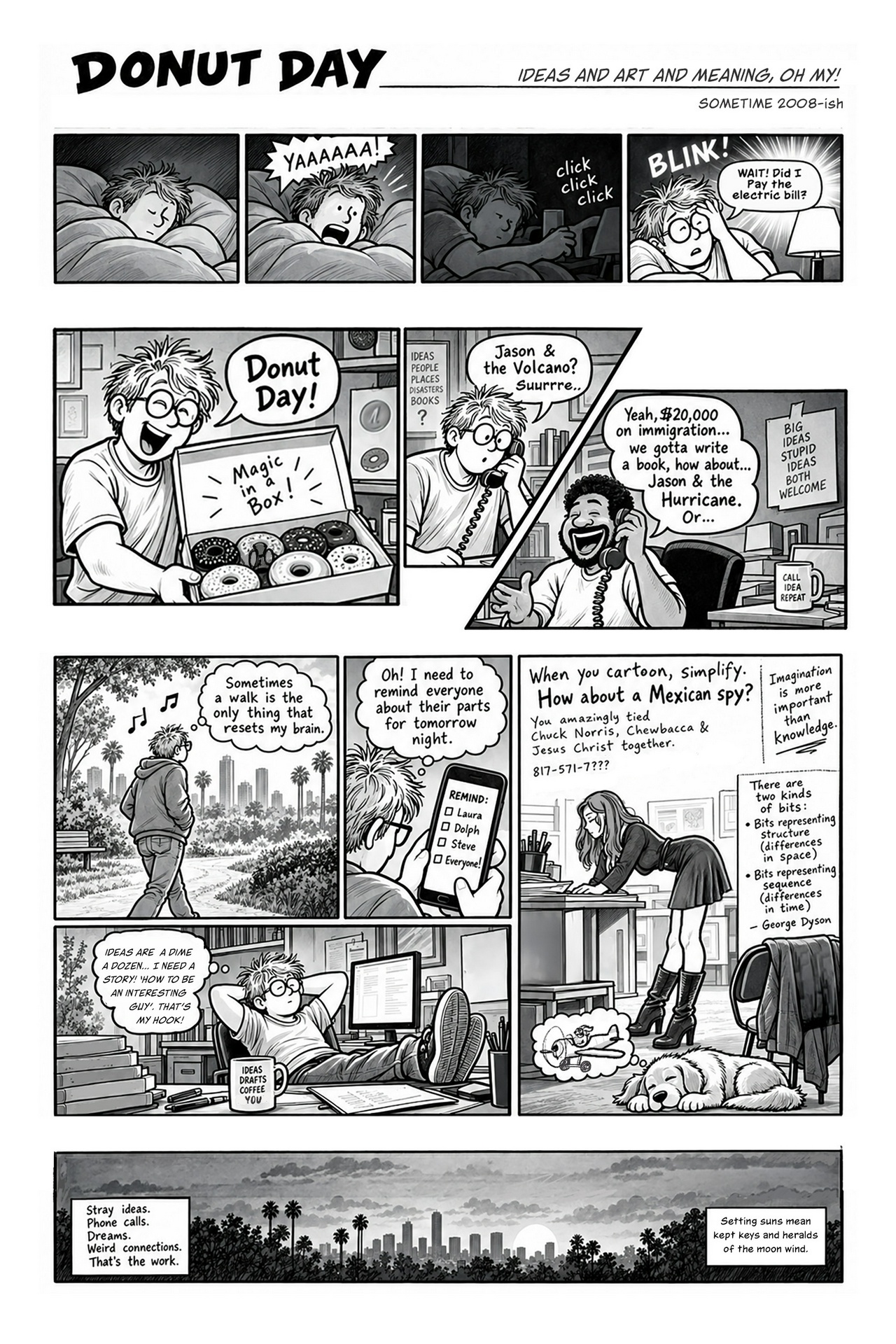
This comics page is based on a spread from a 2009 sketchbook. This new version is clever and slick, but I think I like my original energy.
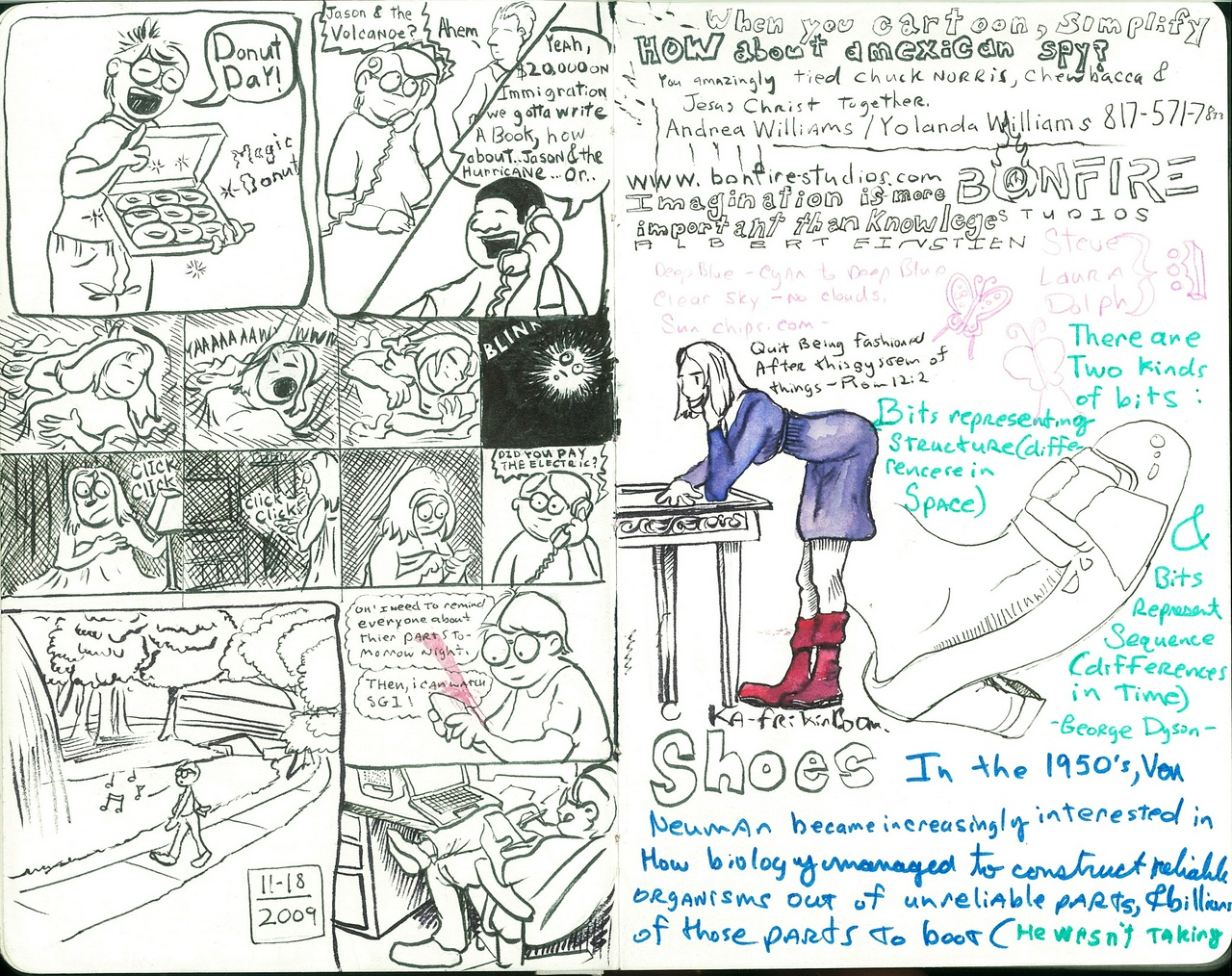
Its sloppy and weird and somehow better. This new version feels published, but almost to sanitized.
#comics #journal #sketchbook #sketchbook31
from nguo lai
13.
Il y avait de la place dans cette maison qu’on appelait « Le château » pour une ribambelle de cousins, (j’avais 6 oncles et tantes), mais tous et toutes étaient nettement plus âgés. Mais je me faisais très bien, tout seul, un monde auquel ma copine participait gaiement. J’explorais aussi les combles de la maison, dans les odeurs de pommes et de vieux papiers, les archives familiales y dormaient. Je crains d’y avoir mis un certain désordre. On mangeait des noisettes. Une fois toute la bande des cousins fut emmenée à quelques kilomètres dans un village, je me souviens de la place bordée de grands arbres, le sol était en partie en terre, ou recouvert de terre. Au fond il y avait une vaste maison toute en pierre grise. On entrait dans une large pièce qui sentait bon le feu de bois, le sol était en terre battue. Tout autour des armoires cloutées de cuivre, je découvris les lits-clos. C’était la maison de notre arrière-grand-père.
#ngolai
from Taglibro de Fanjo
Hodiaŭ en la sportejo, mi unuafoje uzis la longan halteron, kiu pezas 20 kilogramojn mem, por ekzerci dum mi puŝadis mian kokson supren (angle tiu ekzerco nomiĝas hip thrust kaj ĝi bonegas por akiri belan pugon). Mi aldonis ankaŭ du 20-kilogramajn diskojn. Sume, mi levis 60 kilogramojn.
Mi tre fieras, ĉar antaŭ 6 monatoj, mi povis levi nur 18 kilogramojn dum tiu ekzerco.
Mi ne scias, kiu estas la limo, sed mi esperas, ke mi iam povos levi pli ol 100 kilogramojn!
Toluca, Meksiko
Choi Yido dan Keluarga Kim
from  🌾
🌾
#gyushuaabo22yl

Mengendap-endap merintangi kegelapan malam yang dihiasi temaram cahaya lampu gas dari berbagai kedai dan bar adalah salah satu keahlian tersembunyi Choi Yido. Ia sering melakukannya—sudah melakukannya semenjak ia resmi menjadi Alpha. Berbaur bersama masyarakat biasa dalam samaran baju sederhana dan sedikit improvisasi—corengan debu maupun arang di pipi, sengaja berlari sejenak agar tampilannya penuh peluh dan lusuh seakan ia telah bekerja keras seharian—merupakan cara yang ia pilih untuk mengenal kerajaannya sendiri dari dalam. Wajahnya yang sungguh mirip Yang Mulia Pendamping Raja membuatnya harus agak kreatif bila tak ingin dikenali, namun toh sampai detik ini tidak ada panggilan ke ruang singgasana maupun Dewan Tetua untuk mempertanyakan 'kegiatan ekstra'-nya. Ia akan sedikit egois dan menganggap hal tersebut sebagai kemenangan kecil.
Setelah meloncati tembok istana, Alpha muda itu tidak langsung menuju kediaman keluarga Kim. Ia menyempatkan diri ke kedai kenalannya untuk bercakap-cakap sejenak sambil menikmati ikan halibut dibalur tepung dan digoreng garing, lengkap dengan saus tartar dan kentang goreng buatan sendiri. Hidangannya panas dan lezat, membuat sang Alpha mendesah puas kekenyangan. Setelah menghabiskan hampir dua jam di sana, ia pun pamit undur diri, sudah tidak sabar ingin menemui sang Omega kekasih hati.
(Tidak tahu diri, padahal status kalian juga belum resmi.)
(Diamlah.)
Terkadang, Alpha di dalam dirinya senang mengundang perselisihan, bahkan terhadap manusianya sendiri. Benar-benar menyusahkan.
Karena telah hafal di luar kepala, jejak-jejak kakinya menuju kediaman keluarga Kim tertinggal mulus sepanjang jalanan tanpa keraguan. Terletak cukup jauh dari keramaian jalan raya, di antara rumah-rumah megah kaum elit lainnya, berdiri mansion besar yang dihadiahkan ayahnya pada Paman Mingyu sebagai hadiah pernikahannya dahulu kala. Mansion yang awalnya milik Tuan Raja pribadi, kini menjadi milik adik sepupu satu-satunya itu. Dihuni tiga orang anggota keluarga Kim, seorang kepala pelayan, dua orang penjaga istal kuda, seorang supir pribadi, dan belasan pelayan serta tukang kebun, rumah tersebut tak pernah berhenti hidup, bahkan lebih aktif dari istana kerajaan dengan penghuni yang jauh lebih banyak lagi. Rumah yang selalu dirindukan Choi Yido, baik ketika masih kecil dulu maupun saat ini.
Bel yang menggantung di sisi pintu depan sengaja ia tarik. Gemanya menyadarkan setiap penghuni akan kehadiran seorang tamu, namun hanya satu orang yang bertugas membukakan pintu: Tuan Jung, kepala pelayan mereka. Setelah Tuan Park pensiun dan pulang ke kampung halamannya, Tuan Jung lah yang menggantikan tugasnya mengatur rumah tangga keluarga Kim, termasuk menyortir tamu-tamu tak diinginkan sebelum ujung sepatu mereka sempat menapak di ambang pintu. Karena itu lah, Tuan Jung mengenal siapa gerangan pemuda yang membunyikan bel malam itu.
“Yang Mulia,” buru-buru ditundukkannya kepala dan dibungkukkannya badan, tetapi Yido segera memegang bahunya untuk menghentikan.
“Tuan Jung, saya mohon,” seringai lemah ditariknya menghiasi wajah. “Bukankah sudah saya bilang? Di sini, saya hanya keponakan Paman Mingyu dan teman sejak kecil Ri. Saya akan sangat berterima kasih kalau saya diperlakukan tiada berbeda.”
“Ah...maaf, saya refleks saja...,” agak tersipu malu, Tuan Jung mengangguk beberapa kali. “Maafkan saya, Tuan Choi. Saya...tidak akan mengulanginya lagi.”
Mendengar itu, seringai Yido berubah menjadi senyuman lega. “Nah, nah, anggap saja tidak terjadi apapun. Apakah Ri ada di rumah, Tuan Jung? Jika ya, saya ingin bertamu.”
Tuan Jung mempersilakan tamunya masuk dengan membuka pintu lebih lebar. Yido menerima undangan tersebut dengan anggukan sopan, sebelum mulai melepas mantel yang ia kenakan sebagai kamuflase. Warnanya gelap dan bahannya kasar—barang murahan yang ia beli dari toko pakaian bekas di kota bagian Timur. Topi pet berwarna serupa pun ia lepas, membiarkan Tuan Jung dengan sigap menerima dan menyampirkan artikel pakaian tersebut di tiang gantungan dekat pintu masuk. “Nona ada di rumah, tapi Tuan Kim dan Tuan Hong sepertinya hendak pergi,” jawab sang kepala pelayan, membuat Yido membeku di tempat.
“Paman akan pergi? Berarti rumah akan kosong?” tentunya bukan kosong 'kosong', tetapi Tuan Jung menangkap maksudnya. Tidak baik bila seorang Alpha bertamu ke rumah seorang Omega tanpa kehadiran orangtuanya.
“Benar, Tuan.”
“Jika begitu, apa lebih baik saya kembali lain waktu—”
“Yido?”
Ah. Terlambat.
Tumit sepatunya berputar. Paman Joshua sudah bergegas mendekatinya dengan lengan terbuka lebar dan senyuman tulus di wajahnya. “Kenapa nggak bilang mau dateng? Kamu udah makan?” Yido membiarkan dirinya dipeluk erat. Wangi kue jahe dan mentega hangat merasuki indra penciumannya, membuat hatinya seketika nyaman. Seperti wangi ibunya, wangi Paman Joshua secara ajaib selalu mampu menentramkan perasaan, meski baginya tak ada Omega yang wanginya sememikat Kim Gyuri.
“Sudah, Paman, barusan saja,” ucapnya setelah pelukan terlepas. “Maaf saya datang tanpa pemberitahuan. Saya hanya...eh...” Kemudian, Alpha muda itu menunduk malu-malu. “...tiba-tiba saja ingin bertemu Gyuri...” Setengah hati Joshua menjerit gemas, setengahnya mau ketawa pakai hidung melihat muka Yoon Jeonghan bertingkah bak remaja kasmaran (bagaimanapun, rasanya tetap aneh ketika anak sahabat baikmu memiliki wajah persis sama dengannya).
“Ah, sebenernya kita mau keluar makan malam sih...,” diangkatnya kepala saat menyadari kedatangan seseorang dari balik tembok. “Oh. Mingyu.”
Deg.
Jantung Yido melonjak dari rongga dada. Mendengar nama pamannya disebut, pemuda itu pun teringat kembali akan alasan sesungguhnya ia bertolak menuju rumah ini: untuk mencari tahu mengapa Paman Mingyu belum juga menjawab pinangannya pada sang putri. Diam-diam diteguknya ludah. Jakunnya naik-turun perlahan.
”...Yido?” Mingyu memanggilnya.
“Gyu, Yido mau ketemu Ri,” Joshua mendekati suaminya, otomatis mengalungkan lengan ke sekeliling pinggang sang Alpha. “Tapi kita mau pergi makan. Apa kita batalin aja rencana nge-date kita?”
“S-saya akan datang lagi lain kali!” segera, Yido menyergah ucapan Paman Joshua. Ia tidak ingin merusak rencana milik siapapun atas keegoisannya. Bertemu Gyuri masih bisa lain kali. Bertanya dan meminta kejelasan pada Paman Mingyu pun masih bisa ditangguhkan. Toh, selama tak ada Alpha atau Beta lain yang meminta tangan Gyuri, maka Yido aman.
“Yido,” tapi Mingyu memanggil namanya sekali lagi, dalam nada lembut kali ini. Alpha muda itu pun mengangkat wajah untuk menatap pamannya tepat di mata. “Duduklah, Nak. Tuan Jung, tolong bawakan teh dan kue-kue.” Sang kepala pelayan segera membungkuk hormat sebelum undur diri. Gestur sang Alpha tua mengajak mereka untuk berpindah ke ruang keluarga yang lebih nyaman, lengkap dengan perapian yang telah dinyalakan. Fokus Mingyu kemudian berpindah pada suaminya. “Kamu tidak apa-apa rencana kita batal, Sayang? Kamu tidak lapar?” tanyanya.
Joshua tersenyum kecil, lalu mengecup lembut pipi kekasihnya. “Aku minta makanan ke dapur aja, nggak pa-pa kok. Palingan dicemberutin dikit,” kekehnya ringan. Juru masak keluarga Kim terkenal akan kelezatan hidangannya dan sifat suka mengomelnya (walau, menurut Joshua, mirip ibu yang suka khawatiran akan anaknya). “Nanti aku balik lagi. Jangan sok galak kamu ya. Anak kakak kamu tuh. Anak sahabat aku juga.”
“Sayang! Aku tidak—” belum sempat Mingyu protes sambil terbata, Joshua sudah berlalu, meninggalkan suara tawanya yang bagaikan musik di telinga sang Alpha. Buru-buru Mingyu berdeham, berusaha mengembalikan wibawanya sebagai kepala keluarga, dan mengajak Yido, keponakan serta calon pemimpin negara ini, ke ruang keluarga.
from Blog of Sand
The Nth Day of Christmas
I've always thought the Twelve Days of Christmas seemed kind of arbitrary. Why not more or less days? So I thought, let's extend the song as far as we can with real examples of numbers that match the particular day. So enjoy the... N days of Christmas (I petered out at 106...):
On the first day of Christmas, my true love gave to me...
1) One Moon orbiting planet Earth 2) Two geographic poles, the North and the South 3) Three germ layers in a developing human embryo 4) Four canonical bases that spell out DNA 5) Five Great Lakes along the U.S.-Canadian border 6) Six flavors of quark in the Standard Model 7) Seven base units in the SI system 8) Eight planets orbiting around our Sun 9) Nine Muses of ancient Greek tradition 10) Ten digits in our decimal number system 11) Eleven players on a full soccer team 12) Twelve months in the Gregorian calendar 13) Thirteen cards in each suit of a standard deck 14) Fourteen lines in a traditional sonnet 15) Fifteen object balls in a game of eight-ball pool 16) Sixteen ounces in an avoirdupois pound 17) Seventeen Sustainable Development Goals of the United Nations 18) Eighteen holes in a standard round of golf 19) Nineteen years in the Metonic cycle 20) Twenty canonical amino acids used to build proteins 21) Twenty-one guns in the traditional highest military salute 22) Twenty-two letters in the Hebrew alphabet 23) Twenty-three pairs of chromosomes in a typical human cell 24) Twenty-four hours in a solar day 25) Twenty-five spaces on an American bingo card 26) Twenty-six letters in the English alphabet 27) Twenty-seven books in the New Testament 28) Twenty-eight tiles in a double-six domino set 29) Twenty-nine days in February in a leap year 30) Thirty days in April, June, September, and November 31) Thirty-one days in each of the year's longest months 32) Thirty-two permanent teeth in a typical adult human mouth 33) Thirty-three letters in the modern Russian alphabet 34) Thirty-four inches, the classic long-scale length of a bass guitar 35) Thirty-five member states in the Organization of American States 36) Thirty-six Hanukkah candles lit across all eight nights, not counting the shamash 37) Thirty-seven pockets on a European roulette wheel 38) Thirty-eight stars on the U.S. flag from 1877 through 1890 39) Thirty-nine books in the Protestant Old Testament 40) Forty thieves facing Ali Baba in the famous tale 41) Forty-one home games in a traditional 82-game NBA regular season 42) Forty-two gallons in a U.S. barrel of oil 43) Forty-three quintillion possible configurations of a standard Rubik's Cube, approximately 44) Forty-four permanent teeth in a full adult pig dentition 45) Forty-five revolutions per minute for a classic 45-rpm record 46) Forty-six chromosomes in a typical human somatic cell 47) Forty-seven strings on a full-size concert pedal harp 48) Forty-eight constellations catalogued by Ptolemy in antiquity 49) Forty-nine days counted between Passover and Shavuot in the Counting of the Omer 50) Fifty states in the United States of America 51) Fifty-one original member states of the United Nations 52) Fifty-two cards in a standard playing-card deck 53) Fifty-three players on an NFL regular-season roster 54) Fifty-four African countries belonging to the United Nations 55) Fifty-five delegates who attended the U.S. Constitutional Convention 56) Fifty-six signers of the Declaration of Independence 57) Fifty-seven participating states in the OSCE 58) Fifty-eight protons in the nucleus of every atom of cerium 59) Fifty-nine beads on a traditional five-decade Catholic rosary 60) Sixty seconds in a minute 61) Sixty-one sense codons in the standard genetic code 62) Sixty-two home runs hit by Aaron Judge in his record-setting 2022 American League season 63) Sixty-three chromosomes in a typical mule 64) Sixty-four squares on a chessboard 65) Sixty-five years old, the standard age of Medicare eligibility for most Americans 66) Sixty-six books in the Protestant Bible 67) Sixty-seven counties in the state of Florida 68) Sixty-eight degrees Fahrenheit, exactly twenty degrees Celsius 69) Sixty-nine love songs on the Magnetic Fields album 69 Love Songs 70) Seventy miles per hour, the national speed limit for cars on British motorways 71) Seventy-one percent of Earth's surface covered by water, approximately 72) Seventy-two typographic points in one inch 73) Seventy-three books in the Catholic Bible 74) Seventy-four guns on the classic “seventy-four” ship of the line 75) Seventy-five balls in traditional American bingo 76) Seventy-six trombones leading the big parade in The Music Man 77) Seventy-seven founding countries that gave the Group of 77 its name 78) Seventy-eight cards in a standard tarot deck 79) Seventy-nine protons in the nucleus of every atom of gold 80) Eighty days allotted for Phileas Fogg to travel around the world 81) Eighty-one cells in a standard Sudoku grid 82) Eighty-two games in a traditional NBA regular season 83) Eighty-three counties in the state of Michigan 84) Eighty-four Earth years, approximately, for Uranus to orbit the Sun 85) Eighty-five essays comprising The Federalist Papers 86) Eighty-six episodes in the original run of The Sopranos 87) Eighty-seven octane, the usual rating of regular gasoline in the United States 88) Eighty-eight keys on a standard modern piano 89) Eighty-nine protons in the nucleus of an atom of actinium 90) Ninety degrees in a right angle 91) Ninety-one tiles in a complete double-twelve domino set 92) Ninety-two clubs in the top four divisions of English football 93) Ninety-three million miles, approximately, from Earth to the Sun 94) Ninety-four federal judicial districts in the United States 95) Ninety-five theses traditionally associated with Martin Luther's challenge to the Church 96) Ninety-six wells in the classic laboratory microplate 97) Ninety-seven percent of Earth's water contained in the oceans, approximately 98) Ninety-eight episodes in the original run of Gilligan's Island 99) Ninety-nine Names of Allah in the well-known Islamic tradition of the Asma al-Husna 100) One hundred senators in the United States Senate 101) One hundred and one Dalmatians in Dodie Smith's famous story and its Disney adaptation 102) One hundred and two stories in the Empire State Building 103) One hundred and three articles in the Constitution of Japan 104) One hundred and four days of summer vacation in the world of Phineas and Ferb 105) One hundred and five counties in the state of Kansas 106) One hundred and six bones in your two hands and two feet combined
from Blog of Sand
Inbetweeners Part 16- Cervi's Death
Cervi was one of the original Inbetweeners when the campaign first started out. Currently the campaign has Domilia, Rotlog, Uzo, Bruce and Zemus. Rotlog and Uzo are the only characters from the original group, while Zemus is one of the OG players under a different character. He was a human monk who was in the circus with Thogg, the Goblin Ranger. His character demonstrated pretty remarkable growth, starting out unsure of their place in the world after being brought back by the Interloper, but finding his courage and purpose after facing the Bone Devil in the Desecrated Temple. Ironically, he was killed by a plant, a shambling mound to be specific, in the Secret Garden room of the Lady of Pain branch. I never intended for this room to be particularly dangerous, but a shambling mounds slam attacks and engulf ability can be a lot to handle for a low level player. I believe the group was already hurt from previous encounters, and was overpowered by the shambling mound. With its high hitpoints, it was able to kill Cervi before they could put it down. They fished his body out of the... mulch of the shambling mound and brought him back to the Interloper.
The Interloper attempted to resurrect Cervi but was blocked by Torm. Cervi's acts of clearing the desecrated temple and defeating the masquerade Vrock had earned him Torm's attention and a place in the heavens for his afterlife. I kind of envisioned it like that scene from Constantine (the Keanu Reeves movie adaptation) where he's ascending to heaven and flips off the devil as he floats towards the light. I wanted ressurecting Cervi to be a full blown questline, where the players needed to figure out a way to get him back from the heavens. Here were my rough notes of potential plot points:
“If the group seeks to resurrect Cervi they will run into the following obstacles:
-Torm blocked the interloper from snatching his soul
-The Interloper cannot retrieve Cervi’s soul without pissing off the Gods, the type of heat he’d like to avoid so in the meantime he can grant the group guidance and also an alternative partner.
-The group can appeal to the Shadow Templar of Torm. They will agree to smuggle Cervi’s soul back if the group can defeat a powerful fiend potentially- it is open to negotiation.
-If the group tries to pray to Torm directly they will get a vague directive to continue their good works
-Zariel has backchannels to get a soul back from heaven, if she has sufficient motivation
-Mobius could arrange it for the safe return of Celeste Whitewind
-Other means are possible…”
It ended up being a moot point because the Cervi's player had a work schedule change and could no longer make the sessions. Still, there were a few sessions where he was present and Cervi was dead, so I had to give him an alternate character. Enter: Ambrosius Addercap
He was a professor of alien research at a prominent wizarding school, but became obsessed with his work. The institution let him go, but he continued his work in a private lab which he funded with dangerous spells and items he acquired. He was focused on penetrating the veil of the plains to harness the secrets of the Far Realm. There, he thought, he could discover the meaning of everything and untold power. Instead, insanity took over and the realm consumed him. The Interloper was able to rescue his soul, but his body literally turned into space worms. The Interloper crafted this body instead:
Ambrosius has been given a second chance to study the planes and learn about secrets to manipulating the fabric between them. He has been instructed to help the group and study them, which he will dutifully try to accomplish… but he is utterly insane.
His body is that of a flightless, colorful, four-legged bird; it stands about 15 feet tall and weighs around 750 pounds. It’s talons are wickedly sharp and appears designed to brutally dismember prey larger than itself.
STATS:
Armor Class: 15 (natural armor) Hitpoints: 90 (12d10 + 24) Speed: 50 ft Str: 19 (+4) Dex: 13 (+1) Con: 14 (+2) Int: 20 (+5) Wis: 3 (-4) Cha: 7 (-2)
Skills: Acrobatics +4, Investigation +10, Knowledge +10 Senses: Darkvision 60 ft, passive perception 12
Attacks: Bite + 2 Claws Bite: +7 to hit, 4d6 + 4 piercing damage Claws: +7 to hit, 2d6+4 x 2
Multicolored Toxic Gas (recharge 5) Instead of attacking, it may release a cloud of multicolored gas in a 20 foot radius around itself. Everything caught in the cloud except for the bird itself rolls 1d6 and takes the following effects if it fails a Con Save DC 15. Doesn’t work on undead, constructs or elementals. Each effect lasts 1 minute unless otherwise noted:
1- If under 100 hitpoints, the creature falls into a deep sleep 2- The creature is blind 3- The creature becomes horribly nauseous, getting disadvantage on everything 4- The creature glows brightly, giving all other attackers that can see advantage against it 5- The creature is enraged, gaining an extra melee attack per round, +3 dmg (STR), ignores ½ physical damage and attacks anything around it indiscriminately. 6- Creature takes 2d6 + 3 (10) dmg per turn, continuing to roll Con save until it passes or dies.
In his life, Ambrosius knew many spells, however the damage he took to his mind in his encounter with the Far Realm is… irreparable. Ambrosius may attempt to cast any spell he knew in life, but the risk of something going wrong is very high.
-Take the level of the spell, and add 1 and multiply by 2. Roll 1d20, if you get or exceed that number, the spell works. If not… something else happens.
So, Ambrosius was more powerful than the other players at this point in the campaign, they were all still relatively low level. Fortunately, his player was a champ and made sure to role play Ambrosius appropriately for a professor who had been driven mad by the Far Realm. He would wander off during combat, engage NPCs in inane conversation about the Far Realm, and essentially inject entropy and chaos into each interaction. Sometimes, however, he would come in clutch and help the players defeat a particularly challenging foe. He didn't get to use the multicolored gas much, if at all, which is too bad because the chaos it could have instilled in an encounter would have been fun. We also didn't get to play around much with the spell malfunctioning mechanic. Soon after Ambrosius joined the campaign his player had to leave. I think the players were probably between levels 5 and 7 at this time. Another player, Melrakki, who wasn't with the campaign very long, had to leave as well, so I had to write in their exits.
At the start of a session, the Interloper warned the players that Ambrosius had gone rogue. The Far Realm influence had eaten away at what little bit of control and sanity he had left and he was on a rampage, last seen in the Throne Room. Melrakki had gone after him. The players perused to find this:
“The throne room is torn apart with blood, gore, carnage and destruction. Several guards lay slain, some from being eviscerated by claws, others from magic spells. Melraki lays in the corner, cut open and not moving in a pool of her own blood. In the center of the room, a wild eyed, crazed Ambrosius speaks rapidly in an unidentifiable language, scrawling symbology on the walls in blood. He is injured from battle, with a sword still sticking out of him and a few arrows but seems utterly unphased. Battle immediately ensues. “
Once Ambrosius had been defeated, a Star Spawned Larva Mage emerged from his body. This is a CR 16 powerful mage made up of Far Realm worms and parasites that had a number of nasty features. Normally, an encounter that would be near impossible for the players at that level to handle. However, I wanted them to fight this creature without nerfing it for the sake of the narrative, so the Interloper cast Foresight on them ahead of the battle and I gave them one full round of attacks/actions during the transformation from Ambrosius to Star Spawned Larva Mage. Also, Royal Guard showed up during the fight to help tank some of the damage.
Uzo was absent this session, and he was the heavy hitter of the group. Fortunately, a new player joined this session, Bruce Disdain, an Aarakocra Barbarian, so they had the muscle they needed. It was an intense fight, but the Interloper's buffs really pushed the group over the edge. This was the first instance of the group beating encounters 9-10 CR points above their level, and the campaign starting to power scale out of control and the characters leveling rapidly. I was okay with this shift in dynamics though because the players were supposed to have been untethered from causality, and the gifts from the Interloper should lead to them being impossibly powerful compared to normal players at that level. My philosophy from here on out was don't nerf the players, buff the enemies. And this led to the campaign becoming more and more gothic/steampunk/body horror anime as time went on...
But I digress. Cervi. He stayed in heaven and would occasionally communicate with the players as an NPC when it served the plot. He was quite happy farming in Arborea. I still hope he will make it back before the campaign ends, but we will see. With all the horrors the faced— undead, fiends, Far Realm abominations, it was an untended to garden that did him in. Oh, and I forgot one of the most interesting coincidences. Thogg was Cervi's best friend, and Thogg's chosen enemy as a ranger were plants. He was a vegetarian not because he disliked meat but because he wanted to kill as many plants as possible. This only intensified his hatred of plants, as he inherited the halfing gardener's trowel and made it his mission to kill any sentient plants going forward.
So yeah, rest in piece Cervi, and Melrakki! I'm not going to do a post about Melrakki because she wasn't really in the campaign long enough to build out much lore. She did get a funny sword from the Interloper though that dealt double damage but had disadvantage on all attacks. It ended up being comical because it rarely hit. The sword would essentially bend around targets, sometimes be floppy, and sometimes bend in 4 spatial dimensions to avoid hitting something. However, when it did hit, it hit hard. Melrakki had transformed into a white fox when she was killed by Ambrosius. Uzo took the foxes pelt and moved on... hobgoblins aren't exactly... sentimental.
brain drippings
from hypocritepoet
little genius

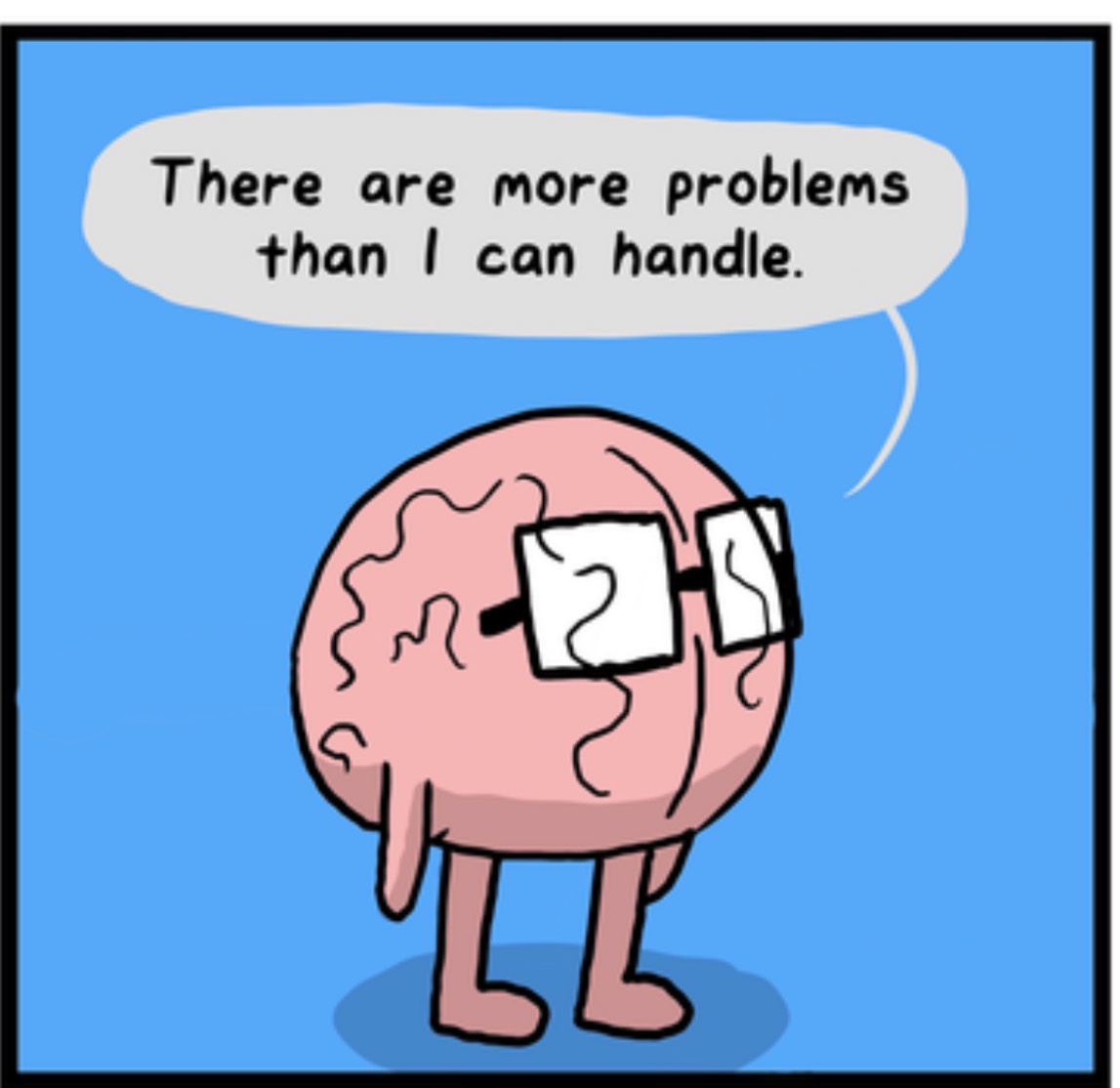
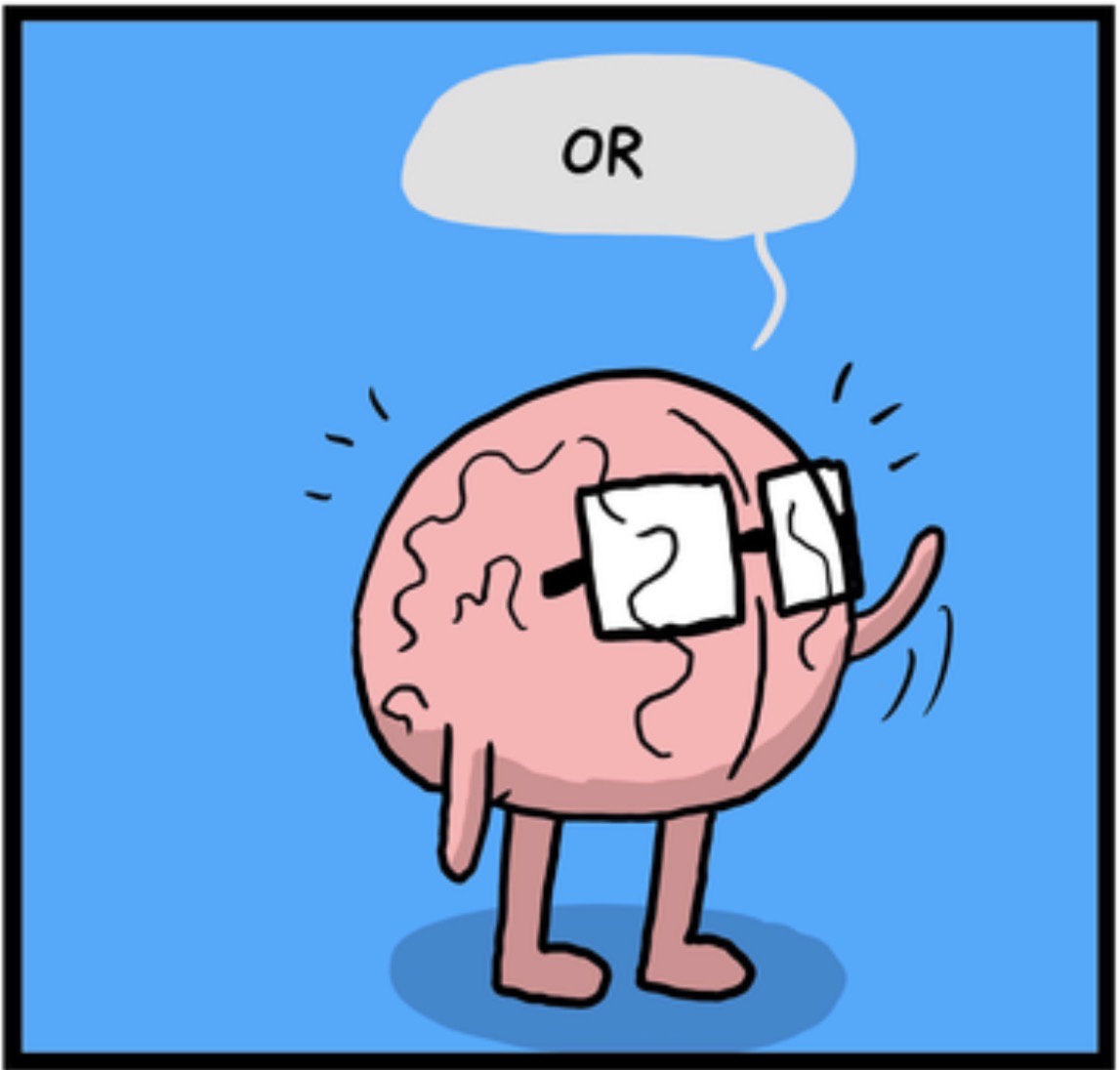
This wanna be a better brain gag cracks me up of course, it’s a nod to As Good As IT Gets. And it reminds me of a moment some time ago when I told my wife something similar to Helen Hunts demand for a compliment.
‘Dear, I need a compliment. Please give me a complement.’
She thought for an uncomfortably long time and said, “I like that your carry my luggage for me.”
Okay.
Not what I was expecting. But I’ll take it.
——
Billy Joel didn't write “hurry up, you're falling behind” Instead, he wrote... “SLOW DOWN, YOU'RE DOING FINE. YOU CAN'T BE EVERYTHING YOU WANT TO BE BEFORE YOUR TIME”
Be who you are. Do not waste time trying to be what the world expects of you. Genuine people tend to attract genuine people.
in a world obsessed with being extraordinary, there is a deep peace in just being a good human.
The world around you is beautiful when the world within you is peaceful.
“never tell a person to be strong when they come to you to be weak.”
we stress too much for a life that can end at any time. make sure to live.
we don't see things as they are. we see them as we are.
bad days are also part of a very good life.
I can respect a busy man, but i also recognize when a man simply doesn't care enough to make time. learn the difference
We do not talk, we bludgeon one another with facts and theories gleaned from cursory readings of newspapers, magazines and digests.






The Goal: https://vimeo.com/1225475435/f30303a0f1?share=copy&fl=sv&fe=ci
Lovely: https://vimeo.com/1225475438/de0b67a376?share=copy&fl=sv&fe=ci